Description
1. Product Overview
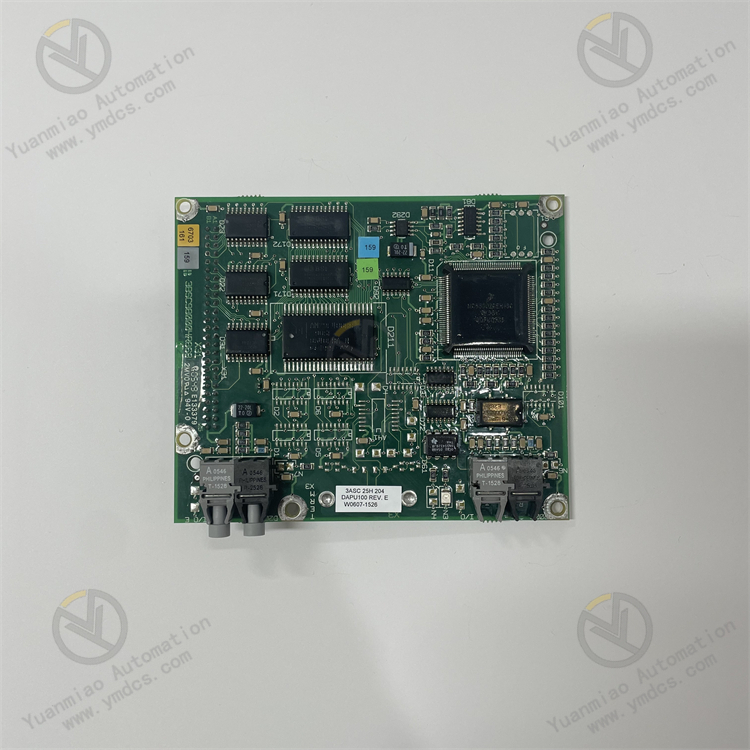
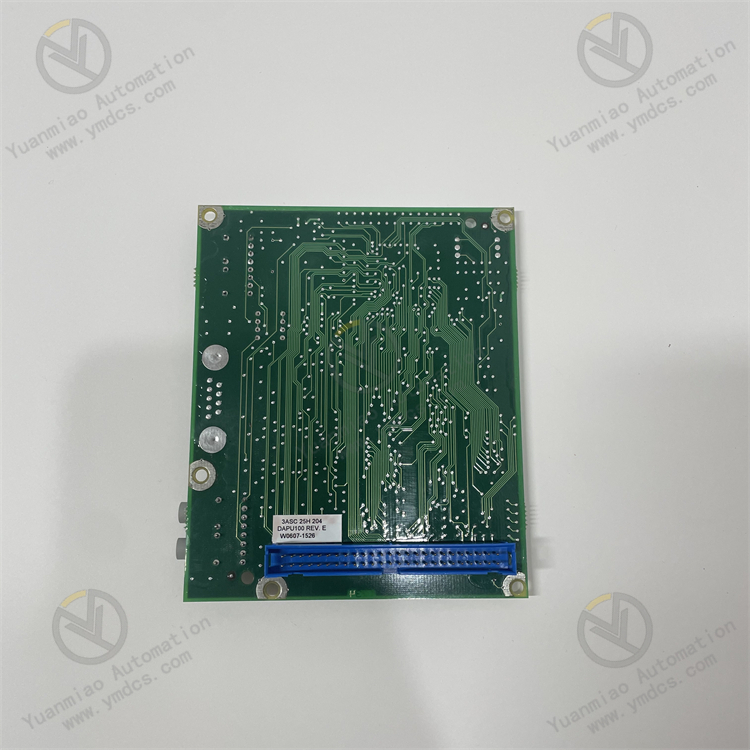
Full Model: DAPU100
Material Code: 3ASC25H204
Manufacturer: ABB
Product Name: Multi-function High-speed Counter & Pulse Acquisition Module / Process Pulse Data Processing Unit
Product Description
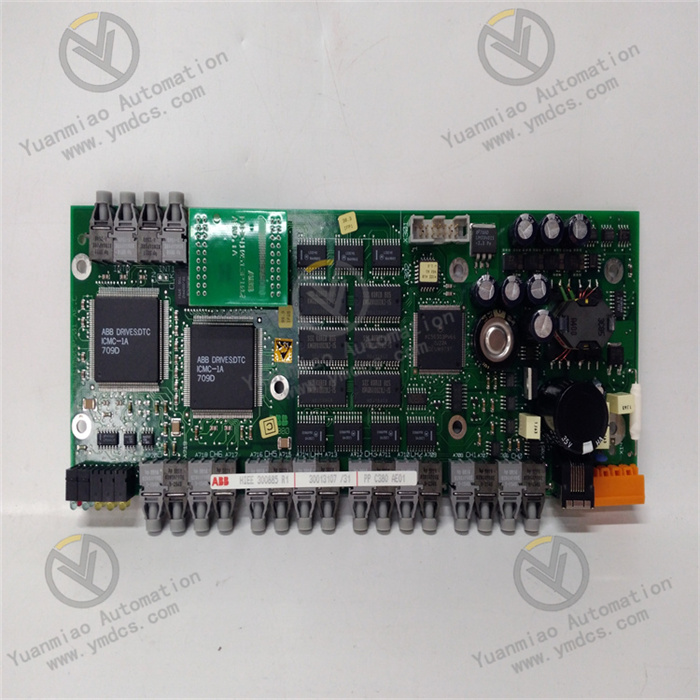
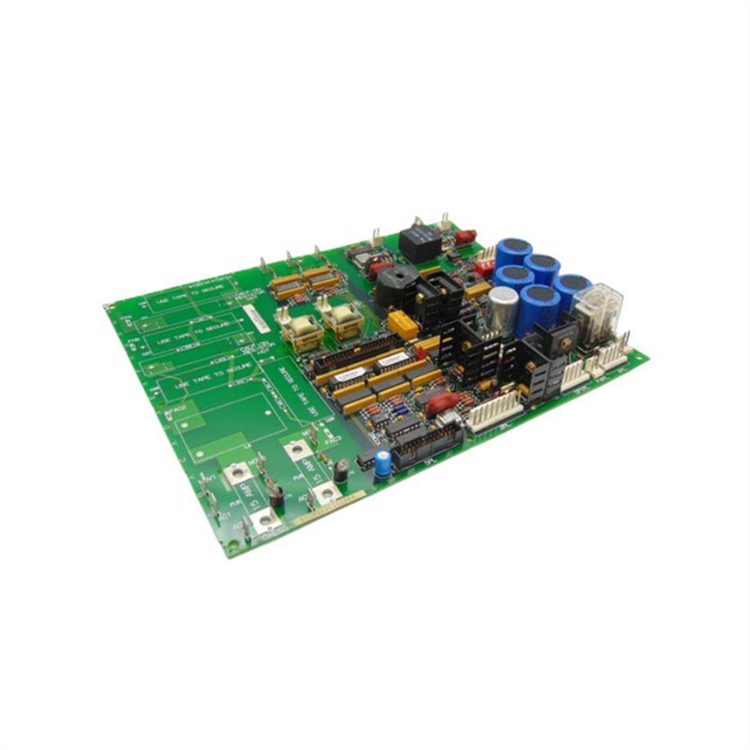
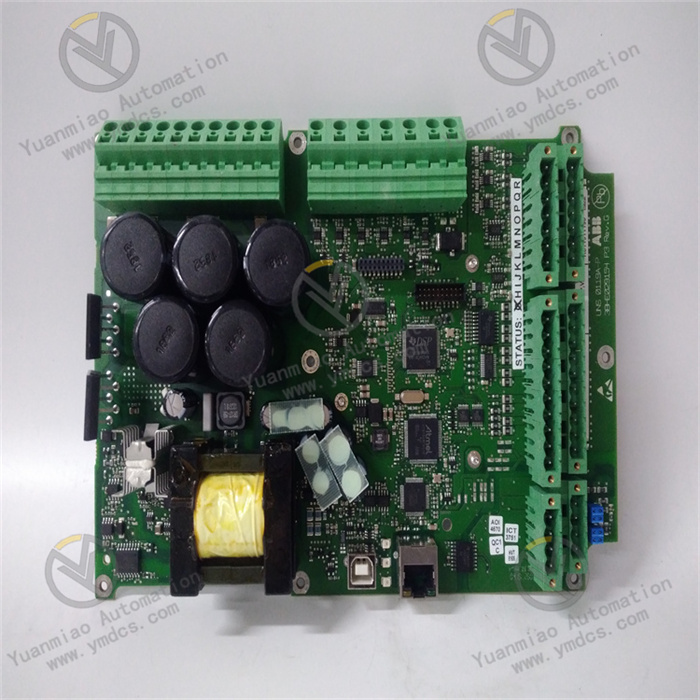
ABB DAPU100 (3ASC25H204) is a high-speed pulse counter and process data acquisition module specially developed for ABB Symphony, Industrial IT and System 800xA DCS control systems. As a core functional module of the S800 I/O series, it is designed for high-precision metering and pulse acquisition applications in process industries including power generation, chemical industry, oil & gas, water treatment and metallurgy. The module performs high-frequency pulse signal acquisition, cumulative metering and frequency conversion for field flowmeters, speed probes, pulse encoders and incremental instruments. It serves as a critical I/O unit for industrial flow statistics, speed monitoring, energy accumulation and equipment overspeed protection.
Equipped with a 32-bit high-speed industrial processor, the module supports high-frequency pulse acquisition, precise counting, instantaneous flow conversion and totalization statistics. It accepts pulse signals within a wide frequency range with high counting accuracy and extremely low pulse loss rate. Adopting channel-wise independent electrical isolation, it effectively resists electromagnetic interference, surge voltage and signal noise in industrial sites, suitable for long-distance pulse wiring and harsh high-interference conditions. Built-in hardware self-diagnosis, pulse anomaly discrimination, anti-chatter filtering, open-circuit detection and multiple protection mechanisms can efficiently filter interference pulses and prevent miscounting and missing counts. Designed as a standard rack-mounted modular unit supporting non-destructive in-situ replacement for 24/7 continuous stable operation. Only genuine identical replacement modules are recommended to avoid metering deviation, pulse loss and abnormal speed monitoring caused by incompatible third-party modules, ensuring accurate process metering and reliable equipment operation.
2. Core Functions
High-precision high-speed pulse acquisition. Supports high-frequency acquisition of various active/passive pulse signals, encoder pulses, flowmeter pulses and speed pulses from field devices. It features wide response frequency range and high counting resolution to accurately capture instantaneous pulse variations without missing counts, miscounts or jumping readings.
Process flow and cumulative metering. Embedded standard flow conversion algorithms enable real-time instantaneous flow calculation, total flow accumulation and process parameter conversion. Customizable measuring ranges support metering of media such as water, gas and oil to satisfy industrial precise energy consumption and material statistics.
Equipment speed and frequency monitoring. Converts high-frequency pulse signals into real-time rotational speed and operating frequency to realize online speed monitoring, overspeed alarm and low-speed protection for fans, pumps, steam turbines and conveying equipment, providing accurate data support for equipment safety interlocks.
Intelligent pulse filtering and discrimination. Dual hardware & software filtering automatically filters stray pulses and chatter pulses induced by electromagnetic interference, accurately distinguishing valid pulses from interference signals and greatly improving acquisition stability and metering accuracy under complex operating conditions.
Independent isolation protection for all channels. Each pulse input channel is electrically isolated. Circuit faults or abnormal signals on one channel will not affect other channels or the whole module, effectively eliminating channel crosstalk and ground loop interference and enhancing system fault tolerance.
Comprehensive self-diagnosis and fault alarm. Power-on full module self-test plus continuous runtime inspection accurately identify channel open circuit, abnormal pulse signal, over-frequency, signal loss, communication fault and hardware abnormality. On-board indicators and pop-up alarms on the host system enable fast fault location.
- Convenient online operation and configuration. Supports online range modification, metering parameter calibration, pulse factor configuration, fault reset and data clearing. Commissioning, calibration and routine maintenance can be implemented without system shutdown, matching the continuous production mode of industrial sites.
3. Technical Features
High-speed and high-precision counting performance. Adopts a 32-bit high-speed industrial processor with fast pulse response and high counting resolution for precise statistics of high-frequency pulses. Long-term metering error is minimal, meeting accuracy requirements for industrial trade metering and precise process control.
Anti-interference pulse discrimination architecture. Dual protection of hardware opto-isolation and intelligent software filtering effectively suppresses invalid pulses caused by strong industrial electromagnetic interference, line induced noise and contact chatter, fundamentally eliminating metering drift and counting disorder.
Strong adaptability to wide operating conditions. Capable of stable operation under wide temperature, wide humidity and complex electromagnetic environments. It adapts to demanding industrial sites such as power plants, chemical plants, oil & gas facilities and metallurgical plants characterized by heavy interference, high dust and drastic temperature variation with excellent environmental adaptability.
High data stability and reliability. Built-in power-off data retention mechanism ensures cumulative metering data and configuration parameters are preserved upon power failure. Automatic data backup prevents loss of metering data during shutdown or power outage and guarantees continuity and integrity of production data.
Standardized modular design. Standard S800 I/O rack mounting structure with dimensions, pin definitions and communication protocols natively compatible with the full range of ABB DCS control systems. Non-destructive in-situ replacement allows rapid commissioning without complicated configuration, delivering convenient and efficient maintenance.
- Long-term stable operation with low power consumption. Optimized low-power circuit design generates low heat and hardware wear. It achieves low failure rate during 24/7 continuous operation with no long-term parameter drift or channel degradation and extended service life.
4. Specification Parameters
| Item | Parameter |
|---|---|
| Model | DAPU100 |
| Material Code | 3ASC25H204 |
| Product Series | ABB S800 I/O, Industrial DCS Pulse Acquisition & Metering Module Series |
| Product Type | Multi-function processing module for high-speed pulse counting, flow accumulation and speed monitoring |
| Input Signal Type | Industrial active/passive pulse signals, encoder pulses, frequency signals |
| Acquisition Accuracy | High-precision pulse counting, overall metering error ≤ ±0.2% |
| Core Hardware | 32-bit high-speed industrial processor, 100 MHz main frequency |
| Memory Configuration | 128 MB RAM, 256 MB flash memory; supports parameter and data retention upon power failure |
| Isolation Method | Independent opto-isolation for all channels; electrical isolation between channels and between channels and backplane |
| Operating Power Supply | 24V DC ±10% industrial control power supply |
| Communication | Proprietary system bus, compatible with ABB DCS high-speed real-time communication protocol |
| Protection Mechanism | Signal overvoltage protection, short-circuit protection, surge protection, open-circuit self-diagnosis, interference pulse filtering |
| Operating Temperature | -40℃~+70℃ (Continuous stable operation) |
| Storage Temperature | -45℃~+75℃ (Storage / Transportation) |
| Ambient Humidity | 5%~95%RH (Non-Condensing) |
| Protection Class | IP20 (Standard protection inside cabinet) |
| Mounting Method | Fixed installation in standard industrial rack slots; supports non-destructive in-situ replacement |
| Core Characteristics | High-speed pulse acquisition, accurate flow accumulation, speed & frequency conversion, intelligent anti-interference filtering, power-off data retention, full-channel isolation, real-time self-diagnosis |
| Compatible Systems | ABB Symphony Plus, Industrial IT, System 800xA, AC800M full series DCS/PLC control systems |
| Typical Applications | Flow metering of media in power plants, material accumulation statistics in chemical industry, pulse acquisition for oil & gas, equipment speed monitoring, energy metering for water treatment, industrial high-precision pulse data acquisition |
5. Working Principle
After being supplied with 24V DC power, the module automatically executes full hardware self-test, processor initialization, channel parameter loading and bus communication handshake. It sequentially verifies power supply status, pulse acquisition circuits, isolation units, storage modules and communication links. Once self-test passes, the module enters standby acquisition mode and continuously monitors field pulse signals and commands from the host system.
During normal operation, each pulse input channel receives pulse signals transmitted from field flowmeters, encoders and speed probes. Signals first undergo opto-isolation and hardware noise reduction to filter invalid pulses caused by line noise and electromagnetic interference. Afterwards, the 32-bit high-speed processor completes pulse counting, frequency measurement, instantaneous flow calculation and accumulation summation. Combined with preconfigured instrument factors, range parameters and medium compensation formulas, the module automatically implements process condition correction and standardized quantification to generate accurate process data including instantaneous flow, total flow, equipment rotational speed and operating frequency. These data are uploaded to the upper DCS system in real time via the high-speed system bus for process monitoring, energy statistics, equipment interlock protection and production data archiving.
The module performs continuous real-time self-diagnosis and data monitoring to dynamically detect missing pulses, over-frequency pulses, abnormal signals, line open circuits and communication interruptions. When an anomaly is detected, fault status is marked and abnormal data locked to prevent erroneous data from disturbing system logic; meanwhile fault alarms are transmitted to the host system. After fault clearance, the module resumes acquisition and counting automatically and continues cumulative metering data to guarantee uninterrupted production metering. Equipped with power-off data protection, it automatically saves current cumulative data and configuration parameters upon power loss and resumes metering after power restoration to avoid data gaps and metering deviation.
6. Common Faults and Troubleshooting
1. Module communication failure, offline on host, no data refresh for all channels
Causes: Loss of 24V power supply, unstable voltage or loose wiring; oxidized rack backplane bus contacts and poor contact of communication cables; lost module configuration parameters or program error; bus address conflict between devices.
Solutions: Stabilize power supply voltage and tighten power terminals; clean rack bus contacts, secure communication cables and troubleshoot bus links; reload module configuration and verify bus address to avoid conflicts; replace original module if communication hardware is damaged.
2. No pulse counting; field instrument operates normally but no data in system
Causes: Broken pulse signal cable, reversed polarity or loose terminals; incorrectly configured channel acquisition parameters, mismatched range with instrument; channel locked by protection without reset; ageing of module acquisition circuit.
Solutions: Inspect pulse loop wiring point by point, correct polarity, tighten terminals and repair damaged cables; verify instrument pulse factor, range and frequency parameters to match system configuration; power cycle to release channel lock; replace module if acquisition hardware fails.
3. Disordered counting, severe fluctuation, falsely increased/decreased totalized value
Causes: Severe on-site electromagnetic interference and poor cabinet grounding; long unshielded cables inducing stray noise and false pulses; improperly set filtering parameters; unstable pulse output from field instruments.
Solutions: Optimize cabinet grounding and electromagnetic shielding; route pulse cables separately away from high-voltage circuits; adjust module software filtering parameters and enable anti-interference discrimination function; verify signal quality of field instruments; replace original module if faults persist indicating hardware abnormality.
4. Abnormal data on single channel while other channels operate normally
Causes: Short circuit, leakage or abnormal grounding on single channel circuit; ageing of channel opto-isolation unit; micro-short circuit caused by dust and moisture on terminals; corrupted single-channel configuration parameters.
Solutions: Isolate and inspect wiring and field instruments of the faulty channel to eliminate circuit abnormalities; clean dust and moisture on terminals and retighten connections; reset single-channel configuration parameters; replace module if channel hardware cannot be repaired.
5. Failed power-on self-test, unable to commission, frequent module reboot
Causes: Fluctuating power supply voltage, instantaneous voltage drop or surge; corrupted module program files and lost configuration; poor contact of backplane bus; hardware failure of internal processor or storage unit.
Solutions: Optimize power supply with voltage stabilization and anti-interference measures; rewrite and load complete configuration program; clean backplane bus contacts and re-seat the module; replace original module directly if core hardware unit fails.
6. Inaccurate counting, discontinuous data and communication abnormality after replacing with new module
Causes: Bus address and communication parameters not matched; original instrument factors, ranges and initial totalized values not imported; reversed wiring polarity; incompatible system firmware version.
Solutions: Verify wiring definition and correct misconnections; configure matching bus address and communication parameters; synchronize original process metering parameters and initial cumulative values and complete parameter calibration; ensure compatible system firmware; put into operation after online testing confirms counting accuracy and data continuity.