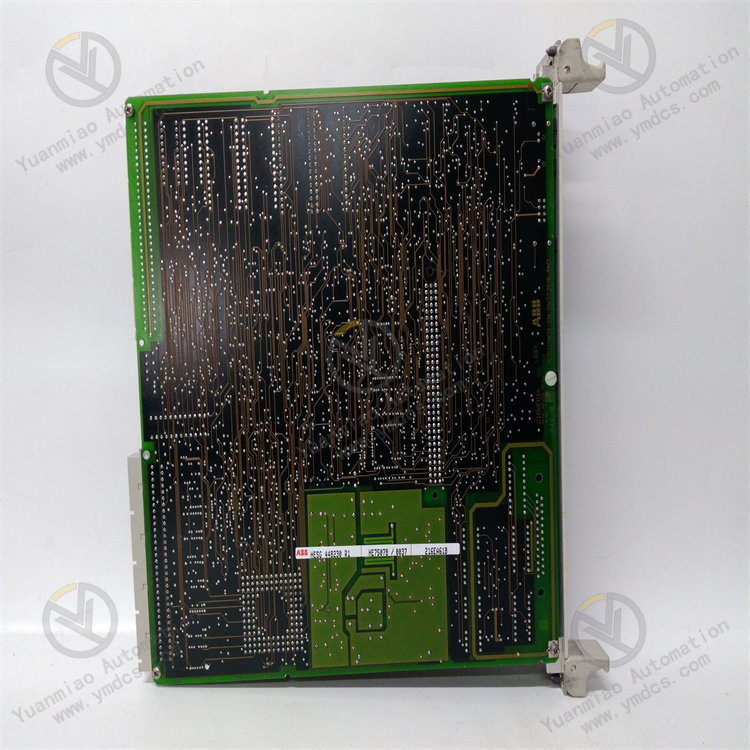
Description
1. Product Overview
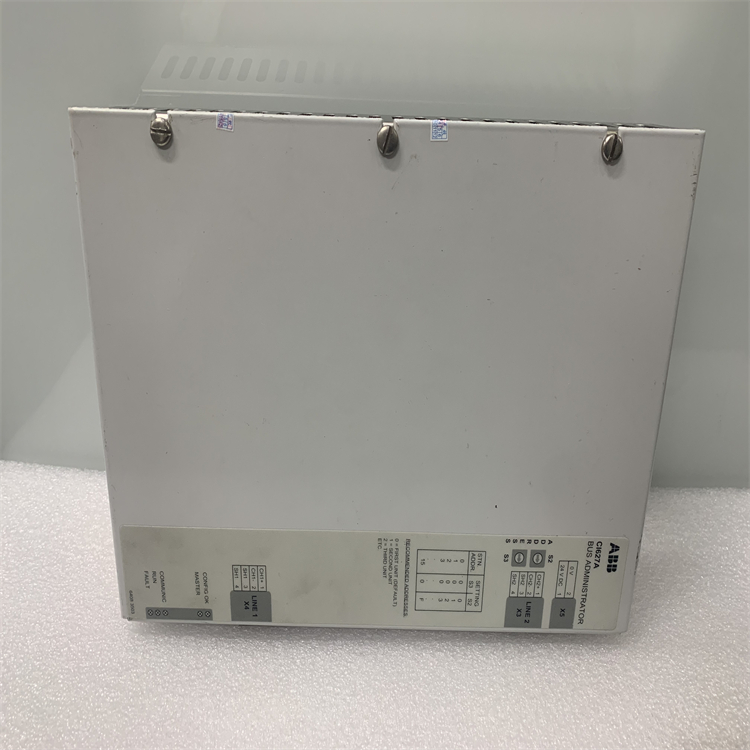
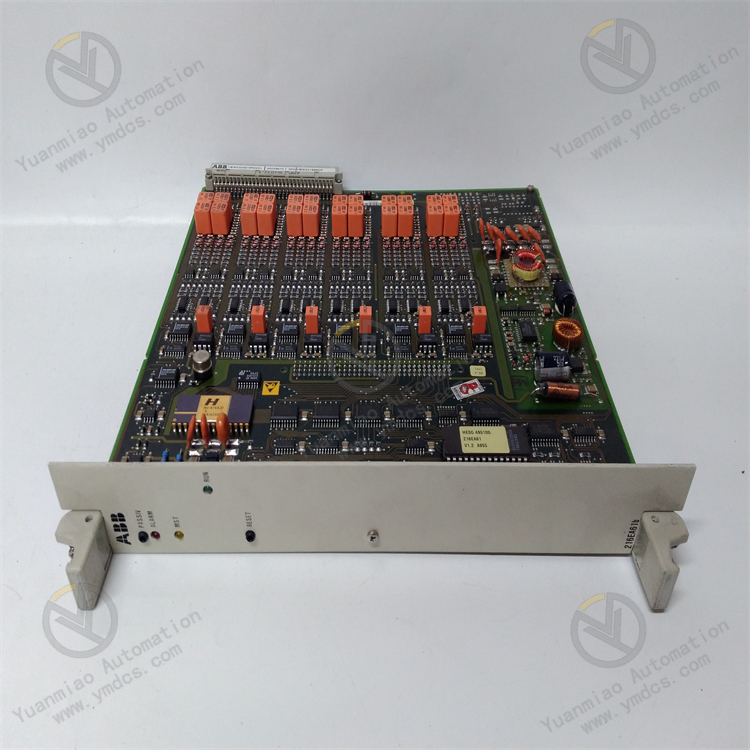
Full Model: 216EA61B Part Number: HESG448230R1
Manufacturer: ABB
Product Name: Mixed Analog Input/Output Module / AI/AO Acquisition & Control Card for Power Station Systems
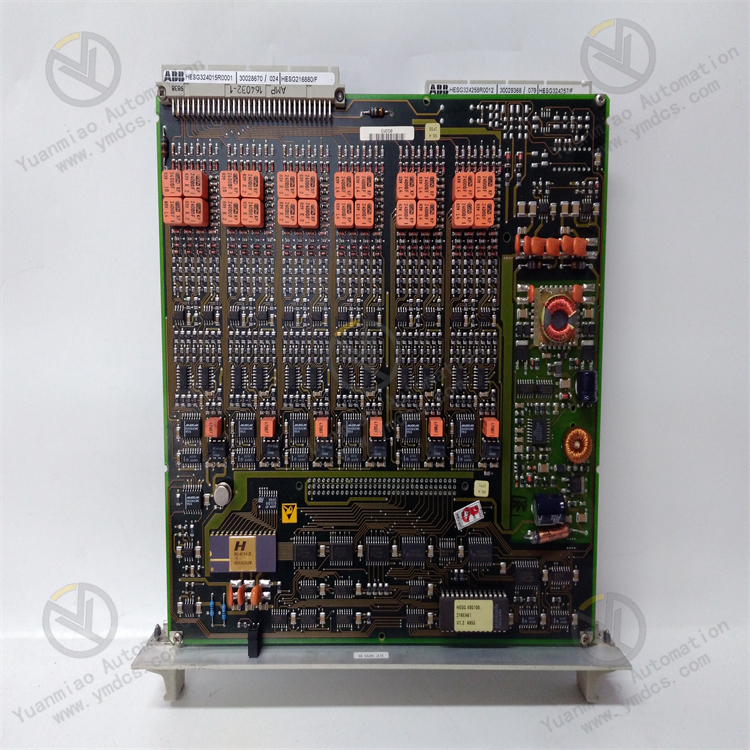
Product Description ABB 216EA61B (HESG448230R1) is a high-reliability mixed analog IO module dedicated to ABB power control systems and generator protection systems. It is compatible with the ABB REG216 series generator protection system and the extended 800xA automation platform, widely deployed in thermal power plants, hydropower stations, new energy power plants and large industrial facilities for unit condition monitoring, analog signal acquisition and closed-loop control.
Adopting an integrated architecture of 4 analog inputs plus 2 analog outputs, the module can simultaneously acquire field analog process signals and output control commands without matching multiple types of IO cards, effectively simplifying cabinet hardware layout and reducing maintenance costs. Equipped with differential input circuitry and dual protection consisting of optoelectronic isolation and capacitive isolation, it delivers powerful anti-interference performance and adapts to harsh operating conditions in power plants featuring strong electromagnetic fields and wide temperature fluctuations. Featuring high-precision signal sampling, linear output, full-channel self-diagnosis and high-speed bus communication, it serves as core standard hardware for auxiliary equipment regulation, process parameter monitoring and analog closed-loop control systems of generating units. Only original identical replacement is permitted; ordinary general-purpose analog modules cannot be used as substitutes.
2. Core Functions
4-channel high-precision differential analog inputs support acquisition of standard industrial analog signals. It accurately receives continuous process parameters including field temperature, pressure, liquid level, flow rate and valve position feedback to realize real-time monitoring of unit operating conditions.
2 independent analog output channels generate standard control signals to directly drive regulating valves, actuators and variable frequency equipment, realizing closed-loop process regulation, valve stroke control and auxiliary unit load adjustment.
Dual isolation protection architecture: optoelectronic isolation between AI and AO channels, and capacitive isolation between channels and the system bus. It thoroughly eliminates crosstalk between channels and bus interference to maintain stable accuracy of signal acquisition and output.
High-speed bus data exchange. Compatible with the ABB B448C parallel bus for high-speed interaction with the 216VC62a main processing unit. It also supports PROFIBUS DP and HART protocols for seamless connection with DCS, PLC and third-party host systems.
Hardware-level full-channel self-diagnosis function. It continuously monitors wire breakage, short circuit, over-range, signal drift, channel anomalies and communication faults, accurately locates fault points and uploads alarms to facilitate rapid maintenance troubleshooting.
Embedded high-precision linear calibration and temperature drift compensation algorithms ensure no zero drift or range offset during long-term operation, guaranteeing unit regulation accuracy and process stability.
- Compatible with redundant control system architectures for power stations. It supports on-line parameter calibration, range modification and configuration optimization. Commissioning and maintenance can be carried out without shutdown, suiting continuous operation of generating units.
3. Technical Features
Integrated mixed IO architecture: combines 6 channels (4AI+2AO) in one single card to handle both signal acquisition and regulation output. It simplifies cabinet layout, reduces hardware failure points and wiring complexity to meet intensive design requirements of power plants.
Differential input plus dual isolation design: differential sampling effectively suppresses common-mode interference. High-grade isolation withstand voltage of 2500 V AC prevents signal distortion and module damage caused by electromagnetic crosstalk and voltage surges in industrial sites.
High-precision stable sampling and output: industrial-grade high-precision ADC/DAC chips together with temperature drift compensation maintain accurate sampling and linear output under wide temperature conditions, satisfying requirements for precise process regulation.
Excellent multi-protocol compatibility and expandability: natively adapted to ABB generator protection systems and the 800xA platform, while supporting mainstream industrial bus protocols. Easy system integration for renovation, expansion and upgrade of new and existing systems.
Strong adaptability to severe industrial conditions: designed for wide operating temperature range, vibration resistance and electromagnetic interference resistance. Passed high-standard EMC tests and enables stable long-term operation in harsh environments such as power plants and chemical plants.
- Fast non-destructive maintenance replacement: standardized rack mounting, unified interface and bus protocol. No modification to system logic and control loops is required after replacement. Commissioning can be completed rapidly only by synchronizing range and calibration parameters, greatly cutting downtime maintenance costs.
4. Specification Parameters
| Item | Parameter |
|---|---|
| Model No. | 216EA61B |
| Part Number | HESG448230R1 |
| Product Series | ABB REG216 Generator Protection & Control System |
| Product Type | Mixed Analog Input/Output Control Module (4AI+2AO) |
| Channel Configuration | 4 differential analog inputs, 2 independent analog outputs |
| Isolation Type | Optoelectronic isolation between AI/AO channels; capacitive isolation between channels and system bus |
| Isolation Withstand Voltage | 2500 V AC (rms) |
| System Bus | B448C Parallel Bus (compatible with 216VC62a main control unit) |
| Communication Protocols | PROFIBUS DP, HART Industrial Protocol |
| Compatible Systems | ABB REG216 Generator Protection System, ABB 800xA Automation System |
| Operating Temperature | -25℃~+55℃ |
| Storage Temperature | -40℃~+80℃ |
| Ambient Humidity | 5%~95%RH (Non-Condensing) |
| Protection Class | IP20 |
| Core Characteristics | High-precision differential sampling, isolation & anti-interference, linear analog output, full-channel self-diagnosis, multi-protocol communication, automatic temperature drift compensation |
| Operating Characteristics | Free of zero drift, high signal stability, electromagnetic interference resistance, support for 24/7 uninterrupted operation |
| Mounting Method | Standard rack mounting, supports in-situ non-destructive replacement |
| Typical Applications | Generator set monitoring, auxiliary equipment regulation in power plants, analog closed-loop process control, valve regulation, precise control of pressure and flow |
5. Working Principle
After power-on, the module automatically executes hardware self-test, channel initialization, bus matching and system configuration loading. It comprehensively verifies power supply circuits, sampling channels, output loops and bus communication status, and enters normal acquisition and control mode once no abnormality is confirmed.
During system operation, the 4 analog input channels continuously collect field analog process signals via differential sampling. After filtering and noise reduction, isolation shaping, temperature drift compensation and engineering unit conversion, high-precision standardized data is transmitted through the B448C parallel bus to the 216VC62a main control unit and host systems to realize real-time unit condition monitoring, parameter tracing and over-limit alarming.
Meanwhile, the module receives regulation commands issued by the main control system. With embedded high-precision DAC conversion algorithms, it drives the 2 analog output channels to generate linear standard control signals for accurate control of field actuators, regulating valves and variable frequency equipment to achieve closed-loop adjustment of process parameters. Channel self-diagnosis and isolation protection mechanisms run continuously on the module to monitor signal status of every AI/AO channel. Once wire breakage, short circuit, over-range, signal abnormality, communication interruption or other faults are detected, the faulty channel will be locked immediately, fault codes uploaded and abnormal signals blocked. Normal channels keep running to avoid system regulation disorder and equipment misoperation, ensuring stable and reliable operation of the whole unit monitoring and regulation system.
6. Common Faults and Solutions
1. Fluctuating, drifting or inaccurate analog input values
Causes: Poor shielding of field signal cables and severe electromagnetic interference; loose and oxidized terminals leading to poor contact; corrupted range calibration parameters; aging module channels and abnormal temperature drift compensation.
Solutions: Optimize cable shielding and cabinet grounding, keep cables away from high-power interference equipment; tighten terminals and remove oxide layers; recheck and calibrate channel range and zero-point parameters; replace the module if persistent drift on a single channel cannot be fixed.
2. No AI data, wire breakage alarm, offline channel
Causes: Broken or detached field signal cables; faulty transmitters with no output; open circuit at terminal loops; burned circuits of module input channels.
Solutions: Troubleshoot and repair field signal loops and tighten wiring; inspect and replace defective transmitters; locate open-circuit faults on cables; directly replace the original module if channels suffer permanent hardware damage beyond repair.
3. No response of AO output, failed regulation, large linear deviation of output
Causes: Incorrect wiring of output loop and abnormal load; overloaded load caused by actuator failure; corrupted module output parameters and invalid calibration; aging hardware of output channels.
Solutions: Verify output loop wiring and troubleshoot load and cable faults; inspect and repair field actuators; recalibrate AO linear parameters; replace the module if hardware aging leads to irreversible output inaccuracy.
4. Module communication interruption, bus disconnection, no data upload
Causes: Abnormal B448C bus links and loose connectors; inconsistent bus address and communication protocol parameters; abnormal module communication firmware; abnormal bus scheduling of the main control unit.
Solutions: Inspect and tighten bus wiring to troubleshoot link faults; verify and unify system bus parameters and device addresses; restart the module to reinitialize communication; refresh system bus configuration, and replace the module if faults persist.
5. Self-test alarm upon power-on, failure to initialize and start normally
Causes: Unstable power supply voltage, undervoltage or overvoltage; dust accumulation and moisture inside the module resulting in reduced circuit insulation; damaged internal sampling/output chips; loss or abnormality of firmware.
Solutions: Stabilize power supply voltage and troubleshoot power faults; clean dust and dry damp circuits on the module; restore factory settings and re-flash compatible firmware; directly replace the module if hardware damage leads to failed self-test.
6. System unrecognition, mismatched parameters and abnormal regulation after module replacement
Causes: Incompatible firmware versions between new and old modules; failure to import original range and calibration configuration parameters; unsynchronized bus addresses; system hardware configuration not updated.
Solutions: Flash original firmware version compatible with the system; import historical configuration parameters and calibrate range, zero point and linearity channel by channel; unify bus communication parameters; refresh system hardware configuration and restart for initialization before commissioning.