Description
1. Overview
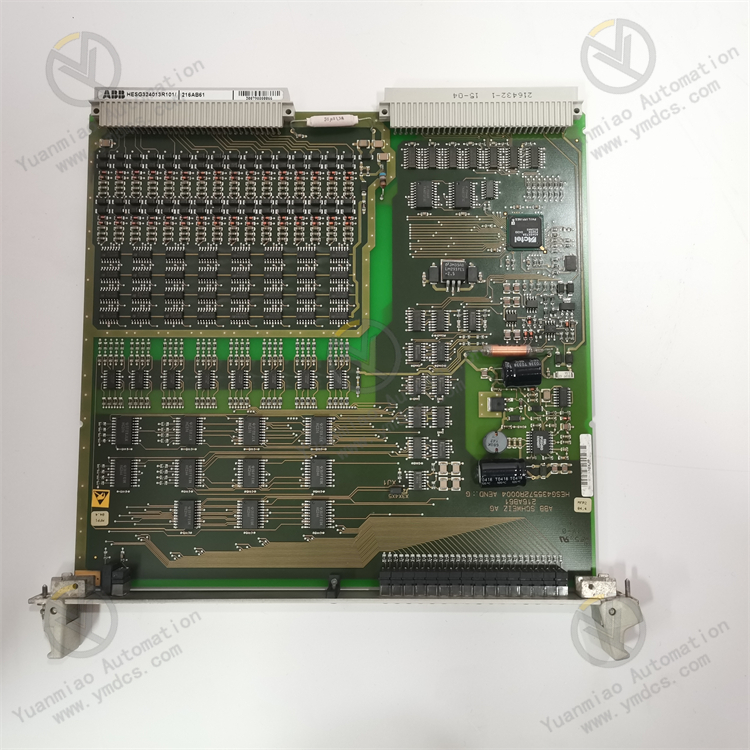
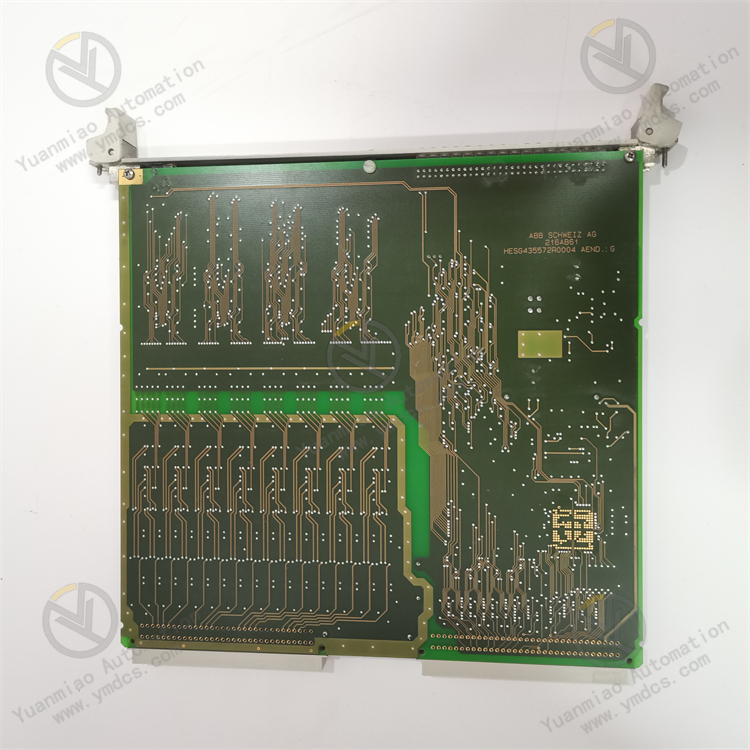
ABB 216AB61 (part number HESG324013R101) is a high‑end signal conditioning and bus interface monitoring module for ABB Industrial IT / Advant OCS systems. It is a core board designed for power plants, heavy industry and process industries. The module is developed for analog signal galvanic isolation & conversion, system bus status monitoring, loop signal conditioning and fault signal acquisition for large‑scale industrial control systems. As a critical hardware component for stable analog signal transmission, loop fault diagnosis and system signal compatibility matching in DCS, it is widely deployed in key automatic‑control scenarios including thermal power generation, metallurgy heavy industry and large‑scale chemical plants.
216AB61 HESG324013R101 delivers core capabilities including high‑precision signal acquisition, multi‑channel analog signal isolation and conditioning, bus link monitoring, signal noise reduction & reshaping, and hardware self‑diagnosis & alarming. It effectively mitigates analog‑signal attenuation, interference distortion, signal drift and loop noise in field environments, ensuring accurate transmission of process parameters such as temperature, pressure, flow and liquid level. Adopting industrial‑grade isolation protection, it features strong anti‑interference performance and high operational stability for 24‑hour non‑stop continuous operation. It serves as an original spare part for maintenance of legacy ABB industrial control systems, signal‑loop retrofitting, bus‑link optimization and faulty‑board replacement, offering high compatibility, simple commissioning and no major configuration modification required.
2. Functions and Features
2.1 Core Functions
High‑precision Analog Signal Conditioning and Conversion: Supports reception, reshaping, noise reduction and isolated conversion of standard industrial analog signals. It adapts to analog signals from various field transmitters, repairs and optimizes distorted, attenuated and noisy raw signals, and outputs standard stable signals for main‑controller computation to guarantee accuracy of process‑parameter acquisition.
Multi‑channel Galvanic Isolation Protection: Built‑in independent galvanic‑isolation channels realize complete isolation between primary‑side field signals and secondary‑side system control circuits. It prevents signal drift, system interference and board breakdown induced by ground‑potential difference, surge impact and electromagnetic crosstalk, providing all‑round protection for downstream main‑control equipment.
Real‑time System Bus Link Monitoring: Equipped with bus‑signal quality detection, link‑status monitoring and data‑transmission verification functions. It continuously monitors bus communication stability, data synchronism and link load status, and predicts latent faults such as bus ageing, link abnormality and transmission distortion in advance.
Comprehensive Hardware Self‑diagnosis and Alarm: Continuously monitors module power‑supply status, signal‑loop continuity, input‑signal abnormality, bus communication fault and chip operating condition. It accurately identifies faults including signal over‑range, loop short‑circuit/open‑circuit, communication timeout and module anomaly, and uploads alarm codes in real time for fast fault‑point localization.
Industrial‑grade Signal Noise Reduction and Anti‑interference Processing: Multi‑stage filtering and signal‑reshaping circuits are integrated to suppress frequency‑converter interference, high‑frequency noise and line inductive interference on site, eliminating analog‑signal fluctuation, jitter and drift and greatly improving acquisition stability of system parameters.
Compatibility with System Redundancy Architecture: Natively supports redundant bus and redundant control architecture of ABB systems. It enables data synchronisation and bumpless switchover of redundant links. Abnormity of a single link or module will not affect signal transmission of the whole system, ensuring continuous and controllable critical processes.
Signal Compatibility for Legacy Systems: Specially designed for hardware architecture of classic legacy ABB industrial control systems. It perfectly matches signal‑transmission protocols, back‑plane bus specifications and electrical parameters of old systems, solving the problems of poor signal adaptability, frequent fluctuation and insufficient compatibility in legacy installations.
2.2 Product Features
High‑precision Low‑drift Signal Processing: Adopts high‑precision operational chips and sophisticated conditioning circuits with minimal signal‑conversion error and low temperature‑drift coefficient. No obvious parameter drift occurs under wide‑temperature conditions, meeting requirements for high‑precision process‑parameter monitoring and regulation.
Powerful Industrial Anti‑interference Performance: Multi‑layer protection combining power‑supply filtering, electromagnetic shielding, surge suppression and galvanic isolation is integrated. It copes with harsh high‑electromagnetic‑interference conditions in power plants, metallurgy and chemical plants, delivering stable, distortion‑free and jitter‑free signals during long‑term operation.
High Compatibility for Fast Commissioning without Debugging: Fully compliant with bus protocols and back‑plane interfaces of ABB Industrial IT and Advant OCS systems. Hardware parameters and underlying logic are fully compatible with legacy equipment. Replacement of faulty modules requires no system‑configuration modification or signal‑parameter recalibration; the module can be commissioned upon power‑on.
Industrial‑grade Long‑term Stable Design: Constructed with ageing‑resistant PCBs, rugged industrial components and enclosed protective circuits. It withstands on‑site dust, humidity, temperature fluctuation and minor vibration, achieving extremely low failure rate in continuous operation for round‑the‑clock industrial production.
Compact Modular Design for Easy Installation and Maintenance: Compact modular form factor for standard slot‑mounting in control cabinets. It occupies minimal space and supports convenient assembly & disassembly, significantly lowering construction difficulty and O&M costs for system maintenance, faulty‑part replacement and loop retrofitting.
3. Specifications
| Parameter Item | Technical Specification |
|---|---|
| Model | 216AB61 HESG324013R101 |
| Device Type | Analog signal conditioning and bus‑link monitoring module |
| Core Functions | Analog‑signal isolated conditioning, noise reduction & reshaping, bus‑status monitoring, hardware self‑diagnosis, loop fault detection |
| Signal Processing Characteristics | High‑precision signal conversion, low drift, multi‑stage filtering and anti‑interference |
| Electrical Characteristics | Galvanic isolation between input and output; prevention of cross‑loop interference and surge impact |
| Communication | Compatible with ABB proprietary back‑plane bus and system monitoring bus |
| Redundancy Support | Supports system redundant bus architecture and bumpless link switchover |
| Ingress Protection | IP20 (standard indoor cabinet protection grade) |
| Power Supply | DC power supply via cabinet back‑plane |
| Operating Temperature | 0 ℃ ~ +60 ℃ (standard industrial operating condition) |
| Ambient Humidity | 5%‑95%RH, non‑condensing and frost‑free |
| Explosion‑proof Rating | Standard non‑explosion‑proof version for cabinet‑internal installation |
| Mounting Method | Fixed slot‑mounting inside standard DCS cabinet |
| Applicable Systems | ABB Industrial IT / Advant OCS control systems |
4. Working Principle
ABB 216AB61 HESG324013R101 operates on a closed‑loop workflow: Field Signal Reception → Isolation Protection → Filtering & Reshaping Conditioning → Precision Conversion & Transmission → Bus Monitoring & Self‑diagnosis. Upon power‑on, the module automatically completes hardware initialisation, circuit self‑test and bus‑protocol matching, then enters normal operation to continuously receive raw analog signals from field devices.
Raw field signals first pass through the isolation circuit for galvanic isolation, which blocks ground‑potential difference, surges and electromagnetic interference and prevents abnormal external signals from intruding into internal system control loops. Isolated signals go through multi‑stage filtering circuits to remove high‑frequency noise, line interference and pulse disturbance. High‑precision signal‑conditioning chips perform waveform reshaping, signal restoration and accurate conversion, converting unstable raw signals into standard, linear and drift‑free signals uploaded to the DCS main controller for process computation and logic regulation.
While processing signals, the module synchronously monitors system‑bus communication status, data‑transmission quality, link load and synchronisation, and continuously verifies integrity of transmitted data. Once signal out‑of‑tolerance, loop open‑circuit/short‑circuit, signal drift & distortion, bus communication fault or module hardware failure is detected, the abnormal loop is locked, fault alarms are triggered and fault information is uploaded to protect downstream system equipment from damage. Under redundant configuration, seamless link switchover is realised to guarantee accurate signal acquisition, stable bus communication and continuous‑reliable process control.
5. Application Scenarios
Main‑control Systems for Thermal Power Plants: Used for analog‑signal conditioning and bus monitoring of boiler, turbine and auxiliary‑control systems in thermal & cogeneration power plants. It ensures precise acquisition of core parameters including temperature, pressure, flow and water level, resists strong interference from high‑voltage frequency‑conversion equipment, and supports stable unit operation and accurate regulation.
Large‑scale Chemical Process Automatic‑control Systems: Applied in refineries, coal‑chemical and fine‑chemical plants for isolated anti‑interference conditioning of analog signals from reaction, rectification and heat‑exchange processes. It resolves signal attenuation and interference‑induced jitter caused by long‑distance wiring and stabilises closed‑loop control of chemical process parameters.
Metallurgy & Heavy‑industry Control Systems: For high‑electromagnetic‑interference environments in metallurgy, steel and building‑material industries, signal isolation and noise‑reduction functions eliminate signal fluctuation caused by equipment start‑stop and frequency‑converter operation, ensuring reliable production‑line process monitoring and equipment interlock control.
Industrial Bus System Status Monitoring: As a core unit for system‑bus health monitoring, it tracks DCS bus‑link conditions in real time, identifies latent faults such as bus ageing, transmission distortion and abnormal load in advance, and reduces risks of bus breakdown and signal loss.
Maintenance & Upgrade for Legacy ABB Systems: Direct replacement for aged, signal‑drifted or failed legacy conditioning modules in ABB Industrial IT / Advant OCS installations. No modification to system configuration or wiring is required. Signal abnormalities can be rapidly rectified and overall system performance optimised.
6. Common Faults and Troubleshooting
6.1 Frequent process‑parameter fluctuation and analog‑signal drift & jitter
Fault Causes: Ageing of module filtering‑conditioning circuit, degraded signal‑isolation performance, severe field‑line interference, abnormal module temperature drift, poor loop earthing.
Solutions: Rectify shielding and earthing of field signal cables to eliminate external electromagnetic interference; inspect signal‑loop wiring, tighten terminals and repair damaged cables; remove dust from the module and improve heat dissipation to suppress temperature drift. If parameter fluctuation persists, the conditioning circuit is deemed defective; replace original 216AB61 module.
6.2 No signal in partial analog loops; parameters show zero or over‑range
Fault Causes: Damaged module signal‑input loop, ageing and failure of channel circuits, open‑circuit field wiring, abnormal module power supply, defective signal‑conversion chip.
Solutions: Inspect field transmitters and signal lines to rule out external loop open‑circuit and device failure; verify stable back‑plane supply voltage for the module; clean module gold‑fingers and cabinet‑slot contacts and reseat firmly. If no signal is obtained after eliminating external causes, hardware damage is confirmed; replace the module.
6.3 Frequent system alarms for bus‑link abnormality and data‑synchronisation failure
Fault Causes: Abnormal module bus‑monitoring circuit, failed bus‑protocol adaptation, poor back‑plane‑contact condition, firmware anomaly after long‑time operation.
Solutions: Clean module bus contacts and cabinet slots, re‑insert and secure the module; power‑cycle to refresh firmware status and re‑negotiate bus protocol. If alarms recur despite healthy system bus links, the bus‑monitoring unit is faulty; replace spare module.
6.4 Degraded signal‑acquisition accuracy and persistent excessive parameter deviation
Fault Causes: Ageing of high‑precision conditioning chip, circuit‑parameter drift, failed internal filter capacitors, hardware‑performance degradation due to long‑term high‑temperature operation.
Solutions: Recalibrate system analog parameters and verify acquisition accuracy; optimise cabinet heat dissipation to avoid high‑temperature module operation; remove accumulated dust and improve operating environment. Replace original module if accuracy cannot be restored and deviation remains out of tolerance.
6.5 No alarm upon module power‑on yet intermittent signal‑transmission dropout
Fault Causes: Poor internal‑circuit connection, component ageing, unstable power‑supply contact, abnormal firmware, degraded interference‑protection performance.
Solutions: Check cabinet power‑supply stability and eliminate voltage fluctuation and momentary power loss; mitigate field interference sources and reinforce shielding & isolation; power‑cycle the module to reset operating status. If intermittent interruptions recur, hardware ageing and failure are confirmed; replace the module.