
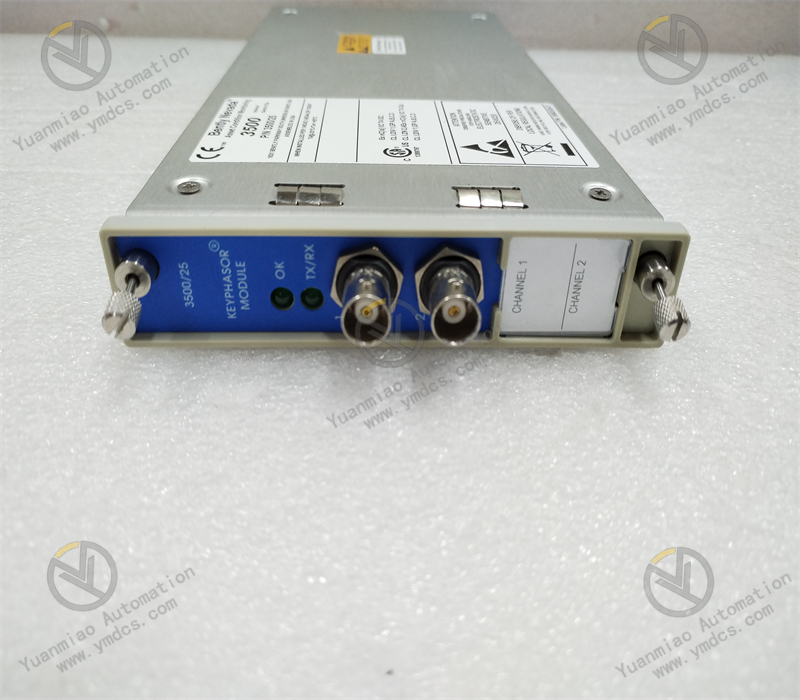
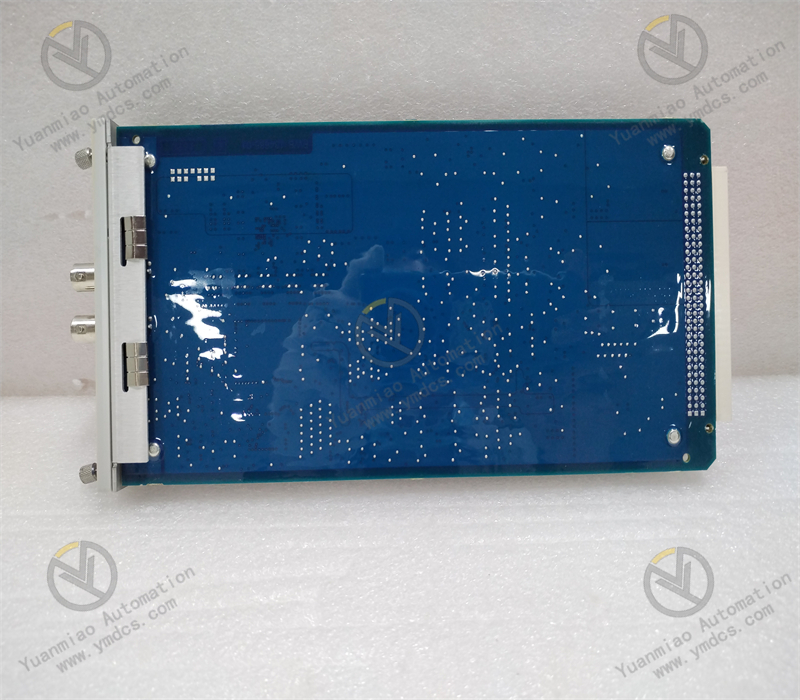
Description
1. Product Introduction
The Bently Nevada 3500/25 (Part No. 184684‑01) is a dedicated dual‑channel enhanced keyphasor monitoring module for the 3500 system. Serving as the core reference‑measurement unit of the 3500‑series machinery‑protection system, it fully complies with API 670 machinery‑protection standards, SIL 2 functional‑safety specifications and high‑grade industrial EMC requirements. It acts as the fundamental reference‑signal unit within TSI monitoring systems for high‑speed rotating machinery such as steam turbines, gas turbines, centrifugal compressors and large pump units in the power, petrochemical, coal‑chemical and oil‑gas‑storage‑transport sectors.
Adopting a hot‑swappable integrated design for the standard 3500 rack, the module integrates dual‑channel keyphasor‑signal acquisition, high‑precision pulse shaping, phase‑reference conversion, rotational‑speed synchronous calibration, buffered‑signal output and loop self‑diagnosis functions in one hardware unit. It provides comprehensive compatibility with mainstream speed‑and‑keyphasor sensors including Bently‑Nevada eddy‑current proximity probes and magnetoelectric keyphasor pickups. As the “phase and rotational‑speed reference source” for the whole vibration‑monitoring system, the 3500/25 184684‑01 differs from conventional vibration‑monitoring modules: instead of measuring vibration amplitude directly, it accurately captures once‑per‑revolution reference pulses from the rotating shaft. These pulses deliver the sole reference basis for rotor‑vibration‑phase analysis, balancing correction, fault‑spectrum tracing, precise rotational‑speed calibration and cross‑channel data synchronization, making it a prerequisite core module for accurate fault diagnosis, vibration‑signature analysis and reliable protection‑logic judgment on rotating equipment. Its main advantages comprise high‑accuracy phase measurement, fast‑pulse response, stable signal performance, dual‑channel redundant acquisition, excellent noise immunity, simple configuration and long‑term maintenance‑free operation. It reliably operates under harsh plant‑site conditions such as high temperature‑humidity, oil‑gas dust, intense variable‑frequency electromagnetic interference and persistent mechanical vibration, supporting 7×24‑hour non‑stop reference‑signal output and system‑wide synchronous monitoring. It is widely deployed in new‑build TSI system projects, upgrade‑and‑replacement of legacy keyphasor modules, accuracy‑optimization retrofits for vibration‑monitoring systems, improvement of fault‑diagnosis frameworks and safety‑compliance modification of turbine units.
2. Functions and Working Principle
Core Functions
The enhanced keyphasor module 3500/25 184684‑01 integrates five core capabilities: high‑precision acquisition of independent dual‑channel keyphasor pulses, accurate rotational‑speed calculation for rotating equipment, synchronous calibration of vibration‑phase reference, redundant buffered output of dual‑channel signals and full‑scope fault self‑diagnosis for the keyphasor loop. It satisfies the fundamental requirements of large‑rotating‑machinery condition‑monitoring systems for phase reference, speed reference, data synchronization and fault tracing. Supporting simultaneous connection of two keyphasor sensors for dual‑reference redundant acquisition on one machine, the module effectively prevents paralysis of the entire vibration‑monitoring system, loss of phase information and rotational‑speed distortion triggered by single‑channel keyphasor‑signal failure.
The module acquires real‑time pulses generated when a shaft‑mounted keyway or key tooth passes the sensor detection zone. After noise‑reduction filtering, waveform shaping and level calibration, it outputs high‑precision standard digital Keyphasor signals that supply a unified rotational‑speed and phase reference for all vibration‑monitoring modules inside the 3500 rack. Based on accurate once‑per‑revolution pulse timing, the system calculates 1X, 2X harmonic vibration phase, amplitude and frequency‑domain distribution characteristics, enabling refined diagnosis of typical rotating‑machinery faults such as rotor unbalance, misalignment, rub‑impact, rotor bow and bearing defects. Comprehensive self‑alarming functions cover sensor open‑circuit, abnormal signals, pulse loss, signal saturation and module faults. The health status of the keyphasor loop is monitored continuously with early warning against reference‑signal failure, ensuring synchronized data, correct phase readings and true rotational‑speed values across the whole TSI system, and delivering core reference data for fault‑trend analysis, root‑cause investigation and equipment maintenance.
Working Principle
The module operates on the principle of accurate pulse‑signal acquisition plus phase‑timing reference calibration. Together with external keyphasor sensors, a 3500‑series rack, assorted vibration‑monitoring modules and host‑configuration software, it forms a complete closed‑loop rotating‑machinery monitoring system. During high‑speed shaft rotation, the shaft‑key structure periodically sweeps across the sensor detection area and generates analogue pulses strictly correlated with shaft speed and phase, which are fed to the two input channels of the 3500/25 module.
On‑board high‑precision waveform‑shaping circuitry and anti‑interference filter units eliminate spurious pulses caused by industrial electromagnetic noise, variable‑frequency interference and mechanical jitter while preserving genuine shaft‑key pulses. Using Bently‑Nevada proprietary timing‑calibration algorithms, the module performs high‑speed computation on pulse periods and intervals to calculate real‑time rotational speed and generate standardized phase‑reference timing signals. These reference signals are distributed synchronously via the system bus to all vibration‑, displacement‑ and speed‑monitoring modules in the rack, achieving time‑sequence synchronization and phase alignment for all monitored data. The two channels run in parallel with real‑time cross‑checking and mutual backup; if one channel signal becomes abnormal, the module automatically maintains reference‑signal output using the healthy channel to avoid monitoring failure. The whole acquisition‑and‑computation workflow features rapid response, extremely high timing precision and stable synchronization performance, resolving well‑known issues including missing reference for vibration analysis, phase disorder, rotational‑speed drift and inaccurate fault tracing, and guaranteeing authenticity, accuracy and consistency of unit condition‑monitoring data.
3. Technical Features
- Dual‑channel redundant acquisition for safe and reliable reference signalsTwo independent synchronous keyphasor‑acquisition channels support dual‑sensor redundant configuration. Real‑time comparison and mutual backup between channels prevent reference‑signal interruption caused by single‑sensor failure, wiring disturbance or pulse loss. Redundancy safeguards the whole TSI system against phase drop‑out, speed loss and monitoring outage at source, improving fault tolerance and operational reliability of unit‑monitoring systems and complying with redundancy specifications for safety‑monitoring of high‑risk equipment.
- Ultra‑high timing precision supporting refined fault diagnosisEquipped with high‑precision pulse‑shaping and timing‑calibration chips, the module delivers high pulse‑capture sensitivity, minimal phase error and excellent rotational‑speed accuracy. Weak shaft‑key pulses are reliably detected, and stable 1X phase‑reference signals are provided for rotor balancing, vibration‑spectrum analysis, fault‑feature localization and operating‑trend comparison, overcoming common drawbacks of ordinary keyphasor modules such as phase drift, timing deviation and inaccurate fault positioning.
- Multi‑sensor compatibility with flexible configuration and wide applicabilityFully compatible with the complete portfolio of Bently‑Nevada eddy‑current keyphasor probes and magnetoelectric keyphasor pickups, the module adaptively recognizes high‑/low‑level pulses and fits key‑installation geometries and pulse‑output forms of steam turbines, gas turbines and compressors. Channel‑level parameters are freely configurable for units operating over different speed ranges and shafts with different key‑tooth / keyway counts. It is equally suitable for new‑build projects and legacy‑unit retrofits with strong scenario adaptability.
- Multi‑layer anti‑interference design for harsh industrial environmentsIntegrated multi‑stage digital filtering, electromagnetic shielding and pulse‑stabilization‑shaping circuitry have passed high‑grade EMC/EMI certification. The module effectively suppresses false pulses and signal distortion originating from strong electromagnetic radiation, variable‑frequency‑drive interference, crosstalk and persistent mechanical vibration, ensuring zero pulse loss, no false triggering and zero phase offset under complex plant‑site conditions and delivering continuous stable reference‑signal output.
- Hot‑swappable integrated design, simplified maintenance and cost savingsHot‑swap capability for the standard 3500 rack permits module replacement while energized, eliminating full‑rack shutdowns and minimizing downtime losses during maintenance or fault‑module exchange. Acquisition, waveform conditioning, redundancy comparison, bus synchronization and fault‑diagnosis functions are integrated on‑board; no external auxiliary hardware is required, simplifying system architecture and field wiring. No routine calibration is needed, lowering long‑term maintenance workload and costs.
- SIL 2 safety‑compliant to meet strict industrial requirementsThird‑party SIL 2 functional‑safety certification and compliance with API 670 high‑end machinery‑protection standards are achieved. Built‑in fail‑safe protection mechanisms mitigate risks such as reference‑signal loss, system‑synchronization disorder and measurement distortion. The module satisfies safety‑acceptance criteria for TSI systems in high‑risk power‑generation and petrochemical facilities and is well‑suited for unattended, 7×24‑hour continuous‑running industrial applications.
4. Specifications
Basic Parameters
Product Model: 3500/25 Part Number: 184684‑01 Manufacturer: Bently Nevada Product Series: 3500 Machinery‑Protection Monitoring‑System Series Device Type: Dual‑Channel Enhanced Keyphasor Reference‑Monitoring Module Compatible Rack: Standard Bently Nevada 3500‑series system rack Supported Sensors: Bently‑Nevada eddy‑current keyphasor probes, magnetoelectric keyphasor pick‑up sensors Applicable Standards: API 670 Machinery‑Protection Standard, SIL 2 Functional‑Safety Certification, IEC Industrial‑EMC Standard, Bently‑Nevada factory precision‑measurement specifications Primary Application: Accurate rotational‑speed calibration of rotating machinery, synchronous vibration‑phase reference, vibration‑spectrum analysis, rotor‑fault diagnosis, balancing correction, TSI system data synchronization and reference‑data provision for predictive‑maintenance programmes.
Core Performance Parameters
Operating Principle: Keyphasor‑pulse acquisition + waveform‑shaping calibration + timing‑reference synchronization algorithm Channel Configuration: 2 independent redundant keyphasor acquisition channels, operating synchronously with mutual backup Signal Types: Magnetoelectric pulses, eddy‑current switching pulses Core Functions: Rotational‑speed calculation, phase‑reference output, system‑wide timing synchronization, pulse‑signal buffering Accuracy Grade: Ultra‑high industrial timing precision, no phase drift or speed deviation during long‑term continuous operation On‑board Diagnostics: Comprehensive self‑alarming for sensor open‑circuit, pulse loss, abnormal signals, channel faults and module faults
Electrical & Output Parameters
Operating Power Supply: Standard DC power fed from the 3500 rack, stable industrial‑grade power compatibility Signal Output: Standardized digital Keyphasor reference signals, synchronously transmitted over the rack‑system bus Buffered Output: Two independent buffered keyphasor outputs for connection to secondary monitoring equipment Communication Interfaces: Compatible with 3500‑system bus communication, supporting remote configuration, status diagnostics and signal monitoring Immunity Rating: High‑level EMI/RFI electromagnetic shielding, resistant to industrial high‑intensity electromagnetic, variable‑frequency and mechanical‑vibration interference
Mechanical & Physical Parameters
Construction: Hot‑swappable single‑board modular design for standard rack installation, high‑precision integrated circuitry, shock‑resistant dust‑sealed industrial housing Mounting Method: Slot‑mounted inside the 3500 standard rack, easy insertion‑removal, neat wiring, hot‑swap permitted under power Maintenance Requirements: No routine calibration; supports remote‑parameter configuration, fault diagnosis and real‑time channel‑status monitoring, suited for long‑term continuous‑operation maintenance regimes
Environmental Parameters
Operating Temperature: −20 ℃ ~ +60 ℃ Storage Temperature: −40 ℃ ~ +85 ℃ Relative Humidity: 5 %‑95 % RH, non‑condensing Environmental Resistance: Shock‑resistant, dust‑proof, oil‑gas‑corrosion‑resistant, high‑frequency‑EMI‑hardened, highly stable timing‑signal performance for 7×24‑hour high‑load harsh‑condition operation inside power‑plant facilities
5. Application Scenarios
As the core reference unit of the 3500 TSI monitoring system, the enhanced keyphasor module Bently Nevada 3500/25 184684‑01 is purpose‑built for high‑speed rotating‑machinery service. It is widely deployed within condition‑monitoring and fault‑diagnosis systems for critical rotating assets including large steam‑turbine generator sets, gas turbines, centrifugal process compressors, high‑speed fans and large pump units across thermal‑power generation, combined‑cycle gas‑power plants, petrochemical refining, coal‑chemical processing, oil‑gas storage‑transport and heavy‑industry captive‑power‑plant sectors. It constitutes an indispensable reference module for vibration analysis, phase calibration, speed monitoring and fault tracing on turbine machinery.
Typical use‑cases include round‑the‑clock keyphasor reference and speed‑synchronization monitoring for steam‑turbine generator units, precise rotor‑vibration‑phase calibration and spectrum‑based fault analysis on gas turbines, refined diagnosis of rotor unbalance / misalignment faults on large centrifugal compressors, integration as the keyphasor unit in new‑build 3500 TSI projects, upgrade of legacy single‑channel keyphasor installations to dual‑channel redundant configurations, retrofits improving monitoring accuracy and data synchronization of existing TSI systems, reference‑signal support for rotor‑balancing correction, fault‑tolerance enhancement of safety‑monitoring systems for unattended high‑risk facilities, long‑term vibration‑trend comparison analysis, root‑cause localization of latent rotating‑machinery faults and establishment of reference‑data frameworks for predictive‑maintenance strategies for industrial rotating equipment.
As a high‑performance dedicated dual‑channel redundant keyphasor unit within the 3500 portfolio, the 3500/25 184684‑01 resolves well‑known limitations of traditional single‑channel keyphasor hardware: high failure risk, phase drift, accidental pulse loss and system‑synchronization breakdown. It delivers stable, precise and reliable reference signals supporting vibration monitoring, fault diagnosis and machinery protection, and mitigates hazards of fault misjudgement, missed alarms and monitoring outages caused by defective reference signals. Long‑term accuracy, stability and compliance of large‑rotating‑machinery monitoring systems are guaranteed, making this original‑equipment module the preferred core reference hardware for new installations, legacy‑system retrofits, accuracy upgrades and reliability‑optimization projects for industrial rotating‑machinery TSI systems.