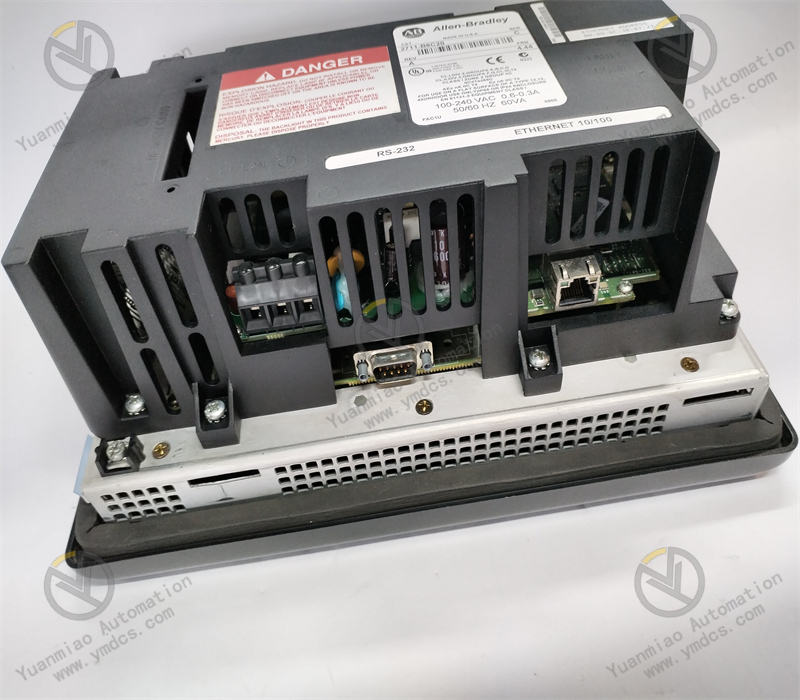
Description
1. Product Overview
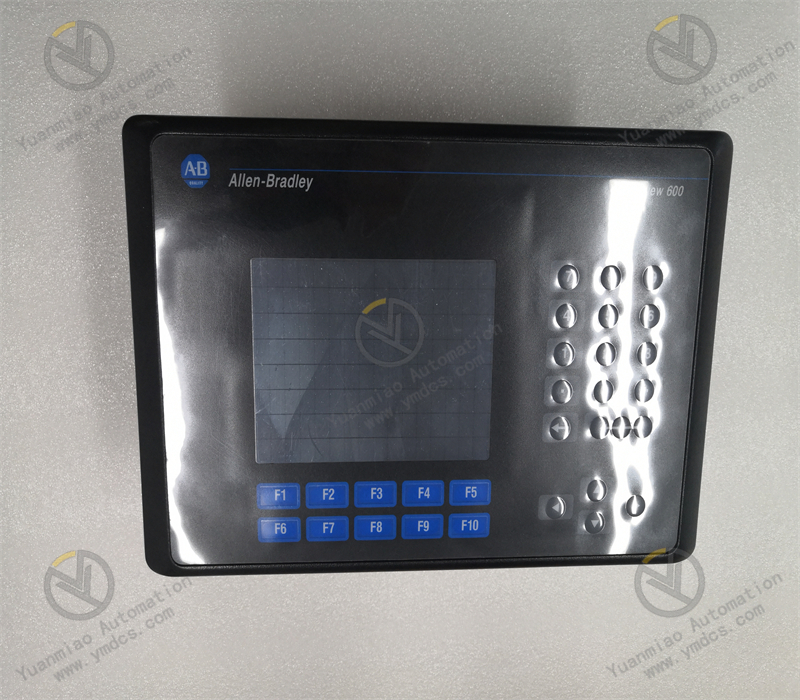
Allen‑Bradley 2711‑B6C20 is a hybrid color touch‑and‑keypad industrial Human‑Machine Interface (HMI) from Rockwell Automation classic PanelView 600 Standard series. As a mid‑range high‑performance visualization operation terminal within the 2711 product family, it is designed for small‑and‑medium‑sized automated production lines, complete process equipment, intelligent assembly lines, power‑monitoring systems and plant‑wide automation supporting industrial‑control systems. Adopting an integrated dual‑operation architecture of resistive touch screen plus full‑function physical keys, it is equipped with a 5.7‑inch industrial‑grade color TFT‑LCD display. Compared with monochrome terminals, it delivers richer screen layering, distinct status differentiation and multi‑level alarm visualization to meet demands for refined process control.
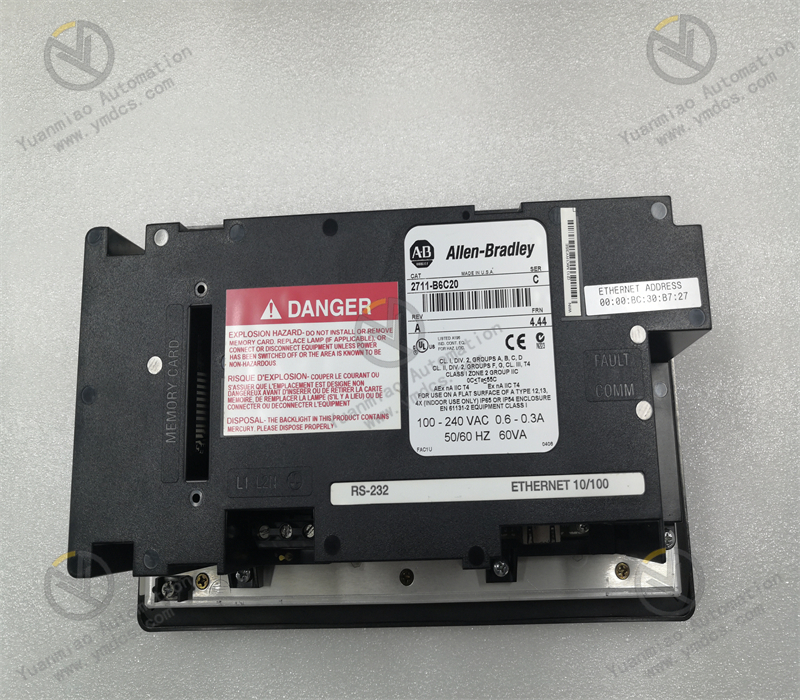
This unit comes with built‑in dual‑communication interfaces of EtherNet/IP Ethernet and RS‑232 serial port. It is a mainstream model in the classic 2711 series that supports both legacy serial‑port maintenance and modern industrial Ethernet networking. It seamlessly connects with full‑range Rockwell‑Automation PLCs, variable‑frequency drives, smart instruments and host monitoring systems, featuring fast networking speed, strong expandability and broad system compatibility. Built with an industrial metal‑reinforced housing and front high‑protection industrial panel for standard cabinet flush‑mount installation, it offers wide‑temperature operation, vibration resistance, electromagnetic‑interference immunity, dust‑proof, moisture‑proof and oil‑resistant properties to sustain 7×24‑hour non‑stop factory production. Boasting core strengths including high‑definition color visualization, dual‑mode industrial operation, high‑speed Ethernet networking, low‑failure maintenance‑free performance and universal non‑destructive replacement, it is extensively applied in technical‑retrofit upgrade of new & existing production lines, process‑visualization transformation, replacement of legacy monochrome terminals and HMI supporting for small‑and‑medium‑sized automation systems. It serves as a classic color HMI terminal with high site versatility, superior visualization effect and outstanding operational stability.
2. Functional Features
2.1 5.7‑Inch Industrial Color TFT High‑definition Display for Hierarchical Process Visualization
It adopts a 5.7‑inch industrial‑grade color active‑matrix TFT‑LCD display with physical resolution of 320×240 pixels and supports 18‑bit true‑color output, delivering rich color gradation, clear working‑condition distinction and high parameter recognizability. Fitted with industrial long‑life white LED backlight with service life over 25 000 hours, it provides uniform brightness and stable color performance against strong‑light direct sunlight, dim‑light conditions and sharp temperature swings on‑site. Different from conventional monochrome terminals, it differentiates equipment status such as normal operation, warning, fault shutdown, standby and debugging by color coding. It supports display of complex process screens, multi‑segment workflow diagrams and multi‑point centralized parameter panels, eliminating pain points of monochrome units including simplistic visuals, vague status discrimination and insufficient visualization capability. It perfectly fits industrial scenarios requiring refined process control, multi‑parameter monitoring and multi‑level alarm prompts. It avoids black screen under cold startup, screen distortion at high temperature, color fading and image ghosting during long‑time runtime, and guarantees accurate round‑the‑clock visualization of production conditions.
2.2 Dual‑redundant Touch‑and‑keypad Operation for High‑intensity All‑condition Compatibility
It features exclusive industrial hybrid‑operation design integrating high‑precision 4‑wire analog resistive touch screen and integrated stainless‑steel membrane function keys, combining fine‑grained touch‑operation convenience and high‑strength durability of physical keys. The resistive touch screen delivers sensitive & accurate response, drift‑proof, moisture‑resistant, oil‑repellent and vibration‑induced false‑trigger‑proof performance, suitable for fine‑tuning process parameters, screen switching, precise point selection and recipe editing. The integrated 10‑group programmable function keys together with navigation & numeric keys offer ultra‑long mechanical service life, wear resistance, corrosion resistance and oil tolerance for frequent start‑stop commands and heavy‑duty manual operations on‑site. Two operation modes work redundantly for seamless hand‑over in case of touch‑screen moisture‑caused malfunction or key sticking, completely removing shutdown risks arising from single‑mode operation failure. It is fully applicable to heavy‑industry, chemical, rubber‑plastic, water‑treatment, packaging and other rigorous industrial sites. It requires no regular calibration and low maintenance, with overall service life far exceeding ordinary single‑mode HMI terminals.
2.3 Dual‑link Communication via Ethernet + RS‑232 for Full‑coverage Compatibility of New & Legacy Industrial‑control Systems
On‑board 10/100 Mbps auto‑adapt industrial Ethernet interface and RS‑232 serial‑port interface operate independently and complement each other, meeting requirements of modern industrial networking and legacy‑equipment maintenance. The Ethernet port natively supports EtherNet/IP and TCP/IP protocols for high‑speed bus networking, multi‑device coordinated linkage, remote data exchange and host‑system connection. It achieves low transmission latency, high throughput and strong networking expandability for centralized monitoring in modern factories, distributed‑assembly‑line coordination and multi‑unit collaborative control scenarios. The RS‑232 serial port supports configuration‑program upload & download, equipment‑parameter commissioning, peripheral connection and point‑to‑point single‑unit communication. It is fully compatible with legacy serial‑port‑based industrial‑control devices, realizing interconnection between new and old systems without additional protocol‑conversion modules. It supports on‑line multi‑language switching, recipe storage, alarm‑message buffer and password‑based authority hierarchical management, featuring flexible networking, comprehensive functions and excellent compatibility.
2.4 Full‑dimensional Local Visualized Control to Simplify Production‑line O&M Workflow
It provides complete industrial‑grade human‑machine interaction capabilities. It collects, dynamically refreshes and accurately displays full‑set process parameters such as equipment operating speed, temperature, pressure, flow rate and liquid‑level in real‑time, and visually presents equipment start‑stop status, workflow progress, multi‑level fault alarms, abnormal conditions and interlock‑protection status. Local operations are available including process‑parameter modification, manual/automatic mode switching, start‑stop control, fault acknowledgement & reset, recipe recall & editing, historical‑condition query and parameter comparison & calibration. Without reliance on central‑control computers or host systems, operation‑maintenance staff can conduct daily on‑site operation, rapid troubleshooting and precise process commissioning. It greatly shortens equipment downtime for troubleshooting & repair, streamlines automation‑equipment on‑site management procedures, and significantly improves production‑line maintenance efficiency and production continuity.
2.5 Industrial‑grade Reinforced Protection Architecture for Stable Long‑term Continuous Operation under Wide‑temperature Conditions
The unit adopts high‑strength integrated metal‑reinforced construction. Its front‑panel undergoes special protective treatment to achieve high‑standard dust‑proof, moisture‑proof, oil‑repellent, scratch‑resistant, anti‑aging and anti‑static performance. It effectively withstands workshop dust accumulation, slight moisture condensation, oil contamination, continuous equipment vibration and start‑stop shock. Having passed strict industrial tests of high‑low‑temperature cycling, vibration‑shock and EMC, it obtains Class‑A industrial anti‑interference capability to suppress electromagnetic crosstalk from frequency‑conversion devices, motor start‑stop and high‑frequency equipment. It supports year‑round 7×24‑hour non‑stop production without data drift, screen stuttering, communication dropout or operation malfunction, delivering outstanding operational stability.
2.6 Standardized Universal Design for Non‑destructive Upgrade & Replacement of Legacy Terminals
It strictly complies with original‑factory specifications of PanelView 600 series. Panel cut‑out dimensions, mounting mode, mechanical structure and interface layout are fully aligned with other terminals of the same series. Communication protocols, configuration logic, power‑supply specifications and program architecture feature full interoperability. It can directly replace on‑site legacy monochrome terminals or faulty color units suffering from screen failure, touch malfunction, key sticking, communication anomaly, blurred display and data disorder. Cabinet reconstruction, configuration‑program reprogramming and extensive networking‑parameter commissioning are unnecessary. Equipment renewal and system visualization upgrade can be completed within short downtime with low retrofitting cost, high construction efficiency and superior site adaptability. It stands as a preferred option for visualization transformation of legacy production lines.
3. Technical Parameters
3.1 Basic Specifications
Product Model: 2711‑B6C20;Brand & Manufacturer: Allen‑Bradley (Rockwell Automation);Product Series: PanelView Standard 600 2711‑Series Industrial Color HMI Terminal;Product Type: Integrated Touch‑keypad Color Industrial HMI Operation Terminal;Core Positioning: Core unit for local visualized monitoring, process‑parameter commissioning, fault‑alarm handling and interconnection between new & legacy industrial‑control systems for small‑and‑medium‑sized automation equipment;Core Features: 5.7‑inch color TFT display, dual‑mode industrial operation, Ethernet + RS‑232 dual‑communication, metal‑reinforced housing, wide‑temperature & high anti‑interference performance, long‑life backlight, non‑destructive color upgrade for legacy terminals.
3.2 Display and Operation Parameters
Display Screen: 5.7‑inch industrial color TFT‑LCD;Display Color: 18‑bit true color with distinct color gradation for working‑condition differentiation;Backlight: Industrial long‑life white‑LED backlight, service life ≥25 000 hours, clear visibility under strong‑light & dim‑light conditions;Resolution: 320 × 240 pixels;Operation Mode: 4‑wire analog resistive touch screen + stainless‑steel membrane multi‑function keys (10‑group programmable function keys plus navigation keys);Operation Characteristics: Drift‑proof & moisture‑resistant touch against false triggering; wear‑resistant, oil‑repellent and corrosion‑resistant keys with ultra‑long mechanical service life;Display Functions: Real‑time screen refresh, multi‑color working‑condition differentiation, synchronous parameter update, multi‑level fault pop‑up alarm, workflow visualization, recipe‑data presentation, historical‑status query.
3.3 Communication and Expansion Parameters
Communication Interfaces: 10/100 Mbps auto‑adapt industrial Ethernet port, RS‑232 serial‑communication port;Networking Protocols: Natively support EtherNet/IP, TCP/IP; compatible with full‑range Rockwell‑Automation PLC industrial‑control systems;Networking Modes: High‑speed Ethernet bus networking, RS‑232 point‑to‑point serial‑port commissioning connection;Transmission Characteristics: High‑speed & low‑latency, stable large‑data transmission, strong electromagnetic‑interference immunity, high bus fault tolerance, accurate & bias‑free data synchronization;Expansion Interfaces: Dual‑USB ports (host & device ports), hot‑swappable SD‑card slot for storage expansion;Supported Functions: Configuration‑program read‑write, online parameter modification, real‑time equipment monitoring, fault‑data upload, recipe storage, multi‑language switching, hierarchical authority management, external print output.
3.4 Electrical Operating Parameters
Power‑supply Voltage: 100~240 V AC industrial wide‑range AC power supply, 50/60 Hz;Max. Power Consumption: 75 VA;Operation Mode: 7×24‑hour year‑round non‑stop continuous operation;Anti‑interference Grade: Industrial Class‑A EMC; resistant to workshop high‑frequency electromagnetic crosstalk, frequency‑conversion interference and motor start‑stop shock interference;Operating Characteristics: Flicker‑free screen, garble‑free data, persistent online communication, responsive operation, low heat generation and low failure rate.
3.5 Environmental and Mechanical Parameters
Operating Temperature: 0℃~+55℃;Storage Temperature: -25℃~+85℃;Operating Humidity: 5%~95% non‑condensing;Panel Protection: Industrial‑grade dust‑proof, moisture‑proof, oil‑repellent and anti‑aging protection;Housing Material: High‑strength industrial metal‑reinforced enclosure;Shock‑vibration Resistance: Tolerant of equipment start‑stop impact, cabinet continuous vibration and workshop mechanical vibration;Installation Mode: Standard cabinet panel flush‑mount installation;Applicable Working‑conditions: Continuous‑production scenarios for light‑industry, rubber‑plastic, packaging, chemical, water‑treatment and general‑purpose automated production‑lines as well as small‑and‑medium‑sized complete automation equipment.
4. Hardware Configuration and Structural Advantages
4.1 Color‑visualization Architecture for Refined Process Control
Equipped with industrial‑grade true‑color TFT display module, it breaks limitations of conventional monochrome terminals. It distinguishes equipment states including running, standby, warning, fault and debugging by color difference, and visualizes complex process‑flow diagrams, multi‑parameter panels and multi‑level alarm interfaces for intuitive understanding of production conditions and sharp reduction of human misjudgment risk. The long‑life LED backlight delivers uniform brightness and stable color performance without fading, ghosting or brightness degradation after long‑time runtime. It adapts to complex factory lighting and temperature‑variation environments and provides visualized hardware support for refined process management.
4.2 Dual‑redundant Operation Design for Zero‑defect Working‑condition Adaptation
The dual‑redundant touch‑plus‑physical‑key architecture satisfies requirements for fine‑grained debugging and heavy‑duty industrial operation. The resistive touch screen performs precise fine‑tuning, screen switching and recipe editing under regular moist & ambient‑temperature conditions. Stainless‑steel function keys resist oil contamination, dust and frequent pressing under continuous vibration for heavy‑duty manual operation. Two modes serve as mutual backup so that single‑mode failure will not halt equipment operation, thoroughly eliminating production‑line shutdown risks caused by HMI operation malfunction. It outperforms single‑mode HMI terminals in site adaptability and operational reliability.
4.3 High‑speed Ethernet Networking for Seamless Interconnection of New & Legacy Systems
It combines modern industrial Ethernet and traditional serial‑port communication. The Ethernet port supports high‑speed EtherNet/IP networking for modern‑factory centralized management, multi‑device linkage and remote‑monitoring demands with fast networking speed, strong expandability and large data throughput. The RS‑232 serial port supports legacy‑equipment commissioning and program read‑write, solving networking‑compatibility challenges during transition‑period retrofits of mixed new‑and‑old production lines. Data intercommunication between legacy serial‑port devices and new‑generation Ethernet‑based systems is realized without extra protocol‑conversion modules, greatly lowering retrofitting networking cost.
4.4 Metal‑reinforced Integrated Housing for Robust Construction and High Stability
Built with high‑strength integrated metal‑reinforced structure, the unit is pressure‑resistant, impact‑resistant, deformation‑resistant and corrosion‑resistant. Compared with plastic‑housing terminals of the same class, it achieves prominent improvements in shock resistance, dust‑proofing, moisture‑proofing, anti‑aging and electromagnetic‑interference immunity. It withstands harsh industrial‑site conditions such as dust accumulation, oil stains and continuous vibration with extremely low hardware‑failure rate. It guarantees long‑term stable production of production lines from hardware perspective and effectively reduces unexpected equipment‑failure shutdown events.
4.5 Rich Expansion Functions for Diversified Production Requirements
Dual‑USB ports and hot‑swappable SD‑card slot enable U‑disk‑based program update, data backup, firmware upgrade, external keyboard & printer connection and large‑capacity SD‑card‑supported data logging. Built‑in multi‑language support, recipe management, hierarchical password authority and alarm‑message buffer meet production demands for different processes, work‑shifts and control‑levels, adapting to diversified, refined and standardized modern industrial‑production‑management modes.
4.6 Fully‑compatible Standardized Design for Efficient Non‑destructive Technical Retrofit
Fully conforming to Rockwell‑Automation PanelView 600 series general specifications, it features full interoperability within the series in mounting cut‑out dimensions, interface definitions, communication protocols, configuration logic and power‑supply specifications. It supports direct in‑situ replacement of legacy 2711‑series monochrome terminals or faulty color units. Cabinet modification, program rewriting and re‑commissioning of networking parameters are not required. Visualization upgrade can be accomplished within short downtime to rapidly improve production‑line condition‑visualization level, delivering high cost‑performance and outstanding implementation efficiency for technical‑retrofit projects.
5. Application Scenarios
5.1 Small‑and‑medium‑sized Automated Production‑line Equipment
Widely deployed on packaging machinery, printing equipment, rubber‑plastic forming machines, conveying production lines and non‑standard automation standalone units as color‑visualization operation terminals. It fulfills equipment start‑stop control, refined process‑parameter adjustment, real‑time workflow monitoring, multi‑level fault‑alarm viewing & reset to boost production‑line visualization‑management level.
5.2 Supporting for Full‑range Rockwell‑Automation Industrial‑control Systems
Perfectly matched with automation‑control systems composed of full‑range AB PLCs, variable‑frequency drives and smart instruments. It implements multi‑device linkage monitoring, real‑time process‑data acquisition and remote‑status synchronization via high‑speed Ethernet networking for centralized‑automation‑control scenarios in small‑and‑medium‑sized factories.
5.3 Chemical, Water‑treatment and Auxiliary Power Equipment
Applicable to harsh working‑conditions of complete chemical units, sewage‑treatment sets, fan‑pump power systems and heat‑exchange units with heavy dust, oil contamination and high humidity under continuous vibration. It undertakes process‑parameter monitoring, visualized working‑condition display, local fault disposal and parameter fine‑tuning to guarantee stable operation‑maintenance and safe continuous running of auxiliary power equipment.
5.4 Visualization Technical‑retrofit Upgrade for Legacy Production Lines
It realizes in‑situ non‑destructive color upgrade for factory legacy monochrome HMI terminals suffering from simplistic display, vague status differentiation, absence of Ethernet networking and insufficient visualization capability. It establishes communication links between new and old equipment and enhances production‑line intelligence & visualization level for quality‑improvement retrofitting projects of various industrial legacy production lines.