Description
1. Product Overview
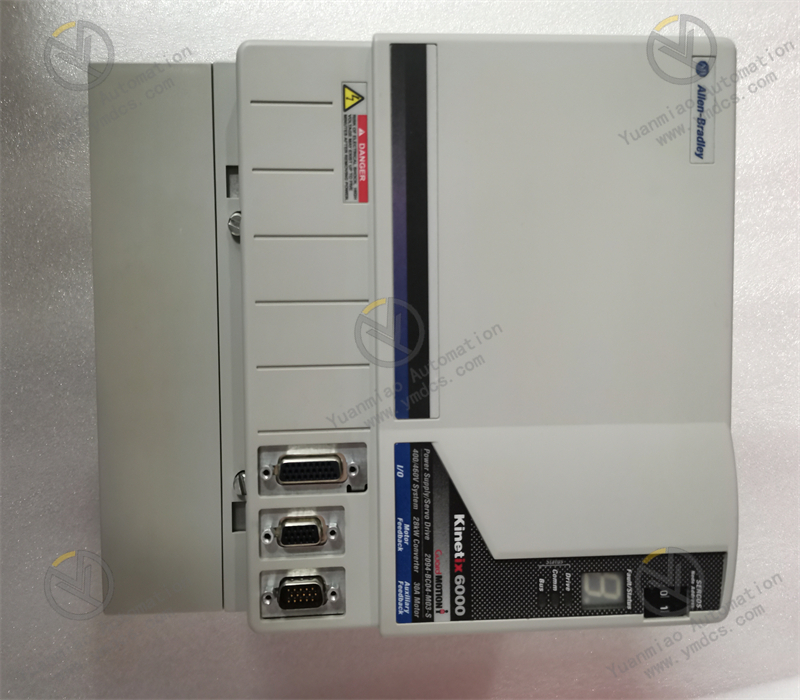
Allen‑Bradley 2094‑BC04‑M03‑S is a 400/460V‑class Integrated Axis Module (IAM) of Rockwell Automation Kinetix 6000 series. It integrates rectifier power supply, servo inverter drive and single‑axis motion control into one unit, acting as the core drive component for multi‑axis servo motion‑control systems. Featuring 28 kW rectification power and 28 A continuous inverter output, this module is equipped with the standard Safe Torque‑Off (STO) function. Designed for high‑precision industrial motion‑control applications under medium‑and‑high‑voltage conditions, it is widely applied for multi‑axis synchronization, high‑speed positioning and precise servo‑control processes on automated production lines.
Adopting an all‑in‑one integrated architecture, the 2094‑BC04‑M03‑S eliminates separate power‑supply and drive modules, greatly simplifying servo cabinet layout while reducing wiring complexity and overall equipment footprint. It accepts 360‑480 V three‑phase industrial AC input and supports high‑speed servo response together with precise position‑loop, speed‑loop and torque‑loop closed‑loop control. It is compatible with the full range of Allen‑Bradley servo motors and motion controllers. As a major legacy EOL model, it is extensively deployed for new and retrofitted automated equipment, production‑line technical modification and fault‑replacement maintenance. Characterized by stable operation, load‑shock resistance, high safety level and broad compatibility, it serves as a mainstream core drive module for industrial medium‑and‑high‑voltage multi‑axis servo systems.
2. Functional Features
All‑in‑one integrated architecture combining power supply and drive Integrating a three‑phase rectifier and single‑axis servo inverter, the module completes power conversion and servo‑motor driving without external rectifier or braking power units, significantly simplifying multi‑axis servo system architecture. Compared with split‑type servo solutions, it reduces cabinet‑mounted components and wiring failure points, improves integration level and operational stability of the whole motion‑control system, and meets requirements for compact cabinet design.
400/460 V high‑voltage compatibility with stable high‑power output Designed for 360‑480 V three‑phase industrial high‑voltage power supply, it delivers 28 kW rated rectifier power and 28 A continuous inverter output. It matches medium‑and‑high‑power servo motors for high‑speed start‑stop, heavy‑duty positioning and continuous high‑frequency operation. Smooth output waveform and uniform torque eliminate speed jitter and positioning deviation, suitable for industrial motion‑control scenarios demanding high precision, heavy load and fast dynamic response.
Standard STO Safe Torque‑Off complying with industrial safety specifications Built‑in Safe Torque‑Off is a standard safety configuration for industrial drives. It rapidly cuts off servo output torque under emergency conditions to prevent accidental motor startup and rotation. It satisfies requirements for machinery safety protection, operator safety and equipment compliance acceptance, and fits manned industrial sites such as automated production lines, precision machinery and assembly lines.
High‑precision triple‑loop control for superior motion performance Full closed‑loop control of position loop, speed loop and torque loop delivers fast response, high positioning accuracy and excellent dynamic following performance. It realizes sophisticated processes including multi‑axis synchronization, electronic cam, interpolation motion, high‑speed positioning and precision cutting. It fulfills servo‑motion demands of various high‑precision automated machines and enhances processing accuracy and production efficiency.
High anti‑interference capability for harsh industrial environments Built‑in EMC filtering, surge suppression and harmonic‑mitigation circuits resist electromagnetic interference caused by on‑site frequency converters, high‑frequency devices and motor start‑stop cycles, avoiding servo jitter, signal abnormality and false alarms. Tolerant of grid voltage fluctuation and load shock, it maintains reliable long‑term continuous operation under complex electromagnetic conditions on the shop floor.
Modular networking with strong multi‑axis synchronization expandability Supports standard‑bus networking for the Kinetix 6000 system. Multiple modules can be paralleled to construct multi‑axis servo systems featuring high inter‑axis synchronization accuracy and low communication latency, easily realizing multi‑axis coordinated motion, synchronous start‑stop and collaborative control. Standardized interfaces and communication protocols are compatible with the full portfolio of Rockwell Automation PLCs and motion controllers for convenient configuration, simple commissioning and excellent expandability.
- Comprehensive multi‑level protection for safe and controllable equipment operation Full‑range protection covers overvoltage, undervoltage, overcurrent, overload, short‑circuit, overheating, encoder abnormality and communication fault. Automatic alarm and fault‑lock‑out pinpoint fault types, preventing module burnout, motor damage and equipment downtime triggered by abnormal load, grid disturbance or wiring mistakes to protect equipment and personnel.
3. Technical Specifications
3.1 Basic Specifications
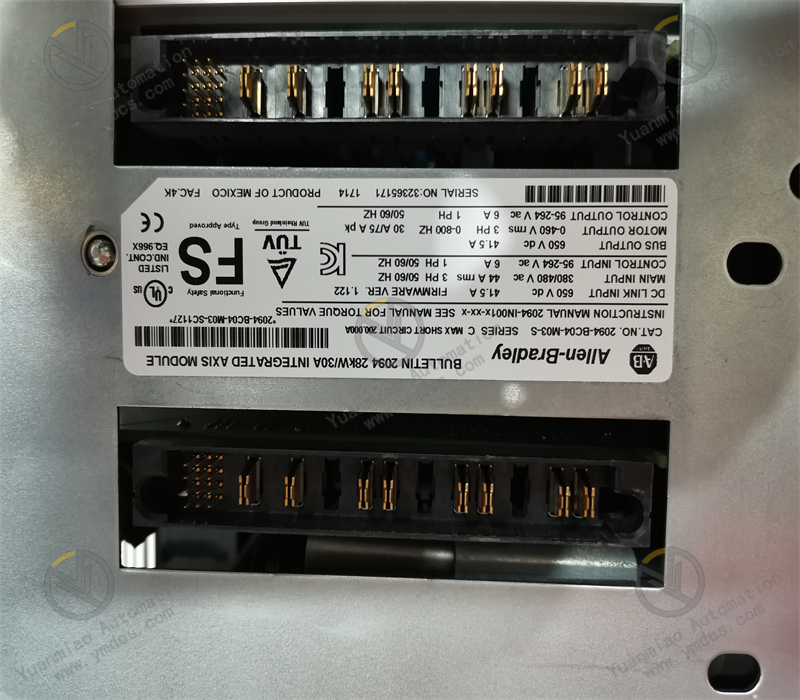
Product Model: 2094‑BC04‑M03‑S Manufacturer: Allen‑Bradley (Rockwell Automation) Product Series: Kinetix 6000 Multi‑Axis Servo Drive System Product Type: Integrated Axis Module (IAM, combined servo power supply and drive) Core Positioning: Core unit for medium‑and‑high‑voltage industrial single‑axis servo drive and multi‑axis coordinated motion control Key Characteristics: Combined power‑supply‑and‑drive design, 460 V high‑voltage compatibility, 28 kW high power, STO safety function, high‑precision closed‑loop control, multi‑fault protection, bus networking expandability.
3.2 Input Electrical Parameters
Input Voltage: 360‑480 V three‑phase AC Nominal Voltage Rating: 400/460 V industrial high‑voltage class Input Frequency: 50/60 Hz Rated Rectifier Power: 28 kW Applicable Grid: Industrial three‑phase high‑voltage power system; withstands normal grid fluctuation and transient surges.
3.3 Output Electrical Parameters
Continuous Inverter Output Current: 28 A Control Modes: Position / Speed / Torque triple closed‑loop control Motor Compatibility: Kinetix series medium‑and‑high‑power servo motors Safety Feature: Standard STO Safe Torque‑Off function compliant with industrial safety standards.
3.4 Mechanical & Structural Parameters
Mounting: Standard DIN‑rail mounting inside industrial cabinets Approximate Weight: 9.6 kg Structure: Compact integrated construction with dedicated heat‑dissipation air duct Termination: Standard power terminals, signal terminals and bus interfaces for neat and convenient wiring Housing Material: High‑strength flame‑retardant industrial housing, insulation, dust resistance and anti‑aging performance.
3.5 Protection Functions
Protection Mechanisms: Overvoltage, undervoltage, overcurrent, short‑circuit, overload, overheating, encoder fault, communication abnormality and abnormal‑load protection Safety Function: STO Safe Torque‑Off with zero‑torque output latching Fault Handling: Automatic shutdown upon fault, code‑based alarm, status latching; fault history query supported.
3.6 Environmental Specifications
Operating Temperature: 0 ℃ ~ +45 ℃ Storage Temperature: ‑20 ℃ ~ +70 ℃ Relative Humidity: 5%‑95%, non‑condensing Ingress Protection: IP20 (for cabinet‑internal installation) Operation Mode: 7×24‑hour continuous industrial operation Typical Applications: Automated production lines, precision machining, packaging & printing, material‑handling systems, rubber‑and‑plastics machinery and other industrial fields.
4. Hardware Configuration & Structural Advantages
Integrated design that greatly simplifies system architecture Combining rectifier power supply and servo inverter, one module replaces traditional split power‑supply‑plus‑drive assemblies. It reduces cabinet hardware count, saves installation space, simplifies wiring procedures and lowers wiring‑related failure probability, improving overall servo‑system stability and maintainability for compact automated‑equipment designs.
High‑voltage high‑power output with outstanding heavy‑duty dynamic performance With 400/460 V high‑voltage rating, 28 kW rectifier power and 28 A continuous output, it reliably drives medium‑and‑high‑power servo motors for heavy‑duty start‑stop, high‑speed reciprocation and continuous high‑frequency motion. Fast dynamic response and sufficient torque output avoid power lag and speed decay, satisfying high‑precision heavy‑duty motion‑control processes.
Built‑in industrial safety function for enhanced compliance The integrated STO eliminates the need for additional safety modules. It meets requirements for safe equipment shutdown, maintenance‑related personnel protection and machinery‑safety standards. Suitable for automated lines requiring safety interlock and emergency stop protection, it cuts safety‑retrofit costs and complies with industrial‑equipment acceptance criteria.
High‑precision triple‑loop control for broad‑process adaptability Mature and stable full‑closed‑loop motion‑control algorithms deliver accurate positioning, smooth speed regulation and superior synchronization. It enables sophisticated multi‑axis coordinated motion for precision positioning, high‑speed cutting, synchronous conveying, electronic cam and trajectory interpolation, boosting equipment processing accuracy and operational stability.
High anti‑interference performance and reliability for harsh conditions Multi‑stage filtering and anti‑interference circuits suppress grid harmonics, electromagnetic crosstalk and load shock to eliminate common defects such as servo jitter, drift and false alarms. Industrial‑grade thermal design ensures high heat‑dissipation efficiency; no over‑temperature tripping or performance degradation occurs under long‑term full‑load operation for shop‑floor environments with heavy electromagnetic noise and continuous production.
- Standard bus‑based networking for convenient expansion and maintenance Parallel networking of multiple modules achieves high‑synchronization multi‑axis systems with three or more axes. Standard configuration protocols are compatible with the full Rockwell Automation control portfolio for easy commissioning, universal parameters and good spare‑part interchangeability, facilitating later‑phase technical modification, capacity expansion and replacement maintenance.
5. Application Scenarios
Automated multi‑axis coordinated production lines: Widely used in assembly lines and synchronous conveying machinery to realize precise multi‑axis synchronization, coordinated motion and point‑to‑point positioning for stable continuous automated production.
Precision packaging and printing machinery: Deployed in high‑speed packaging machines, laminators, printing presses and cutters for high‑speed precision cutting, register‑based color tracking, synchronized feeding and trajectory‑control processes requiring high‑speed high‑precision performance.
Rubber‑and‑plastics forming machinery: Applied in servo‑control systems for injection‑molding, extrusion and blow‑molding machines. It adapts to heavy‑duty high‑frequency start‑stop as well as precise pressure and position control with high operational stability and load adaptability.
Intelligent logistics and material‑handling equipment: Used in sorting lines, lifting conveyors and warehouse handling machinery for accurate start‑stop, constant‑speed transportation, point positioning and dynamic speed adjustment for continuous automated‑logistics workflows.
- Maintenance and replacement for legacy servo systems: As a well‑established legacy‑generation model, it is used for fault‑component replacement and technical upgrading of older equipment. On‑site replacement can be performed without extensive rewiring or program modification to restore machine operation rapidly.