Description
1. Product Overview
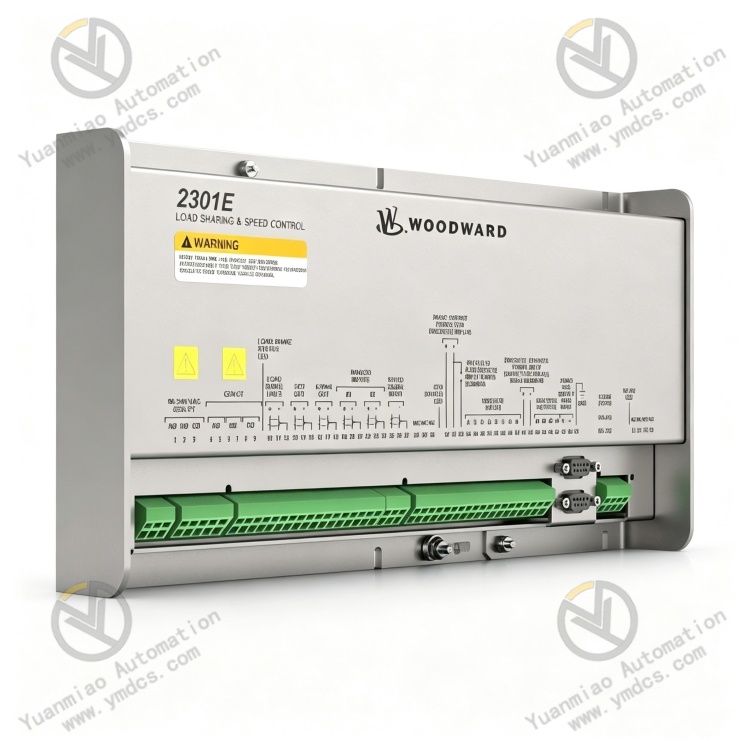
WOODWARD 2301E (Part No. 8273‑1011) is a high‑performance microprocessor‑based digital speed and load‑sharing controller of Woodward 2301E series manufactured by Woodward, USA. Developed specially for diesel‑generator sets, gas‑generator units and small steam‑turbine power systems, it serves as the core control unit for speed regulation of single industrial generator and active‑load sharing of multiple parallel‑running generators. Adopting fully‑digital computing architecture to replace traditional analog governors, the controller delivers high‑precision speed regulation, intelligent load distribution, built‑in fault‑diagnosis and self‑adaptive parameter functions. It can precisely adapt generator‑sets to various operating modes including grid‑connected operation, island‑mode operation and base‑load operation. Three core control modes, isochronous speed control, droop control and base‑load control, are supported to solve typical industrial‑operation pain‑points such as uneven load distribution, speed fluctuation, unstable grid‑synchronization and load oscillation during multi‑generator parallel‑operation. Suitable for industrial power stations, standby power plants, offshore platforms, oil‑gas fields and self‑owned power stations for mines & factories, the unit enables stable 7×24‑hour non‑stop operation. It is a mainstream standard device for automatic‑control of medium‑and‑small‑size generator‑sets and retrofit‑replacement of legacy governing systems. Approved by multiple classification societies and certified for hazardous explosive‑area deployment, it meets strict operating requirements for industrial and marine applications.
2. Core Technical Parameters
2.1 Basic Specifications
- Model: 2301E 8273‑1011
- Product Series: WOODWARD 2301E Digital Governor Control Series
- Product Type: Digital Speed / Load‑Sharing Controller for Generator‑Sets
- Core Functions: Precise speed regulation, load‑sharing control for parallel generators, operation‑mode switching, fault monitoring and protection
- Compatible Equipment: Diesel generator‑sets, gas generator‑sets, small‑size steam‑turbine power units
- Mounting Method: Standard panel‑mounting / DIN‑rail mounting, adaptable to control cabinet and genset enclosure layout
- Net Weight: 1.75 kg, lightweight reinforced metal housing with stable deformation‑resistant structure
2.2 Control & Sampling Parameters
- Speed‑pickup Input Range: 0.5 Hz‑10 kHz magnetic pickup signal input; full‑range software scaling adaptable to various generator speeds
- Control Modes: Isochronous constant‑frequency mode, droop regulation mode, fixed / dynamic base‑load mode; one‑click operation‑mode switching
- Load‑Sharing Signal: 0‑3 VDC analog output with precise linear load‑proportion response
- Voltage Sampling (PT Input): 100‑240 VAC, 45‑66 Hz, compatible with standard generator output‑voltage
- Current Sampling (CT Input): Three‑phase CT current sampling; single‑phase power consumption ≤0.1 VA at full load, high sampling accuracy and low power loss
- Actuator Output: Low‑frequency PWM current output, compatible with full range of Woodward L‑series, F‑series and P‑series actuators
2.3 Interface & Communication Parameters
- Digital Inputs: 8‑channel configurable discrete inputs; user‑defined functions such as run, idle speed, rated speed, fault reset
- Relay Outputs: 4‑channel programmable relay contact outputs; configurable logics for alarm, shutdown and operation‑mode switch‑over
- Commissioning Communication: RS‑232 port for on‑line parameter configuration, data monitoring and program debugging via host PC software
- Network Communication: RS‑485 port supporting Modbus RTU protocol for remote monitoring by central control systems
- Data‑logging Function: Automatic recording of 16‑second high‑frequency operating data upon shutdown, overspeed or abnormal‑load events to facilitate fault traceability
2.4 Electrical & Power‑consumption Parameters
- Power Supply: Wide‑range DC 18‑36 V power supply, compatible with industrial storage‑batteries and regulated power‑supply systems
- Operating Current: Rated operating current ≥600 mA; total rated power consumption ≤20 W for long‑term low‑power stable operation
- Electrical Protection: Built‑in over‑voltage, over‑current and reverse‑polarity protection, tolerant of industrial‑grid voltage fluctuation and transient electrical surges
- Operation Stability: Digital self‑adaptive PID regulation; zero temperature drift and zero parameter offset, maintaining constant control‑accuracy during long‑time operation
2.5 Environmental, Protection & Certification Parameters
- Operating Temperature: ‑40 ℃ ~ +70 ℃, ultra‑wide industrial temperature range, suitable for high‑temperature equipment‑rooms, low‑temperature outdoor sites and enclosed cabinet environments
- Storage Temperature: ‑40 ℃ ~ +105 ℃, satisfying requirements for transportation and long‑term idle‑storage under extreme‑temperature conditions
- Operating Humidity: 5%‑95% RH, non‑condensing, suitable for humid, dusty and high‑moisture industrial‑field environments
- Vibration & Shock Resistance: Compliant with MIL‑STD 810C vibration‑and‑shock‑resistance standard, adapted to high‑frequency vibration from generator units
- Ingress‑protection Class: IP20, reinforced metal housing, dust‑proof and collision‑resistant
- Approvals: CSA hazardous‑location certification and marine‑classification‑society approvals including ABS, BV, CCS, DNV; applicable for on‑land industrial and offshore marine service
3. Product Functions and Core Advantages
3.1 Core Product Functions
- High‑precision Steady‑state Speed Regulation: Digital self‑adaptive PID algorithm acquires real‑time generator‑speed signals and dynamically adjusts fuel‑supply / air‑intake volume to achieve constant‑speed control. Minimal speed deviation occurs under no‑load, full‑load and variable‑load conditions, ensuring stable output frequency and meeting power‑supply requirements of precision‑sensitive loads.
- Accurate Load‑sharing for Multiple Parallel Generators: Supports networking of multiple generator‑sets in parallel. Standard 0‑3 VDC load‑bus signals automatically balance active‑power load among all units, preventing single‑unit overload or light‑load idling and improving overall efficiency and stability of parallel‑connected power‑stations.
- Intelligent Multi‑mode Operation Switching: Three integrated control modes (isochronous, droop, base‑load) adapt to diverse production‑requirements: standalone island‑operation, grid‑tied parallel‑operation and constant base‑load operation. Mode transitions are shock‑free and oscillation‑free to accommodate various power‑station operational strategies.
- Comprehensive Fault Monitoring & Traceability: Real‑time detection of hidden risks such as speed anomaly, unbalanced load, actuator failure and signal abnormality triggers alarm or protective shutdown. High‑frequency operational data is automatically saved for precise fault root‑cause analysis and data support for equipment maintenance and system optimization.
- Remote Configuration & Centralized Monitoring: Modbus RTU communication enables connection to DCS and PLC central‑control systems for remote parameter modification, operating‑condition monitoring and early‑warning alerts. Host‑side commissioning software supports fine‑tuning and parameter‑optimization both on‑site and remotely.
- Customizable Programmable Logic: 8 digital inputs and 4 relay outputs support freely‑assigned functions to realize custom control‑logic, alarm‑logic and interlock‑protection‑logic, satisfying renovation‑demands of new & legacy generator‑sets and non‑standard working‑conditions.
3.2 Core Product Advantages
- Full‑digital High‑precision Control with Superior Stability over Analog Governors: Eliminates temperature drift and parameter‑shift defects of traditional analog circuits. Digital computation delivers high‑accuracy stable performance with no frequent recalibration required. Both governing precision and consistency of load‑sharing are greatly enhanced, lowering risks of power‑supply frequency fluctuation.
- Excellent Parallel‑operation Compatibility for Balanced Multi‑unit Performance: Dedicated load‑sharing algorithm supports parallel‑networking between identical and compatible genset controllers, featuring low load‑distribution error and fast dynamic‑response. It fundamentally solves common problems such as load drift, load‑hunting and system oscillation in multi‑generator parallel‑systems.
- Ultra‑wide Temperature Range & Military‑grade Anti‑interference Performance for Harsh Environments: Reliable continuous operation within ‑40 ℃ ~ +70 ℃ together with high‑level vibration‑resistance and EMC‑shielding enables long‑time stable service in hot equipment‑rooms, cold outdoor sites, high‑vibration genset locations and strong‑EMI industrial‑fields, covering industrial, marine and explosive‑hazardous applications.
- Strong Compatibility for Seamless Retrofit of Legacy Systems: Universal I/O terminals and standard communication protocols are compatible with most diesel‑/gas‑generator actuators and control‑systems on the market. Direct drop‑in replacement for older 2301 and 2301D governors is achievable without extensive rewiring or control‑logic modification, delivering low renovation‑cost and fast project deployment.
- Low‑maintenance & Long‑term Maintenance‑free Operation: Free of ageing‑prone analog components and potentiometer‑drift issues. Rugged hardware construction ensures permanent parameter storage. Frequent on‑site calibration is no longer required, greatly reducing power‑station maintenance workload and unplanned downtime.
- Multi‑standard Compliance for Wide‑range Application Coverage: Simultaneously compliant with industrial‑explosion‑proof, marine‑shipboard and on‑land power‑station regulations. Versatile deployment covers civil, industrial, marine, offshore and oil‑gas hazardous‑area sectors.
4. Typical Application Scenarios
- Mine & Factory Self‑owned Power‑stations: Speed‑control for factory standby generator‑sets and single‑/multi‑unit load‑sharing regulation for on‑site captive power‑plants
- Oil‑gas & Chemical Industry: Governor‑control for generator‑sets installed inside explosive‑hazard zones of oil‑fields, gas‑fields and refineries, as well as remote unattended field power‑stations
- Marine & Offshore Industry: Speed regulation and parallel load‑sharing control for main / auxiliary shipboard generators and offshore platform power‑plants
- Standby Power‑supply Sector: Emergency power‑stations, generator‑sets supporting UPS systems and prime‑mover control units for uninterruptible‑power‑supply installations
- New‑energy Auxiliary Power‑plants: Steady‑speed governing and load regulation for peak‑shaving and wind‑solar‑storage hybrid backup generator‑sets
- Legacy‑equipment Retrofit Projects: Upgrade of old analog governing systems, fault‑replacement of ageing 2301‑series controllers and performance‑optimization & capacity‑expansion of multi‑generator parallel power‑stations
5. Installation, Operation and Maintenance Guidelines
- Mount the controller via panel‑mount or DIN‑rail installation. Disconnect generator control‑supply power before installation and fasten the unit securely to prevent loose wiring and poor‑contact faults caused by genset vibration.
- Strictly separate wiring for power‑supply, speed‑pickup signals, voltage‑&‑current sampling, actuator drive and communication ports. Lay power‑cables and signal‑cables on separate cable‑routes and properly earth all shielded cables, so as to eliminate speed‑governing fluctuation and load‑imbalance induced by electromagnetic interference.
- Supply regulated DC 18‑36 V power, preferably from dedicated storage‑batteries or industrial stabilized power‑sources. Avoid sharp voltage rises/drops and power‑supply fluctuations which may trigger unexpected controller reboot, parameter loss or abnormal governing action.
- During initial commissioning, accurately set PID governing parameters, load‑sharing coefficients and operating‑condition thresholds according to generator rated‑power, rated‑speed and actuator specifications. Complete no‑load single‑unit stability tests and multi‑generator parallel‑load tests to guarantee oscillation‑free steady‑state performance.
- During routine maintenance, periodically inspect power‑supply status, terminal‑tightness and communication‑link health. Monitor speed‑regulation accuracy, load‑sharing data and fault logs through host‑software to detect hidden anomalies including parameter drift, signal distortion and actuator‑mismatch deviation at an early stage.
- For long‑running parallel‑generator systems, recalibrate load‑sharing parameters on a regular basis to maintain even power distribution among all units and prevent accelerated equipment‑ageing caused by prolonged unequal‑load operation.
- Replace faulty units exclusively with original controllers of identical model. After replacement, restore all saved configuration‑parameters and re‑perform single‑unit and parallel‑operation commissioning, ensuring generator operating‑performance, governing precision and load‑sharing logic fully consistent with pre‑replacement status.