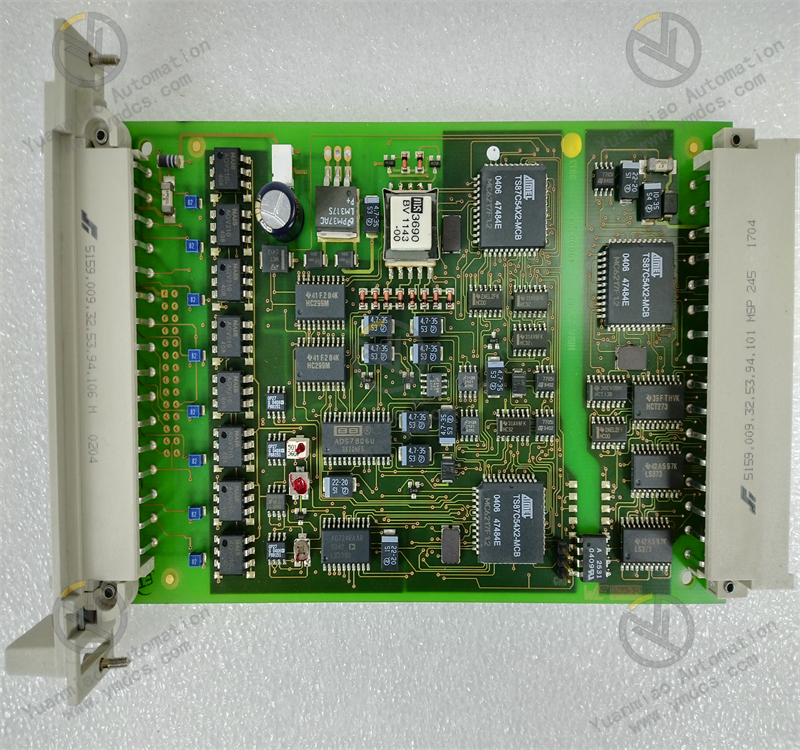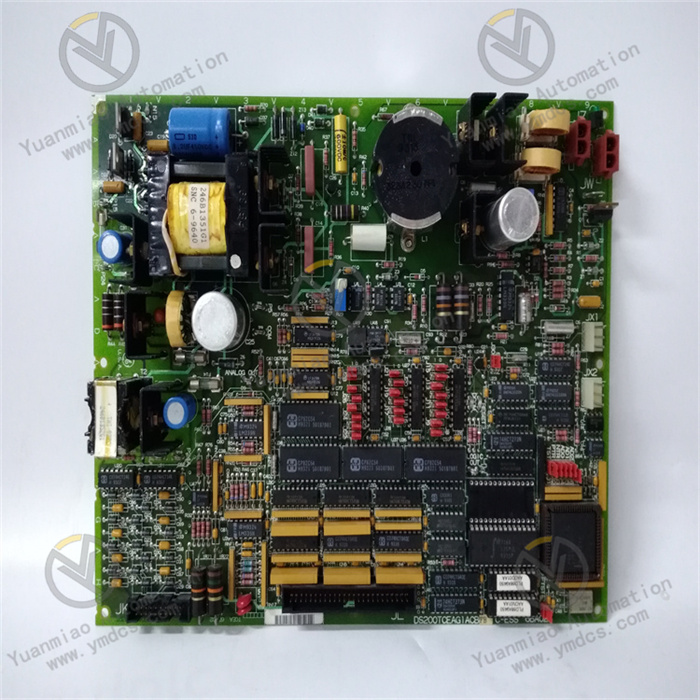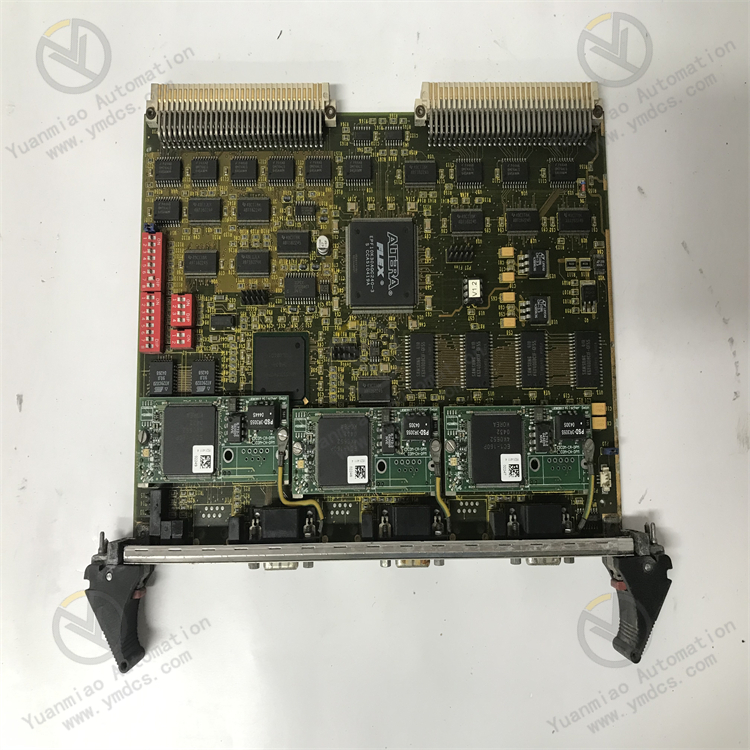
Description
1. Product Overview
GE TB63600BJ14 is a multi-parameter on-line monitoring and acquisition terminal developed by GE Vernova (formerly GE Digital Energy). It serves as the core master acquisition device supporting the HYDRAN on-line monitoring system, specially designed for primary power equipment such as high-voltage oil-immersed main transformers and oil-immersed reactors. Compatible with the full range of GE front-end sensing transmitters for dissolved gas, moisture, temperature and partial discharge in oil, it acts as the core terminal for data aggregation, logic processing, protocol conversion and remote transmission within transformer condition monitoring systems for substations, new energy booster stations and industrial captive power plants. It is widely applied in complete sets for newly built intelligent substations, upgrading reconstruction of old transformer on-line monitoring systems, replacement of original GE monitoring equipment, supporting condition-based maintenance of main power equipment and core spare parts reservation.
Adopting an industrial embedded hardware architecture, this terminal integrates high-precision data acquisition, multi-signal compatible parsing, intelligent data filtering, fault logic evaluation, standardized protocol transmission and full-range self-diagnosis functions. It can centrally collect multi-dimensional status data of transformers, including dissolved gas in oil, insulation moisture, equipment temperature, operating electrical quantities and partial discharge. Different from ordinary acquisition devices, the TB63600BJ14 is specially optimized for strong electromagnetic conditions in power systems, featuring high data acquisition accuracy, powerful multi-signal compatibility, high long-term operation stability, low communication delay and excellent anti-interference performance. The whole unit has passed reliability tests for power-grade electromagnetic compatibility, high-low temperature cycling, vibration shock, insulation withstand voltage, dust and water resistance. It adapts to harsh working conditions such as indoor and outdoor substation environments, alternating temperature, strong electromagnetic interference and continuous vibration, supporting 7×24-hour non-stop stable operation all year round. It is the core supporting master terminal of the GE HYDRAN series monitoring system.
2. Functional Characteristics
2.1 Multi-parameter Compatible Acquisition for Full-range Evaluation of Transformer Operating Status
The GE TB63600BJ14 boasts powerful compatible acquisition capability for various types of sensing signals. It seamlessly interfaces with the full range of GE HYDRAN front-end monitoring transmitters for hydrogen, multi-component gas, oil moisture and temperature, while supporting industry-standard analog and digital sensing signals. The terminal centrally collects core data such as dissolved gas concentration in oil, water content of insulating oil, equipment body temperature, partial discharge signals and operating electrical parameters, realizing comprehensive integrated monitoring of transformer insulation status, fault gas generation, temperature rise conditions and operating load. Through multi-dimensional joint data analysis, it can accurately distinguish different defect types including insulation aging, internal overheating, latent discharge, sealing moisture ingress and abnormal load, solving misjudgment and missed judgment issues caused by single-parameter monitoring. It provides complete data support for transformer condition assessment and fault tracing.
2.2 High-precision Data Processing with Intelligent Filtering and Anti-interference
Equipped with a high-performance industrial computing chip, the terminal embeds multi-stage algorithms for data noise reduction, outlier rejection, linear calibration and temperature-pressure compensation. It can automatically filter invalid interference data induced by substation electromagnetic harmonics, voltage fluctuations and working condition jitter. Targeting the characteristics of tiny data variations in transformer monitoring, it features ultra-high precision identification of minor increments, enabling accurate capture of abnormal trends such as slow gas generation, slight temperature rise and mild partial discharge in early latent equipment faults. It avoids missed detection of hidden dangers resulting from data jumping and insufficient precision of conventional devices. All collected data is standardized and calibrated, with no zero drift, data distortion or transmission delay, delivering outstanding data consistency and stability during long-term operation.
2.3 Bi-directional Multi-protocol Communication for Smart Power Station System Integration
Natively integrated with mainstream standardized power communication protocols, it supports bi-directional communication such as IEC 61850 and Modbus RTU/TCP. It can seamlessly connect to substation SCADA systems, power IoT platforms, equipment condition monitoring systems, intelligent operation & maintenance backends and comprehensive protection monitoring platforms. It supports full-function interaction including active real-time data upload, historical curve storage, over-limit event recording, fault alarm push, remote parameter configuration and remote equipment status query. Compatible with both new and legacy power monitoring system architectures, it adapts to compatible access for old substation reconstruction and intelligent integration of new smart power stations. It features strong expandability and system adaptability to meet the requirements of digital and intelligent operation & maintenance management for unattended substations.
2.4 Intelligent Fault Evaluation and Graded Alarms Enabling Condition-based Maintenance
Embedded with a power-industry logic model for transformer fault evaluation, the terminal automatically analyzes equipment operating status based on multi-parameter linked data and supports customizable multi-level alarm thresholds (warning, alarm, critical alarm). For fault scenarios including abnormal hydrogen growth rate, excessive moisture, temperature over-limit, signal interruption and sensor abnormality, it automatically triggers local indication and remote alarm push, and synchronously records traceability information such as fault time, data increment and operating conditions. It supports historical data trend review, increment analysis and rate evaluation, helping operation and maintenance personnel distinguish normal aging, slow deterioration and sudden faults of equipment, realizing intelligent operation & maintenance upgrade from post-fault disposal to pre-warning.
2.5 Full-range Hardware Self-diagnosis for Safe and Controllable Equipment Operation
It features dual self-diagnosis functions for the terminal body and front-end sensing links. It continuously monitors power supply status, hardware conditions, communication links, acquisition loops and operating status of front-end sensing devices 24 hours a day. It accurately identifies hidden risks such as abnormal power supply, loop failure, communication interruption, sensor failure, abnormal data and pipeline faults, automatically generates standardized fault codes and event logs, and shields invalid abnormal data in a timely manner to prevent system misjudgment caused by uploading erroneous data. It ensures the stability and reliability of the full link including acquisition, calculation and transmission of the entire transformer monitoring system, greatly reducing the probability of system operation & maintenance faults.
2.6 Industrial Reinforced Protection for Long-term Maintenance-free Operation under Harsh Conditions
The whole machine adopts a compact protective structure dedicated for power industry, and the PCB boards are coated with military-grade three-proof coating, delivering excellent performance of dustproof, waterproof, moisture-proof, anti-corrosion, anti-aging, anti-vibration and resistance to alternating high and low temperature. The electrical circuit adopts full isolation design, built with surge suppression, electromagnetic filtering, electrostatic protection and overvoltage/overcurrent protection mechanisms, which can effectively resist strong electromagnetic interference, transient pulse impact and voltage fluctuation in substations. The device has no high-frequency vulnerable components, featuring low power consumption and low heat generation. It supports continuous live operation 7×24 hours all year round and requires no frequent calibration or maintenance during long-term service, adapting to harsh and complex on-site power conditions.
3. Technical Parameters
3.1 Core Adaptation Parameters
Model: TB63600BJ14 Brand: GE Vernova (Former GE Digital Energy) Product Series: GE HYDRAN Transformer On-line Monitoring System Master Terminal Product Type: Multi-parameter Data Acquisition, Calculation, Protocol Conversion and Transmission Terminal Adapted Equipment: High-voltage Oil-immersed Main Transformers, Oil-immersed Reactors, Industrial High-voltage Oil-immersed Electrical Equipment Adapted Sensors: Full Range of GE HYDRAN Hydrogen, Multi-component Gas, Moisture and Temperature Monitoring Transmitters Monitored Parameters: Dissolved Hydrogen in Oil, Multi-component Gas, Moisture in Oil, Equipment Temperature, Operating Condition Signals Core Functions: Multi-channel Data Acquisition, Intelligent Data Calibration, Fault Trend Evaluation, Graded Alarms, Multi-protocol Communication, Hardware Self-diagnosis, Remote Operation & Maintenance Application Scenarios: Intelligent Supporting for Smart Substations, Reconstruction of Old Transformer Monitoring Systems, Replacement of Original GE Monitoring Equipment, Condition-based Maintenance of Main Power Equipment, Operation & Maintenance Supporting for New Energy Booster Stations, Core Monitoring Spare Parts Reservation
3.2 Acquisition and Calculation Parameters
Acquisition Channels: Multi-channel compatible acquisition, supporting synchronous access of multiple sensing signals Signal Types: Compatible with standard analog signals, digital communication signals and switching signals Acquisition Accuracy: Industrial high-precision acquisition, high data linearity and minimal error Processing Capacity: High-speed real-time data calculation, filtering and noise reduction, temperature-pressure compensation, outlier rejection Evaluation Function: Supports gas production rate analysis, trend increment analysis and multi-parameter linked fault evaluation Storage Capacity: Local storage of event logs, fault records and historical trend data, supporting remote retrieval
3.3 Communication and Output Parameters
Communication Protocols: Dual power protocol compatibility of IEC 61850 and Modbus RTU/TCP Communication Modes: Industrial Ethernet and serial communication, bi-directional data interaction Data Functions: Real-time data upload, historical curve upload, active alarm push, event record upload Remote Functions: Supports remote parameter configuration, remote firmware upgrade, remote fault reset and remote status query System Compatibility: Fully compatible with GE HYDRAN full-series monitoring platforms, power SCADA, intelligent operation & maintenance systems and industrial configuration platforms
3.4 Electrical Operating Parameters
Power Supply: Industrial wide-range AC/DC compatible power supply, complying with on-site power supply specifications for power industry Power Consumption: Low-power design, low heat generation of the whole machine and stable long-term operation Electrical Architecture: Full-loop electrical isolation design to avoid signal crosstalk and electromagnetic interference Protection Mechanisms: Built-in multi-protection against overvoltage, undervoltage, overcurrent, surge, static electricity and electromagnetic interference Operating Characteristics: No parameter drift, accuracy attenuation or communication distortion during long-term live operation
3.5 Structure and Installation Parameters
Structure Form: Integrated wall-mounted compact industrial protective structure with high integration and small size Installation Method: Wall mounting in substation cabinets and local cabinet installation, adapting to various on-site layouts Fixing Method: Fixed with standard bolts, seismic and anti-loosening, suitable for equipment vibration conditions Wiring Method: Standard industrial terminal wiring, standardized routing, convenient disassembly and simple maintenance Replacement Feature: In-situ non-destructive replacement of old GE terminals of the same series, no rewiring, system reconstruction or parameter re-commissioning required
3.6 Environmental Working Parameters
Operating Temperature: -20℃~+65℃, wide-temperature design for power industry conditions, adapting to alternating four-season temperature Storage Temperature: -30℃~+70℃ Operating Humidity: 5%~95%RH (no condensation) Environmental Resistance: Resists strong electromagnetic interference, equipment vibration shock, dust, moisture and temperature difference corrosion in substations Operation Mode: Supports 7×24-hour non-stop continuous on-line operation all year round
4. Hardware Configuration and Structural Advantages
4.1 Core Hardware Configuration
The GE TB63600BJ14 terminal adopts a dedicated power monitoring hardware architecture from GE Vernova. It is equipped with an industrial high-speed main computing chip, multi-channel high-precision data acquisition unit, independent signal isolation module, multi-stage EMI electromagnetic compatibility filter loop, dual-protocol communication processing unit and full-range hardware self-diagnosis monitoring module. All core components have passed strict factory screening, high-low temperature aging, precision calibration and power-grade EMC tests, specially adapted to long-term on-line monitoring scenarios of high-voltage transformers. The device adopts a multi-channel independent acquisition architecture with no mutual interference between sensing signals, enabling synchronous and stable parsing of multiple front-end sensing data. Equipped with exclusive power data algorithms, it can adaptively respond to fluctuations in power working conditions, automatically correct acquisition errors and filter interference signals. Its data acquisition precision, computing speed and operation stability outperform general-purpose acquisition terminals, fully meeting the operation standards of the complete GE HYDRAN monitoring system.
4.2 Structural Design Advantages
The terminal adopts an integrated compact wall-mounted industrial structure with regular layout, high integration and small footprint, adapting to narrow installation spaces in substation cabinets, local boxes and complex outdoor working conditions. The high-strength flame-retardant anti-corrosion body with fully sealed dustproof and waterproof structure and military-grade three-proof coating can withstand harsh environments for a long time, including high-temperature exposure, low-temperature cold, moisture condensation, dust accumulation and continuous equipment vibration, eliminating common faults such as body aging, circuit moisture ingress, signal interference and parameter drift. The standardized power terminal interface features standard wiring, convenient expansion and simple maintenance, and can be flexibly combined with various GE front-end sensing devices for complete system assembly. Natively compatible with the full range of GE HYDRAN monitoring systems, in-situ replacement of old equipment requires no circuit modification, communication configuration reconstruction or parameter resetting, greatly reducing the costs of substation intelligent reconstruction, equipment maintenance and spare parts reserve. The body is equipped with status indicator lights for operation, communication and faults to visually reflect equipment working status and facilitate rapid on-site inspection and troubleshooting.
5. Working Principle
The GE TB63600BJ14 monitoring terminal adopts a full closed-loop working mechanism: front-end sensing signal acquisition → isolation and filtering preprocessing → high-precision data calculation and calibration → multi-parameter linked evaluation → trend storage and graded alarms → standardized protocol transmission → hardware self-diagnosis protection. As the core hub of the entire transformer on-line monitoring system, it realizes aggregation, processing, analysis and uploading of all station monitoring data.
During operation, the terminal receives raw monitoring signals such as gas, moisture and temperature in oil collected by GE HYDRAN series front-end transmitters in real time. The built-in independent signal isolation and filtering loop completes signal noise reduction and anti-interference preprocessing to eliminate data anomalies caused by on-site electromagnetic fluctuations. Relying on the high-speed computing chip, various signals are linearly calibrated, compensated for temperature and pressure, and error-corrected to convert into standardized accurate monitoring data. Combined with the built-in transformer fault evaluation logic, comprehensive analysis is performed on real-time data, historical trends, gas production rates and parameter increments to accurately identify latent faults such as early overheating, insulation moisture ingress, latent discharge and abnormal gas generation of equipment. Graded local alarms and remote signal push are triggered according to over-limit severity.
Meanwhile, the terminal conducts real-time self-inspection of its own hardware conditions, power supply status, communication links and operating status of front-end sensing devices throughout the operation. It accurately locates hidden troubles such as loop abnormality, communication interruption, sensor failure and power fluctuation, automatically records fault logs and locks abnormal states to ensure authenticity and validity of system data. Finally, all monitoring data, trend curves, alarm events and fault records are uploaded to the background monitoring platform in real time via IEC 61850/Modbus standardized protocols, realizing all-weather digital and visual intelligent management of transformer operating status. The complete workflow features closed and stable logic, precise calculation, fast response and strong anti-interference capability, providing core data support for safe and stable operation and condition-based maintenance of main power equipment.
6. Application Scenarios
6.1 Master Control for Full-range On-line Condition Monitoring of High-voltage Transformers
It is widely applied to high-voltage oil-immersed main transformers and reactors in power grid substations, photovoltaic & wind power booster stations, industrial captive power plants, metallurgical and chemical enterprises. As the core master terminal of the on-line monitoring system, it centrally aggregates and analyzes multi-dimensional data including gas in oil, insulation moisture and equipment temperature, accurately capturing latent transformer faults and insulation deterioration trends, and warning equipment hidden dangers in advance. It prevents major accidents such as equipment damage, unplanned outages and power supply interruption caused by fault expansion, ensuring safe and stable operation of main power equipment.
6.2 Complete Supporting and Upgrading Reconstruction of GE HYDRAN Monitoring System
Specially adapted for original GE HYDRAN series monitoring equipment, it can perfectly match the full range of front-end sensing transmitters to form a complete transformer on-line monitoring system, meeting the complete set requirements of newly built smart substations. Meanwhile, it can perform non-destructive replacement of old and failed master terminals of the same series, solving problems of old equipment such as weak computing capacity, outdated protocols, poor stability and lack of intelligent evaluation functions. It realizes intelligent upgrading of old monitoring systems at low cost and improves the level of substation equipment condition management.
6.3 System Integration for Digital Operation & Maintenance of Smart Substations
Supporting mainstream standardized power communication protocols, it can seamlessly access smart substation monitoring platforms, power IoT systems and unattended operation & maintenance platforms, realizing digital aggregation, visual display, intelligent analysis and automatic alarming of transformer monitoring data. It replaces traditional manual inspection and off-line tests, filling the blind spot of all-weather equipment monitoring, improving the intelligent and digital operation & maintenance capability of substations, and adapting to the development requirements of unattended and lean operation & maintenance of smart power grids.
6.4 Spare Parts Reservation and Emergency Replacement of Core Power Equipment
As an original authentic monitoring master terminal of GE Vernova, it is an essential maintenance spare part for GE complete monitoring systems in the power industry. It can rapidly handle on-site emergencies such as terminal failure, communication interruption, abnormal data and computing failure, quickly restore the functions of the whole transformer on-line monitoring system and eliminate equipment monitoring blind spots. It prevents missed detection of equipment hidden dangers caused by shutdown of the monitoring system and guarantees all-year-round safe and stable operation of main power equipment.