Description
1. Product Overview
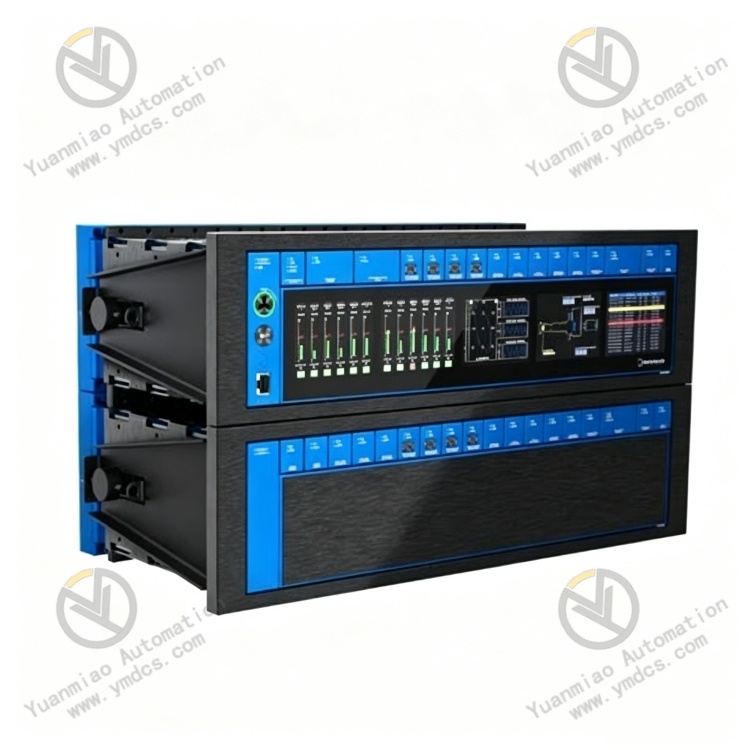
Bently Nevada 60R/PPM01‑02‑2 is a dedicated Preamplifier and Power Supply Module (PPM) for the Baker Hughes Bently Nevada Orbit 60 Series. It acts as the core signal‑conditioning and sensor‑power‑supply unit of the Orbit 60 machinery condition‑monitoring system, an integrated functional module specially designed for industrial IEPE/ICP piezoelectric accelerometers. Adopting the Orbit 60 Series standard half‑height rack‑mount form factor, it is compatible with all standard Orbit 60 chassis. It mainly provides constant‑current excitation power for field vibration sensors, and performs pre‑amplification, filtering, noise reduction and signal shaping for weak vibration signals. It converts raw low‑amplitude vibration signals acquired on‑site into high‑precision, standardized, anti‑interference readable signals, which are transmitted to the main monitoring module for computation, analysis and fault judgment.
Integrating sensor power supply, signal pre‑amplification, signal conditioning, fault diagnosis and electrical protection into one unit, the 60R/PPM01‑02‑2 perfectly meets vibration‑monitoring requirements for large rotating machinery in wind‑power, thermal‑power, petrochemical, metallurgical and other industries. Compatible with standard IEPE low‑impedance voltage‑output accelerometers, it delivers stable constant‑current excitation power to capture subtle machinery vibration, minor bearing wear and early‑stage abnormal vibration signals, enabling advance fault prediction. It delivers core performance including industrial‑grade wide‑temperature operation, high electromagnetic‑interference immunity, zero signal drift and real‑time fault self‑diagnosis with multi‑layer electrical protection. It can operate reliably long‑term under harsh plant conditions featuring heavy vibration, strong interference and wide temperature swings. As a core signal‑acquisition supporting module for the Orbit 60 vibration‑monitoring system, it is widely deployed for new‑unit monitoring‑system configuration, faulty‑module replacement in legacy systems, vibration‑monitoring‑accuracy upgrading and machinery predictive‑maintenance retrofits. It is a preferred core module for high‑precision vibration‑condition monitoring of critical industrial rotating equipment.
2. Functional Features
2.1 Integrated Constant‑current Sensor Power Supply for Mainstream IEPE Vibration Sensors
Custom‑developed for industrial piezoelectric accelerometers, this module embeds a high‑precision constant‑current excitation source, outputting standard 2 mA / 4 mA constant current to supply stable operating power for field IEPE/ICP integrated‑electronic piezoelectric sensors. It can directly drive mainstream industrial vibration‑monitoring sensors without external independent power‑supply or signal‑conditioning equipment, suited for bearing‑vibration, housing‑vibration and overall‑equipment‑vibration acquisition of various large rotating machinery. Featuring high stability and zero current drift, constant‑current output guarantees long‑term stable sensor operation and eliminates sensor‑sensitivity offset, signal distortion and acquisition failure caused by power‑supply fluctuation, laying a hardware foundation for accurate machinery‑vibration‑data collection.
2.2 High‑precision Signal Pre‑amplification and Conditioning to Restore Real Vibration Conditions
For weak, noise‑contaminated, low‑amplitude raw vibration signals collected by on‑site sensors, built‑in professional amplification and filtering circuits perform precise amplification, intelligent noise reduction, clutter filtering and waveform shaping. It effectively eliminates electromagnetic clutter interference from on‑site motors, frequency converters and high‑frequency equipment while fully retaining genuine machinery‑vibration‑feature signals, accurately restoring subtle equipment vibration, low‑frequency vibration and abnormal fluctuation details. Conditioned standardized signals deliver stable amplitude, regular waveform and high signal‑to‑noise ratio, perfectly matching computation‑and‑analysis requirements of Orbit 60 main modules. It greatly improves identification accuracy of early‑stage machinery faults such as bearing wear, rotor unbalance and foundation looseness.
2.3 Real‑time Module and Sensor‑link Self‑diagnosis Ensures Reliable Acquisition Chains
Equipped with comprehensive link‑fault self‑diagnosis, it continuously monitors fault conditions including sensor open‑circuit, short‑circuit, poor contact, power‑supply anomaly, signal out‑of‑range and link interference. Upon detection of sensor‑link abnormality, the module rapidly pinpoints fault locations, generates fault flags and uploads alarms to the system backend, enabling maintenance personnel to quickly troubleshoot sensors, cabling and modules. It thoroughly avoids missing vibration data, monitoring blind spots and loss of machinery protection triggered by sensor‑link failure, and maintains full integrity, valid data output and reliable operation of the vibration‑monitoring chain.
2.4 Multi‑layer Electrical Protection for Complex Industrial Operating Conditions
It integrates multiple industrial‑grade protection mechanisms: overvoltage, undervoltage, overcurrent, short‑circuit, reverse‑polarity, signal out‑of‑range and surge suppression. It provides all‑round defence against on‑site risks such as grid anomalies, wiring mistakes, transient surges, load abnormalities and cable short‑circuits. In case of power‑supply anomalies, cable faults or signal over‑range, the module triggers protective latching automatically to prevent circuit burnout, sensor damage and signal‑acquisition disorder. It achieves Class‑A industrial EMC performance to withstand heavy on‑site electromagnetic interference, equipment start‑stop shocks and high‑frequency variable‑frequency interference, securing stable signal acquisition and equipment operation under complex conditions.
2.5 Standardized Half‑height Modular Design for Convenient Installation and Efficient Maintenance
Adopting unified Orbit 60 Series half‑height modular construction with standardized dimensions and broad compatibility, it supports fast plug‑in mounting on dedicated chassis guide rails. Assembly and disassembly are straightforward with neat cabling. New installation, replacement and capacity‑expansion can be completed without chassis modification. On‑board hardware status LEDs intuitively indicate module operation, sensor health, link faults and abnormal alarms, allowing maintenance staff to rapidly locate faults and significantly cut repair downtime. Thanks to standardized universal design, it can directly replace legacy faulty modules of the same series, suited for technical retrofits, fault replacement and accuracy optimization of new and legacy Orbit 60 monitoring systems.
2.6 Industrial Reinforced Construction for Long‑term Maintenance‑free Stable Operation
Built with industrial‑grade reinforced PCBA and high‑strength flame‑retardant dust‑proof housing, the unit has passed rigorous industrial tests including high‑low‑temperature cycling, vibration‑shock, EMC and damp‑heat aging. It exhibits excellent dust‑proof, moisture‑proof, vibration‑resistant, anti‑aging and anti‑static properties. It withstands long‑term exposure to continuous machinery vibration, cabinet temperature swings, minor workshop condensation and dust‑oil accumulation. With extremely low hardware failure rate, it supports 7×24‑hour non‑stop maintenance‑free operation after commissioning, perfectly satisfying monitoring demands of critical industrial machinery under year‑round continuous production.
3. Technical Parameters
3.1 Basic Specifications
Product Model: 60R/PPM01‑02‑2;Brand & Manufacturer: Bently Nevada (Baker Hughes);Product Series: Orbit 60 Series Machinery Condition‑monitoring & Mechanical‑protection System;Product Type: Half‑height integrated preamplifier‑and‑power‑supply module;Core Positioning: Core functional unit for Orbit 60 vibration‑monitoring system; provides constant‑current power for IEPE sensors, implements vibration‑signal pre‑amplification, signal conditioning and link self‑diagnosis;Core Features: Constant‑current sensor excitation, high‑precision signal amplification, intelligent noise‑reduction filtering, full‑link self‑diagnosis, multi‑layer electrical protection, industrial anti‑interference capability, standardized plug‑in installation, long‑term maintenance‑free service.
3.2 Electrical and Signal Parameters
Compatible Sensors: IEPE/ICP low‑impedance voltage‑output piezoelectric accelerometers;Selectable Excitation Current: 2 mA, 4 mA standard constant‑current output;Signal‑processing Functions: weak‑vibration‑signal amplification, clutter filtering, waveform shaping, noise‑reduction normalization;Diagnostic Functions: self‑diagnosis for sensor open‑circuit, short‑circuit, out‑of‑range, link anomaly and power‑supply fault;Protection Mechanisms: overvoltage protection, undervoltage protection, overcurrent‑short‑circuit protection, reverse‑polarity protection, signal out‑of‑range protection;Signal Accuracy: high signal‑to‑noise ratio, low signal drift, low distortion, stable acquisition accuracy over long runtime;Anti‑interference Grade: Industrial Class‑A EMC; resistant to on‑site high‑frequency electromagnetic interference, voltage surges and mechanical vibration shocks.
3.3 Mechanical and Installation Parameters
Module Form Factor: Orbit 60 Series standard half‑height functional module;Installation Method: Plug‑in mounting on dedicated Orbit 60 chassis guide rails;Mechanical Characteristics: lightweight modular design, neat wiring, easy assembly & disassembly, flame‑retardant dust‑proof reinforced housing;Status Indication: on‑board LED indicators for real‑time feedback of module operation, sensor status and fault alarms;Compatible Equipment: full range of Orbit 60 standard chassis, system main control modules and matching vibration‑monitoring sensors.
3.4 Environmental and Operating‑condition Parameters
Operating Temperature: 0 ℃~+60 ℃;Storage Temperature: ‑25 ℃~+85 ℃;Operating Humidity: 5%~95% non‑condensing;Vibration Resistance: withstands continuous industrial‑machinery vibration, cabinet start‑stop shock and field mechanical vibration;Protection Features: dust‑proof, moisture‑proof, anti‑aging, anti‑static, flame‑retardant;Operating Mode: supports 7×24‑hour year‑round non‑stop industrial operation;Applicable Conditions: harsh continuous‑production conditions for power‑generation, petrochemical, heavy‑metallurgy, HVAC power facilities and large‑scale rotating machinery.
4. Hardware Configuration and Structural Advantages
4.1 Constant‑current Excitation Design Delivers Stable and Reliable Sensor Acquisition
Equipped with high‑precision constant‑current output circuitry, it supplies clean, stable, drift‑free excitation power for IEPE vibration sensors, completely eliminating sensor‑sensitivity offset, signal attenuation and acquisition distortion induced by power‑supply fluctuation. Matching operating characteristics of industrial piezoelectric vibration sensors, it guarantees continuous and accurate vibration‑data collection under complex conditions, providing genuine and effective raw‑data support for machinery condition analysis and fault early‑warning.
4.2 Professional Signal‑conditioning Circuit Restores Equipment Vibration Features with High Precision
Adopting industrial‑grade low‑noise amplification and multi‑stage filtering circuits optimized for noisy industrial environments, it precisely amplifies weak fault‑related vibration signals, effectively filters power‑frequency interference, high‑frequency clutter and ambient noise, and greatly improves vibration‑signal signal‑to‑noise ratio. It accurately captures early‑stage subtle fault‑vibration signatures of machinery, addresses pain‑points of conventional acquisition modules such as signal distortion, loss of detail, false alarms and missed alarms, and significantly enhances machinery predictive‑maintenance capability.
4.3 Full‑link Intelligent Self‑diagnosis Eliminates Monitoring Blind Spots
It implements multi‑dimensional status monitoring covering the module itself, power‑supply links, sensors and signal cabling. It actively identifies various link anomalies and generates accurate alarms, allowing maintenance staff to grasp real‑time status of the whole vibration‑acquisition chain. It fundamentally solves common problems of traditional monitoring systems: inability to predict sensor‑link faults, long‑term degraded operation and undetected data failure. It comprehensively improves integrity and reliability of machinery vibration‑monitoring systems.
4.4 Multi‑layer Electrical Protection Achieves High Hardware Safety Factor
A comprehensive electrical‑protection architecture covers fault scenarios across power supply, signal paths and cabling. It effectively defends against abnormal conditions including on‑site wiring errors, grid fluctuations, transient surges and cable short‑circuits, protecting hardware integrity of modules, sensors and the whole monitoring system. Excellent EMC performance adapts to high‑interference industrial sites; no circuit damage, signal disorder or functional degradation occurs over long‑term operation, delivering industry‑leading hardware stability.
4.5 Standardized Modular Design Reduces Maintenance and Upgrade Costs
The unified half‑height standard form factor is fully compatible with all Orbit 60 Series chassis systems. It supports fast plug‑in replacement without chassis disassembly. New deployment, capacity expansion and faulty‑unit replacement can be finished without cabinet or wiring modification, featuring simple construction and short downtime. Intuitive status indication streamlines fault‑troubleshooting workflows and lowers maintenance difficulty. It fits diverse on‑site demands for rapid repair, technical retrofits and legacy‑system renewal with outstanding universality and adaptability.
4.6 Industrial‑grade Reinforced Hardware for Durability under Harsh Conditions
Constructed with high‑strength flame‑retardant reinforced housing and high‑durability industrial PCBA and validated by multi‑faceted harsh environmental tests, it delivers superior anti‑vibration, dust‑proof, moisture‑proof and anti‑aging performance for long‑term stable operation at high‑vibration, wide‑temperature‑swing, dust‑laden and high‑interference industrial sites. The mature hardware architecture avoids signal drift, circuit aging and functional degradation over long runtime. Long maintenance‑free cycles greatly cut equipment‑maintenance costs and downtime risks.
5. Application Scenarios
5.1 Vibration Monitoring for Power‑generation Units
Widely used within Orbit 60 monitoring systems for thermal‑power, hydro‑power and wind‑power generator sets. It provides sensor power supply and signal conditioning for bearing, rotor and housing vibration acquisition, accurately monitors machinery vibration status, predicts faults such as rotor unbalance, bearing wear and foundation looseness, and safeguards safe and stable generator‑set operation.
5.2 Large‑scale Rotating Equipment in Petro‑chemical Industry
Suited for online‑monitoring systems of critical continuous‑production equipment including chemical turbomachinery, compressors, large fans and process pump trains. High‑precision signal acquisition and conditioning enable early‑stage equipment‑fault early‑warning, prevent unplanned machinery shutdown and secure continuous stable operation of chemical production lines.
5.3 Heavy‑duty Metallurgical Power Machinery
Applied to condition‑monitoring systems for metallurgical rolling mills, sintering fans and large power transmission units. It adapts to harsh heavy‑industry environments characterized by heavy vibration, strong interference and complex operating conditions, collects accurate equipment‑vibration data and delivers core‑data support for equipment‑condition assessment and maintenance planning.