Description
1. Product Introduction
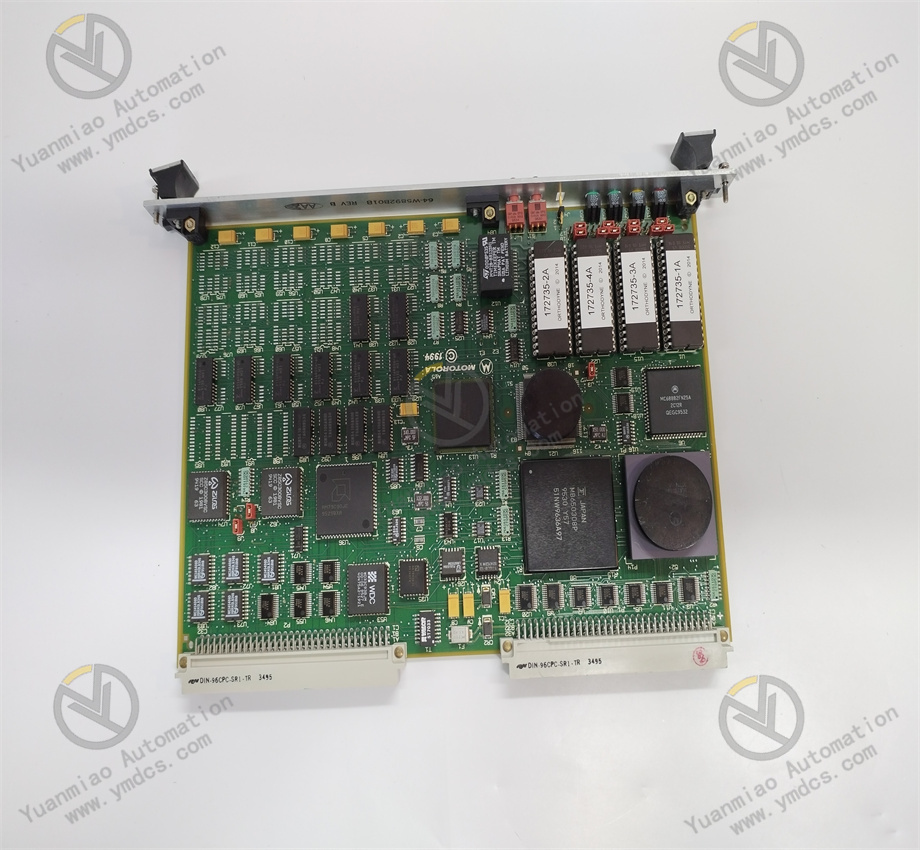
The Motorola MVME147‑011 is an industrial‑grade VMEbus Single‑Board Computer (SBC) belonging to the Motorola MVME147 series. It serves as the core main‑control hardware for legacy industrial embedded real‑time control systems. Fully compliant with the VMEbus industrial bus standard, it functions as the primary computing and control unit for industrial control equipment, rail‑transit facilities, military‑grade devices, heavy‑metallurgy machinery, large‑unit control systems and legacy automation platforms.
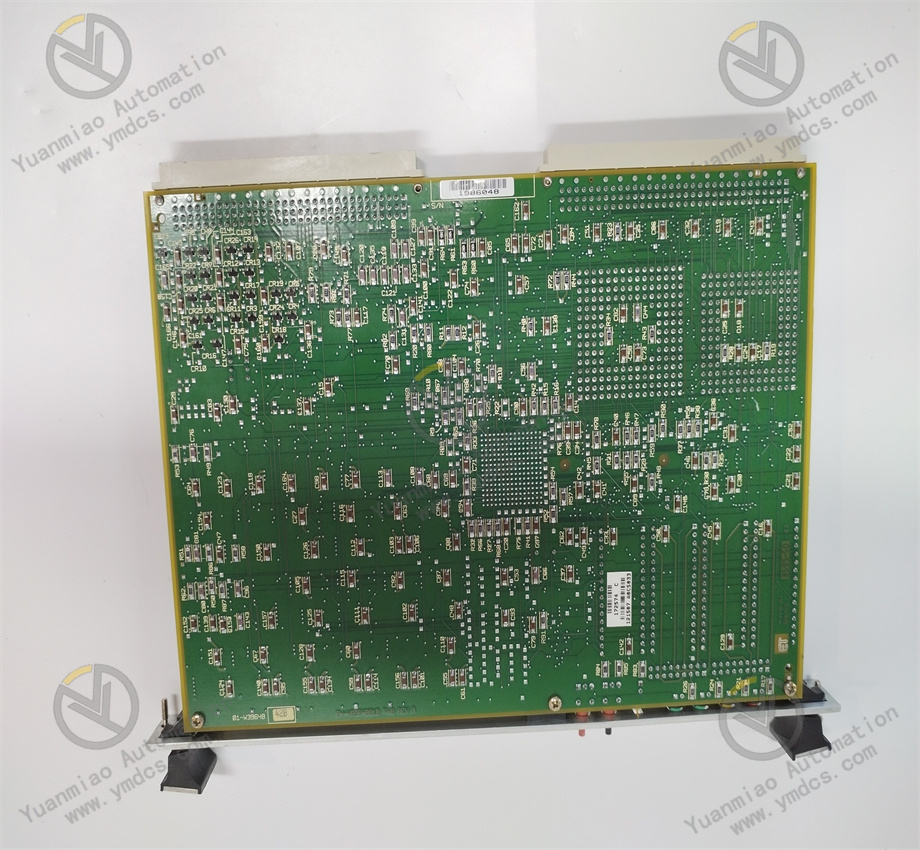
This standard‑configuration variant in the MVME147 series is equipped with a 25 MHz MC68030 32‑bit microprocessor plus an MC68882 floating‑point coprocessor. It carries 4 MB shared DRAM with parity‑check capability to deliver complete data‑verification and fault‑tolerance performance, which differentiates it from lower‑end variants of the same series without parity checking. Built as a double‑height standard VME board, it integrates a full suite of peripheral resources including Ethernet port, high‑speed SCSI interface, four serial channels, real‑time clock and battery‑backed‑up CMOS memory. Pre‑loaded with the factory‑supplied MVME147BUG monitor‑debug firmware, it can operate in dual modes: VMEbus System Controller or VMEbus Slave Device.
Adopting industrial wide‑temperature components, vibration‑reinforced mechanical structure and high‑immunity circuitry, the board withstands harsh on‑site conditions such as high temperature, dust, electromagnetic interference and continuous vibration. It supports 7×24‑hour non‑stop stable operation and acts as an original core spare‑part for component replacement, embedded‑hardware refurbishment, operation‑maintenance and retrofit projects of legacy VME‑based industrial control systems.
2. Functions and Working Principle
Core Functions: The MVME147‑011 single‑board computer integrates six major capabilities: core computation, floating‑point arithmetic, data storage, bus scheduling, peripheral communication and system monitoring, and it is purpose‑built for industrial embedded real‑time control applications. Powered by the 32‑bit high‑speed main processor and dedicated floating‑point coprocessor, it efficiently executes complex industrial algorithm computation, logic control, data parsing and high‑precision floating‑point calculations. Its parity‑checked DRAM memory verifies runtime data in real‑time to eliminate data corruption and computation anomalies and improve overall system fault tolerance.
Supporting dual‑mode scheduling as VMEbus Master or Slave, the board can independently manage system‑bus resources, device addressing and data exchange. Multiple EIA‑232 serial ports, Ethernet and SCSI interfaces enable data communication and command interaction with external sensors, actuators, host computers and storage devices. The onboard 4K battery‑backed‑up CMOS SRAM and real‑time clock preserve system configurations, operating parameters and fault logs even after power loss. On‑board LED indicators and self‑test firmware implement system diagnosis, runtime monitoring and fault localization, ensuring stable, accurate and predictable operation of embedded control systems and satisfying core requirements for real‑time equipment control, data acquisition, interlock logic and equipment maintenance.
Working Principle: The MVME147‑011 operates based on the principle of MC68030‑based embedded real‑time computation plus VMEbus parallel scheduling. The MC68030 main processor serves as the central computing unit to coordinate instruction scheduling, logic operations and data processing, while the MC68882 floating‑point coprocessor executes high‑precision floating‑point tasks separately, greatly enhancing calculation accuracy and response speed for complex industrial control algorithms.
The 4 MB programmable parity‑check DRAM works as system memory and performs parity verification on read‑and‑write data to automatically detect transmission errors and memory anomalies, preventing data corruption and system crash caused by industrial interference. Through the standard A32/D32 VMEbus interface, high‑speed data exchange is realized with the backplane bus and other industrial boards. The unit can switch freely between Master and Slave roles to schedule bus resources and achieve coordinated operation with other modules. Serial, Ethernet and SCSI interfaces handle peripheral data transmission, remote communication and mass storage independently. The battery‑backed‑up CMOS section retains configurations and clock data to ensure parameter persistence across power cycles. On‑board firmware continuously monitors hardware health, bus links and memory status, and visualizes run‑time and fault conditions via front‑panel LEDs to guarantee real‑time, stable and precise execution of embedded control functions.
3. Technical Features
High‑performance computing architecture with excellent real‑time response: Equipped with the 25 MHz industrial‑grade MC68030 32‑bit main processor and dedicated MC68882 floating‑point coprocessor. Dual‑chip collaborative processing delivers fast response and high‑precision results for both logic control and floating‑point computation, making it ideal for industrial real‑time control and sophisticated algorithm applications.
Parity‑checked memory with outstanding fault tolerance: Factory‑fitted with 4 MB shared DRAM supporting programmable parity check — a feature absent on lower‑spec variants. Runtime‑data verification detects transmission errors, effectively counteracts data anomalies induced by electromagnetic interference and significantly improves control‑system stability and noise immunity.
Fully‑integrated interfaces with rich expandability: On‑board resources include four EIA‑232‑D serial ports, industrial Ethernet, high‑speed SCSI interface and multiple ROM/PROM expansion slots. Storage, communication and expansion capabilities are self‑contained, removing the need for extra extension modules for most embedded control, data‑acquisition and equipment‑communication tasks.
Standard VMEbus with wide compatibility: Built around the A32/D32 VMEbus architecture, supporting dual‑mode operation as system‑bus master or slave. It fits all standard VME chassis, backplanes and peripheral boards, enabling seamless drop‑in replacement within legacy VME control systems without modification to the existing system architecture.
Power‑fail data retention for simplified maintenance: A 4K×8 battery‑backed‑up CMOS SRAM and real‑time clock permanently save configuration parameters, runtime logs and time‑stamp data during power loss. The system resumes its operating state automatically after reboot, eliminating repeated configuration work and reducing maintenance overhead.
- Industrial reinforced construction for harsh environments: Designed as a double‑height standard VME board with ruggedized PCB layout, wide‑temperature components, anti‑vibration and anti‑interference circuits. It withstands long‑term exposure to high temperature, humidity, dust, electromagnetic radiation and continuous vibration on‑site, delivering 7×24‑hour trouble‑free continuous operation and minimizing routine calibration requirements.
4. Specifications
Basic Parameters
Product Model: MVME147‑011 Brand & Manufacturer: Motorola Product Type: VME‑bus Industrial Single‑Board Computer (SBC) Applicable Systems: Standard VME‑bus industrial chassis, embedded real‑time control systems, legacy industrial‑automation platforms Applicable Standards: VMEbus specification, embedded industrial‑control hardware design requirements Primary Purpose: Main‑control computation for industrial equipment, real‑time logic control, high‑precision floating‑point calculation, bus‑data scheduling, peripheral data acquisition and communication, spare‑part replacement for legacy industrial‑control systems
Core‑Hardware Configuration
Main Processor: MC68030, 25 MHz, 32‑bit industrial microprocessor Floating‑Point Coprocessor: MC68882, dedicated hardware floating‑point unit System Memory: 4 MB shared DRAM with programmable parity‑check function (standard for this model) Storage Expansion: Four 16‑bit wide ROM / PROM / EPROM / EEPROM expansion sockets Backup Memory: 4K×8 CMOS SRAM with battery‑backup for power‑fail data retention Firmware: Pre‑installed MVME147BUG factory monitor‑debug firmware
Interface and Bus Parameters
System Bus: A32/D32 VMEbus, dual‑mode Master / Slave operation Serial Ports: 4 × EIA‑232‑D standard serial‑communication interfaces Network Interface: On‑board industrial Ethernet port High‑Speed Interface: SCSI controller built‑around WD33C93 chip Status Indicators: Four LED status lamps: SCON, RUN, FAIL, STATUS
Mechanical and Electrical Parameters
Board Form Factor: Double‑height standard VME industrial board Operation Mode: Embedded real‑time non‑stop operation Self‑Test Functions: Power‑on hardware self‑diagnosis, bus‑status monitoring, fault indication, firmware‑based diagnostics Electrical Characteristics: Industrial‑standard power supply, immunity to voltage fluctuation and electrical disturbance, stable signal transmission with zero drift
Environmental Specifications
Operating Temperature: 0 ℃ ~ +70 ℃ industrial wide‑temperature range Storage Temperature: −40 ℃ ~ +85 ℃ Relative Humidity: 5 %‑95 % RH, non‑condensing Environmental Resistance: High immunity to industrial electromagnetic interference and mechanical shock; dust‑proof, moisture‑resistant, wide‑temperature tolerant; suitable for 24‑hour continuous steady‑state industrial‑site operation
5. Application Scenarios
The Motorola MVME147‑011 single‑board computer is widely deployed within VME‑based embedded real‑time control systems across heavy metallurgy, rail transit, thermal‑power generation, military equipment, petrochemical industries and legacy automated‑production‑line facilities. It is a key replacement spare‑part for conventional industrial controllers.
Typical applications include: real‑time logic control and data processing for large‑scale industrial units; core mainboard for on‑board rail‑transit control systems; automation monitoring systems for thermal‑power and power‑generation equipment; embedded master controller for steel‑rolling machinery; maintenance‑and‑replacement projects for legacy VME control hardware in chemical plants; control hardware for military‑support automation equipment; floating‑point algorithm processing for production‑line control; core board for serial‑port data‑acquisition systems; upgrade and refurbishment of legacy industrial hardware; original spare‑part replacement for end‑of‑life devices; fault recovery and reliability improvement of embedded real‑time platforms, and many more.
As a classic high‑end MVME147 variant equipped with parity‑checked memory, it leverages its strengths of fast 25 MHz computation, dedicated floating‑point processing, data fault tolerance, rich on‑board interfaces, broad VMEbus compatibility and long‑term maintenance‑free stability. It addresses well‑known pain‑points of older industrial boards such as low arithmetic precision, high error risk without data checking, limited interfacing options, poor compatibility and frequent breakdowns. It is perfectly suited for maintenance‑and‑retrofit work on discontinued legacy industrial control systems, delivers core hardware assurance for continuous, stable and safe operation of traditional industrial assets, and serves as a preferred original spare‑part for maintenance, replacement and upgrade of legacy industrial‑control hardware.