Description
1. Product Overview
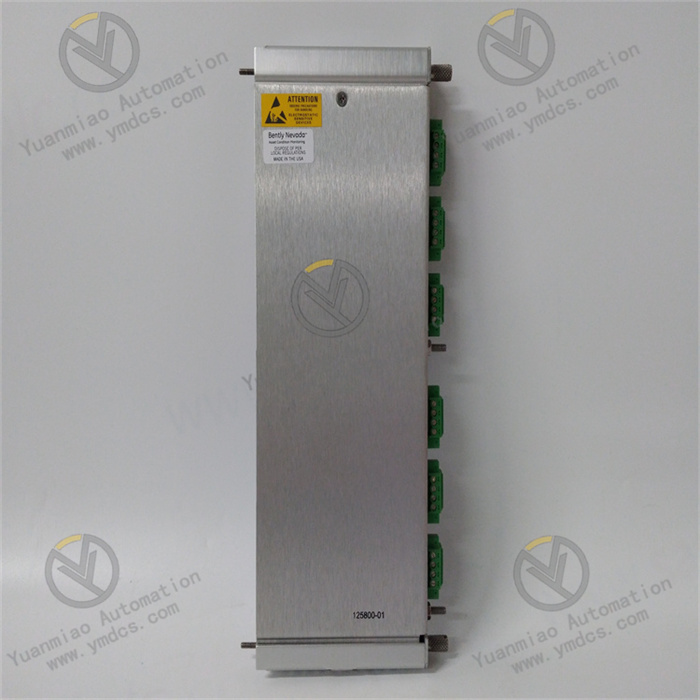
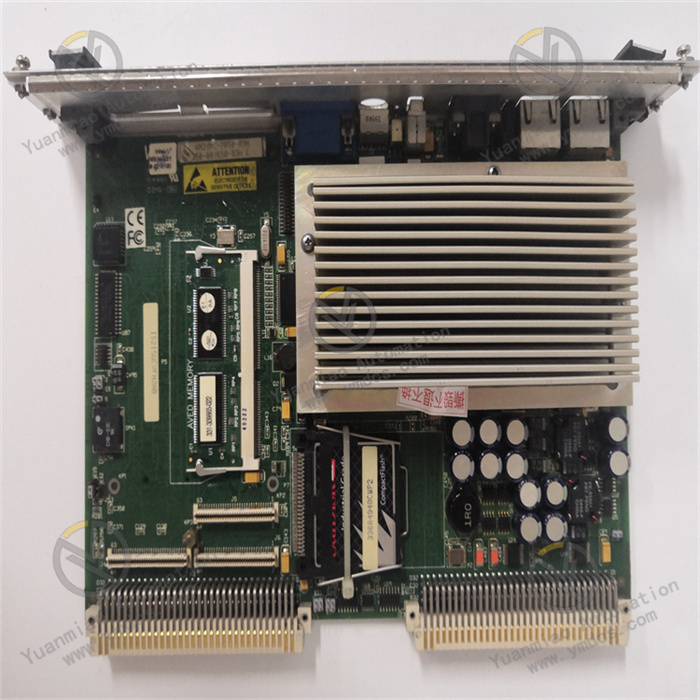
Full Model: IS215WECAH1A
Manufacturer: GE General Electric
Product Series: Mark VIe Wind Control Series
Product Name: Wind Energy Control Assembly, Wind Turbine Main Control Expansion Module
Product Positioning
GE IS215WECAH1A is a dedicated wind energy control assembly developed for 1.5MW wind turbines. As a core component of the GE Mark VIe wind turbine control system, it acts as a critical interface unit between the turbine main control system and energy regulation loops. Adopting an integrated industrial hardware architecture, this module integrates signal acquisition, energy logic computation, operating condition regulation, system communication, fault monitoring and redundancy adaptation. Designed for harsh wind farm operating environments, it precisely fulfills core control requirements including grid-connected generation, power regulation, load adaptation and fault protection. Widely deployed with original GE wind control systems and technical retrofit projects for domestic equivalent replacements, it serves as an essential control unit enabling stable grid connection, efficient power generation and safety protection for wind turbines.
Core Functions
The module undertakes five primary responsibilities for wind turbines: energy monitoring, power regulation, operating condition adaptation, system coordination and fault protection. It continuously collects key data including turbine generation power, grid connection parameters, unit operating status and pitch system conditions. Leveraging embedded GE proprietary wind control algorithms, it dynamically achieves accurate regulation of active and reactive power to accommodate fluctuating grid loads and variable wind conditions, stabilizing output power and maintaining compliant power factor. Furthermore, it facilitates bidirectional data exchange and logical coordination among the main controller, pitch system, converter, grid circuit breaker and remote monitoring platform. It continuously monitors unit anomalies and rapidly identifies operating limit violations, signal abnormalities, communication failures and energy imbalance. Corresponding regulation commands and alarm signals are issued timely to prevent grid oscillation, power over-limit, equipment overload and unexpected shutdowns, ensuring 24-hour safe, stable and efficient grid-connected operation of wind turbines.
Compatible Systems
Specially designed for the GE Mark VIe wind turbine control system and mainstream 1.5MW doubly-fed wind turbine control architecture. It seamlessly matches the control logic and communication framework of the turbine main controller, pitch control system, converter unit, grid switchgear and wind farm monitoring system. Natively supporting dedicated wind industry communication protocols, it connects smoothly to wind farm SCADA platforms, centralized control systems, fault recording systems and grid dispatching platforms. It supports technical renovation of legacy wind farm control systems, in-situ replacement of faulty modules, system performance upgrading and unit capacity expansion without extensive modification of existing control programs and wiring. Applicable for new wind farm construction, maintenance retrofits, spare parts replacement and intelligent system upgrading.
Application Scenarios
Primarily applied for main control energy regulation and system control of onshore 1.5MW wind turbines operating in diverse wind farm environments including plains, mountainous areas and tidal flats. Its core applications cover steady-state grid-connected control, dynamic power regulation, adaptive wind condition response, unit fault monitoring and coordinated protection. Capable of enduring frequent wind speed variations, extreme diurnal temperature differences, humidity and dust, as well as grid disturbances, it meets stringent reliability, precision and stability standards for wind farm grid-connected control and constitutes a vital control component for medium and small-scale wind turbines.
2. Technical Features
Proprietary Wind Control Algorithm for Precise and Stable Power Regulation
Equipped with GE self-developed wind energy control algorithms optimized for stochastic and volatile wind resources. It tracks real-time wind speed changes and grid dispatching commands to realize stepless adjustment of turbine active and reactive power. It effectively mitigates power fluctuation, grid voltage offset and frequency drift to guarantee power quality complying with grid codes. Featuring high linearity of response and low steady-state error, it accommodates full operating modes including low-wind startup, rated power generation and power curtailment under high wind speeds.
Wide Temperature Range for Superior Outdoor Environmental Adaptability
Constructed with industrial wide-temperature components and ruggedized hardware. Operating temperature spans -40℃~+90℃, reliably coping with extreme cold in winter, high temperature in summer and drastic temperature fluctuations at wind farms. It delivers excellent moisture-proof, dust-proof and anti-aging performance. No parameter drift or logic disorder occurs during long-term cabinet-mounted outdoor operation. Its environmental resistance surpasses general industrial modules and satisfies unattended continuous operation requirements of wind farms.
High-Speed Signal Processing for Ultra-Fast Dynamic Response
Embedded high-speed signal processor supports sampling frequencies up to 5kHz. It instantly captures sudden wind gusts, grid disturbances and unit state changes, completing parameter correction and power regulation within milliseconds. It rapidly adapts to variable wind conditions, suppresses grid oscillation, power overshoot and unit instability, and significantly improves disturbance resistance and operating adaptability.
Multi-Layer Redundant Protection Ensuring High Operational Safety and Reliability
Integrated multi-protection mechanisms: hardware monitoring, software logic verification and redundant data comparison. It continuously monitors module power supply, signal sampling accuracy, communication link health and energy regulation status. When faults such as power over-limit, signal failure, communication interruption, power supply fluctuation and operating imbalance are detected, it rapidly activates regulation interlock, local alarms and coordinated system protection to isolate abnormal conditions and avoid cascaded failures including turbine shutdown, off-grid events and equipment damage.
Multi-Protocol Communication for Flexible Networking and Expansion
Compatible with mainstream industrial communication protocols for wind power. Multiple transmission modes are available: backplane bus, industrial Ethernet and serial communication. It seamlessly interfaces with turbine main controllers, wind farm SCADA platforms and grid dispatching systems. Functions include real-time data uploading, remote parameter configuration, equipment status monitoring and fault tracing. It enables intelligent centralized management of turbine energy performance and meets demands of unattended and digitalized wind farm operation & maintenance.
Standardized Modular Design for Convenient Maintenance and Replacement
Adopting standardized modular architecture consistent with the GE Mark VIe series. Compact layout enables neat installation, easy disassembly and strong interchangeability, perfectly matching original turbine control cabinet layout. It supports full-range power-on self-test, accurate fault localization and real-time operating parameter monitoring, with active reporting of fault codes and abnormal conditions. Maintenance personnel can quickly identify defects. In-situ replacement can be implemented without complex program commissioning, minimizing turbine downtime and reducing wind farm operation losses.
Enhanced Anti-Interference Design for Complex Electromagnetic Environments
Equipped with electrical isolation, electromagnetic shielding, surge protection and electrical fast transient suppression circuits together with dedicated noise filtering. It effectively resists interference from wind farm converters, high-frequency electromagnetic radiation, line surges and electrostatic discharge. Long-term operation remains free of intermittent communication dropout, data distortion and false logic judgment, stabilizing the overall wind turbine control system.
3. Specification Parameters
| Item | Parameter |
|---|---|
| Model | IS215WECAH1A |
| Manufacturer | GE General Electric |
| Series | Mark VIe Wind Control Series |
| Device Type | Wind Energy Control Assembly, Wind Turbine Main Control Expansion Module |
| Applicable Units | 1.5MW Doubly-Fed Wind Turbines |
| Applicable Systems | GE Mark VIe Wind Control System, Wind Farm SCADA Monitoring System |
| Core Functions | Wind Power Regulation, Adaptive Condition Control, Signal Acquisition & Calculation, System Data Interaction, Fault Monitoring & Protection, Remote Parameter Setting |
| Maximum Signal Processing Frequency | 5kHz |
| Operating Input Voltage | DC 9~36V Wide Voltage Range |
| Supported Grid Frequency | 50Hz / 60Hz |
| Communication Interfaces | Backplane Bus, Industrial Ethernet, Serial Communication |
| Regulation Functions | Active Power Control, Reactive Power Control, Power Factor Optimization, Grid Voltage Stabilization |
| Protection Functions | Power Over-Limit Protection, Abnormal Condition Protection, Signal Fault Protection, Communication Loss Protection, Power Supply Abnormity Protection |
| Operating Temperature | -40℃~+90℃ |
| Storage Temperature | -45℃~+95℃ |
| Ambient Humidity | 5%~95%RH, non-condensing, suitable for outdoor turbine cabinet installation |
| Electrical Performance | Electrical Isolation, Electromagnetic Shielding, Surge Protection, High Electromagnetic Immunity, Signal Noise Reduction |
| Mechanical Features | Standard Modular Design, Cabinet Rack Mounting, Easy Assembly & Disassembly, High Interchangeability |
| O&M Features | Full Power-On Self-Test, Fault Code Reporting, Online Parameter Configuration, In-Situ Replacement, Commissioning Without Disassembly |
| Product Characteristics | Proprietary Wind Control Algorithm, Wide Temperature Tolerance, Fast Dynamic Response, Multi-Layer Protection, Flexible Networking, High Anti-Interference, Stable Operation, Easy Maintenance |
4. Working Principle
4.1 Power-On Initialization and Full-Range Self-Test
After receiving DC 9~36V power supply, the module automatically completes hardware initialization, firmware loading, system parameter verification, communication protocol configuration and comprehensive self-diagnosis. It sequentially inspects signal acquisition circuits, communication ports, processing chips, power supply circuits and regulation output logic to detect hardware faults, wire breakage, missing parameters, communication errors and power supply fluctuations. Once self-test passes, the module synchronizes parameters and control logic with the wind turbine main controller and enters standby monitoring mode, ready to respond to power regulation and operation control commands.
4.2 Real-Time Acquisition and Processing of Multi-Dimensional Wind Farm Data
During operation, the module continuously collects critical turbine data including real-time wind speed, active/reactive power, grid voltage and current, grid frequency, pitch system status and unit load. Raw signals undergo filtering, error compensation, analog-to-digital conversion and data validation to eliminate invalid data induced by electromagnetic noise and environmental disturbances. Accurate and stable measurement data serves as the foundation for power regulation, condition evaluation and fault identification.
4.3 Intelligent Wind Energy Calculation and Dynamic Power Regulation
Based on embedded dedicated wind control algorithms, the module performs dynamic computation combining real-time wind conditions, grid dispatching instructions and unit rated parameters to output precise power regulation commands. Under variable operating conditions such as wind speed fluctuation, grid load variation, unit startup/shutdown and power curtailment, it continuously adjusts active and reactive power setpoints and optimizes power factor. Stepless precise power control suppresses grid voltage and frequency fluctuations, ensures stable grid-connected operation and improves power generation efficiency and power quality.
4.4 Multi-System Coordination and Adaptive Operating Condition Control
As the core interactive unit of the turbine control system, the module establishes bidirectional data exchange with the main controller, pitch system, converter, grid switchgear and SCADA platform. It automatically switches corresponding regulation logic and control parameters according to different operating modes: startup, grid connection, off-grid, power curtailment and fault standby. All subsystems are coordinated to realize full-condition adaptive control, guaranteeing stable operation throughout the complete turbine cycle from startup, full-load generation to shutdown.
4.5 Fault Monitoring, Protection and Data Logging & Uploading
Continuous on-board diagnosis and fault monitoring run throughout operation to supervise internal hardware health and unit operating conditions. When detecting power over-limit, signal abnormality, communication interruption, unstable power supply or operating imbalance, the module locks abnormal status, triggers local alarms and uploads fault codes to the monitoring platform. Abnormal regulation logic is interlocked and coordinated protection commands are sent to the main controller to execute power curtailment, shutdown or off-grid actions to prevent fault escalation. Operating logs, fault sequences and condition parameters are recorded persistently to support fault tracing and maintenance analysis, ensuring long-term safe operation of wind turbines.
5. Common Faults and Troubleshooting
5.1 Symptom: Module No Response, Turbine Power Regulation Failure, Unable to Follow Grid Dispatch
Possible Causes
① Abnormal module supply voltage exceeding DC 9~36V range, loose wiring or poor contact;
② Failed initialization, corrupted control parameters or firmware anomaly;
③ Disconnected signal acquisition circuit or inadequate shielding leading to invalid measurement data;
④ Malfunction of core processing chip and disabled regulation logic;
⑤ Communication link breakdown or protocol mismatch with main controller.
Solutions
Shut down the turbine, cut off power and complete discharge. Measure input supply voltage and troubleshoot power fluctuation and loose terminals to ensure voltage within rated range. Power-cycle the module, restore default parameters and re-synchronize turbine control and dispatching settings. Inspect signal cables and shielding grounding, repair broken wires and resolve signal interference. Verify communication links and protocol configuration with the main controller and re-establish synchronization. If regulation function remains unavailable after confirming normal power supply, wiring, communication and parameters, hardware damage is confirmed. Replace with original GE IS215WECAH1A module.
5.2 Symptom: Severe Turbine Power Fluctuation, Unstable Grid Connection, Frequent Power Over-Limit Alarms
Possible Causes
① Improperly tuned power regulation parameters and unbalanced dynamic compensation logic;
② Distorted sampling data and incorrect condition judgment due to on-site electromagnetic interference;
③ Sampling precision drift and degraded signal processing performance of the module;
④ Abnormal wind condition adaptation logic failing to respond rapidly to wind speed changes;
⑤ Poor coordination between upstream and downstream subsystems and unbalanced power feedback.
Solutions
Review and optimize core parameters including power regulation gains, dynamic compensation and anti-chatter delay according to local wind and grid characteristics. Improve shielding and grounding of signal cables, route away from converters and high-voltage equipment to reduce electromagnetic interference. Calibrate sampling accuracy to correct measurement offset. Inspect pitch and converter subsystems for coordination faults. If power oscillation and unstable grid connection persist after parameter optimization and interference mitigation, module performance degradation is confirmed and replacement is required.
5.3 Symptom: Communication Interruption, No Operating Data on Remote Platform, Remote Dispatching Inoperative
Possible Causes
① Damaged communication cables, oxidized or loose connectors with poor contact;
② Incorrect configuration of communication protocol, device address or baud rate, mismatched with main controller and monitoring system;
③ Data packet loss and intermittent communication dropouts caused by strong wind farm electromagnetic interference;
④ Aging communication chip or damaged port on the module;
⑤ Communication link failure on the SCADA server side.
Solutions
Fully inspect communication cables and ports, fasten connections, replace damaged wires and clean connector contacts. Uniformly verify communication parameters between the module, main controller and remote platform, correct configuration errors and re-establish communication links. Optimize cabinet shielding and grounding to mitigate field interference. Troubleshoot remote server and communication infrastructure to rule out external faults. If persistent disconnection and missing data continue after rectification, the module communication circuit is faulty and original replacement is needed.
5.4 Symptom: Module Over-Temperature Alarm, Slow Operation and Parameter Drift
Possible Causes
① Poor ventilation in turbine control cabinet, excessive dust and blocked heat dissipation channels;
② Abnormal power consumption induced by long-duration high-load computation and frequent power regulation;
③ Excessive cabinet ambient temperature under summer high-temperature conditions;
④ Aging internal components with deteriorated thermal stability and excessive heat generation.
Solutions
Periodically shut down equipment to clean cabinet air ducts, filters and dust on module surfaces, unblock heat dissipation passages and improve ventilation. Reasonably control unit load to avoid prolonged high-frequency regulation under extreme operating limits. Monitor cabinet ambient temperature to maintain operation within specified temperature range. Timely replace aged IS215WECAH1A modules with recurrent over-temperature alarms, parameter drift and unstable operation to guarantee reliable turbine power regulation.
5.5 Symptom: Frequent Unit Power Curtailment and Unexpected Condition Protection Shutdowns
Possible Causes
① Improperly configured protection thresholds and excessively short anti-chatter delay leading to false protection;
② Erratic sampled data causing incorrect condition judgment;
③ Internal logic disorder or abnormal firmware operation;
④ Temporary power supply fluctuations disturbing module operation.
Solutions
Review and optimize power protection thresholds and delay settings, fine-tune parameters according to local wind conditions. Eliminate signal interference and sampling distortion to ensure authentic and stable operating data. Verify power supply stability and install surge suppression devices. Reboot the module to refresh operation logic and upgrade compatible firmware versions. If false protection shutdowns still occur after eliminating external and parameter-related issues, hardware failure is confirmed and spare part replacement is required.