Description
1. Overview
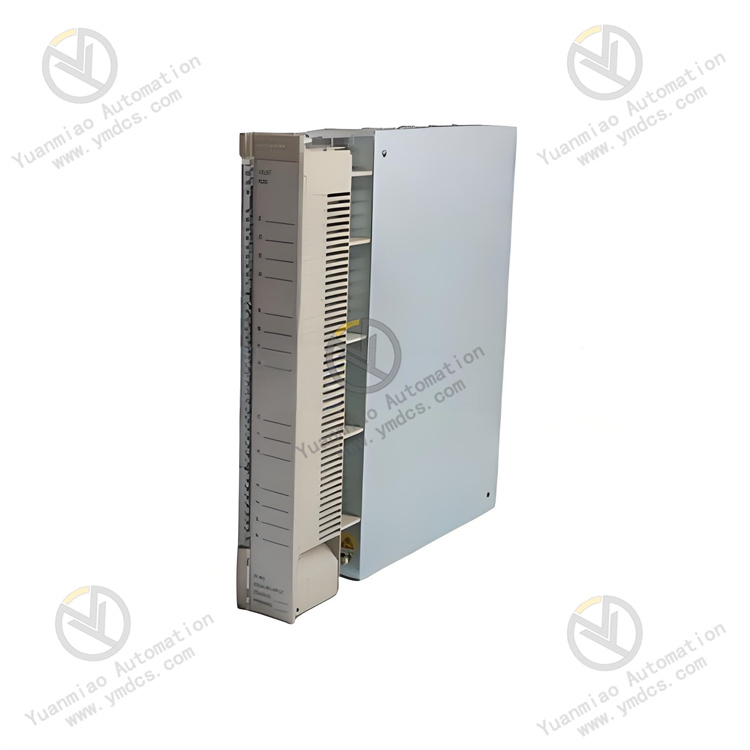
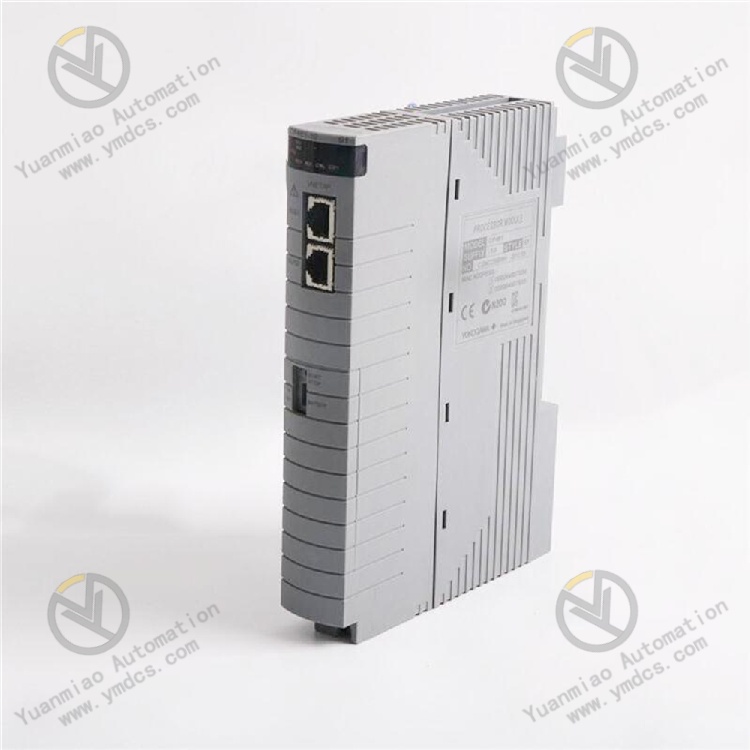
Yokogawa CP471-01 is a high-performance Field Control Station (FCS) processor module developed by Yokogawa Electric Corporation for the CENTUM VP Distributed Control System (DCS). Serving as the core computing and control hub of the entire DCS system, it undertakes critical tasks including plant-wide process control, logic operation, data scheduling, bus communication and I/O management.
This high-spec processor dedicated to industrial process control adopts a high-performance 32-bit computing core, supporting complex continuous process control, batch process control and interlock logic operation. It acts as the key hardware component of DCS systems in process industries such as chemical, power, petrochemical and metallurgical sectors.
The CP471-01 boasts outstanding system compatibility and operational stability. It natively supports dual hot-standby redundancy with bumpless switching capability, completely eliminating system shutdown and process interruption risks caused by main controller faults.
Integrated with large-capacity storage, high-speed bus communication, real-time data processing and built-in fault diagnosis functions, the module can centrally manage all field I/O modules and perform full-range functions such as high-precision PID regulation, sequence control, safety interlock and data acquisition & upload.
With proven durability, strong anti-interference performance and zero drift during long-term operation, it is widely used for new DCS system construction, hardware replacement of legacy CENTUM VP systems, system expansion and technical retrofitting & upgrading.
1. High-Performance Core Computing for Complex Process Applications
Built upon an industrial-grade 32-bit high-performance processor architecture featuring fast computation and short program scan cycles. It efficiently executes massive complex industrial control algorithms including PID regulation, cascade control, split-range control, sequence logic, time-sequence interlock and batch recipe processing.
It precisely satisfies high-precision and high-stability process requirements for continuous chemical production, thermal regulation in power plants and petrochemical reaction processes, ensuring steady controllability of process parameters without control lag or overshoot.
2. Dual Redundant Hot-Standby Architecture for Superior System Reliability
Supports 1:1 dual hot-standby operation. The primary and standby modules realize real-time synchronization of data, programs and operating status.
When the primary processor encounters failure, crash or abnormal offline, the system achieves millisecond-level automatic bumpless switching. Control logic remains continuous, process data is retained and equipment operation is unaffected throughout the switchover.
It fundamentally prevents plant shutdown, process fluctuation and safety hazards induced by single-point failures, meeting the stringent requirements for highly reliable continuous production in process industries.
3. High-Speed V-net Bus Communication for Efficient & Stable System Networking
Natively compatible with Yokogawa proprietary V-net industrial bus protocol for high-speed real-time data exchange. It seamlessly interconnects operator stations, engineering stations, servers and various I/O modules to realize plant-wide data synchronization, command issuance and status feedback.
The communication channel delivers strong anti-interference capability, ultra-low latency and zero data loss. It suits multi-node networking and wide-range coordinated process control within large-scale DCS systems, guaranteeing real-time performance and consistency of the whole control system.
4. Large-Capacity Storage & Power-Fail Protection to Secure Data Integrity
Equipped with on-board large-capacity storage for storing abundant control programs, process recipes, interlock logic, historical parameters and fault logs.
A battery-backed power-fail protection mechanism retains critical process data, program parameters and fault records after power loss. Operating parameters are automatically restored upon power recovery, avoiding data loss and program disorder to ensure process continuity and data traceability.
5. Comprehensive Self-Diagnosis & Fault Protection for Simplified Maintenance
Embedded complete functions for hardware self-test, program diagnosis, communication monitoring and status inspection. It detects various abnormalities including CPU errors, bus faults, I/O communication failures, power supply anomalies and program errors in real time, accurately locating fault points and uploading alarm information.
Integrated protection logic including fault interlock, exception fault tolerance and on-line alarms enables early identification of hardware aging and hidden system risks, significantly reducing unexpected failures and lowering the difficulty of on-site troubleshooting and maintenance.
6. Industrial Modular Design for Harsh Operating Environments
Standard modular design for DCS racks with convenient plug-and-play installation and compact structure, matching the standard cabinet layout of CENTUM VP systems.
The whole module passes strict EMC electromagnetic compatibility tests to resist grid harmonics, electromagnetic radiation and switching surges. All hardware components adopt industrial wide-temperature specifications with excellent resistance to humidity, vibration and aging.
It supports 24/7 continuous long-term operation and adapts to demanding industrial sites featuring high temperature, heavy dust and strong electromagnetic interference in chemical, petrochemical and power plants.
3. Technical Specifications
1. Basic Parameters
Model: CP471-01
Brand: YOKOGAWA (Yokogawa Electric Corporation)
Product Type: DCS Field Control Station Processor Module
Applicable System: CENTUM VP Distributed Control System
Core Functions: Process control computation, PID regulation, sequence interlock control, I/O data management, V-net bus communication, fault diagnosis, data storage & backup
Operation Mode: Standalone operation / 1:1 dual hot-standby redundant operation
Application Scenarios: New construction, capacity expansion, legacy hardware replacement and technical upgrading of DCS systems for petrochemical, thermal power, fine chemical, metallurgical and water treatment process industries
2. Core Computing Performance
Core Architecture: 32-bit high-performance industrial processor
Computing Capacity: Parallel operation of large-scale complex control algorithms
Scan Cycle: High-speed cyclic program scanning with ultra-low process response delay
Control Functions: Continuous process regulation, discrete sequence control, safety interlock, batch recipe control, parameter logic operation
Operational Stability: Drift-free and logic-consistent long-term continuous operation with excellent uniformity of control precision
3. Communication & Networking Parameters
Bus Protocol: Natively supports Yokogawa V-net real-time industrial bus
Networking Mode: Multi-node DCS networking, interconnection with upper stations, I/O modules and communication modules
Communication Characteristics: High-speed real-time transmission, anti-interference, low latency and high data synchronism
Expandability: Compatible with various communication expansion modules to connect third-party instruments and supervisory systems
4. Storage & Data Backup Parameters
Storage Configuration: On-board large-capacity flash memory for programs and data
Backup Mechanism: Battery-backed power-fail data preservation for parameters, programs and logs
Data Functions: Historical data recording, fault log storage, operation status archiving and process recipe saving
Recovery Feature: Automatic loading of backup parameters after power-on without reconfiguration or programming
5. Mechanical & Environmental Parameters
Mounting: Plug-in modular installation on standard DCS racks
Operating Temperature: 0℃~+60℃
Storage & Transportation Temperature: -20℃~+70℃
Operating Humidity: 5%~95% RH (non-condensing, no corrosive gas)
Anti-Interference Standard: Complies with industrial DCS EMC specifications
Operation Mode: Supports 24/7 year-round continuous unattended operation
The Yokogawa CP471-01 processor module follows a closed-loop workflow:
Real-Time Data Acquisition → Logic Calculation & Regulation → Control Command Output → Data Synchronization & Storage → Fault Self-Diagnosis.
After power-on initialization, the module automatically loads system configuration programs, process parameters and interlock logic. It collects analog signals, digital signals and status data from all field I/O modules via the V-net bus in real time.
Leveraging its high-speed computing core, it continuously executes algorithms including PID regulation, sequence control, interlock logic and process computation. Based on preset process parameters, it outputs precise control commands to drive actuators for regulating critical process variables such as temperature, pressure, flow and liquid level to maintain stable production.
Under redundant configuration, the primary and standby processors synchronize programs, data and operating status to achieve bumpless switchover upon faults.
Meanwhile, continuous hardware and communication self-inspection runs throughout operation. Once communication abnormality, axis error, program fault or power anomaly is detected, fault logging, alarm notification and safety interlock will be triggered immediately to prevent fault escalation and ensure safe, stable and continuous operation of the whole DCS system.
1. Main Control System for Petrochemical Process DCS
Widely deployed for DCS control of core chemical process sections including refining units, reaction facilities, distillation columns and tank farms. It executes continuous process regulation, equipment interlock, sequential start-stop and safety protection control to guarantee continuous, stable and safe chemical production. It serves as the standard core hardware for CENTUM VP systems in the petrochemical industry.
2. Thermal Control System for Power Plants
Suitable for thermal control, water-steam system regulation and auxiliary equipment interlock control of thermal power plants and cogeneration plants. It precisely manages key parameters including unit temperature, pressure and load. The redundant architecture eliminates shutdown risks caused by main controller failures, ensuring long-term stable operation of power generation units and meeting high reliability and safety standards for power industry.
3. Industrial Automation Systems for Metallurgy & Water Treatment
Applied in process automation control systems for metallurgical furnaces, water treatment and energy management. It realizes precise regulation of process parameters, automatic equipment coordination, system status monitoring and data archiving, adapting to multi-procedure continuous production and improving automation management level and operational stability of production lines.
4. Replacement & Capacity Expansion Upgrade of Legacy DCS Systems
Directly compatible for replacing aged legacy processor modules of the same series in CENTUM VP systems. Ideal for technical retrofits where hardware aging, performance degradation and frequent failures occur. No modification to system configuration, control logic or cabinet layout is required. It rapidly restores DCS operational performance, enabling low-cost system expansion and intelligent upgrading while shortening production downtime during renovation.
![]()