Description
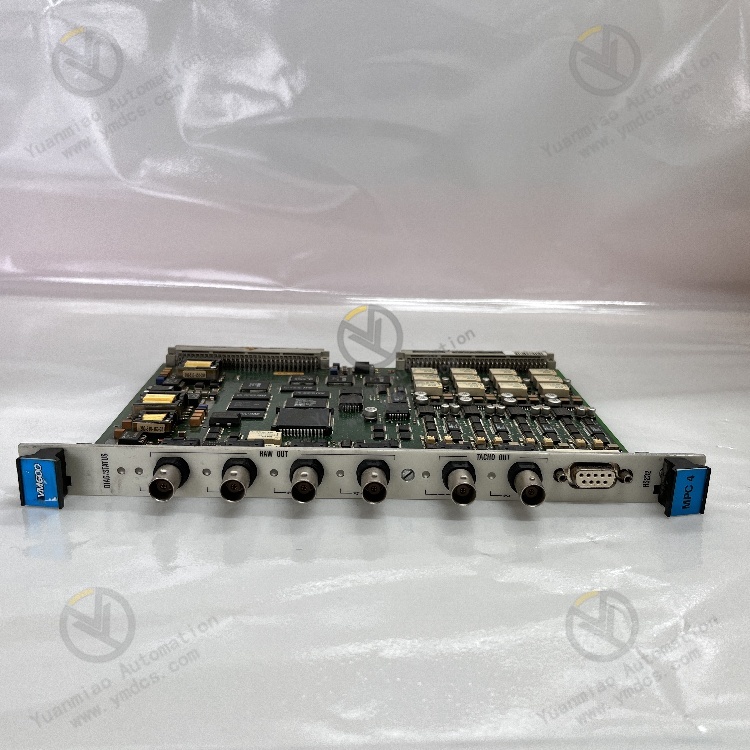
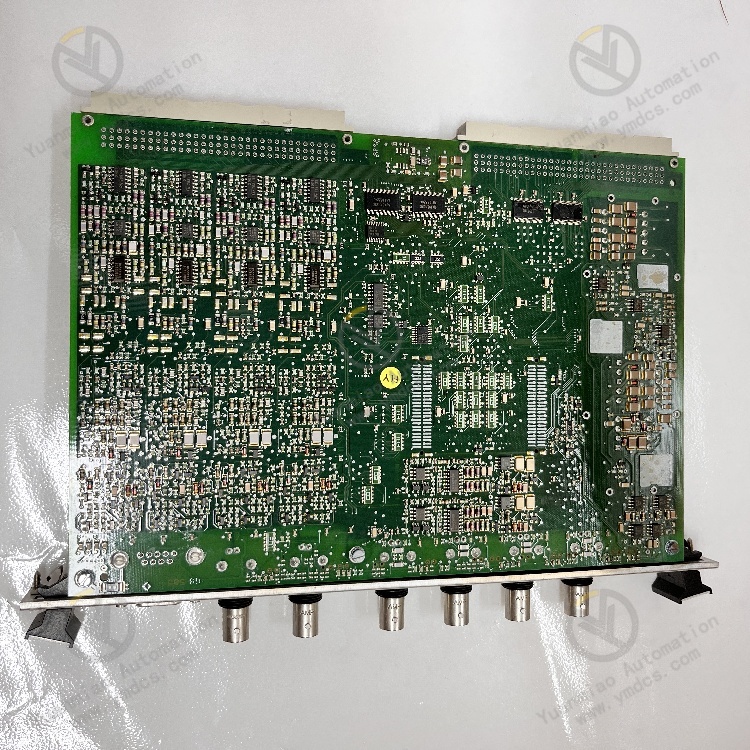
Vibro-meter 200-510-070-113 200-510-111-034 VM600 MPC4
I. Basic Information
Vibro-meter VM600 is a high-precision Machinery Protection System (MPS). Adopting a modular structure, it is specially developed for vibration monitoring and intelligent protection of large critical rotating machinery. It supports flexible combination and expansion of various functional modules to meet customized monitoring demands in diverse industrial environments. Among them, 200-510-070-113 and 200-510-111-034 are core models of the VM600 system, corresponding to MPC4 (Machine Protection Card). Serving as the core signal processing and protection unit of VM600, it undertakes core functions including vibration signal processing, fault diagnosis, alarm threshold judgment and equipment protection interlock. With high-precision measurement, flexible configuration and outstanding reliability, it is an essential core component for monitoring and protection systems of critical rotating machinery.
As the core processing module and main carrier for vibration monitoring and intelligent protection of the VM600 system, MPC4 is available in dedicated exclusive models 200-510-070-113 and 200-510-111-034. Both are dedicated machinery protection modules exclusively for the VM600 system, mainly applied to vibration and rotating speed monitoring, fault early warning and equipment protection of key rotating machinery. They deliver high-precision signal acquisition, processing, analysis and alarm control functions to realize timely detection and emergency disposal of equipment abnormalities. They work together with CPUM (Central Processing Unit Module) and IOC4T (Input/Output Card) to build a complete condition monitoring and protection system for rotating machinery. The highly integrated combination of MPC4 and IOC4T fulfills signal interaction and control execution, providing full-range monitoring and protection for core industrial equipment. It is worth noting that this series of MPC4 cards are being phased out, and spare parts will be available until 2027. There is no direct replacement for MPC4 in standard VM600 systems, while MPC4 used in VM600 MK2 systems can be substituted by the combination of MPC4 MK2 and IOC4 MK2.
II. Technical Specifications
2.1 General Core Specifications
Power Supply: Powered uniformly by VM600 system rack, compatible with standard 24V DC ±10% power supply with maximum current below 1.5A. Equipped with stable power input interface as well as over-current and over-voltage protection, it effectively prevents card damage caused by power anomalies, ensures stable signal processing and protection functions, and provides reliable power support for system-wide monitoring and protection. It is also adaptable to 100-240V AC, 50/60Hz, 1.5A power supply in certain occasions to satisfy power demands of different industrial sites.
Environmental Adaptability: Operating temperature: -20°C ~ 60°C, resistant to temperature fluctuations and harsh working conditions such as high temperature, heavy dust and strong electromagnetic interference. Storage temperature: -40°C ~ 85°C. Operating humidity: 0~90% non-condensing; Storage humidity: 0~95% non-condensing. It possesses strong anti-electromagnetic interference and dustproof performance that meets strict on-site environmental requirements, and certain models reach protection grades suitable for severe dusty environments. The matching shielded connecting cable 200-510-111-034 has an operating temperature range of -30°C ~ 70°C (non-condensing), fitting wiring requirements of various field environments.
Dimension & Weight: Designed in compact modular style for standard 19-inch VM600 racks. The size of MPC4 card is approximately 120mm×80mm×150mm (H×W×D) with weight about 0.65kg. The 200-510-111-034 shielded cable is 5 meters long with diameter of 6mm and weight of 0.3kg. Lightweight in overall structure, it can be directly installed on the front of VM600 racks without occupying extra space, easy to assemble with IOC4T cards and other modules. Some MPC4 models measure 110mm×170mm×160mm (W×H×D) and weigh around 2kg, applicable to more complex monitoring scenarios.
Basic Core Parameters: Its frequency range covers low frequency to high frequency for detection of various vibration signals. The maximum sampling frequency per channel reaches 25kHz with 16-bit resolution, enabling accurate capture of weak vibration signals and providing high-precision data support for equipment fault diagnosis. The speed counting channel supports resolution up to 1 revolution per second, compatible with proximity probes, magnetic pulse sensors and TTL signals, and supports fractional speed ratio to guarantee accurate speed monitoring. Built-in 8GB internal memory allows capacity expansion via SD card to meet mass monitoring data storage needs.
2.2 Core Technical Parameters of MPC4
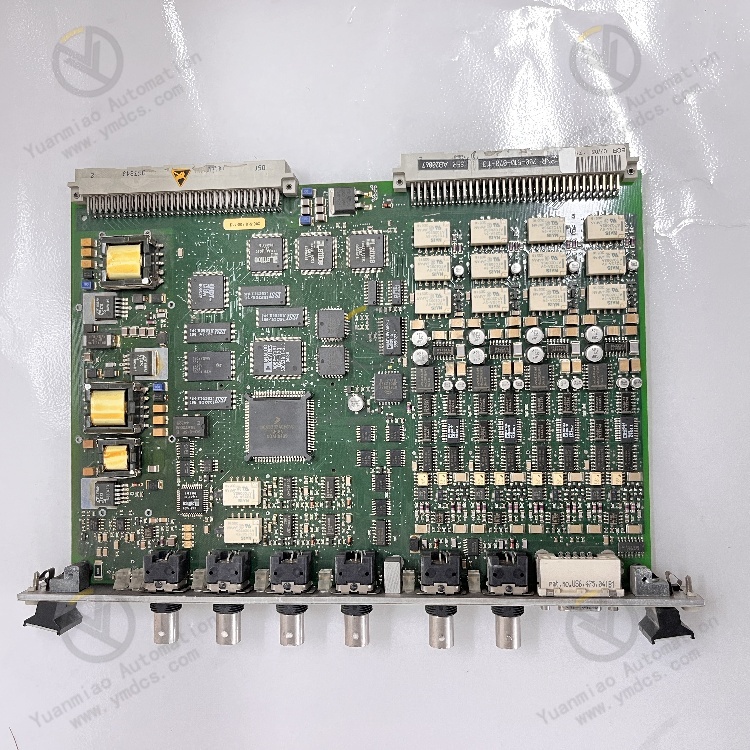
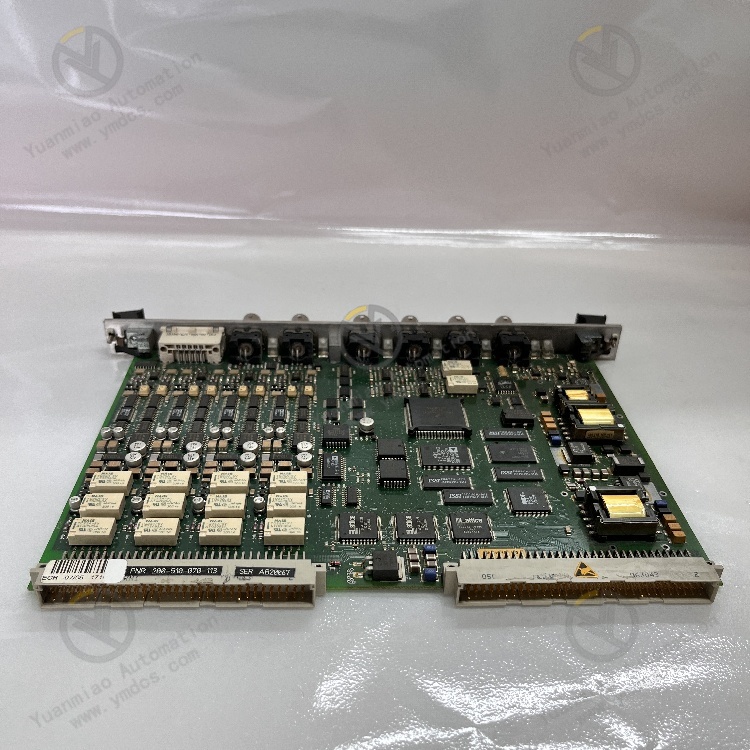
Signal Interface Configuration: Equipped with 4 dynamic signal input channels (differential signal input supported) and 2 speed input channels, all channels support independent programmable configuration to receive original monitoring signals from accelerometers, velocity sensors, proximity probes, displacement sensors, speed sensors and other transducers. Dynamic signals fulfill measurement functions required by various machinery protection applications including relative vibration and absolute vibration. It integrates sensor power supply function, compatible with Vibro-Meter front-end devices such as ICP accelerometers and proximity systems, providing multiple power outputs including +27.2V, -27.2V, +15.0V (0-25mA) and 6.16mA (1-23V), and the +5V circuit is equipped with 11.0A over-current protection.
Signal Processing Function: It delivers powerful digital signal processing capability to perform filtering (high-pass / low-pass / band-pass), integration / differentiation, rectification (RMS, average value, true peak value etc.), order tracking (amplitude & phase, only available for standard version and independent circuit version) and sensor-target gap measurement on collected original vibration and speed signals, so as to accurately extract key parameters such as vibration amplitude, phase and frequency for fault diagnosis. A BNC interface is arranged on the front panel for direct original signal analysis, facilitating on-site commissioning and signal verification.
Alarm & Protection Function: It supports programmable setting of Alert, Danger and Normal thresholds, as well as alarm delay, hysteresis and latch functions. Alert and danger levels can be adaptively adjusted according to rotating speed or external signals. It has abundant alarm logics with switchable over-level (A+, D+) and under-level (A-, D-) modes (only over-level available for accelerometer systems), and supports combined AND, OR and majority voting logics, including 8 basic functions and 4 advanced functions with maximum alarm scanning interval of 100ms. The built-in OK system monitors sensor signals in real time to diagnose wire breakage, sensor failure and conditioner faults. It is fitted with 6 channel status LEDs and 1 hardware/processing error LED for quick fault location. Each dynamic channel has 2 processing outputs, every dual channels share 1 processing output (2 outputs per MPC4 card), and each speed channel is equipped with 1 processing output to realize fast alarm signal output.
Communication & Integration Function: It supports multiple communication protocols including Modbus RTU (RS485), Ethernet/IP, OPC UA and Ethernet for convenient data exchange and system integration. It can be connected with VibroSight software, VM600 MPSx software, factory DCS, PLC and other control systems to complete signal uploading and command distribution, fitting various industrial monitoring and control scenarios. MPS and CMS adopt independent communication buses and are configured via respective software to avoid interference of CMS operation on MPS functions.
Programming & Configuration: Programming and parameter setting can be completed via VM600 MPSx software with flexible configuration interface. Users can customize signal acquisition parameters, filtering modes, alarm thresholds and output logics according to actual monitoring requirements to establish exclusive monitoring and protection logics for different types of rotating machinery.
Protection & Reliability: Perfect signal protection and filtering circuits effectively eliminate external electromagnetic interference and signal noise to stabilize input signals and ensure accurate data processing. It supports hot-swap operation and automatic self-check & diagnosis after power-on, greatly improving system reliability and maintenance convenience. The highly integrated assembly with IOC4T card integrates sensor power supply, buffer output, DC output, relay and serial communication interfaces with high integration and stable performance.
Compatibility & Expandability: Specially designed for VM600 system, it is fully compatible with core modules such as CPUM and IOC4T to realize fast data transmission and accurate command execution. It matches ABE040, ABE042, ABE056 and other VM600 racks, and can work with relay cards like IRC4 and RLC16 to expand alarm output paths and realize multi-device linkage control. Sensors and connecting cables can be flexibly matched to satisfy monitoring requirements of different industrial sites.
2.3 Exclusive Matching Specifications & Differences of 200-510 Series
Models 200-510-070-113 and 200-510-111-034 are dedicated VM600 MPC4 machinery protection cards manufactured by Meggitt Sensing. They share identical core functions and technical parameters as matching components for VM600 MPC4 system cards, with only minor differences in product positioning, interface details, application emphasis and physical form, while both achieve full compatibility with VM600 system. Details are as follows:
System Compatibility: Both are exclusively applicable to Vibro-meter VM600 series machinery protection systems and perfectly compatible with ABE040, ABE042, ABE056 series racks. They can be directly installed on the front of racks and connected with racks and other modules through VME backplane bus without extra adaptation. Cooperating with CPUM, IOC4T and other modules, they build complete monitoring and protection systems, and meet demands of industrial automation, machinery protection and key equipment monitoring in line with API 670 standards.
Module Matching: Both need one-to-one seamless connection with IOC4T input/output cards to form highly integrated assemblies for signal acquisition, processing, output and control execution. They coordinate with CPUM modules to receive control commands and feedback operating status, and can be matched with IRC4, RLC16 relay cards to expand alarm functions. Among them, 200-510-111-034 is mostly used as shielded connecting cable matched with MPC4 cards and sensors to ensure reliable signal transmission.
Signal Adaptation: Both are compatible with signals of various vibration and speed sensors, supporting access and processing of physical quantities such as vibration displacement, velocity and acceleration. Signal acquisition parameters and filtering modes can be flexibly configured according to sensor types and monitoring demands to guarantee accurate transmission and processing of monitoring data. They support differential, analog, digital and other multi-type signals to meet various monitoring needs. The 200-510-111-034 shielded cable can effectively reduce electromagnetic interference and stabilize signal transmission.
- Minor Differences: 200-510-070-113 focuses on high-precision vibration monitoring and signal processing. As the mainstream core MPC4 model, it is equipped with complete signal processing, alarm and protection functions, suitable for high-standard harsh industrial fields such as power and petrochemical industries. It supports multi-channel high-precision measurement and complex signal processing, and realizes advanced functions including order tracking. 200-510-111-034 is mainly oriented to signal transmission adaptation, mostly serving as matching shielded cables or simplified MPC4 adaptation modules. Its interface design prioritizes connection reliability and excellent shielding performance to resist electromagnetic interference, ideal for signal transmission between sensors and MPC4 cards or scenarios with simple monitoring functions and high requirements for signal stability. The two models keep consistent core technical parameters and can be selected flexibly according to practical applications.
III. Working Principle
The machinery protection unit composed of Vibro-meter 200-510-070-113, 200-510-111-034 and MPC4 acts as the signal processing core and fault protection hub of the VM600 system. Following the closed-loop workflow of Signal Collection → Signal Processing → Fault Judgment → Alarm Linkage, it connects sensors, IOC4T input/output cards, CPUM control modules and external protection devices to realize real-time monitoring, fault diagnosis and emergency protection of key rotating machinery. The detailed working process is as follows:
Signal Collection Phase: MPC4 cards collect original monitoring signals from accelerometers, velocity sensors, proximity probes, displacement sensors, speed sensors and other transducers via built-in interfaces or 200-510-111-034 shielded cables, and provide stable power supply for sensors. It supports synchronous acquisition of 4 dynamic signals and 2 speed signals. After internal noise filtering, purified original signals are sent to signal processing units. The 16-bit high resolution and high sampling rate ensure precise signal collection, and the built-in OK system monitors sensor operating status in real time to timely detect sensor faults and wire breakage.
Signal Processing Phase: MPC4 performs digital processing including filtering, integration, differentiation, rectification and order tracking on collected original signals to accurately extract key parameters such as vibration amplitude, phase, frequency and rotating speed, and analyze operating anomalies such as rotor unbalance, bearing wear and shaft misalignment. Processed parameters and analysis results are transmitted to CPUM modules via VME backplane bus for comprehensive analysis, and relevant signals are fed back to IOC4T cards to provide data basis for subsequent alarm and control actions.
Fault Judgment & Alarm Phase: MPC4 compares real-time monitored parameters with pre-configured Alert and Danger thresholds set by software. When values exceed alert thresholds, alert signals will be triggered and indicated by LED indicators, meanwhile alert information will be sent to CPUM and IOC4T cards. Once danger thresholds are exceeded or signal abnormalities are detected, emergency alarms will be activated immediately with preset alarm logics started. External audible & visual alarms will be driven through self-owned processing outputs or IOC4T cards to remind field staff of timely handling.
Protection Linkage & Status Feedback Phase: While triggering danger alarms, MPC4 interlocks external protection devices such as trip switches and emergency braking units through relay outputs of IOC4T cards to cut off power supply or stop equipment operation rapidly, so as to prevent fault escalation and avoid equipment damage and safety accidents. Meanwhile, MPC4 collects real-time operating data including signal processing status, alarm status and power status, as well as linkage feedback signals from sensors and external devices, and uploads all data to CPUM modules for remote status monitoring and quick troubleshooting. Automatic power-on self-check further enhances overall system reliability.
IV. Application Scenarios
4.1 Power Industry
Widely applied to core equipment such as steam turbines, generators, water pumps and fans in thermal power plants, hydropower stations and nuclear power plants. As core signal processing and protection units, they connect vibration & speed sensors with CPUM and IOC4T modules to collect and process operating signals and judge equipment operating conditions accurately. Adaptable to high temperature and strong electromagnetic interference environments, they rapidly identify faults including rotor unbalance, bearing wear and shaft misalignment, and implement graded alarm and trip interlock to guarantee continuous and safe power supply and avoid blackouts caused by equipment failures. Model 200-510-070-113 delivers outstanding high-precision signal processing performance to meet strict monitoring requirements of nuclear power and thermal power industries, while 200-510-111-034 shielded cables effectively resist strong electromagnetic interference in power plants and stabilize signal transmission.
4.2 Petrochemical Industry
Suitable for key rotating machinery including compressors, process pumps, motors and centrifuges used in petroleum exploitation, refining and pipeline transportation fields, running stably under high-temperature, high-pressure and heavy-dust harsh conditions. MPC4 cards establish stable connection with sensors via 200-510-111-034 shielded cables to transmit vibration and speed data. High-precision signal processing enables early warning of equipment abrasion, seal failure and excessive shaft vibration, and interlocks alarms and shutdown devices to prevent medium leakage, production halt and other safety incidents and economic losses. With strong anti-interference and dustproof capability, it adapts to complex refining site environments, and realizes multi-device linkage protection together with IOC4T cards to ensure smooth production operation.
4.3 Metallurgy & Mining Industry
Applied to rolling mills, industrial fans and driving motors in metallurgical plants, as well as crushers, belt conveyors and hoists in mines. As core signal processing and protection components, they connect field sensors with system core modules to complete accurate signal acquisition, processing and fault judgment. Featuring sturdy structure and excellent environmental adaptability, they adapt to vibration and dusty working conditions in metallurgy and mining sites, timely feed back operating anomalies and reduce equipment downtime and maintenance costs via external device linkage. Flexible configurable alarm thresholds satisfy personalized protection demands of different equipment to ensure efficient and safe production.
4.4 General Machinery Manufacturing Industry
Used for production testing, factory inspection and on-site maintenance of large rotating machinery such as heavy-duty motors, large fans, water pumps and centrifugal separators. Users can flexibly adjust signal acquisition parameters and filtering modes to match various testing instruments and monitoring standards, realizing accurate collection and processing of vibration parameters and providing reliable data support for product quality inspection, fault diagnosis and daily maintenance. It also supports automatic testing process control and fault early warning, and is widely used in protection control of machine tools, conveying equipment and packaging machinery to help enterprises improve product quality and reduce failure losses.
4.5 Other Core Industrial Fields