Description
ABB UFC719AE01 3BHB00072R0101
1. Basic Information
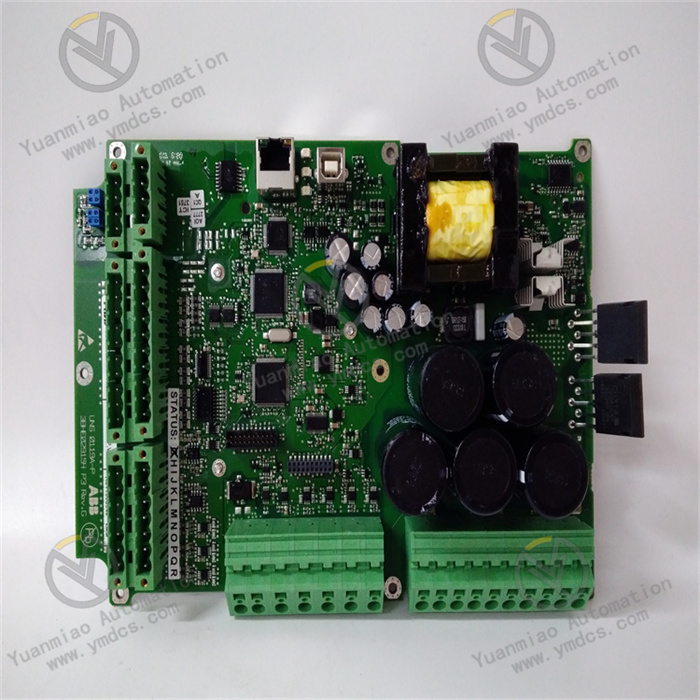
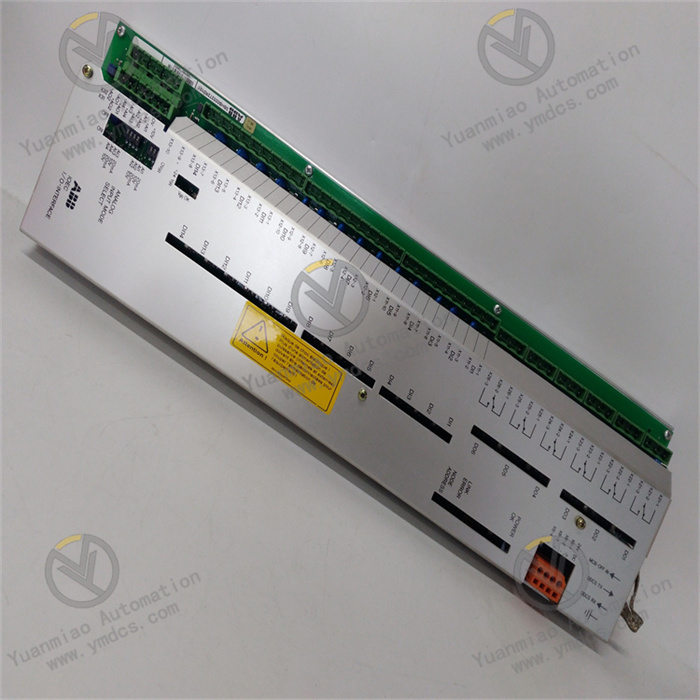
ABB UFC719AE01 (Order No.: 3BHB00072R0101) is a high-performance CPU main control processor module for ABB Symphony / INFI90 series, serving as the core operation and logic scheduling unit of DCS distributed control systems. It undertakes core tasks such as system program operation, logic control, data scheduling, loop regulation, bus management and equipment linkage, acting as the central core board for large-scale automation control systems in power plants, heavy industry and chemical industries.
Adopting an industrial dual-core architecture plus FPGA co-processing solution, the module features fast computing speed, high control accuracy and strong real-time performance, specially designed for large-scale continuous process industries. It supports hardware redundancy adaptation, millisecond-level task scanning, high-reliability data operation and comprehensive self-diagnosis. With triple-proof coated circuit board and enhanced anti-electromagnetic interference technology, it operates stably for a long time in harsh working conditions such as high dust, high temperature and strong electromagnetic interference in power plants, chemical plants and metallurgical industries. It is widely used for new system matching, aging replacement of old DCS CPU modules and system computing power upgrading, being one of the most universal and stable core main control modules in ABB INFI90 control systems.
2. Technical Specifications
2.1 Core Operation & Hardware Specifications
- Processor Architecture: Dual-core ARM Cortex-A9 (1.2GHz main frequency) + FPGA high-speed co-processor, realizing parallel computing for complex logic operation and high-speed signal processing
- Storage Configuration: 1GB DDR3 high-speed RAM + 512MB NAND Flash program storage, supporting large-scale control programs, multi-loop regulation and mass data caching
- Operation Performance: Basic instruction response 0.36μs, standard 1K program scanning cycle only 2.2ms, no delay or stutter in high-frequency tasks and complex interlock logic
- System Capability: Supports full-function operation such as multi-loop PID regulation, batch logic operation, timing control, equipment interlock and process sequence control, adapting to large-scale continuous production conditions
- Redundancy Support: Supports dual-CPU redundant hot standby operation with bumpless switching, eliminating system shutdown caused by single-point main control failure and ensuring continuous production line operation
2.2 Electrical & Power Supply Specifications
- Rated Supply Voltage: Standard industrial 24V DC power supply
- Operating Voltage Range: 20–28V DC wide adaptation, resisting on-site voltage fluctuation, instantaneous voltage drop and surge interference
- Rated Operating Current: 1A, low power consumption design with low temperature rise under full load, adapting to closed cabinet heat dissipation
- Electrical Isolation: Full isolation design for internal bus, signal port and power port effectively avoids crosstalk and surge impact and protects the core operation unit
2.3 Communication & Bus Specifications
- Communication Interfaces: Integrated industrial Ethernet, RS485 serial bus and dedicated system expansion bus for multi-link parallel data interaction
- Supported Protocols: Compatible with Modbus RTU/TCP, Profibus DP and ABB dedicated system bus protocols, seamlessly connecting with upper monitoring, lower I/O modules and third-party industrial control equipment
- Expansion Bus: Supports high-speed expansion bus up to 10m with large throughput and ultra-low delay, adapting to large-scale I/O point networking
- Networking Capability: Supports star and linear redundant networking, managing overall DCS system I/O points, process loops and equipment linkage logic
2.4 Diagnosis & Reliability Specifications
- Safety Level: SIL3 industrial safety integrity level, applicable to key control loops of high-risk process industries
- Self-diagnosis: Full hardware self-inspection on power-on and real-time operation inspection, accurately identifying program abnormalities, bus faults, storage errors, power supply faults and logic errors
- Fault Processing: Automatic alarm for abnormalities, fault code locking and fault-tolerant operation of key tasks to minimize system impact
- Operational Reliability: Supports 24/7 uninterrupted continuous operation with excellent vibration, high temperature and electromagnetic interference resistance for long-term industrial production
2.5 Environmental & Physical Specifications
- Operating Temperature: -25℃~+70℃, ultra-wide temperature range adapting to various industrial plant and computer room environments
- Storage Temperature: -40℃~+85℃, stable storage and transportation performance free from temperature change damage
- Humidity Range: 5%~95% (non-condensing), high humidity, dust and corrosion resistance for long-term closed cabinet operation
- Protection Technology: Full triple-proof coating on circuit board with anti-aging, moisture-proof, dust-proof and oil-resistant performance, compliant with industrial EMC electromagnetic compatibility standards
- Installation Mode: Standard cabinet slot mounting with accurate positioning, firm fixation and vibration resistance
- Dimensions & Weight: 120×80×50mm, approx. 0.5kg, compact design saving cabinet space
3. Working Principle
- System Initialization & Self-inspection: After power-on, the module automatically completes full-dimensional self-inspection of the core processor, storage unit, bus interface and power supply loop, loads system firmware and user control programs, verifies program integrity and configuration parameters, and enters main control operation state after passing inspection.
- Global Data Acquisition & Summary: It polls all lower I/O modules in real time via the system bus, collects full process and equipment data such as on-site temperature, pressure, flow, switch status, equipment feedback and electrical parameters, and completes data verification, filtering and sorting.
- Core Logic & Regulation Operation: Relying on the high-speed dual-core computing architecture, it periodically executes core programs such as PID loop regulation, process sequence control, equipment interlock, fault judgment and logic interlock, and outputs accurate control commands by comparing real-time working conditions with set parameters.
- Control Command Output & Execution: It issues calculated control commands to corresponding I/O modules and execution equipment via the bus to realize automatic process actions such as valve adjustment, motor start-stop, baffle control and loop voltage & current stabilization.
- Data Interaction & Remote Maintenance: It uploads real-time system working conditions, process parameters, equipment status and alarm events to upper SCADA and DCS monitoring platforms, and receives remote commands for parameter modification, program update, mode switching and system reset to realize intelligent remote operation and maintenance.
- Real-time Diagnosis & Fault Tolerant Protection: It continuously monitors hardware status, bus links, program operation and data interaction. Once abnormalities are detected, it triggers alarms and locks fault records automatically. Under redundant mode, it completes bumpless switching to ensure system non-stop and uninterrupted production.
4. Application Scenarios
4.1 Thermal & Hydropower Plant DCS Main Control System
As the core main control CPU of power plant main and auxiliary DCS systems, it is used for the complete process control, loop regulation and interlock protection of boilers, turbines, generators and auxiliary equipment, ensuring long-term stable grid-connected operation of generator sets and serving as the key core module of power industrial control systems.
4.2 Chemical & Petrochemical Process Industry
Suitable for chemical continuous production lines, it undertakes full-automatic sequence control, parameter regulation and safety interlock of reaction kettles, distillation units, conveying systems and heat exchange equipment, adapting to high-risk, continuous and non-interruptible process conditions to ensure production safety and process stability.
4.3 Metallurgy, Papermaking & Water Treatment Automation System
Applied to DCS main control of steel smelting, papermaking production lines and large-scale environmental water treatment projects, it coordinates full-line equipment linkage, parameter stabilization and fault interlock shutdown, adapting to heavy industrial working conditions of high vibration, high interference and high load.
4.4 New Energy Power Station Automation Control System
Used in automatic control systems of photovoltaic/wind power booster stations and energy storage power stations, it completes distribution equipment monitoring, power regulation, grid connection control and safety protection, improving the intelligent operation and maintenance level of new energy stations.
4.5 Upgrading & Replacement of Legacy ABB INFI90 Systems
It is fully compatible to replace old CPU modules of ABB INFI90/Symphony series, solving the problems of insufficient computing power, long scanning cycle, high failure rate and lack of redundant protection of old equipment. It upgrades the overall performance of DCS systems at low cost without modifying system architecture and wiring.