Description
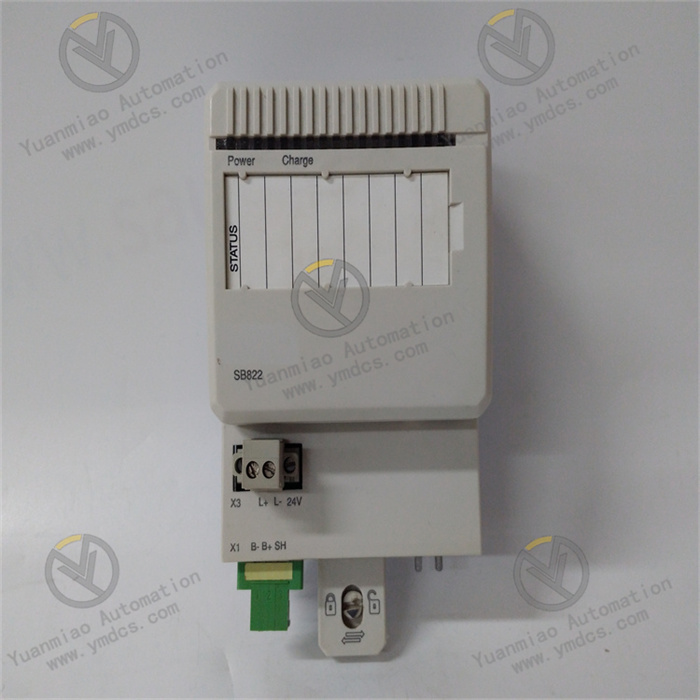
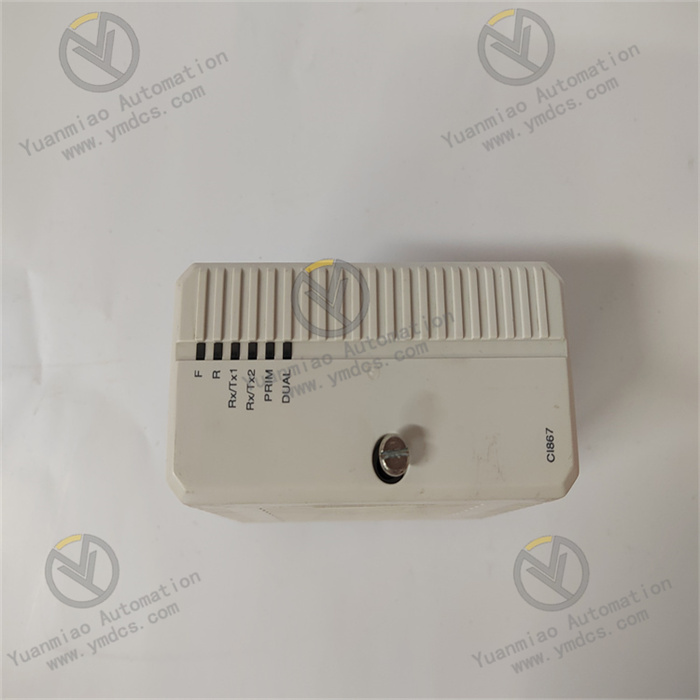
ABB CI867 3BSE043661R
1. Basic Information
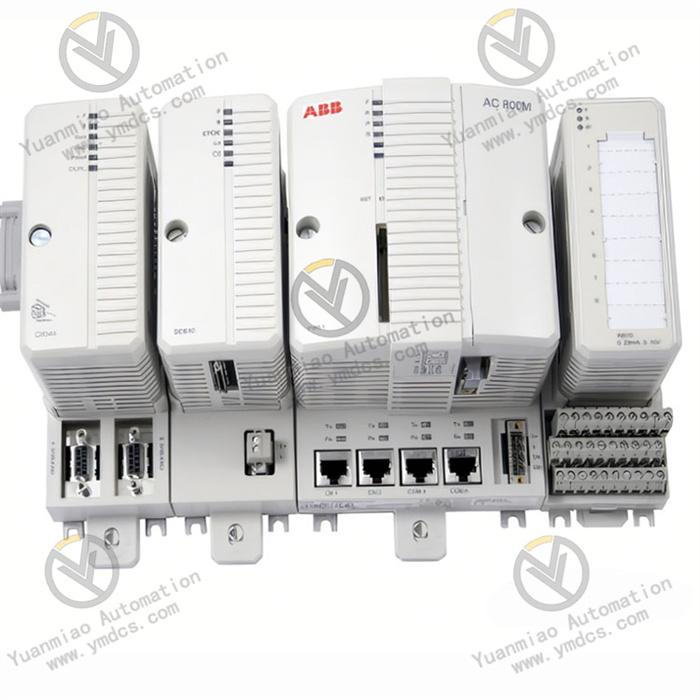
ABB CI867 (Order No.: 3BSE043661R) is a multi-protocol dual-channel Ethernet communication interface module dedicated to ABB AC800M series DCS and PLC systems, serving as the core unit for high-speed networking and cross-system data interaction in industrial automatic control systems. Designed for intelligent networking of modern process industries, it integrates dual Ethernet ports and multi-protocol parsing capabilities, natively supporting mainstream industrial Ethernet protocols including Modbus TCP, PROFINET IO, EtherNet/IP, DNP3 and IEC 60870-5-104. It enables seamless interconnection between ABB main control systems and third-party PLCs, instruments, frequency conversion equipment, upper monitoring systems and remote terminal devices, solving common industrial problems such as single-protocol limitation, low transmission rate and poor cross-system compatibility of traditional communication modules.
2. Technical Specifications
2.1 Core Communication & Control Specifications
- Communication Protocols: Natively supports mainstream industrial Ethernet protocols including Modbus TCP, PROFINET IO, EtherNet/IP, DNP3, IEC 60870-5-104 and SNMP, with bidirectional client/server modes. It flexibly adapts to networking of third-party automation devices of different brands and protocols with strong cross-system integration capability.
- Communication Channels: Dual independent Ethernet ports with isolated and non-interfering links. It supports dual-network redundant backup, load balancing and automatic link fault switching, avoiding communication interruption caused by single link failure and greatly improving network fault tolerance and operational stability.
- Transmission Rate & Mode: Supports 10/100Mbps adaptive Ethernet rate, compatible with full-duplex and half-duplex modes. It adapts to high-speed full-duplex real-time transmission and conventional half-duplex adaptive communication, meeting dual requirements of high-speed real-time control and long-distance stable transmission.
- Storage Configuration: Built-in 128MB high-speed operating RAM and 256MB large-capacity Flash memory stably store firmware, engineering configurations, communication parameters and fault logs. It supports high-frequency and large-volume data interaction without data stuttering, loss or confusion, suitable for large-scale equipment networking.
- Network Adaptability: Compatible with standard industrial Ethernet topologies such as linear, star and ring networks. Optional SFP optical module expansion enables flexible switching between electrical and optical networks, adapting to long-distance, high-interference and cross-regional large-scale industrial networking.
- Core Functions: Supports automatic network device scanning, adaptive protocol parsing, real-time bidirectional data interaction, remote parameter configuration, online program upgrading and breakpoint resume transmission. It realizes remote equipment monitoring, data acquisition, process linkage and fault early warning with upper systems, meeting intelligent automatic control requirements.
- Parameter Adjustability: Online configuration of network IP, baud rate, timeout threshold, retry times, protocol type and redundancy mode via local or upper software. It flexibly adapts to different networking scales, equipment types and transmission distances with strong compatibility and convenient commissioning.
- Protection & Diagnosis: Integrated full-range intelligent network protection and diagnosis functions cover line disconnection detection, link fault monitoring, data verification, communication timeout protection and protocol exception alarm. It locks fault codes and uploads abnormal information in real time to accurately locate network fluctuation, disconnection, device offline and data errors, ensuring stable Ethernet system operation.
2.2 Power & Electrical Specifications
- Power Supply: Standard 24VDC industrial power supply adapts to on-site voltage fluctuation and line pressure drop with wide voltage adaptability, balanced power consumption and no abnormal heat generation during long-term operation.
- Electrical Isolation: Complete internal strong and weak current isolation with independent partition of Ethernet signal and power ports eliminates signal interference caused by power clutter and voltage fluctuation, avoiding data distortion and network flash disconnection, and improving system anti-interference performance and safety.
- Operational Stability: Low-power industrial hardware design with mass-production optimized circuits ensures no parameter drift or performance attenuation during long-term operation. The network connection remains stable without frequent disconnection, reconnection or packet loss, suitable for all-weather continuous industrial production.
2.3 Physical & Structural Specifications
- Installation Mode: Standard slot mounting for ABB AC800M series racks with precise positioning and firm clamping. Excellent vibration resistance prevents loosening and poor contact, applicable to new equipment assembly and legacy system upgrading.
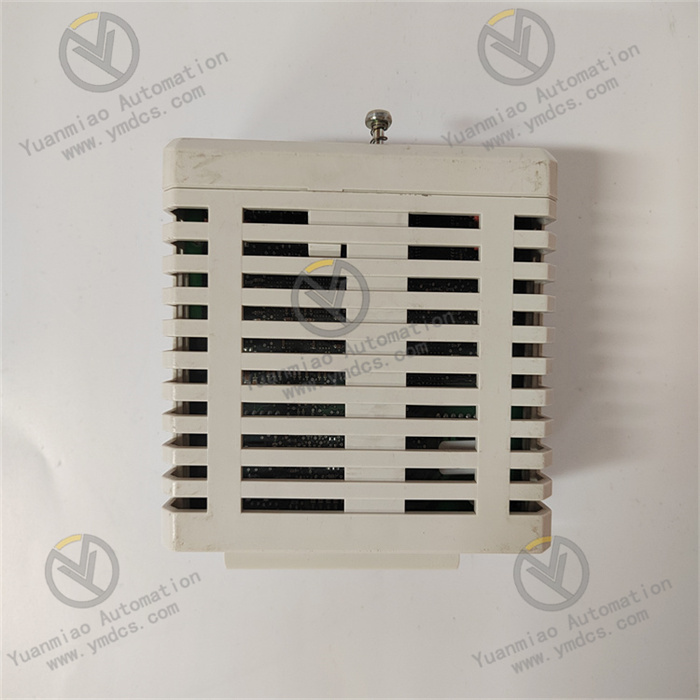
- Structural Design: Compact integrated modular structure highly integrates protocol parsing unit, data processing chip, dual-port circuit, storage unit and isolation protection circuit. High integration saves cabinet space and adapts to dense layout scenarios.
- Weight & Dimensions: Lightweight industrial design with a weight of approximately 210g and compact size, balancing structural strength, operational stability and on-site installation, commissioning and maintenance convenience.
- Material & Protection: Industrial flame-retardant and corrosion-resistant shell with triple-proof coated circuit board provides excellent dustproof, moisture-proof, oil-resistant, anti-corrosion and anti-aging performance. Internal shielded wiring complies with industrial EMC standards, isolating external strong electromagnetic interference and ensuring pure and stable signals.
- Interface Features: Dual Ethernet ports are clearly partitioned with isolated strong and weak electricity. Standard RJ45 interfaces enable convenient plugging and reliable anti-loose connection, preventing signal interruption caused by vibration and adapting to long-term harsh industrial conditions.
- Status Indication: High-definition LED indicators visually display power status, network connection, data transceiving, protocol operation and fault alarm status, facilitating rapid working condition identification and accurate fault location to improve maintenance efficiency.
2.4 Environmental & Reliability Specifications
- Temperature Range: Operating temperature: -25℃~+70℃; Storage temperature: -40℃~+85℃. Wide temperature adaptability withstands extreme temperature differences and seasonal fluctuations in industrial sites.
- Humidity Range: 5%~95% non-condensing. It operates stably in high-humidity and water-vapor environments without damp short circuit, signal drift or equipment failure.
- Operational Reliability: Industrial durable hardware design supports 24-hour uninterrupted continuous operation with low failure rate and stable performance. Hot-swap maintenance enables online replacement and debugging without system shutdown, greatly reducing downtime.
- System Compatibility: Fully compatible with all ABB AC800M series PLC/DCS controllers and seamlessly integrated with ABB automatic control systems. It adapts to third-party devices with standard Ethernet protocols, suitable for network upgrading and cross-brand equipment integration of new and legacy systems.
3. Working Principle
- System Initialization & Self-calibration: After power-on, the module completes full hardware self-check, power detection, storage verification, dual-port initialization and protocol stack loading. It automatically identifies network topology and link status, adapts network parameters such as IP address and baud rate, and enters standby communication status after fault-free verification.
- Protocol Parsing & Signal Processing: The module monitors dual Ethernet link signals in real time, receives data instructions from upper systems and third-party devices, and collects field operating data and status signals. Internal filtering, verification and error correction algorithms eliminate invalid data caused by electromagnetic interference and network clutter, ensuring accurate and complete communication data.
- Multi-protocol High-speed Data Interaction: Relying on 10/100Mbps dual-link high-speed transmission capability, it automatically parses and forwards multiple protocols including Modbus TCP and PROFINET IO according to preset modes, realizing real-time command delivery, field data upload and parameter interaction between the main control system and field equipment, meeting dual demands of high-speed real-time control and mass data acquisition.
- Redundant Link & Load Adaptation: Dual ports support redundant backup and load balancing. The backup link takes over data transmission seamlessly in case of main link failure, disconnection or signal abnormality without communication interruption or data loss. It dynamically allocates data channels according to network load to optimize transmission efficiency and ensure stable operation of complex networks.
- Real-time Monitoring & Intelligent Fault Protection: It continuously monitors power supply, network links, data transceiving, protocol operation and module temperature. Once faults such as disconnection, network timeout, protocol abnormality, data error, overtemperature and voltage abnormality are detected, it locks fault codes, triggers local and upper-system alarms, and cuts off abnormal data transmission instantly to protect network and terminal equipment and prevent fault escalation.
- Online Maintenance & Performance Optimization: It supports online parameter tuning, network debugging, protocol switching, firmware upgrading and fault log query. Communication parameters can be optimized dynamically according to network expansion, equipment update and working condition changes to ensure long-term efficient and stable network operation and reduce maintenance costs.
4. Application Scenarios
4.1 Chemical & Petrochemical Process DCS Systems
4.2 Power & Energy Automatic Control Systems
4.3 Heavy Industry Automation Lines (Metallurgy & Papermaking)
4.4 Water Treatment & Environmental Monitoring Systems
4.5 Network Upgrading & Renovation of Legacy Automatic Systems