I. Basic Information
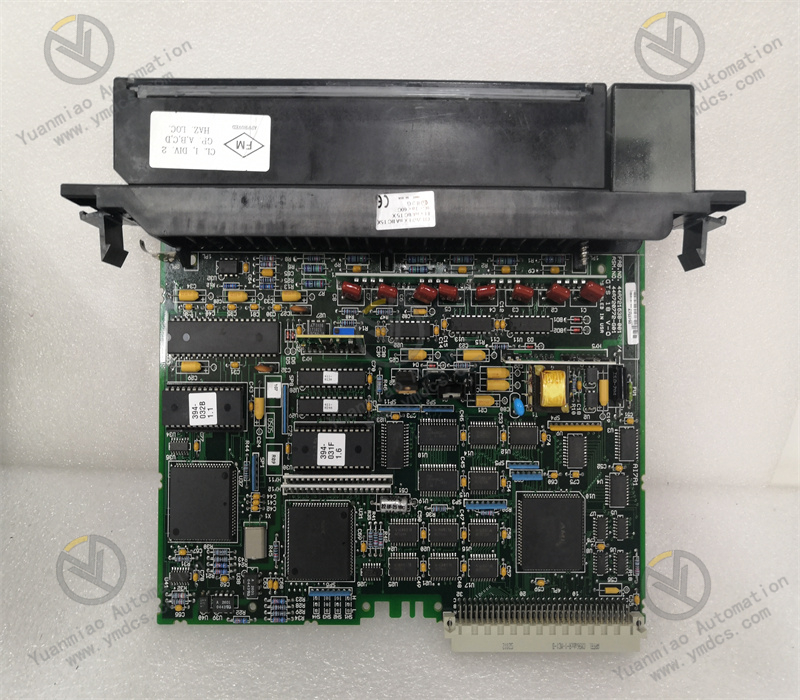
Full Model:IC687BEM731-AB
Brand & Origin:GE Fanuc / Emerson, USA Original
Product Positioning
As a remote I/O bus master module for GE PACSystems RX7i / Series Six series, it serves as the core communication unit of large-scale GE distributed industrial control systems, specially designed for cross-rack, long-distance and multi-station distributed I/O networking. It undertakes core tasks such as master bus scheduling, remote slave link management, high-speed I/O data polling, bus timing synchronization, communication fault diagnosis and link redundancy control. It is the key hardware for realizing centralized control and distributed acquisition. Widely applied in large factory decentralized automatic control systems, long-distance workshop-level equipment linkage, multi-station I/O expansion and upgrading of old GE distributed bus systems, it provides stable bus communication support for long-distance signal transmission, cross-region equipment coordination and large-scale point networking in industrial sites.
Hardware Architecture
It adopts an industrial-grade dedicated bus control MCU + hardware timing logic architecture, integrated with independent bus transceiving unit, differential signal drive circuit, photoelectric isolation module, high-speed data cache, bus fault detection loop and watchdog self-recovery system. The whole machine adopts separated strong and weak current design and independent shielding for communication loops, with industrial three-proof coating on the board, effectively resisting on-site electromagnetic interference, voltage surge and alternating temperature and humidity. Built with a dedicated hardware parsing unit for GE Genius bus protocol, it completes bus scheduling, station polling and data verification independently without occupying CPU resources. It features low bus transmission delay, high timing synchronization accuracy, large station capacity, strong link stability and fast fault self-recovery, thoroughly solving industrial pain points such as communication stuttering, point disconnection, disordered timing and long-distance signal attenuation of traditional distributed systems.
Mounting Specification
It supports embedded plug-in installation on standard slots of GE RX7i series racks, compatible with Series Six system racks, with standardized backplane electrical docking and bus addressing. Buckle locking ensures anti-loosening, shock resistance and stable contact. The body is equipped with indicator lights for bus status, link faults and operation communication, supporting intuitive on-site inspection, rapid fault location and real-time operation status judgment. Featuring compact structure and high integration, it adapts to the dust-proof, moisture-proof and wide-temperature round-the-clock operating environment of closed industrial control cabinets. No complex debugging and calibration is required for disassembly and assembly, fully complying with GE original installation, wiring and operation specifications for distributed bus systems.
Compatible Systems
Exclusively adapted to GE PACSystems RX7i main control platform and Series Six large-scale industrial control systems, it natively supports the GE Genius dedicated industrial field bus protocol. As a master station module, it can mount multiple remote I/O slave stations, analog acquisition modules, digital input/output slave stations and on-site intelligent terminals. Seamlessly compatible with GE Proficy Machine Edition configuration software, it supports bus topology configuration, station address allocation, communication parameter setting, online link diagnosis and bus load monitoring. It can build various distributed bus topologies such as star, chain and redundant types, adapting to the networking requirements of large-scale factories for cross-region, long-distance and multi-point industrial automation.
Product Characteristics
An original industrial-grade Genius bus master controller. It completes full-load bus polling aging, long-distance link stability test, EMC electromagnetic compatibility certification, high and low temperature condition verification and bus fault tolerance test before factory delivery. It supports mounting of large-scale remote I/O stations with independent hardware bus scheduling and zero CPU resource occupation. Equipped with bus redundancy fault tolerance, instantaneous link disconnection self-recovery and data retransmission verification functions, it supports 24/7 uninterrupted high-speed bus operation. Old bus modules of the same series can be replaced in situ, adapting to communication upgrading, bus expansion and iterative technical renovation of distributed industrial control systems.
II. Technical Specifications
1. Bus Communication Parameters
Communication Protocol: Natively supports GE Genius dedicated industrial field bus protocol with hardware-level protocol parsing, fast response and strong compatibility. The bus transmission rate supports adaptive adjustment, and the standard high-speed transmission mode ensures real-time interaction of large-scale I/O points without data congestion or polling delay. A single module supports mounting of multiple remote I/O slave stations, covering large-scale distributed point acquisition and control in factory areas and meeting the networking capacity requirements of large industrial control systems. Adopting differential balanced transmission, the bus delivers strong common-mode interference resistance, adapting to kilometer-level long-distance industrial wiring and effectively avoiding long-distance signal attenuation, clutter interference and data packet loss.
2. Data Processing & Timing Parameters
The built-in independent hardware bus processing core completes bus station polling, data transceiving, frame verification, timing synchronization and abnormal retransmission independently without occupying PLC CPU resources. It supports parallel data interaction of multiple stations with efficient and orderly polling logic, no station preemption conflict and no communication stuttering. The bus features high timing synchronization accuracy, unified operation timing of full-network I/O points, and no cross-station timing deviation or equipment asynchronous action faults in distributed systems. It supports real-time data refresh and rapid status feedback, ensuring the real-time performance and accuracy of remote acquisition and remote control commands, adapting to industrial production conditions with high-speed linkage.
3. Isolation & Protection Parameters
The bus communication port is built with high-voltage photoelectric isolation structure, with complete electrical isolation between the communication loop and the system backplane. It can effectively block ground loop current, voltage surge and high-frequency interference from entering the main control system. Equipped with multi-stage EMI filtering, electrostatic discharge and pulse suppression circuits, it resists electromagnetic clutter interference generated by frequency converters, servo equipment and high-power start-stop equipment. Integrated with bus short-circuit protection, link disconnection detection, over-current self-locking and port abnormal protection, it automatically isolates abnormal stations under fault conditions without affecting the operation of the full-network bus, realizing the operation logic of local fault and full-network stability.
4. Topology & Expansion Parameters
It supports multiple bus topologies including chain, star, tree and redundant dual-bus topologies, adapting to complex factory wiring scenarios and renovation and expansion requirements of old systems. It supports two configuration modes: automatic identification and manual setting of remote slave station addresses, featuring convenient debugging and flexible networking. It can be seamlessly connected with all GE Genius remote I/O modules, intelligent terminals and on-site acquisition units, freely expanding system I/O points and control functions without modifying the main control system architecture, greatly reducing system expansion and technical renovation costs.
5. Environmental Operating Parameters
Operating Temperature:0℃~+60℃
Storage Temperature:-40℃~+85℃
Operating Humidity:5%~95% RH, non-condensing
The whole machine has passed CE and FCC industrial certifications, with excellent dust-proof, moisture-proof, vibration-resistant and electromagnetic interference-resistant performance. It withstands harsh industrial conditions such as long-term vibration, dust accumulation, alternating temperature and humidity and strong electromagnetic interference, widely applicable to distributed automatic control scenarios in large chemical industry, energy and power, metallurgical heavy industry, water treatment and environmental protection fields.
III. Key Features
1. Independent Hardware Bus Scheduling with Zero CPU Occupation
Equipped with a dedicated hardware bus processing core, the module independently completes all bus polling, data parsing, timing control and fault detection tasks without occupying PLC main control CPU computing and communication resources. It effectively avoids excessive CPU load, program scanning delay and system operation stuttering caused by large-scale I/O networking and high-frequency data interaction, greatly improving the computing efficiency and control real-time performance of the entire industrial control system and ensuring the stable and efficient operation of large-scale distributed systems.
2. Large-Capacity Multi-Station Mounting & Long-Distance Stable Transmission
Based on the GE Genius bus architecture, it supports batch mounting of multiple remote I/O slave stations with large networking capacity and strong expandability, meeting the requirements of cross-workshop, long-distance and large-scale point networking in large factories. Adopting differential balanced transmission technology, it effectively suppresses long-line transmission interference and signal attenuation, maintaining stable communication even under kilometer-level wiring, thoroughly solving the pain point that traditional short-distance I/O modules cannot cover large-scale factory areas and have unstable long-distance communication.
3. High Fault-Tolerance & Self-Recovery Mechanism for High Bus Reliability
Built with a complete bus fault diagnosis and self-recovery system, it can real-time monitor bus link status, station online status, abnormal data frames, bus short circuit and line disconnection. When a single remote slave station fails or the line is abnormal, the module automatically isolates faulty points without affecting the normal communication of other stations in the full network, and latches fault codes and uploads abnormal information. Instant link fluctuation and temporary disconnection can realize millisecond-level automatic reconnection and data retransmission, avoiding system shutdown and equipment runaway caused by instantaneous interference, and greatly improving the fault tolerance of distributed system operation.
4. Flexible Multi-Topology Networking for Diverse Renovation Scenarios
Compatible with multiple industrial topologies such as chain, star and redundant dual-bus, it adapts to new scenarios including standardized wiring of newly built automatic systems, renovation of messy lines in old factories and construction of high-reliability redundant systems. It supports online configuration modification, dynamic parameter setting and flexible station addition and deletion, enabling system expansion, point adjustment and functional upgrading without shutdown, greatly shortening the downtime for equipment technical renovation and system upgrading, and adapting to diverse industrial networking requirements.
5. High Compatibility & Low Maintenance Cost for In-Situ Replacement
The hardware dimensions, backplane interfaces, bus protocols and configuration logic are fully compatible with GE RX7i and Series Six system standards. Old bus master modules of the same series with aging communication performance and frequent faults can be directly replaced in situ. No system program modification, bus topology reconstruction or rewiring calibration is required. Full-load operation can be realized after normal power-on self-test, effectively reducing operation and maintenance difficulty and technical renovation costs, adapting to the iterative upgrading of old GE distributed industrial control systems.
IV. Working Principle
GE IC687BEM731-AB is a dedicated master control module for GE Genius distributed bus systems. After being inserted into the RX7i/Series Six standard rack and completing backplane docking and bus wiring, the module automatically finishes hardware self-test, bus initialization, communication port calibration, station scanning and fault clearing upon power-on, and enters the bus master scheduling operation state.
During system operation, as the core master station of the entire distributed I/O network, the module independently initiates full-network station polling through the hardware bus processing unit. It cyclically collects real-time digital and analog data of all remote slave stations, completes data verification, frame parsing and timing calibration, and uploads valid data to the PLC main control CPU. Meanwhile, it receives control commands issued by the CPU and accurately distributes them to corresponding remote I/O slave stations to realize remote equipment start-stop, regulation and interlock control. The entire bus scheduling process is independent without occupying system CPU resources, ensuring efficient and delay-free data interaction.
In the whole working process, the module real-time monitors bus link voltage, signal quality, station online status and data transmission status, and handles bus abnormalities in real time through port isolation, short-circuit protection and fault self-recovery mechanisms. When single station disconnection, line interference or instantaneous link disconnection occurs, it automatically isolates faulty points, attempts link self-recovery and latches fault information to ensure the normal operation of other equipment in the full network. Under normal working conditions, it continuously optimizes bus polling timing, balances network load and suppresses bus congestion and signal interference, providing stable, real-time and high-fault-tolerance bus communication support for the entire distributed industrial control system and ensuring 24/7 uninterrupted continuous equipment operation.
V. Application Scenarios
1. Large-Scale Distributed I/O Networking Systems: As the core of Genius bus master station, it is used for cross-workshop, long-distance and multi-point distributed signal acquisition and equipment control in large factories, adapting to wide-range industrial control scenarios such as large chemical industry, power and water plants.
2. High-Reliability Redundant Automatic Control Systems: Builds a redundant bus topology architecture to eliminate full-network shutdown caused by single-point bus faults, ensuring stable linkage operation of continuous production processes, unattended processes and key production equipment.
3. Technical Renovation and Upgrading of Old GE Industrial Control Systems: Used to replace aging Genius bus master modules, solving problems of old modules such as communication delay, point disconnection, high failure rate and insufficient networking capacity, and improving the communication stability and expansion capacity of distributed systems.
4. Cross-Region Equipment Linkage Control Systems: Adapted to the cooperative control of scattered factory equipment, remote pump stations, workshop auxiliary control equipment and split pipeline equipment, realizing real-time long-distance signal interaction, timing synchronization and accurate linkage.