Description
1. Overview
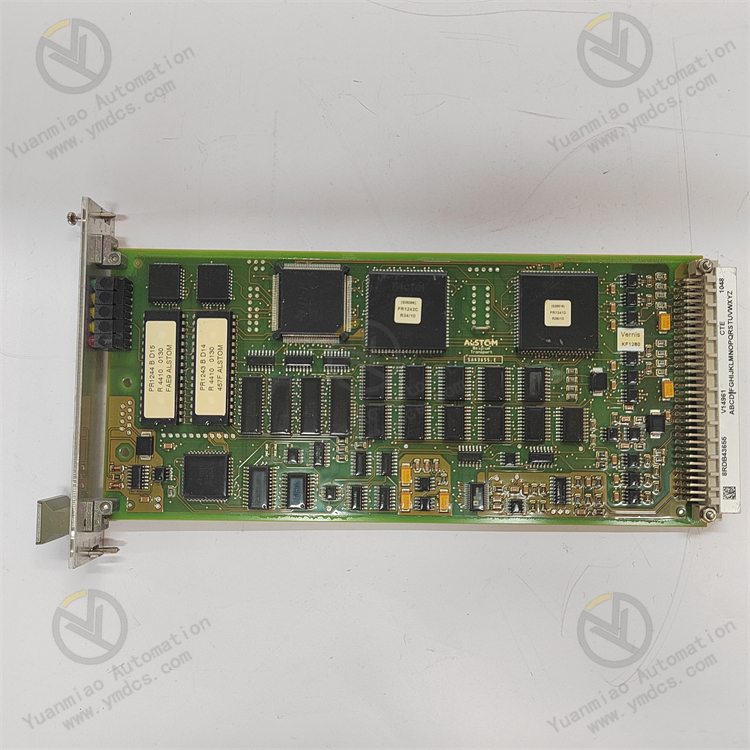
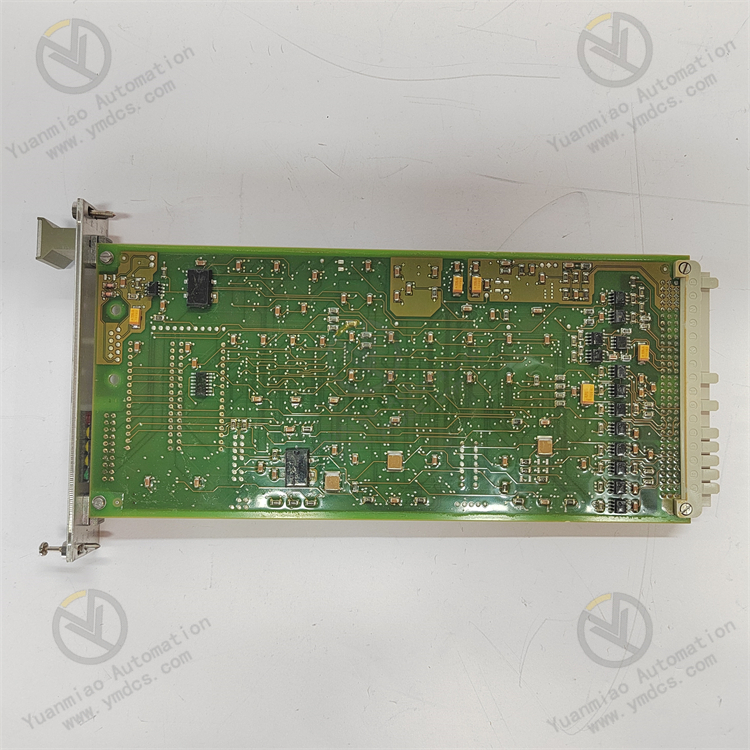
ALSTOM NRD108028 (marked with 8RDB43655 / SA43655.E) is an industrial dedicated interlock control monitoring module developed by ALSTOM. Serving as a core safety interlock unit for power industrial control, energy automation and large unit control systems, it is widely compatible with ALSTOM original complete DCS, unit measurement & control systems and power protection control systems. Integrating all-in-one functions including switchgear interlock management, condition monitoring, logical judgment, fault self-check alarm and network communication, this module acts as a critical intermediate unit linking upper-level control systems with field switches, actuators and instruments to realize coordinated field equipment control, process interlock protection, equipment status collection and system data exchange.
2. Technical Features
2.1 Multi-Equipment Interlock Management Ensures Extremely High Logical Reliability
2.2 Multi-Mode Scheduling Delivers Flexible Condition Adaptability
2.3 All-In-One Integrated Design Boosts System Stability
2.4 Comprehensive Fault Self-Check and Maintenance Reminder Mechanism
2.5 Power-Fail Auto-Restart Fault Tolerance Enables Superior Continuous Operation
2.6 Multi-Protocol Industrial Communication Improves System Expandability
3. Specification Parameters
3.1 Basic Parameters
- Model: NRD108028 8RDB43655 SA43655.E
- Product Series: ALSTOM Industrial Interlock Control Monitoring Module Series
- Manufacturer: ALSTOM
- Device Type: All-in-one multi-equipment interlock control and safety monitoring module
- Compatible Systems: ALSTOM original power unit control systems, industrial DCS/PLC automation systems, energy power measurement & control systems
- Application Scenarios: Interlock management for power plant equipment, coordinated control for chemical & energy equipment, automatic regulation for large industrial units, technical replacement of legacy systems
- Core Functions: Multi-channel switchgear interlock control, process logic operation, equipment status monitoring, fault self-diagnosis & alarming, scheduled maintenance reminders, power-fail auto-restart, multi-protocol communication, remote parameter configuration
- Operating Modes: 24-hour continuous unattended operation, real-time signal acquisition & calculation, dynamic interlock regulation, fault-tolerant operation, remote online monitoring
- Compatibility: Matches ALSTOM original system architecture and communication protocols; supports non-destructive in-situ replacement of same-series legacy modules and mainstream industrial control systems
3.2 Control Performance Parameters
- Controllable Devices: Up to 30 groups of switch devices for synchronous interlock management
- Control Modes: Optional sequence interlock, equipment interlock, scheduled startup/shutdown and condition linkage
- Response Speed: Millisecond-level logic operation and action response with zero delay or lag
- Fault Tolerance: Mechanisms for logical fault tolerance, abnormal signal filtering and false action prevention
- Featured Functions: Custom maintenance cycle alarms, auto restart after power recovery, multi-scenario process logic adaptation
3.3 Power Electrical Parameters
- Rated Input Power: Standard industrial DC 24 V
- Power Adaptability: Tolerates minor voltage fluctuation and transient on-site power disturbance
- Electrical Protection: Multi-layer hardware defense against overvoltage, overcurrent, short circuit, surge and electrostatic discharge
- Insulation: Galvanic isolation between power, signal and communication circuits to eliminate leakage and signal crosstalk
- Power Consumption: Low-power design with low heat generation suitable for long-term continuous energized operation
3.4 Signal and Communication Parameters
- Signal Types: Standard industrial dry/wet contact discrete signals and equipment status feedback signals
- Communication Interfaces: RS232 debug port, RS485 industrial bus, industrial Ethernet
- Supported Protocols: Compatible with mainstream industrial communication protocols with broad compatibility and expandability
- Communication Performance: Stable low-latency lossless transmission supporting real-time data exchange and fault log upload
- System Integration: Seamless connection to DCS, PLC, configuration software and remote monitoring platforms for centralized management and data archiving
3.5 Environmental Parameters
- Operating Temperature: -40℃ ~ +85℃ wide industrial range accommodating temperature swings and heat buildup inside sealed cabinets
- Storage Temperature: -45℃ ~ +90℃ for long-distance transit and offline storage
- Operating Humidity: 5%–95% RH (non-condensing); resistant to condensation-caused short circuits for humid workshops and power stations
- EMC Compliance: High-level industrial EMC certified against harmonics, RF radiation and power pulse disturbance
- Mechanical Performance: Tolerates standard industrial vibration and shock; seismic, dust-proof and anti-aging for permanent cabinet mounting
3.6 Structural and Installation Parameters
- Form Factor: Compact modular industrial board with neat layout and uniform heat dissipation
- Protection Class: Industrial dustproof and moisture-proof for enclosed cabinet installation
- Mounting: Standard DIN rail embedded cabinet installation for easy assembly and secure fastening
- Installation Suitability: Allows dense cabinet mounting with no compromise on heat dissipation or signal stability
4. Working Principle
After power-up, ALSTOM NRD108028 8RDB43655 SA43655.E automatically executes full hardware self-test, core chip initialization, I/O port verification, communication link matching and system parameter loading. Once diagnostics pass, it enters regular 24-hour interlock operation as the core safety logic hub of the whole control system.
During runtime, multi-channel digital input ports collect field switch operating status, startup/shutdown signals and condition feedback in real time. Relying on the high-speed onboard computing core, data is processed via filtering, noise reduction and calibration for condition evaluation according to preset interlock rules, sequence logic, process thresholds and scheduling programs. Regulating commands are output based on calculation results to drive coordinated equipment linkage, mutual locking and sequential startup/shutdown, preventing false operation, process disorder and equipment conflict to ensure orderly production.
Condition monitoring and fault diagnosis run continuously. The module monitors hardware health, signal loop continuity, communication quality and external equipment status in real time. Signal anomalies, loop faults, communication dropout and out-of-limit conditions trigger local alarms, fault log saving and remote notification to upper systems for early warning and rapid troubleshooting. Meanwhile, the module compares cumulative equipment runtime with preset maintenance cycles and generates maintenance alerts when due to prompt scheduled servicing.
5. Application Scenarios
5.1 Automation Control Systems for Power Plants
5.2 Automation Systems for Chemical & Energy Process Industries
5.3 Automatic Regulation Systems for Large Industrial Units