Description
1. Overview
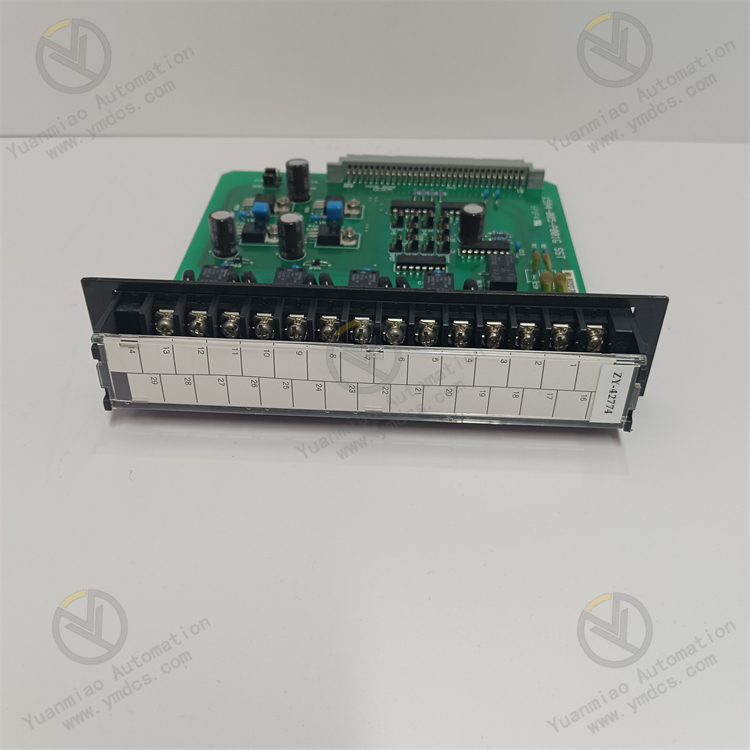
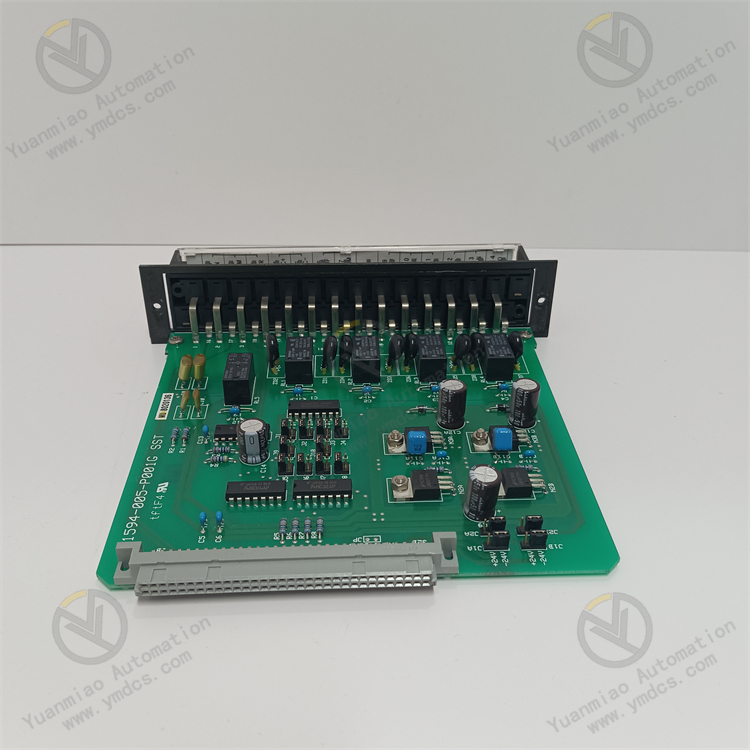
SHINKAWA VM-5Y1-02/GEM 1594-005-P001G is a high-precision TSI (Turbine Supervisory Instrumentation) vibration monitoring module developed by Shinkawa Electric for rotating machinery supervision, belonging to the VM-5 series industrial monitoring system.As a core condition monitoring unit for high-speed rotating equipment such as generator sets, gas turbines, steam turbines and large compressors, it is mainly used to collect and analyze key mechanical parameters including shaft vibration, bearing vibration and shaft displacement in real time, and accurately capture tiny vibration fluctuations and abnormal operating conditions of equipment.Integrated with high-precision signal acquisition, intelligent filtering calculation, over-limit alarm interlock and full-channel self-diagnosis functions, it features excellent temperature and pressure stability and adapts to long-term continuous operation of large rotating equipment in power, chemical and oil & gas industries.It provides reliable data support for unit steady-state operation, variable load regulation, fault early warning and trip interlock protection, serving as the core monitoring hardware to ensure safe, stable and efficient operation of large rotating machinery.
2. Technical Features
2.1 High-Precision Monitoring with Excellent Working Condition Restoration
Equipped with Shinkawa’s exclusive high-precision acquisition and computing chip, the overall measurement accuracy reaches ±0.15%FS, with ultra-high sampling resolution and linearity to precisely capture micron-level vibration parameter fluctuations of units.Its temperature stability is ±0.15%FS/℃ and long-term pressure stability is ±0.05%FS/year, which effectively offsets measurement deviation caused by temperature variation and ambient pressure fluctuation. No zero drift or data distortion occurs during long-term operation, and it can fully restore dynamic vibration characteristics of large rotating machinery under all working conditions to meet precise condition monitoring requirements of high-end industrial units.
2.2 Fast Dynamic Response Adaptable to Transient Unit Conditions
With optimized high-speed signal processing algorithm, the overall response time is ≤ 1s, which can track transient vibration changes during unit startup/shutdown, load ramp-up, load reduction and condition switching in real time and eliminate monitoring lag and data delay.It rapidly captures and records instantaneous vibration peaks caused by startup impact and sudden load change of turbines and compressors, and completely retains data of sudden equipment condition changes to provide complete basis for unit fault tracing, condition analysis and parameter optimization.
2.3 Standard Industrial Design with Strong Compatibility
Designed strictly in accordance with API 670, the authoritative standard for rotating machinery monitoring in petrochemical and power industries. Its hardware architecture, signal output and interlock logic are fully compatible with mainstream power plant TSI monitoring systems and industrial automatic control systems.It is natively compatible with the complete rack and configuration system of Shinkawa VM-5 series, and can seamlessly connect with various mainstream PLC and DCS control systems to support remote upload, centralized monitoring and screen configuration of vibration data without additional adapter devices, suitable for renovation and capacity expansion of monitoring systems for new and legacy units.
2.4 Comprehensive Self-Diagnosis & Interlock Protection for Controllable Maintenance
A complete board-level and channel-level self-diagnosis mechanism is embedded to monitor hidden risks such as sensor open circuit, short circuit, out-of-range signal, loop abnormality, hardware fault and signal distortion in real time, covering all fault scenarios of vibration monitoring loops.The module supports custom configuration of multi-level alarm thresholds to realize graded interlock output for high alarm and high-high alarm of vibration. When an abnormality is triggered, fault sequence, peak data and operation logs are automatically recorded. Combined with system SOE event logging, root causes can be quickly located to support predictive maintenance and effectively prevent equipment wear, shaft damage and unplanned shutdown accidents caused by excessive unit vibration.
2.5 Industrial Rugged Protection Adaptable to Harsh On-Site Conditions
Adopting sealed plastic reinforced structure and industrial triple-proof (dustproof, moisture-proof, anti-corrosion) design, it features dust resistance, moisture resistance, vibration resistance, aging resistance and electromagnetic interference immunity, which can effectively resist electromagnetic noise and voltage interference generated by startup/shutdown of high-power equipment and inverter operation in power and chemical plants.The service life of relay contacts exceeds 100,000 times. The hardware structure is stable without vulnerable parts and has an extremely low failure rate. It supports 24/7 non-stop continuous monitoring and perfectly fits unattended normal operation mode of industrial sites.
3. Specification Parameters
3.1 Basic Model Parameters
- Model No.: VM-5Y1-02/GEM 1594-005-P001G
- Brand & Series: SHINKAWA VM-5 Series Rotating Machinery Monitoring Module
- Module Type: TSI Turbine Vibration Condition Monitoring Module
- Core Functions: Shaft / bearing vibration acquisition of units, high-precision parameter calculation, graded over-limit alarm, interlock signal output, working condition data upload and fault self-diagnosis & tracing
- Applicable Equipment: Gas turbines, steam turbines, generator sets, large compressors and high-speed rotating industrial units
3.2 Core Measurement & Performance Parameters
- Measurement Accuracy: ±0.15%FS high-precision full-scale measurement
- Response Time: ≤ 1s high-speed dynamic response
- Temperature Stability: ±0.15%FS/℃ for stable high-precision operation under wide temperature range
- Long-Term Stability: ±0.05%FS/year with ultra-low zero drift
- Measuring Range: Compatible with conventional vibration ranges of industrial units and supports custom range calibration
- Signal Processing: Intelligent multi-stage filtering, noise suppression, peak hold and data anti-jitter processing
3.3 Electrical & Output Parameters
- Operating Power Supply: Standard industrial 24 VDC power supply
- Analog Output: Standard 4 mA for zero point and 20 mA for full scale
- Relay Contact Specification: SPDT (Single-Pole Double-Throw), 250 VAC / 0.2 A, 30 VDC / 2 A
- Contact Service Life: ≥ 100,000 operations under rated load
- Interlock Output: Multi-channel relay output for multi-level alarm, fault and normal status
- Built-in Protection: Automatic protection against overvoltage, overcurrent, abnormal signals and loop faults
3.4 Environmental Parameters
- Operating Temperature: -40 ℃ ~ +70 ℃
- Storage Temperature: -55 ℃ ~ +125 ℃
- Operating Humidity: 5% ~ 95% RH (non-condensing)
- EMC Compliance: Meets industrial EMC standards to withstand strong electromagnetic interference in power and chemical plants
- Protection Structure: Fully sealed dustproof and moisture-proof reinforced structure
- Operation Mode: 24-hour non-stop continuous monitoring operation
3.5 Mechanical & Maintenance Parameters
- Mounting Method: Standard rack embedded installation compatible with VM-5 series system cabinets
- Structural Features: Integrated sealed modular design with vibration resistance, aging resistance and low failure rate
- Status Indication: Onboard LEDs for running status, fault, alarm and signal abnormality
- Diagnostic Functions: Sensor loop diagnosis, out-of-range signal detection, hardware self-test and fault sequence tracing
- Configuration Compatibility: Customizable alarm thresholds, range parameters and interlock logic; applicable to retrofit and replacement of legacy units
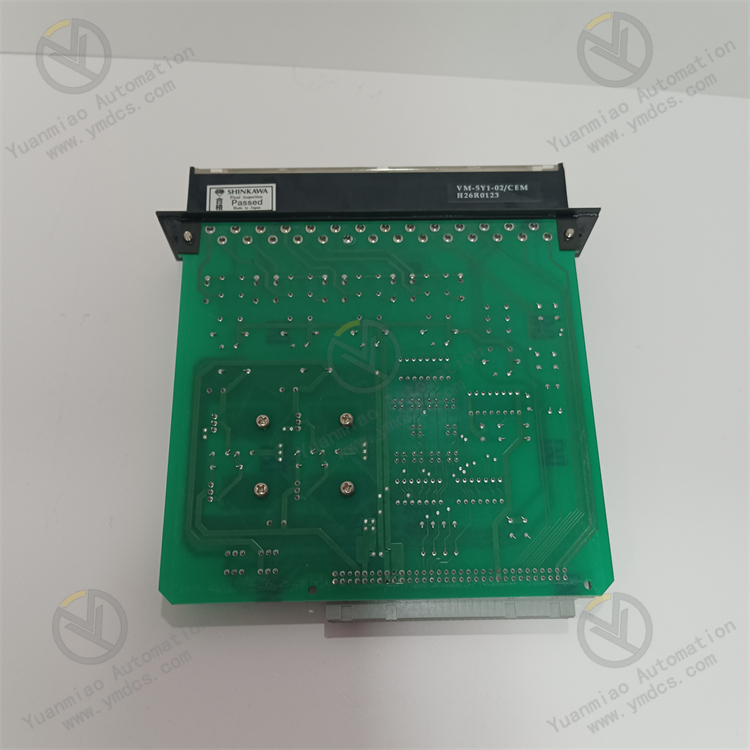
4. Working Principle
Based on the API 670 standard monitoring architecture, the SHINKAWA VM-5Y1-02/GEM 1594-005-P001G module implements a closed-loop unit vibration monitoring workflow: field vibration signal acquisition → filtering, noise reduction and waveform shaping → high-precision calculation and analysis → parameter comparison and judgment → data upload and interlock output → fault self-diagnosis and protection.
After power-on initialization, the module automatically completes full hardware self-test, sensor loop verification, range parameter matching and communication link handshaking. It enters normal high-precision vibration monitoring mode only after confirming healthy hardware circuits, acquisition loops, power supply and communication links.
During unit operation, the module receives analog vibration signals from field vibration sensors for shaft vibration and bearing vibration in real time. The signals go through multi-stage electromagnetic filtering, noise reduction and waveform shaping to eliminate false data caused by on-site electromagnetic interference and line jitter.
A high-precision computing unit accurately analyzes vibration amplitude, peak value and fluctuation frequency, and judges unit vibration status in real time combined with preset range parameters and graded alarm thresholds of the system. Qualified monitoring data is uploaded to the DCS/TSI main control system via standard 4–20 mA analog signals to realize remote real-time monitoring, trend analysis and condition recording of unit vibration parameters.
The module continuously monitors loop status, signal quality and hardware operation of each channel, and compares real-time vibration parameters with safety thresholds throughout the operation.
Once unit excessive vibration, sensor fault, line open/short circuit, abnormal signal or hardware fault is detected, local LED alarms, background system event records and SOE timestamp archiving are triggered immediately, and corresponding graded alarm and interlock control signals are output to assist the system in executing protection actions including early warning, load reduction and emergency shutdown.Relying on ultra-high measurement stability and fast response capability, it consistently guarantees accuracy, real-time performance and reliability of vibration monitoring for rotating units, and effectively avoids safety risks such as equipment damage, unit trip and process shutdown caused by abnormal shaft vibration.
5.1 TSI Monitoring Systems for Turbo-Generator Sets in Power Plants
Widely applied in steam turbine and gas turbine generator sets of thermal power, cogeneration and combined-cycle power plants as the core vibration monitoring unit of TSI systems. It monitors bearing vibration and shaft vibration parameters of units throughout startup, steady-state operation and peak shaving load variation, accurately captures tiny vibration anomalies, provides core data support for unit shaft protection, equipment condition assessment and fault early warning, and ensures safe and stable operation of generator sets.
5.2 Condition Monitoring of Large Industrial Rotating Equipment
Suitable for high-speed rotating equipment such as large centrifugal compressors, fans and pumps in chemical, oil & gas and coal chemical industries. It continuously monitors equipment vibration status and feeds back hidden faults including equipment wear, axis offset and assembly abnormality in real time to support condition-based maintenance and predictive maintenance of equipment, prevent mechanical faults and process shutdown accidents caused by long-term excessive vibration of rotating equipment, and guarantee continuous production of industrial plants.
5.3 Safety Protection Systems for Units Against Excessive Vibration
With graded alarm and interlock output functions, it builds protection logic against excessive unit vibration to realize precise hierarchical control for early warning of slight vibration overrun and interlock shutdown for severe overrun. It effectively eliminates major hidden dangers such as bearing pad wear, shaft bending and severe equipment vibration damage caused by abnormal vibration, serving as the core hardware unit for safety protection of rotating machinery.
5.4 Monitoring Systems Supporting Industrial Automatic DCS/PLC
With standard 4–20 mA analog output and general communication compatibility, it can seamlessly connect with various industrial DCS and PLC automatic control systems to realize centralized data collection, remote monitoring, trend storage and data analysis of vibration data. It meets the demand of centralized equipment condition management in intelligent factories and improves the level of automatic monitoring and intelligent operation & maintenance of industrial units.
5.5 Retrofit & Spare Part Replacement for Legacy TSI Systems
As an original factory-standard monitoring module for SHINKAWA VM-5 series, it is fully compatible with racks, wiring logic and configuration programs of legacy monitoring systems of the same series. It is applicable to upgrade renovation, faulty module replacement and hardware iteration of TSI systems in aging power plants and chemical plants.No large-scale modification of system architecture and on-site wiring is required, and rapid equipment renewal restores vibration monitoring accuracy and protection performance of units to effectively cut equipment maintenance and system renovation costs.
![]()