1. Overview
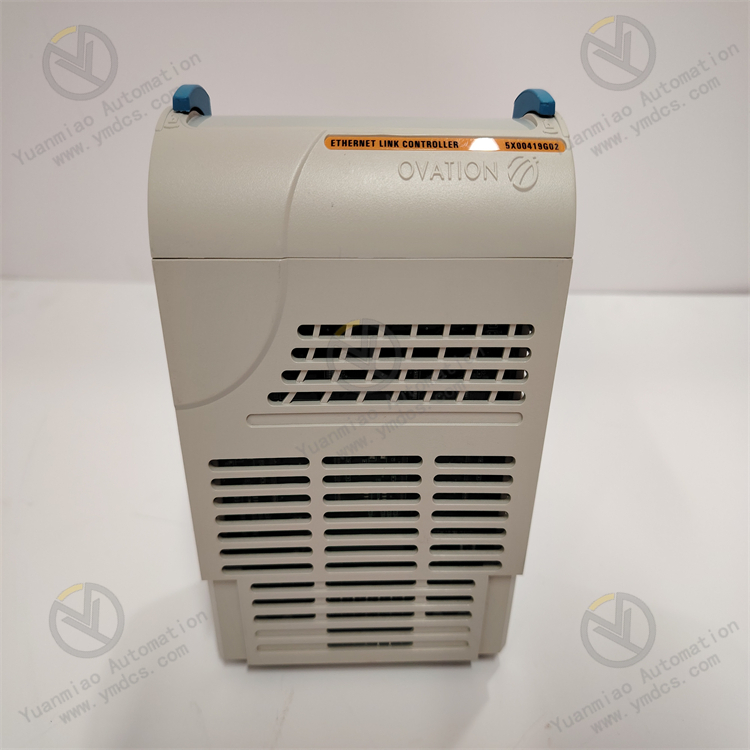
The Emerson 5X00419G02 is a high-performance Ethernet Link Controller (ELC) dedicated for Ovation DCS systems, serving as the core communication gateway unit for large-scale industrial distributed control systems in power, chemical, oil & gas industries. It undertakes key functions such as system network communication, data forwarding, protocol parsing and link redundant switching, ensuring real-time data transmission, stable network linkage and cross-device interconnection of the DCS system.
Equipped with an industrial-grade Ethernet processing chip, the module supports 10/100Mbps adaptive transmission and native Ovation redundant bus architecture, featuring low-latency data forwarding, full-dimensional network diagnosis and network storm suppression. Compatible with TCP/IP, UDP, ICMP and Modbus TCP protocols, it realizes data interaction between DCS and upper SCADA, operator stations and third-party devices. Supporting hot-swap and online configuration, it is widely applied in new DCS networking, legacy system communication module upgrading and redundant link expansion.
2. Technical Features
2.1 High-Speed Ethernet Transmission & Low-Latency Forwarding
Adopting an industrial high-speed Ethernet processing unit, it supports 10/100Mbps rate adaptation and full-duplex communication. With large throughput and ultra-low forwarding delay, it efficiently processes massive real-time process data, interlock logic data and equipment status data without packet loss, delay accumulation or data jitter, meeting the high real-time and stability requirements of large DCS data interaction.
2.2 Multi-Protocol Compatibility & Multi-Scenario Interconnection
It natively supports basic network protocols including TCP/IP, UDP and ICMP, as well as industrial Modbus TCP protocol. It flexibly realizes cross-system data interaction between Ovation DCS and upper monitoring servers, workstations, third-party PLCs and remote operation platforms. Adaptive protocol parsing and data forwarding eliminate the need for additional protocol conversion equipment, simplifying system networking and reducing costs.
2.3 Redundant Link Design & High Network Reliability
Compatible with Ovation redundant network architecture, it supports dual-link redundant backup and millisecond-level fault switching. When the primary link fails, it automatically switches to the backup link seamlessly without data interruption, system offline or process disturbance. It effectively avoids system monitoring failure caused by single-point network faults and greatly improves system network fault tolerance.
2.4 Full-Range Network Self-Diagnosis & Visual Management
It supports power-on self-test, link status monitoring, port abnormality diagnosis, packet loss detection, protocol communication fault diagnosis and hardware fault alarm. It real-timely counts network throughput, communication delay and packet status, accurately locates network disconnection, interference and protocol exceptions, and uploads fault information to the upper system for rapid troubleshooting.
2.5 Hot-Swap & Online Configuration for Non-Stop Maintenance
Supporting live hot-swap in standard Ovation cabinets, module maintenance, replacement and expansion can be completed without system shutdown or process interruption in redundant systems. All network parameters, protocol configurations and link thresholds can be modified online and take effect in real time, greatly improving maintenance efficiency and ensuring continuous production stability.
2.6 Industrial Anti-Interference Design for Harsh Long-Term Operation
With industrial EMC protection, surge suppression, static protection and network filtering design, it effectively resists on-site harmonic interference, RF radiation, power fluctuation and mechanical vibration. Built-in network storm suppression and abnormal packet filtering avoid network stuttering and communication interruption in complex electromagnetic environments, supporting 7×24-hour stable continuous operation.
2.7 Strong Compatibility for New & Legacy System Upgrading
Natively compatible with full-series Ovation DCS and DeltaV systems, and seamlessly connected with AMS and SCADA platforms. The standardized structure enables direct replacement of legacy Ethernet modules without cabinet or logic modification, realizing low-cost network performance upgrading and capacity expansion of old DCS systems.
3. Detailed Specifications
3.1 Basic Hardware Parameters
- Model: 5X00419G02
- Manufacturer: EMERSON (USA)
- Series: Ovation DCS System Communication Module
- Device Type: Ethernet Link Controller (ELC)
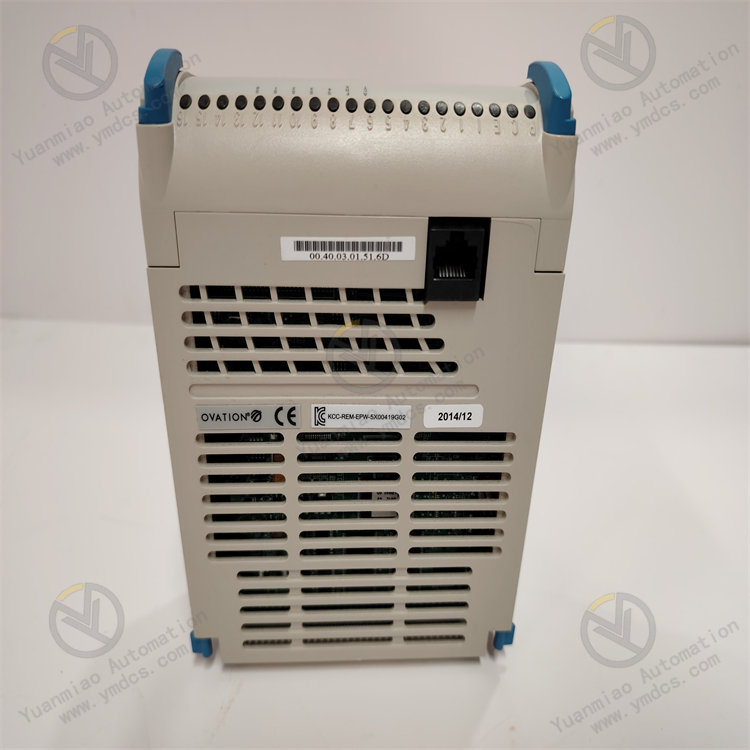
- Interface Configuration: 1× Standard RJ45 Ethernet Port
- Mounting Method: Standard Ovation Controller/IOC Chassis Backplane Plug-In Installation
- Core Functions: High-Speed Data Forwarding, Multi-Protocol Parsing, Redundant Link Switching, Network Diagnosis, System Networking, Online Configuration, Hot-Swap Maintenance
- Applicable Systems: Full-Series Ovation DCS, DeltaV, AMS, SCADA Upper Monitoring System
3.2 Network Communication Performance
- Transmission Rate: 10/100Mbps Adaptive, Full/Half-Duplex Auto-Negotiation
- Communication Protocol: TCP/IP, UDP, ICMP, Modbus TCP (Read/Write Configurable)
- Link Switching: Millisecond-Level Automatic Redundant Switching, No Data Interruption
- Forwarding Performance: Ultra-Low Delay, High Throughput, Support Mass Concurrent Data Transmission
- Network Protection: Built-In Network Storm Suppression, Abnormal Packet Filtering, Port Overload Protection
- Transmission Characteristics: Ultra-Low Packet Loss, Stable Link, Suitable for Industrial Real-Time Control
3.3 Electrical Parameters
- Power Supply: Standard Ovation Backplane 24VDC Stabilized Power Supply
- Power Consumption: Typical Power Consumption <5W, Low Power Operation, No Abnormal Heating
- Built-In Protection: Over-Voltage Surge, Reverse Polarity, Port Overload & Static Protection
- Isolation Performance: Port Electrical Isolation, Resist External Interference and High-Voltage Intrusion
- Power Fault Tolerance: Stable Communication Under Slight Voltage Fluctuation
3.4 Environmental & Mechanical Parameters
- Operating Temperature: -25℃~+70℃ for Long-Term Cabinet Continuous Operation
- Storage & Transit Temperature: -40℃~+85℃ for Transportation & Long-Term Storage
- Operating Humidity: 5%~95% RH (Non-Condensing), Moisture & Corrosion Resistant
- Vibration Resistance: 5g (10Hz~500Hz), Adapt to Cabinet Vibration
- Impact Resistance: 10g (20ms), Excellent Mechanical Shock Resistance
- Mechanical Structure: Compact Modular Design, Vibration-Proof & Anti-Loose
- EMC Performance: Industrial-Grade Anti-Interference Against RF, Harmonic, Static & Surge
3.5 Diagnosis & Maintenance Parameters
- Self-Diagnosis: Power-On Self-Test, Link Detection, Port Status Monitoring, Packet Loss Statistics, Protocol Fault Diagnosis, Hardware Alarm
- Fault Tolerance: Independent Isolation of Single-Link Fault, Redundant Link Automatic Takeover, No System Communication Impact
- Maintenance Features: Hot-Swap Supported, Online Configuration, Network Debugging, Non-Stop Operation
- Data Logging: Network Fault, Communication Log, Configuration Change & Link Switching Event Recording for Traceability
4. Operating Principle
After power-on, the Emerson 5X00419G02 completes hardware initialization, backplane bus handshake, port self-test and protocol loading, and enters normal communication mode after passing inspection. As the core Ethernet communication hub of Ovation DCS, it real-timely receives process data, equipment status data and logic commands from the controller, completes data packaging, protocol parsing and forwarding, and uploads data to operator stations, engineer stations, servers and upper SCADA systems. Meanwhile, it reversely receives control commands and configuration parameters from the upper system, completes verification and forwarding to the DCS controller, realizing real-time data interaction and command linkage between upper and lower systems.
Supporting redundant network architecture operation, the module real-timely monitors the communication quality, delay and packet loss status of primary and backup links. When the primary link has abnormalities such as disconnection, interference or excessive packet loss, it automatically switches to the backup link within milliseconds to ensure uninterrupted data transmission and system monitoring. During full-time operation, it continuously monitors port status, protocol communication, network load and hardware conditions, triggers fault alarms and link protection once abnormalities are detected, isolates faulty ports and stabilizes system network operation.
It supports online network parameter configuration, protocol authority setting and link threshold debugging, adapting to different networking architectures and third-party device docking requirements, realizing network-based, intelligent and visual operation and maintenance of DCS systems.
5. Application Scenarios
5.1 Core Networking of Power Plant Ovation DCS
Widely used in thermal power, hydropower and new energy power plant Ovation DCS systems. As the core communication bridge between controllers and upper monitoring equipment, it undertakes core functions such as unit process data uploading, control command issuing, system clock synchronization and equipment status linkage, ensuring real-time, stable and reliable operation of the unit monitoring system.
5.2 Industrial Cross-System Data Interconnection
Adapted to petrochemical, coal chemical and oil-gas gathering scenarios, it realizes data docking between Ovation DCS and third-party PLCs, intelligent instruments, field control equipment and remote operation platforms via Modbus TCP protocol. It breaks communication barriers, completes centralized data collection, unified monitoring and linkage control of plant-wide process data, and meets factory automatic networking requirements.
5.3 System Redundant Network Construction & Upgrading
It is used to build dual-redundant Ethernet architecture for DCS systems, realizing automatic fault switching of network links and completely eliminating single-point network fault risks. It improves system network fault tolerance and operational reliability, suitable for redundant transformation, network performance upgrading and communication expansion of old single-network systems.