Description
1. Overview
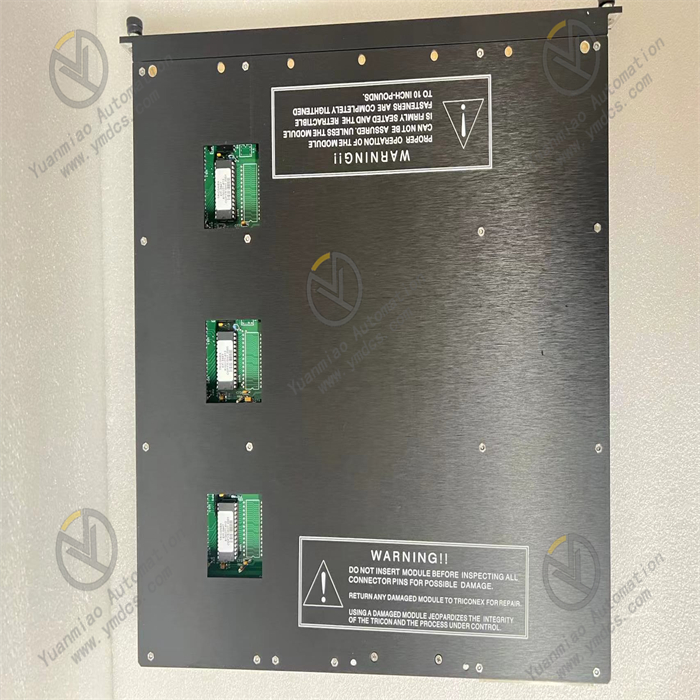
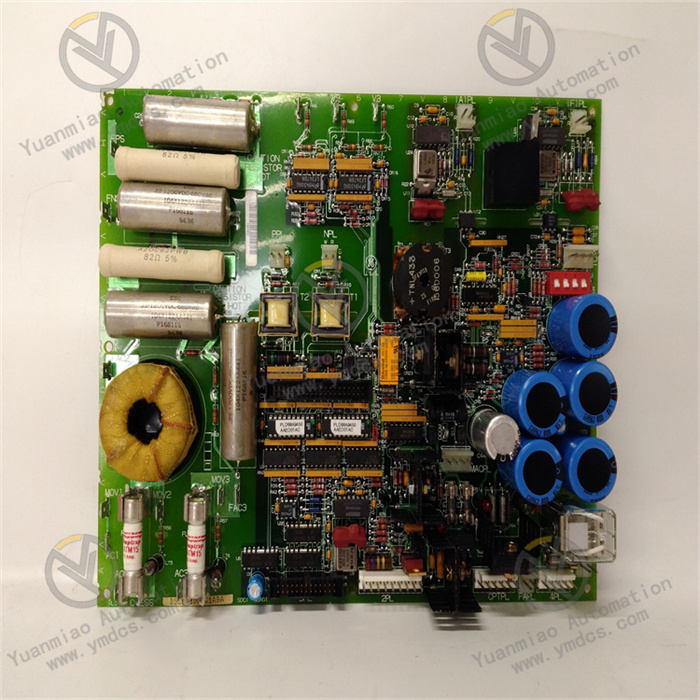
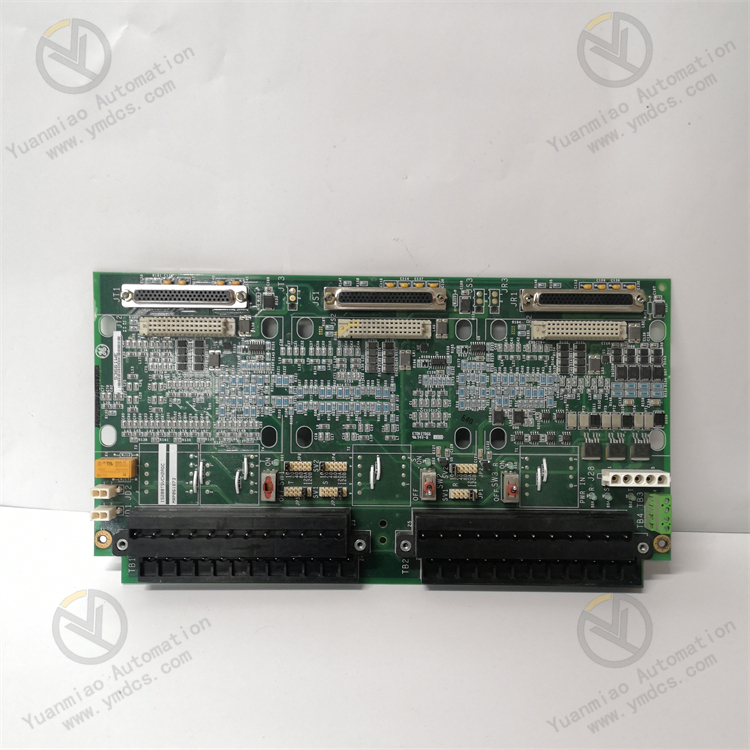
GE IS200TSVCH2ADC is a dedicated TSVC High-Precision Temperature Signal Conditioning & Acquisition Module for the GE Speedtronic Mark VI/VIe Turbine Control System. It is designed for equipment temperature monitoring, exhaust temperature balancing, bearing temperature protection and casing temperature scanning of gas turbines, steam turbines and combined-cycle generator units, serving as core acquisition hardware for unit thermal monitoring and thermal protection systems.The module performs reception of raw signals from multiple temperature sensors, isolated filtering, linearization correction, high-precision analog-to-digital conversion and standardized signal output. It delivers accurate, stable and high-fidelity temperature data sources for unit temperature control logic, overtemperature protection, temperature deviation interlocks and thermal condition optimization.
Equipped with industrial-grade optical isolation, high-resolution AD sampling and dedicated temperature algorithms, IS200TSVCH2ADC features high temperature measurement accuracy, low thermal drift, strong anti-interference capability and excellent long-term stability. It effectively eliminates signal drift, power frequency interference, line attenuation and temperature measurement errors under heavy electromagnetic environments in power plants.Natively compatible with simplex / duplex / triple modular redundant fault-tolerant architectures of Mark VI/VIe, the module supports synchronous multi-point temperature acquisition, cross-data comparison and built-in self-diagnostics, meeting demands for all-condition round-the-clock uninterrupted temperature monitoring on turbine units.It is widely applied in complete thermal monitoring systems for new units, technical retrofits of temperature acquisition channels for legacy units, temperature measurement accuracy upgrades, optimization of thermal protection loops and refined energy efficiency management of generating units.
1. Multi-Channel High-Precision Temperature Acquisition with Ultra-High Resolution
Integrated with multiple dedicated temperature measurement channels for standard integrated circuit temperature sensor signals. Single-channel temperature resolution reaches 0.017℃, measurement accuracy ±0.8℃ and sensitivity up to 1.0mA/℃, enabling precise capture of subtle temperature variations and slow temperature rise trends of units.Built-in dedicated temperature linearization correction algorithms are specially optimized for wide-temperature-range operating conditions of turbine units, effectively compensating sensor nonlinear errors, line voltage drop errors and ambient thermal drift errors. It ensures authentic, accurate and traceable temperature data across the full measurement range, providing reliable basis for unit overtemperature protection and temperature balancing control.
2. Full-Channel Optical Isolation Design with Superior Anti-Interference Performance
Adopting industrial transformer-based optical isolation architecture, all temperature measurement channels feature complete galvanic isolation. It thoroughly blocks impacts from field ground interference, power frequency crosstalk, variable-frequency harmonic waves and electromagnetic induction on temperature signals.Compared with ordinary acquisition modules, it avoids common faults such as temperature jumping, value drift, channel disturbance and data spikes. It perfectly adapts to stringent cabinet operating conditions with high temperature, high humidity and intensive electromagnetic interference in power plants, securing stable continuous temperature measurement of units over long-term operation.
3. Intelligent Signal Conditioning & Filtering for Enhanced Data Stability
A dual mechanism of multi-stage hardware filtering and software digital filtering is embedded to adaptively filter out high-frequency field clutter, transient interference, contact chattering and line noise, while retaining genuine dynamic temperature rise and fall trends of units.It supports signal shaping, amplitude normalization and deviation correction, effectively resolving signal attenuation and distortion on long-distance temperature measurement cables, and guaranteeing smooth, continuous temperature data without abnormal jumps uploaded to the main control system.
4. Full-Scope Built-In Self-Diagnostics for Convenient Operation & Early Warning
Comprehensive channel self-diagnostic functions monitor sensor open circuit, short circuit, loop abnormality, signal over-range, data distortion and abnormal module operating status in real time.It supports online monitoring, data uploading, fault alarms and event logging via the ControlST configuration platform. Hidden risks of temperature measurement loops can be predicted in advance to realize precise fault localization, early warning and full traceability, significantly lowering risks of temperature monitoring failure and unwanted/failed protection actuation.
5. Full Redundant System Compatibility to Meet High-Reliability Power Plant Standards
Fully compatible with simplex / duplex / triple modular redundant fault-tolerant control architectures of Mark VI/VIe. It supports synchronous acquisition of temperature data from multiple modules, cross-data comparison and fault-tolerant voting computation.It satisfies stringent requirements for 24-hour uninterrupted unit operation and zero unplanned outages, preventing thermal protection failure and misjudgment of unit operating conditions caused by abnormal single-channel temperature measurement or single-module faults, and ensuring safe and stable operation of unit thermal systems.
6. Rugged Industrial Design for Harsh Operating Conditions
Constructed with industrial wide-temperature components and flame-retardant reinforced PCB materials, the module has passed a full suite of reliability tests including high-low temperature cycling, humidity-heat aging, vibration shock and EMC.It features dustproof, moisture-proof, vibration-resistant, anti-aging and stable wide-temperature operation characteristics with ultra-low thermal drift coefficient and no parameter shift after long-term operation. Suitable for continuous industrial operation in power plants, it delivers low failure rate and extended service life.
3. Technical Specifications
1. Basic Parameters
Model: IS200TSVCH2ADCBrand: GE (General Electric)Series: Speedtronic Mark VI/VIe Turbine Control SystemBoard Type: TSVC High-Precision Temperature Signal Conditioning & Acquisition ModuleCompatible System: Complete GE Mark VI/VIe Turbine Unit Control SystemCore Functions: Multi-channel temperature signal acquisition, galvanic optical isolation, dual hardware & software filtering, temperature linearization correction, high-precision AD conversion, fault diagnostics of temperature measurement loops, synchronous uploading of redundant dataApplication Scenarios: Temperature monitoring and thermal protection systems for bearing temperature, exhaust temperature, casing temperature and auxiliary equipment temperature of gas turbines, steam turbines and combined-cycle power plant units
2. Temperature Measurement & Electrical Parameters
Supported Signals: Standard integrated circuit temperature sensor signalsChannel Configuration: Multiple independent temperature measurement channels with full inter-channel isolationTemperature Resolution: 0.017℃Measurement Accuracy: ±0.8℃Temperature Sensitivity: 1.0mA/℃Sampling Performance: High-resolution 16-bit AD sampling with high sampling rate and zero lagSignal Processing: Linearization correction, thermal drift compensation, multi-stage filtering, signal shapingProtection Mechanisms: Channel galvanic isolation, overvoltage protection, open/short circuit self-test
3. System Compatibility Parameters
System Compatibility: Fully compatible with simplex / duplex / triple redundant Mark VI/VIe control systemsConfiguration Compatibility: Compatible with ControlST configuration platform, supporting online calibration, channel commissioning, temperature curve monitoring and fault diagnosisData Linkage: Supports cross-data comparison of multiple modules, redundant fault-tolerant computation and real-time data synchronizationFunction Matching: Adaptable to unit logic including overtemperature protection, temperature deviation interlock, exhaust temperature balancing and bearing overheat protection
4. Structural & O&M Parameters
Installation: Embedded mounting within standard Mark VI/VIe racks with precise docking to the system backplane busStructural Layout: Independent isolated layout for each channel; single-channel faults do not affect operation of other channelsO&M Features: Supports hot-swap replacement without shutdown, online channel verification, temperature calibration and fault tracingHardware Technology: Rugged flame-retardant industrial PCB, optical isolation circuits, vibration-resistant, anti-interference and anti-aging structure
5. Environmental Specifications
Operating Temperature: -20℃~+70℃Storage & Transportation Temperature: -40℃~+85℃Operating Humidity: 5%~95% RH (non-condensing, no corrosive gas)Environmental Resistance: Resistance to mechanical vibration & shock, strong electromagnetic interference, humidity-heat aging, stable low-temperature driftApplicable Sites: Power plant main control cabinets, local equipment cabinets, high-temperature, high-humidity and high-interference industrial automatic control scenarios
The GE IS200TSVCH2ADC Temperature Signal Conditioning Module follows a standardized workflow:
Raw signal input from field temperature sensors → Channel galvanic optical isolation → Hardware high-frequency filtering → Signal shaping and amplitude calibration → Temperature linearization correction and thermal drift compensation → High-precision AD analog-to-digital conversion → Digital data verification and fault-tolerant processing → Standardized data upload to main control system.
Raw temperature sensing signals collected from measuring points including unit bearings, exhaust paths, casings and auxiliary equipment are first fed into independent measurement channels of the module. Optical isolation circuits realize galvanic separation between field equipment and the control system to eliminate signal anomalies induced by ground potential difference and electromagnetic interference.
Isolated analog temperature signals go through multi-stage hardware filtering and software digital filtering to remove industrial clutter and transient interference. Built-in temperature algorithms then complete nonlinear correction and ambient thermal drift compensation to restore authentic and accurate thermal condition data.
Calibrated analog signals are converted into standard digital signals via high-resolution AD converters. The module simultaneously executes data self-check, channel status judgment and anomaly screening, and finally transmits valid temperature data steadily to the Mark VI/VIe main control system.
Under redundant architectures, real-time data comparison and fault tolerance are implemented among multiple modules to guarantee accurate, continuous and reliable unit temperature monitoring throughout operation, providing core data support for unit thermal protection, load optimization and condition regulation.
1. Precise Core Temperature Monitoring for Turbine Units
Widely deployed for acquisition of key temperature measuring points on gas turbines, steam turbines and combined-cycle units, including critical parameters such as bearing temperature, exhaust temperature, casing metal temperature, intake temperature and auxiliary equipment temperature.It realizes full-temperature-range and all-time high-precision temperature monitoring of units, accurately capturing minor abnormal temperature rises and preventing misjudgment of unit conditions and protection failure caused by temperature measurement deviations.
2. Unit Thermal Protection & Temperature Interlock Management
It provides precise data sources for high-safety-level logics including unit overtemperature shutdown protection, exhaust temperature balancing protection, bearing overheat interlock and over-limit temperature difference alarm.Relying on high-resolution and highly stable temperature measurement characteristics, it ensures accurate, reliable actuation of protection logics without unwanted trips, effectively mitigating risks of unit overheating damage, thermal imbalance and equipment failure and improving unit operational safety.
3. Technical Retrofit & Upgrade of Temperature Measurement Systems for Legacy Units
It can directly replace outdated temperature acquisition modules featuring low accuracy, large thermal drift, weak anti-interference and frequent data spikes. No modification to field sensors and external wiring is required, enabling low-cost upgrade of unit thermal monitoring systems.It resolves persistent defects of legacy systems such as temperature drift, data jumping and false protection triggering, and greatly enhances thermal monitoring precision and overall system stability.
4. Refined Energy Efficiency & Operating Condition Optimization for Units
Supported by continuous high-precision temperature measurement data, it facilitates exhaust temperature balancing control, precise load matching, combustion condition optimization and refined energy efficiency management of units.It helps units maintain optimal operating conditions, reduce energy consumption and cut thermal losses, satisfying intelligent, refined and low-energy operation control requirements of modern power plants.
![]()