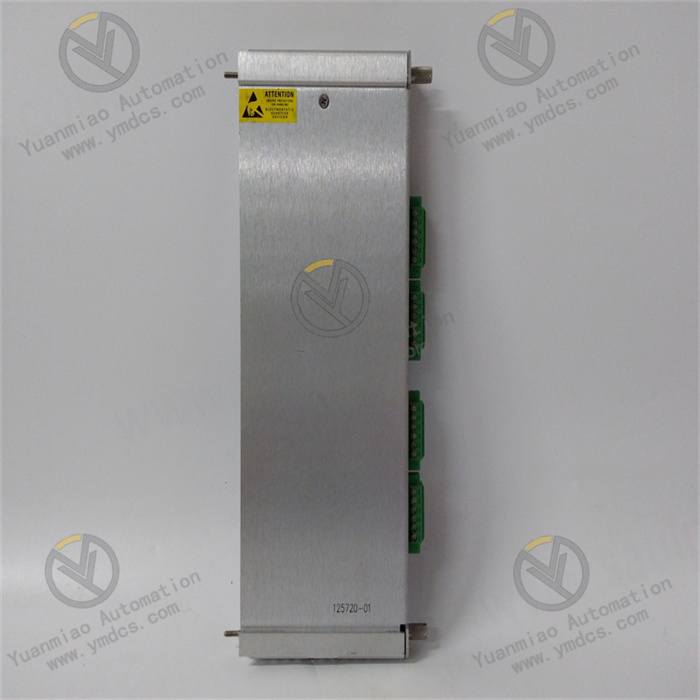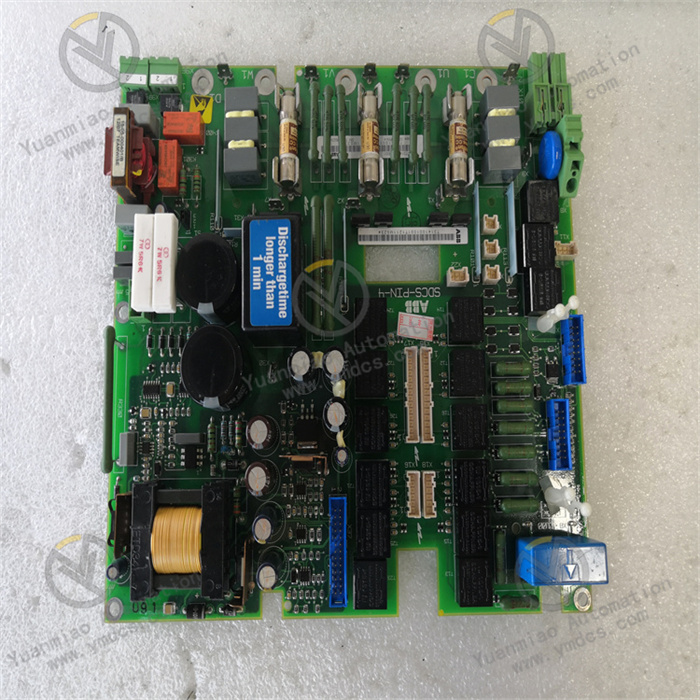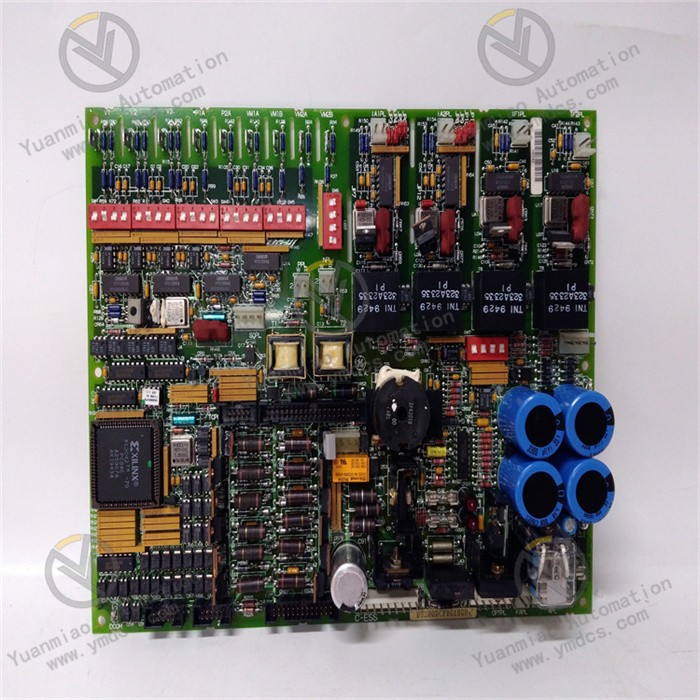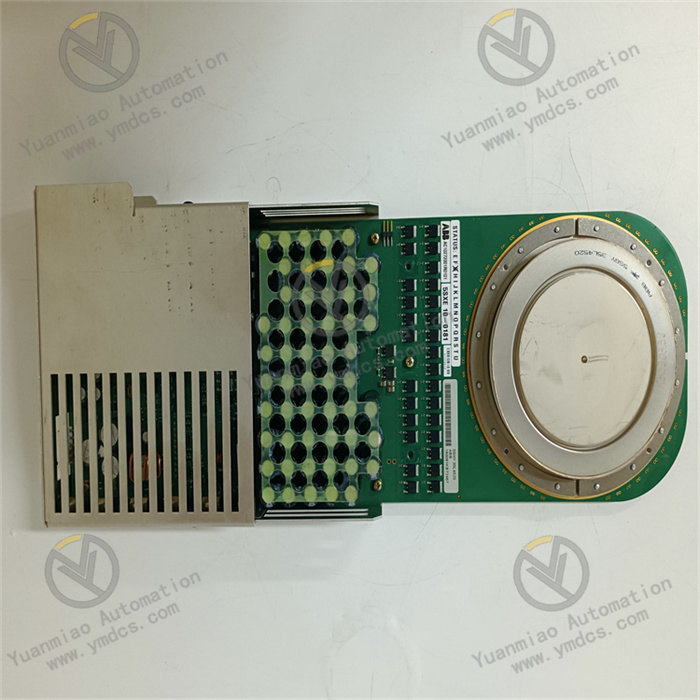
Description
1. Product Overview
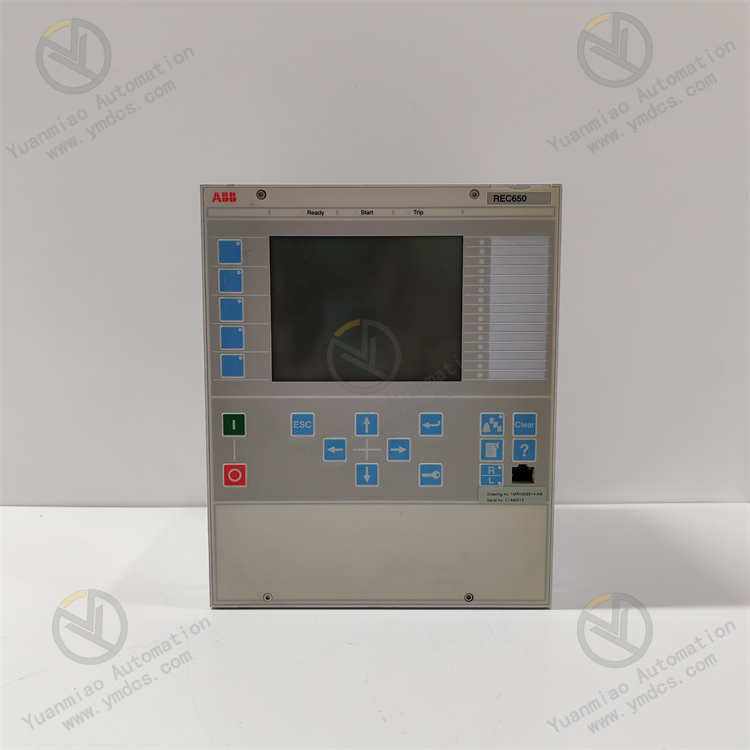
Model: REC650
Part Number: 1MRK008514-AB
Brand: ABB
Product Name: Relion 650 Series Bay Integrated Protection and Control IED
Product Positioning The REC650 is a high-end integrated bay protection and control device within ABB Relion 650 series. It serves as a core intelligent device at the bay level for medium-voltage power distribution and substations. Integrating relay protection, electrical measurement and control, switchgear control, event recording, fault recording and communication networking, it is designed for 10kV~35kV industrial and mining substations, municipal power distribution, renewable energy step-up stations and industrial captive power plants. Fully compliant with international IEC power standards and grid operation specifications, it is critical equipment to realize unattended substations, comprehensive automation and intelligent maintenance.
Core Functions It collects real-time electrical parameters of the bay including voltage, current, power, frequency and phase, and executes full-set relay protection logic calculations for feeders, busbars, capacitor banks, reactors and distribution bays. It enables instantaneous tripping upon faults, abnormal alarms, precise measurement of electrical quantities, local/remote control of circuit breaker switching. It supports fault recording, sequential event recording, data storage and uploading, enabling accurate fault location and stable operation of distribution systems. It delivers dual functions of power equipment safety protection and automatic grid monitoring to guarantee stable, safe and efficient operation of distribution networks.
Applicable Systems ABB substation integrated automation systems, mainstream power DCS monitoring platforms and dispatch control systems. Compatible with universal power communication protocols such as IEC61850, Modbus and DNP3, it can be seamlessly connected to various smart grid monitoring platforms and unattended substation systems.
Application Scenarios Widely deployed in industrial enterprise substations, urban distribution networks, PV/wind power step-up stations, cogeneration plants, rail transit power distribution systems, metallurgical and chemical high-voltage power distribution sites. Suitable for local mounting inside medium-voltage switchgear and centralized panel mounting in substations, meeting the requirement of 7×24-hour continuous and highly reliable operation of power systems.
2. Technical Features
Integrated Design of Comprehensive Protection and Measurement & Control A single unit integrates six core functions: full-range protection, precise measurement & control, switch control, fault recording, event logging and communication forwarding. It can independently complete all bay-level power monitoring and protection tasks without external auxiliary modules. It simplifies substation equipment configuration, greatly reduces cabinet wiring and maintenance costs, and adapts to compact distribution renovation and new construction projects.
Complete Multi-Level Relay Protection Logic Built-in comprehensive protection functions including overcurrent protection, instantaneous overcurrent protection, residual current protection, overvoltage/undervoltage protection, overload protection, abnormal frequency protection and circuit breaker failure protection. It features accurate protection settings and fast operating speed to instantly clear phase-to-phase faults, earth faults and overload conditions, effectively preventing equipment burnout, grid short-circuits and voltage collapse, satisfying high redundancy requirements for grid protection.
High-Precision Electrical Quantity Acquisition and Calculation Equipped with industrial high-precision AD sampling chips for continuous high-frequency acquisition of electrical parameters. The measurement accuracy of voltage, current, power, power factor and frequency reaches grid metering grade. Built-in filtering and compensation algorithms effectively suppress on-site electromagnetic interference, ensuring real-time, accurate and stable measurement data, and providing reliable data support for grid dispatching, load statistics and fault analysis.
Intelligent Communication Networking Supporting Full-Range Protocols Natively supports mainstream power communication protocols including IEC61850, Modbus and DNP3 for standardized power industry networking. Dual-network redundant communication and time synchronization are available. It can connect to monitoring backends to realize remote parameter access, setting modification, remote switching control and real-time data uploading, adapting to unattended operation mode of smart substations.
Industrial-Grade Highly Reliable Anti-Interference Design Strictly complies with EN60255 and EMC electromagnetic compatibility standards. Integrated power surge suppression, optoelectronic signal isolation and electromagnetic filtering circuits effectively resist arc interference inside high-voltage switchgear, frequency converter interference and grid pulse surges. The device is dust-proof, moisture-proof, temperature-variation resistant and vibration-resistant, adapting to harsh electromagnetic and environmental conditions in substations for long-term uninterrupted stable operation.
Visual Human-Machine Interface and Convenient Maintenance Equipped with high-resolution LCD Chinese operation interface. Users can locally view real-time electrical quantities, fault information, event records and device status. Local setting configuration, logic viewing, loop testing and fault query are supported. Matched dedicated commissioning software enables remote configuration, parameter calibration and firmware upgrade, facilitating efficient maintenance and greatly shortening troubleshooting and repair time.
- Programmable Logic with Strong Scene Adaptability Supports custom programmable logic configuration. Protection logic, alarm rules and interlock conditions can be flexibly configured according to different distribution bays and process operating conditions. It meets differentiated control requirements for feeders, busbars, capacitors, reactors, section breakers and other distribution equipment, and is compatible with retrofitting of aged power plants and construction of new smart substations.
3. Specification Parameters
| Item | Parameter |
|---|---|
| Model | REC650 |
| Part Number | 1MRK008514-AB |
| Device Type | Medium-Voltage Bay Integrated Protection and Control IED |
| Applicable Voltage Level | 10kV~35kV Medium-Voltage Distribution System |
| Core Functions | Relay Protection, Electrical Measurement & Control, Circuit Breaker Control, Fault Recording, Event Recording, Remote Communication |
| Supported Communication Protocols | IEC61850, Modbus, DNP3, Dedicated Power Protocols |
| Sampling Accuracy | Grid metering grade high-precision sampling; errors comply with national power standards |
| Power Supply | DC220V / DC110V Special DC Operating Power Supply for Power Industry |
| Protection Operating Characteristics | Instantaneous fault operation, graded time-delay protection, precise blocking logic |
| Operating Temperature | -25℃~+70℃ |
| Storage Temperature | -40℃~+85℃ |
| Ambient Humidity | 5%~95%, non-condensing |
| Protection Class | IP40 (cabinet mounted) |
| Applicable Standards | IEC 61850, EN 60255, EMC Electromagnetic Compatibility Standards |
| Mounting Method | Embedded mounting on switchgear panel, fixed panel mounting |
| Applicable Equipment | Medium-voltage circuit breakers, busbars, feeders, capacitor banks, reactors, distribution bay equipment |
| Origin | Original imported from Switzerland |
| Product Characteristics | Integrated protection & measurement-control, high-precision sampling, multi-protocol networking, programmable logic, strong anti-interference, low-frequency maintenance demand |
4. Working Principle
Power-On Initialization and System Self-Check After being energized by DC operating power, the device automatically completes overall initialization, sequentially performing hardware circuit self-test, sampling channel calibration, protection logic loading, communication parameter matching and system clock synchronization. Once self-check passes, it enters normal monitoring mode with preset protection settings and control logic locked, laying a stable foundation for real-time monitoring and fault protection of distribution bays.
Real-Time Electrical Quantity Acquisition and Data Processing Via secondary circuits of voltage and current transformers, the device continuously collects raw electrical signals including three-phase voltage, three-phase current, residual current, frequency and power. Internal filtering, isolation, noise reduction and AD conversion eliminate on-site electromagnetic interference, restore accurate grid operating data, and complete data calculation, statistics and storage.
Protection Logic Judgment and Fault Action The system continuously compares collected electrical data with preset protection settings and time-delay logic. Under normal operating conditions, grid status is monitored persistently. When short-circuit, overload, earth fault, abnormal voltage, frequency deviation or other faults occur, corresponding protection logic is triggered rapidly. Trip commands are output to open the circuit breaker for instantaneous isolation of the faulty circuit. Meanwhile, fault type, fault time and fault waveform data are captured.
Local and Remote Measurement & Control Coordination Manual local control of circuit breaker switching, parameter viewing and setting modification are supported via front panel. Data interaction with background monitoring systems is realized through standardized communication links. The device receives remote control commands and uploads real-time electrical quantities, alarms, event records and fault recording data to achieve remote monitoring and unattended automatic operation of substations.
- Fault Recording and Maintenance Traceability The device features complete sequential event recording and fault recording functions. It records all equipment operations, status changes, alarm information, fault waveforms and parameters throughout the operation cycle. After faults occur, the whole fault process can be accurately reproduced, providing comprehensive data support for maintenance staff to analyze fault causes, investigate hidden circuit risks and optimize distribution operation strategies, enabling rapid restoration of grid operation.
5. Common Faults and Troubleshooting
Phenomenon: Black screen after power-on, no display, device fails to start Possible Causes
① Loss of DC operating power, abnormal voltage, reversed positive/negative polarity;
② Blown fuse in device power circuit, loose or poor-connected wiring terminals;
③ Damaged internal power module, abnormal mainboard firmware.
Troubleshooting Cut off power and measure DC supply voltage and polarity; check power circuit breaker and circuit continuity. Tighten power terminals and replace blown fuses. If no display remains with normal power supply and wiring, hardware failure of the device is confirmed; factory repair or original equipment replacement is required.
Phenomenon: Abnormal electrical quantity display, drifting and inaccurate voltage/current readings Possible Causes
① Loose, incorrectly wired or poor-connected secondary wiring of transformers;
② Offset and uncalibrated sampling channel parameters;
③ Distorted sampling signals caused by severe on-site electromagnetic interference;
④ Degraded precision due to aging sampling chip inside device.
Troubleshooting Fully verify secondary voltage and current wiring, tighten terminals and correct wrong connections. Access device background to recalibrate sampling channel parameters to eliminate value deviation. Optimize cabinet grounding and shielding to suppress electromagnetic interference. If readings remain abnormal after calibration, sampling circuit failure is confirmed; repair or replace the device.
Phenomenon: Frequent false alarms and false tripping under normal operating conditions Possible Causes
① Improper protection settings, low threshold values, missing delay parameters;
② Incorrect protection logic configuration and disordered interlock parameters;
③ Grid transient interference and harmonic surges leading to misjudgment;
④ Abnormal firmware and disordered logic inside device.
Troubleshooting Recheck and optimize various protection settings and delay parameters to match on-site distribution conditions. Sort out and correct protection logic and interlock configuration. Identify grid harmonics and interference sources and implement filtering and anti-interference measures. Restart the device to reset firmware and restore standard configuration. If false operation persists, device failure is confirmed and spare part replacement is needed.
Phenomenon: Communication interruption, failure to upload data to backend, remote control invalid Possible Causes
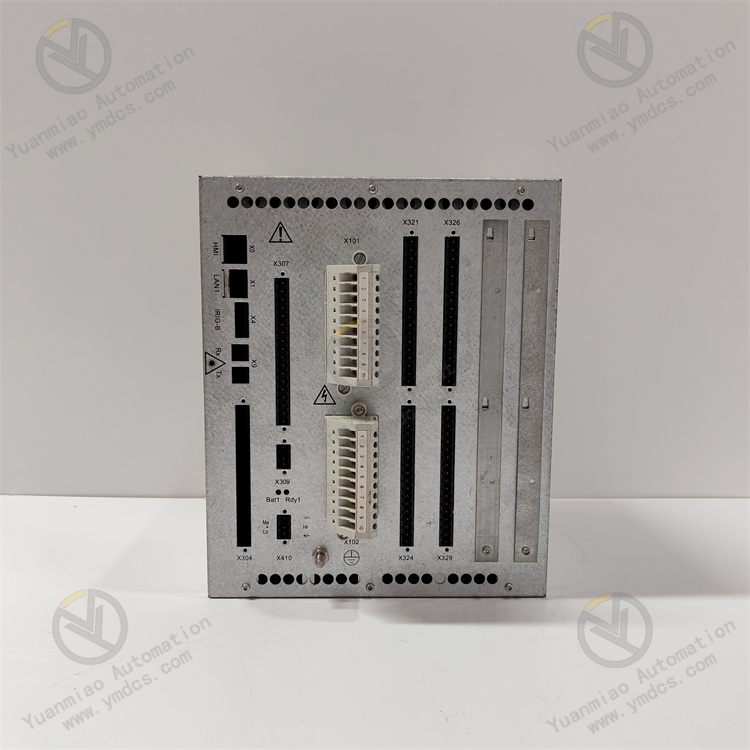
① Loose or damaged communication cables, poor contact of RJ45 connectors;
② Mismatched communication address, baud rate or protocol parameters between device and backend;
③ Faulty switch and broken networking link;
④ Aging and damaged communication module inside device.
Troubleshooting Inspect communication cables and connectors, re-plug and fasten connections, replace damaged cables. Verify and unify communication parameters, protocol types and device addresses between device and backend. Check status of network switches and links. If disconnection continues with correct parameter configuration, communication hardware failure is confirmed and equipment replacement is required.
Phenomenon: Protection fails to operate upon faults, faulty circuit cannot be isolated Possible Causes
① Protection functions not enabled, ineffective settings beyond limits;
② Loose wiring of trip output circuit, unclosed protection trip plate;
③ Protection logic blocked, parameters modified mistakenly;
④ Hardware damage of device output circuit.
Troubleshooting Check activation status of protection functions and setting parameters, restore standard settings. Inspect protection trip plates and output circuit wiring to ensure circuit continuity. Remove incorrect logic blocking and reset protection configuration. If protection still refuses to operate with correct circuits and parameters, hardware failure is confirmed. Replace the device immediately to avoid grid safety risks.
Phenomenon: Frequent crash and restart, unstable operation Possible Causes
① Excessive fluctuation of supply voltage, severe power ripple interference;
② Excessively high cabinet ambient temperature and poor heat dissipation;
③ Program congestion caused by frequent command issuance from backend;
④ Aging firmware and abnormal system program.
Troubleshooting Improve DC power quality by installing power filters to stabilize supply voltage. Clean dust inside cabinet, enhance ventilation and heat dissipation, and control operating temperature of the device. Standardize command issuing logic of backend to avoid frequent operations. Re-flash original factory firmware. If faults recur continuously, replace with original device.