Description
1. Product Overview
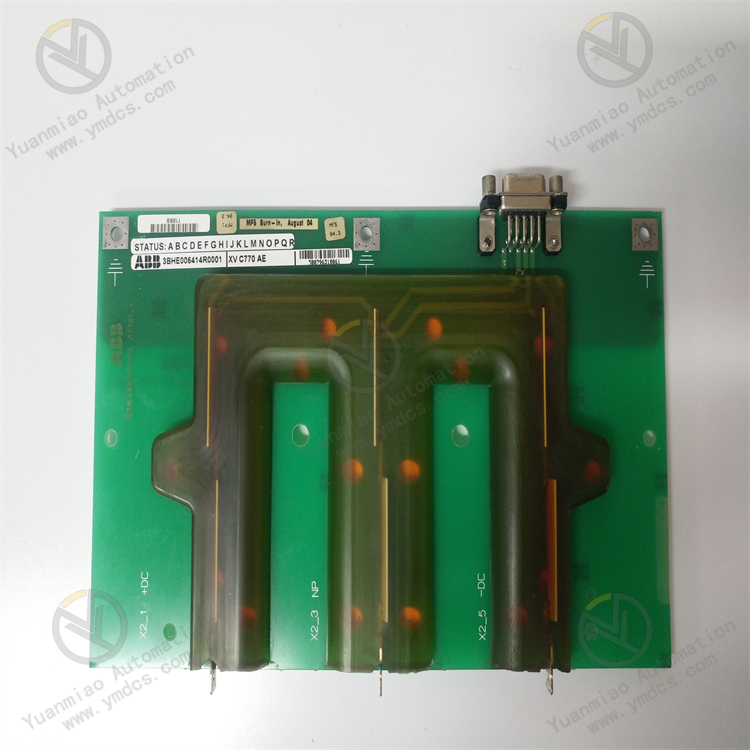
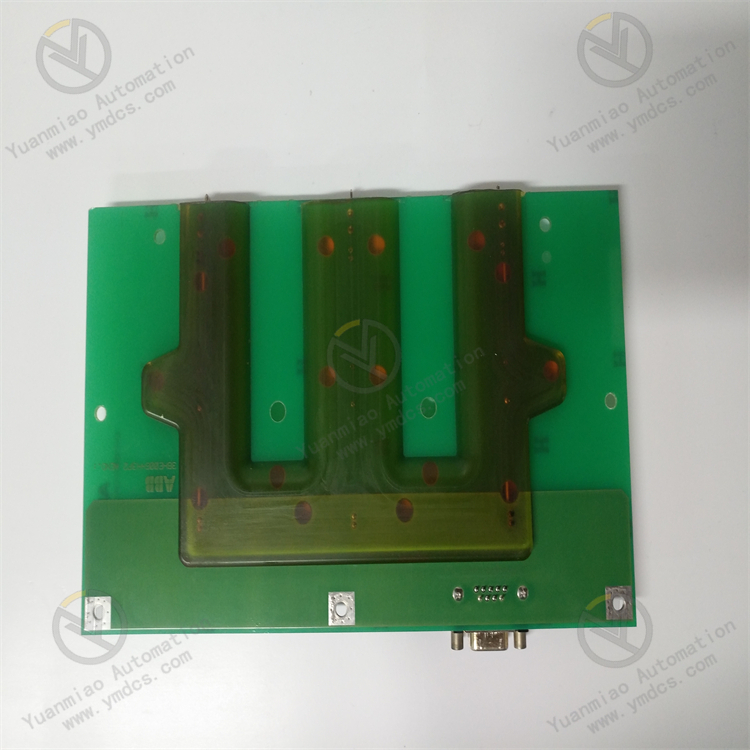
ABB XVC770AE 3BHE006414R0001 is an original high-end integrated communication control module dedicated to ABB AC800M / Symphony Plus control systems, serving as the core bus interface and logic processing unit for process control systems. Integrating multi-protocol communication, high-speed data exchange, logic control as well as signal acquisition and forwarding functions, this module acts as essential hardware enabling data exchange between main controllers, field devices, host monitoring systems and third-party equipment within industrial distributed control systems. It is widely deployed in automated control applications for large process industries including power, chemical, metallurgy and oil & gas sectors.
2. Technical Features
Integrated Multi-Protocol & Multi-Interface Design for Unified Communication Scheduling
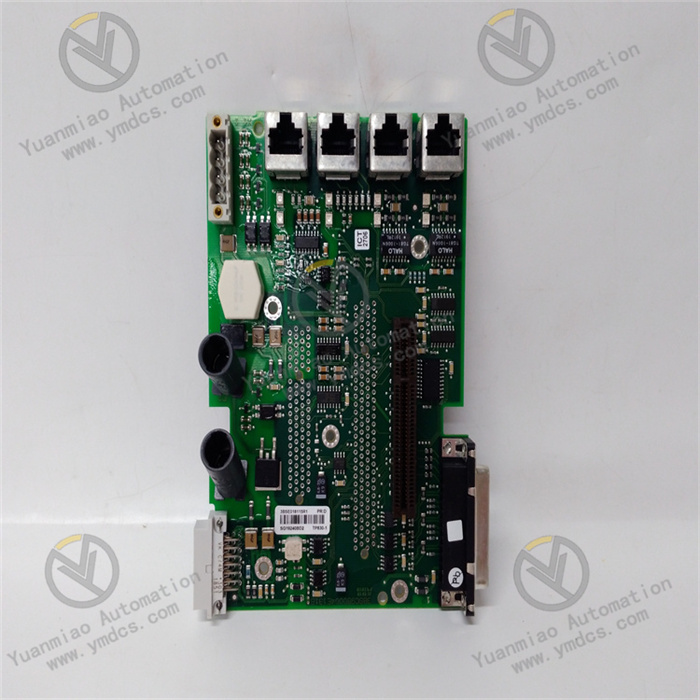
The module is equipped with multiple high-speed communication interfaces, including dual Gigabit Ethernet RJ45 ports, one Profibus‑DP fieldbus interface and dual independent RS‑485 serial ports, supporting parallel independent operation of multiple buses. Compatible with mainstream industrial communication protocols such as Modbus TCP, EtherNet/IP and PROFIBUS DP, it can simultaneously connect to upper monitoring systems, field I/O stations, variable frequency drives, instruments and third-party automation equipment. It realizes intra-system communication, cross-device interlocking and external data uploading in one unit without additional adapter modules, simplifying the communication architecture of control systems.
High-Speed Bus Transmission with Large Data Throughput
The Profibus‑DP bus supports adaptive baud rates ranging from 9.6 kbps to 12 Mbps, and allows connection of up to 126 slave devices on a single bus featuring strong expandability and high transmission speed. Gigabit Ethernet interfaces support millisecond-level mass data exchange, enabling rapid synchronization of massive field data including analog values, binary signals, equipment status and alarm information. It eliminates data delay, packet loss and signal dislocation, fully meeting high-precision and high real-time control requirements of large process industries.
Full Electrical Isolation with Superior Anti-Interference Performance
The module adopts module-wide complete electrical isolation architecture. All communication interfaces, signal circuits and power supply circuits are mutually isolated. It is built with ±6kV ESD electrostatic protection, surge suppression and electromagnetic shielding structures. It effectively resists interference from inverter harmonics, strong electromagnetic radiation, power fluctuation and ground circulation currents on industrial sites, avoiding hazards such as signal cross-feed, waveform distortion, communication interruption and module crash. It suits harsh industrial environments with heavy electromagnetic interference such as power plants, chemical plants and metallurgical facilities.
Hot-Swap Support & Online Maintenance for Non-Stop System Operation
Hot-swap installation and replacement are supported inside cabinets. System shutdown, power cut or production interruption is unnecessary during equipment maintenance, faulty module replacement or system expansion. Equipped with comprehensive online self-diagnosis functions, it continuously monitors bus status, interface conditions, module hardware health and communication link quality, and automatically reports fault codes and abnormal positions. It greatly reduces downtime risks during system maintenance and ensures stable operation of continuous production processes.
Industrial Reinforced Anti-Corrosion Structure for Severe Operating
ConditionsIt features reinforced structure with 316L stainless steel and fluororubber sealing. The printed circuit board is coated with special moisture-proof and anti-corrosion coating, delivering dust-proof, moisture-proof, anti-corrosion and temperature shock resistance. The module has passed strict industrial EMC, vibration, humidity and aging tests. Free of mechanical moving parts, it achieves extremely low failure rate and supports 7×24-hour uninterrupted operation all year round, suitable for long-term operation in enclosed cabinets, high-temperature & high-humidity and dusty industrial sites.
Native System Compatibility, Plug-and-Play Without Complex Commissioning
It is natively compatible with the full range of ABB AC800M and Symphony Plus control systems. Hardware pin definition, bus timing, protocol logic and system configuration are fully matched, supporting direct in-situ replacement of legacy modules of the same model. The system can automatically identify, mount and synchronize parameters. No modification to core system programs or control logic is required. It can be put into service after simple communication parameter configuration, significantly lowering the difficulty of technical transformation and maintenance.
3. Technical Specifications
3.1 Basic Specifications
3.2 Communication Interfaces & Protocols
3.3 Electrical Performance Parameters
3.4 Mechanical & Structural Parameters
3.5 Environmental Specifications
4. Operating Principle
As the core bus interaction hub of the control system, the ABB XVC770AE 3BHE006414R0001 communication control module realizes data circulation and logic management of the whole system based on multi-bus parallel architecture. After power-on initialization, the module completes hardware self-test and bus attachment, automatically connects to the main control bus of the system and synchronizes configuration parameters, communication addresses and interlocking logic.
During normal operation, the module exchanges data with upper monitoring systems, servers and DCS operator stations via Gigabit Ethernet ports. It establishes high-speed communication with field I/O modules, actuators and smart instruments through Profibus‑DP bus, and connects to third-party auxiliary equipment via RS‑485 serial ports. It collects real-time field operating data, equipment status and alarm information and uploads them to the main controller. Meanwhile, it receives control commands, parameter adjustment instructions and interlocking strategies issued by the main controller and accurately forwards them to field equipment to realize process control and equipment interlocking.
5. Application Scenarios
5.1 Core Communication Management for DCS in Large Process Industries
5.2 Expansion & Technical Upgrade of New & Legacy Control Systems
5.3 Multi-Device & Multi-Protocol Interlocking Control
5.4 Redundant Communication Support for Continuous Production
5.5 Key Standard Spare Parts for Industrial Automation