Description
1. Product Overview
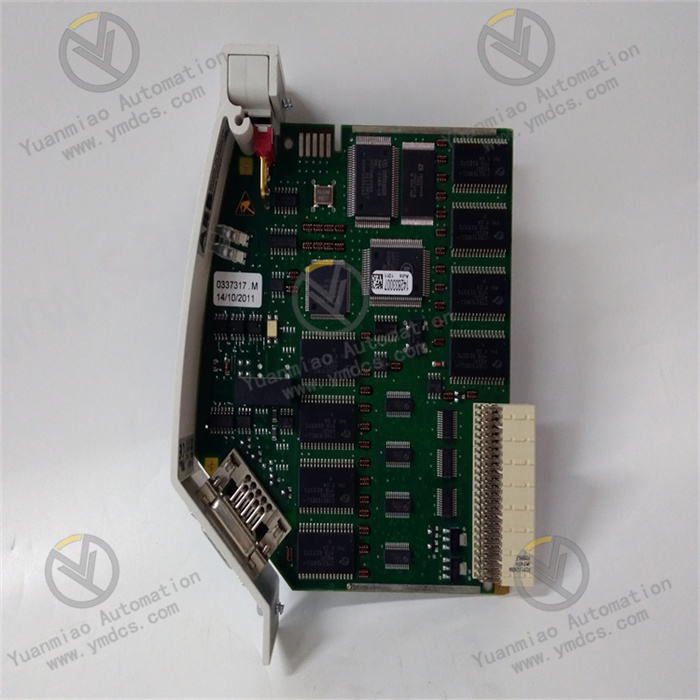
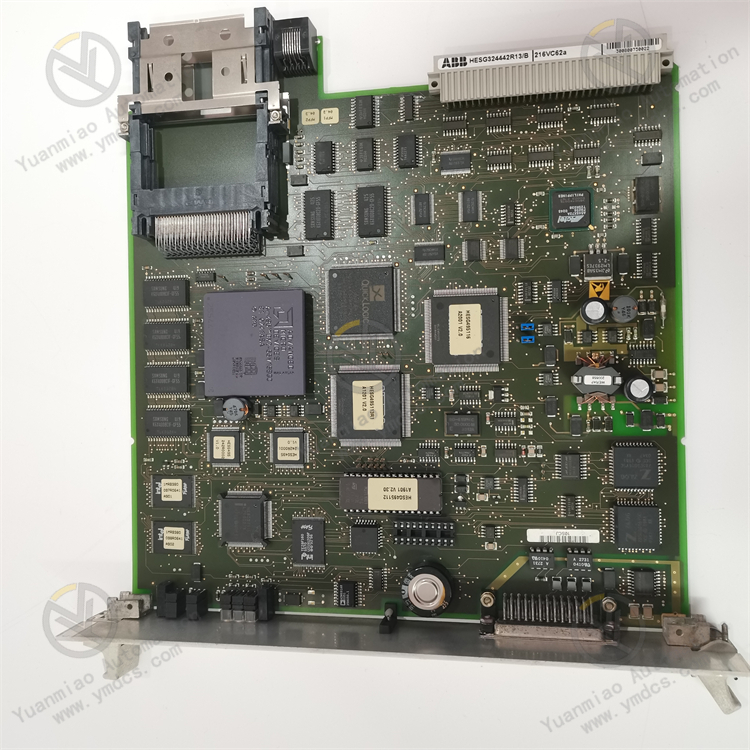
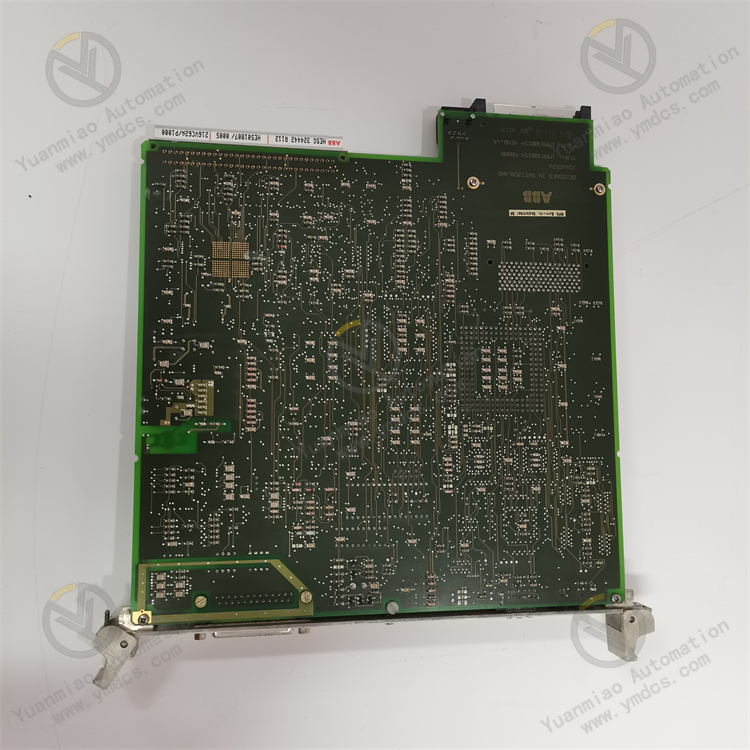
Full Model: 216VC62a
Part Number: HESG324442R13/B
Manufacturer: ABB
Product Name: REG216 System Main Control Processing Unit / CPU Master Card for Generator Protection System
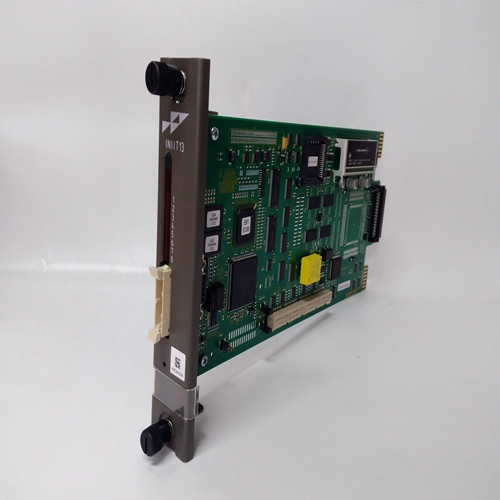
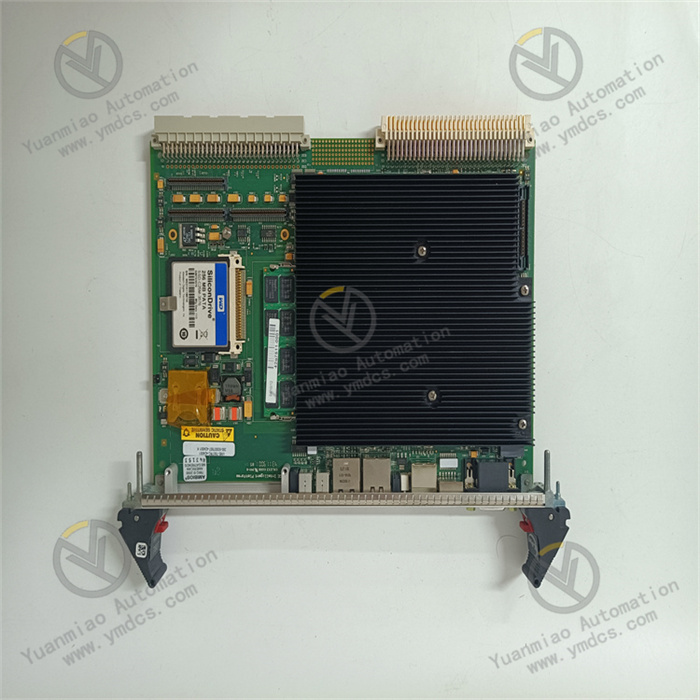
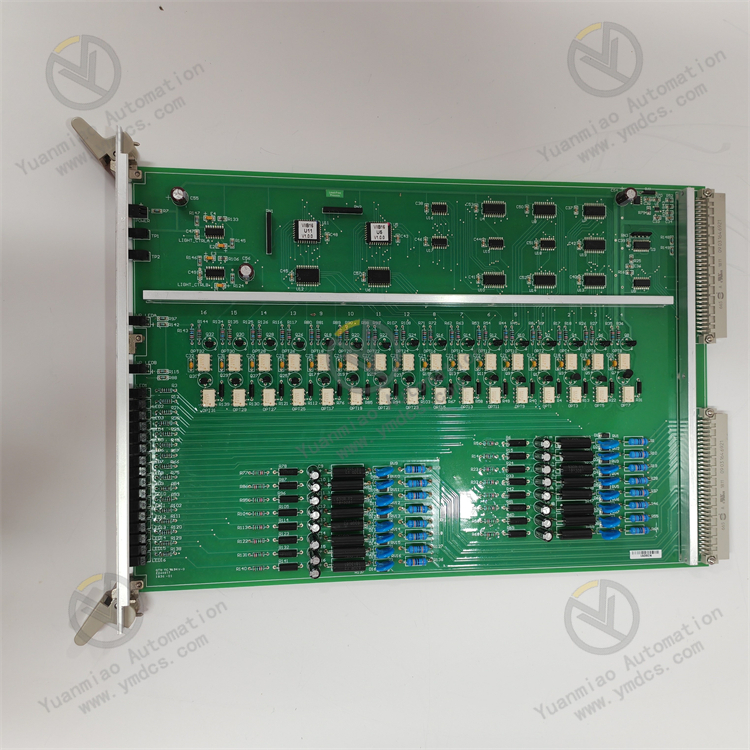
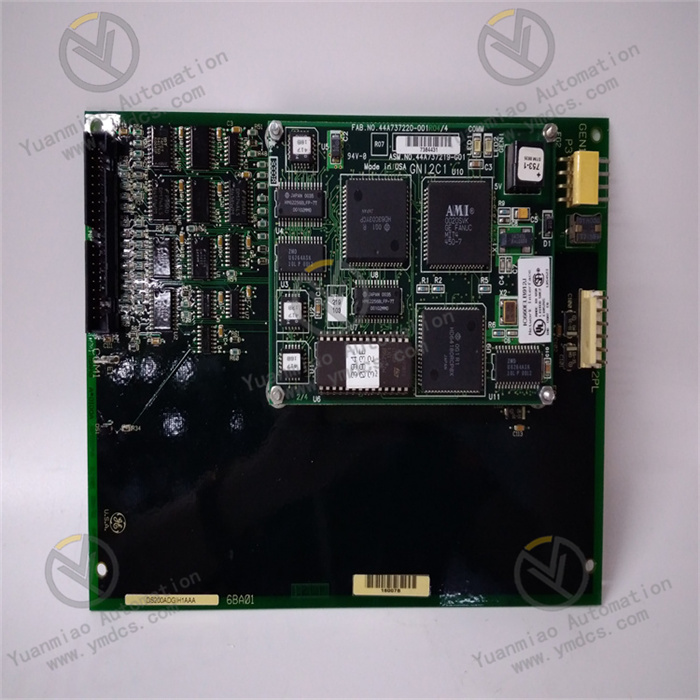
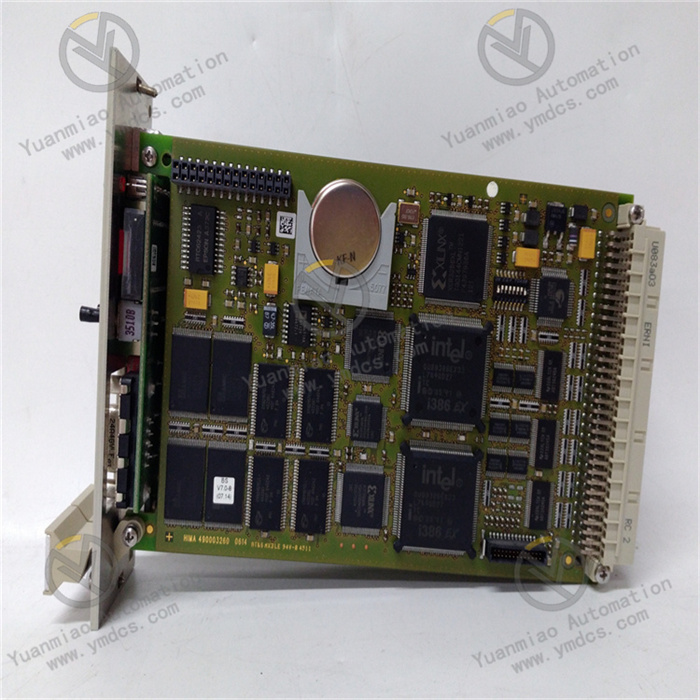
Product Description ABB 216VC62a (HESG324442R13/B) serves as the core main control CPU unit of the ABB REG216 series digital generator protection and control system. It acts as the operation center and bus scheduling core for unit TSI protection, analog regulation and digital interlock systems. Designed for thermal power plants, hydropower plants, cogeneration plants and large industrial generating units, this card is compatible with the ABB Symphony Plus DCS platform. It coordinates all AI/AO analog modules, DI/DO digital interlock modules and signal acquisition modules within the rack, and executes overall data operation, protection logic judgment, interlock management, parameter scheduling and communication interaction with upper systems.
Adopting an industrial high-performance main control architecture, the module supports dual main control redundant deployment in a single rack with outstanding operating condition adaptability, computing stability and fault tolerance. It integrates dedicated generator protection algorithms, digital filtering, sequence-of-event recording and system-wide self-diagnosis mechanisms to accurately identify faults, trigger over-limit alarms, trip protection and closed-loop process regulation for generators and auxiliary equipment. As the core computing hardware of the REG216 system, only genuine identical replacement is allowed. General industrial control CPU modules are prohibited for substitution. It is a critical master card ensuring reliable protection logic, complete data traceability and continuous operation of the automatic control system.
2. Core Functions
Core operation and scheduling for the whole system. As the master controller of the REG216 system, it uniformly manages the B448C parallel bus, centrally processes all unit process data including analog signals, digital signals, rotating speed, temperature and valve position, and completes data filtering, engineering unit conversion and logic operation.
Embedded ABB proprietary protection logic algorithms for generators. It monitors unit operating parameters in real time, accurately identifies fault conditions such as overvoltage, undervoltage, overcurrent and process abnormalities, and activates alarms, interlock blocking and unit trip protection actions.
Redundancy capability for main controllers. Supports single or dual redundant main controller configuration inside the rack. Two modules operate in hot standby fault-tolerant mode. Seamless automatic switchover occurs upon failure of the active controller, eliminating system outage and protection failure risks caused by single-point faults of the main control unit.
High-speed multi-protocol communication. Compatible with PROFIBUS DP/V1, Ethernet, Modbus RTU and other industrial protocols. It seamlessly connects with Symphony Plus DCS, upper configuration software and local monitoring terminals to realize remote parameter configuration, real-time data upload and on-line system diagnosis.
Comprehensive system-level self-diagnosis. Continuously monitors module hardware status, bus links, operating status of each IO subcard, power supply and communication quality. It accurately locates card faults, communication interruptions, configuration errors and parameter mismatches, and actively uploads alarms.
Large-capacity event and fault storage. Supports millisecond-level sequence-of-event recording, fault snapshots, interlock action logs and parameter modification records, fully reproducing the complete process of unit abnormalities to facilitate fault tracing, maintenance analysis and unit optimization.
- Supports on-line configuration, parameter calibration, protection threshold modification and logic optimization. System commissioning, parameter calibration and function upgrades can be implemented without unit shutdown, adapting to long-term continuous operation of power generating units.
3. Technical Features
Dedicated main control architecture for generator protection: Customized for the REG216 generator protection system, equipped with an industrial high-frequency processor featuring sufficient computing power and ultra-fast response. It supports synchronous high-frequency multi-channel data processing without delay, packet loss or logic disorder, meeting high-precision protection and control requirements for generating units.
High-reliability redundant fault-tolerant design: Adopts dual hot standby main control architecture with automatic bumpless switchover during faults. Single-point hardware failure will not affect the whole protection system. The architecture prevents protection failure to operate and unwanted operation, suitable for high-risk continuous operation scenarios in power stations.
High-precision digital signal processing: Integrated multi-stage digital filtering, harmonic suppression and DC component removal algorithms to effectively suppress electromagnetic interference and clutter signals on site, ensuring accurate sampling and stable judgment of protection logic.
Integrated system-wide management capability: Uniformly controls all IO subcards of the REG216 rack to realize centralized data operation, unified protection logic and standardized communication output. The system architecture is concise with consistent logic for convenient operation and maintenance.
Strong compatibility and expandability: Natively compatible with the ABB Symphony Plus system and Control Builder Plus V3.0 or later programming software. It supports subsequent logic upgrade, function expansion and channel expansion for renovation and upgrade projects of new and existing generating units.
- Fast non-destructive maintenance replacement: Standard 6U rack-mounted card design with interfaces, bus protocols and firmware fully compatible with the same series systems. After replacement, no modification to unit protection logic and interlock circuits is required. Commissioning can be completed rapidly only by synchronizing configuration parameters, greatly cutting downtime maintenance costs.
4. Specification Parameters
| Item | Parameter |
|---|---|
| Model No. | 216VC62a |
| Part Number | HESG324442R13/B |
| Product Series | ABB REG216 Digital Generator Protection & Control System |
| Product Type | System Main Control Processing CPU Unit |
| Core Functions | Overall logic operation, bus scheduling, generator protection judgment, interlock management, data storage & tracing, system configuration, communication forwarding |
| System Architecture | Supports single main controller / dual redundant main controller deployment; maximum rack computing load 850% |
| System Bus | Dedicated high-speed B448C parallel bus |
| Communication Protocols | PROFIBUS DP/V1, Modbus RTU, Industrial Ethernet |
| Communication Rate | 9.6 kbps ~ 12 Mbps, auto-adaptive adjustable |
| Compatible Software | ABB Control Builder Plus V3.0 and above |
| Compatible Systems | ABB Symphony Plus DCS, REG216 Generator Protection System |
| Hardware Form | 6U standard 19-inch rack-mounted plug-in card |
| Operating Temperature | -25℃ ~ +55℃ |
| Storage Temperature | -40℃ ~ +80℃ |
| Ambient Humidity | 5% ~ 95%RH (Non-Condensing) |
| Core Characteristics | Redundant fault-tolerant operation, high-speed data operation, millisecond event recording, system-wide self-diagnosis, on-line configuration, accurate protection logic judgment |
| Operating Characteristics | Low failure rate, free of data drift, strong anti-electromagnetic interference, stable 24/7 continuous operation, bumpless switchover upon faults |
| Mounting Method | Fixed installation on standard rack backplane slots, supports in-situ non-destructive replacement |
| Typical Applications | Thermal/hydraulic/new energy generator set protection, closed-loop process control of generating units, auxiliary equipment interlock protection in power plants, main control scheduling for Symphony Plus system |
5. Working Principle
After power-up, the module automatically performs hardware self-test, firmware initialization, B448C bus activation, IO subcard scanning and system configuration loading. It comprehensively verifies power supply circuits, bus links, subcard operating status and external communication links, and enters main control operation mode once self-test passes.
During normal system operation, the 216VC62a acts as the core hub of the whole unit. It polls raw monitoring data from all analog and digital subcards in the rack via the high-speed parallel bus, and implements signal filtering & noise reduction, harmonic suppression, engineering unit conversion, precision calibration and logic operation. Based on preset protection thresholds, delay logics and interlock strategies, the module continuously evaluates operating conditions of generators and auxiliary equipment. Under normal parameters, real-time data, trend curves and operation logs are steadily uploaded. Once parameter over-limit, equipment abnormality or circuit fault is detected, local alarms, remote platform alarms as well as unit interlock and trip protection actions are triggered immediately to guarantee safe and stable operation of generator equipment.
Under redundant architecture, two 216VC62a modules synchronize data and perform parallel computation with hot standby monitoring. When the active main controller fails, bumpless automatic switchover is executed and the standby module seamlessly takes over all computation and control tasks without monitoring interruption, data loss or unwanted protection activation. Meanwhile, the module continuously runs system-wide self-diagnosis and data recording functions. It fully stores sequence of events, fault snapshots and parameter modification records to accurately locate system faults and realize full traceability of unit operating status, ensuring long-term, precise and reliable operation of the whole protection and control system.
6. Common Faults and Solutions
1. Whole system offline, no communication with upper system, main controller disconnected
Causes: Main controller program freeze or abnormal firmware operation; loose or damaged bus links; inconsistent communication parameters and device addresses; loss or damage of core firmware.
Solutions: Reset the main controller via local or remote restart; verify and correct PROFIBUS address, baud rate and communication protocol parameters; inspect and fasten B448C bus and Ethernet connections; re-flash matching original firmware; replace the main controller if the fault persists.
2. Incomplete IO subcard scanning, partial channels offline, data stop updating
Causes: Abnormal bus scheduling and polling congestion of main controller; poor contact or aging of backplane bus; missing or corrupted system hardware configuration; abnormal computing threads leading to subcard identification failure.
Solutions: Refresh system hardware configuration and re-scan all rack IO devices; inspect and tighten backplane bus contacts and wiring; restart the main controller to restore bus scheduling; organize system configuration files; replace the module if underlying hardware failure cannot be repaired.
3. Erroneous protection logic judgment, frequent false alarms, interlock disorder
Causes: Abnormal firmware operation and incorrect data parsing of main controller; incorrectly configured protection thresholds, delay parameters and interlock logic; hardware aging and data drift after long-term operation; program anomaly induced by severe on-site electromagnetic interference.
Solutions: Verify and calibrate generator protection thresholds, delay logics and interlock strategies item by item; optimize cabinet grounding and shielding to suppress field interference; back up valid configuration, restore factory settings and reload matching parameters; replace genuine original module if hardware aging leads to invalid logic.
4. Self-test failure after power-on, abnormal indicator lights, unable to start
Causes: Unstable rack power supply, undervoltage or overvoltage; dust accumulation and moisture causing reduced circuit insulation; damaged internal computing chips; corrupted or lost firmware.
Solutions: Inspect and stabilize rack power supply voltage; clean dust on module gold fingers and circuit boards, dry damp circuits; re-flash matching original firmware; replace the module directly if self-test keeps failing after multiple recovery attempts due to hardware damage.
5. Abnormal redundant switchover, asynchronous dual main controllers, standby unit offline
Causes: Inconsistent firmware versions of two modules; faulty redundant synchronization bus; unsynchronized parameter configuration; address conflict between active and standby controllers.
Solutions: Unify firmware versions and system parameters of both main controllers; troubleshoot and repair redundant synchronization bus links; import identical configuration files and protection logic synchronously; reinitialize redundant architecture and complete synchronization calibration between active and standby units.
6. System unrecognition, mismatched configuration and abnormal protection after module replacement
Causes: Incompatible firmware version of new module; historical backup configuration not imported; uncalibrated bus address and redundancy parameters; system hardware configuration not updated.
Solutions: Flash original firmware compatible with Symphony Plus and REG216 system; import backup configuration and verify protection logic and threshold parameters channel by channel; correct bus address and redundancy settings; refresh system hardware configuration and restart the whole system for initialization before commissioning.