Description
1. Overview
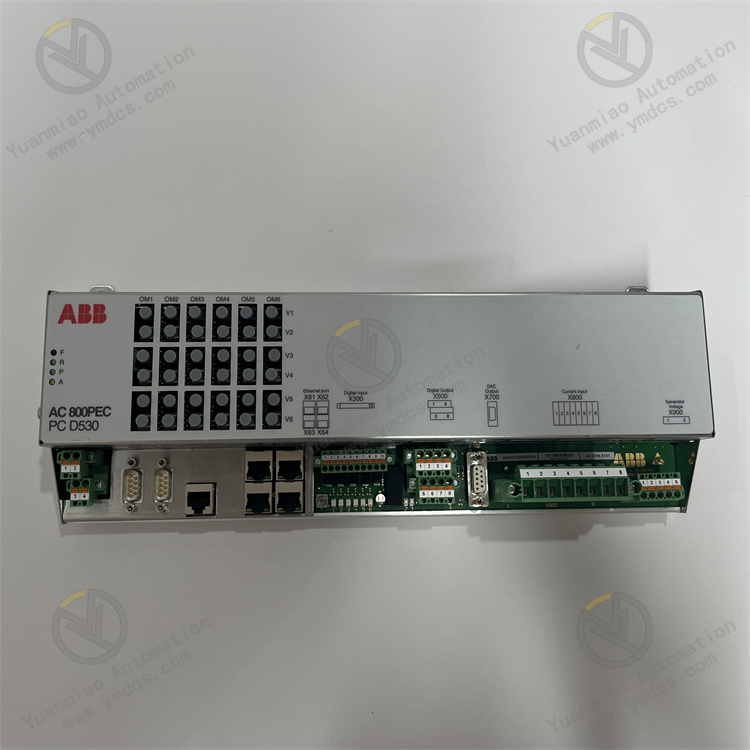
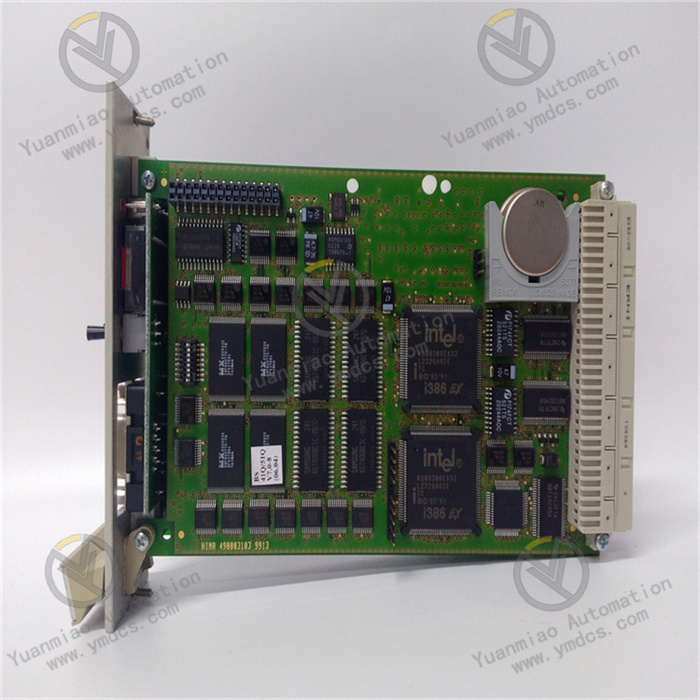
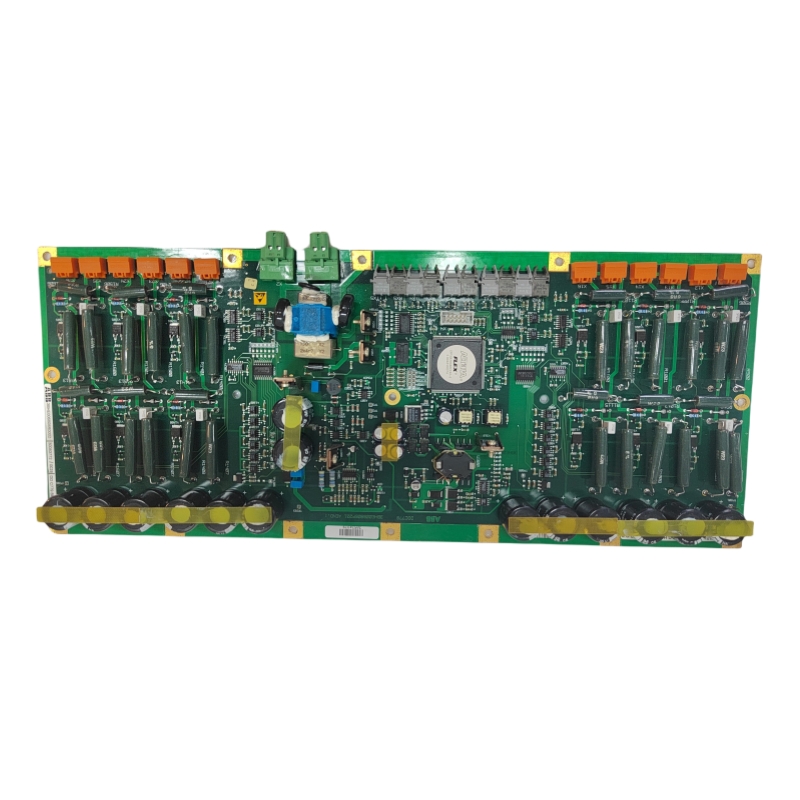
ABB DDC779BE02 (part number: 3BHE006805R0002) is an industrial high-performance distributed control processor developed and manufactured by ABB Switzerland. It functions as a core component of mainstream ABB automation systems including Symphony Plus, Advant OCS and 800xA, and is purpose-built for large-scale industrial distributed control systems (DCS), process automation and power auxiliary control systems. Serving as the central computing and control hub of distributed subsystems, this module independently undertakes on-site local logic calculation, closed-loop process control, equipment status collection, bus data exchange and system fault-tolerant management. It enables precise field equipment control without reliance on upper-level systems and acts as critical hardware for distributed automation architecture.
2. Technical Features
2.1 High-Performance Processor Architecture Delivers Powerful Independent Distributed Control
2.2 Multi-Bus Redundant Communication Ensures Excellent Compatibility and Expandability
2.3 Full-Condition Closed-Loop Control Supports Diverse Industrial Processes
2.4 Comprehensive Self-Diagnosis & Fault Tolerance Maximizes Operational Reliability
2.5 Rugged Industrial Construction Accommodates Severe Field Environments
2.6 High Compatibility Enables Plug-and-Play with Low Retrofit Costs
3. Specification Parameters
3.1 Basic Parameters
- Model: DDC779BE02
- Part Number: 3BHE006805R0002
- Product Line: ABB Distributed Control System Processor Modules
- Manufacturer: ABB (Switzerland)
- Device Type: Industrial decentralized standalone computing and closed-loop control processor
- Core CPU: MPC866 32-bit high-performance industrial microprocessor
- RAM: 64 MB high-speed operating memory
- Flash Memory: 8 MB program storage flash
- Compatible Systems: ABB Symphony Plus, Advant OCS, 800xA mainstream distributed control systems
- Application Scenarios: Power plant auxiliary control, chemical process automation, metallurgical heavy-duty drive control, retrofit replacement of legacy ABB distributed systems
- Core Functions: Autonomous logic calculation, closed-loop process control, multi-bus redundant communication, parameter archiving, fault self-diagnosis & alarming, remote configuration debugging, online firmware upgrade, fault isolation & tolerance
- Operating Modes: 24-hour continuous full-load operation, local distributed autonomous control, real-time dynamic regulation, fault adaptive tolerance, remote online monitoring and maintenance
- Compatibility: Fully compliant with native ABB system architecture; supports non-destructive field replacement and mainstream industrial control platforms
3.2 Control & Computing Parameters
- Computing Architecture: 32-bit RISC high-speed architecture running industrial real-time OS
- Control Modes: Multi-variable closed-loop regulation, sequential interlock, adaptive load adjustment, soft start/stop, fail-safe protection
- Response Performance: Millisecond command response with zero computational lag, zero overshoot and smooth process tuning
- Program Storage: 8 MB dedicated non-volatile flash retaining control programs, process configurations and threshold values
- Data Cache: 64 MB high-speed RAM for low-latency calculation and bus buffering
- Protection Logic: Multi-layer interlock protection against power abnormality, communication failure, program crash, overload/overlimit and hardware defects
3.3 Communication Interface Parameters
- Ethernet Ports: 2 industrial Ethernet ports for high-speed networking and redundant communication
- Fieldbus Ports: Two independent Profibus DP buses plus RS485 serial port
- Supported Protocols: ABB proprietary bus, Profibus DP, Modbus RTU and other mainstream industrial protocols
- Communication Functions: Real-time process data upload, remote parameter setup, fault log query, online program upgrade, bidirectional equipment status feedback
- Communication Performance: Dual-bus redundant backup, low latency, lossless stable transmission supporting long-term continuous data exchange and fault audit
3.4 Electrical Power Parameters
- Rated Supply: Standard industrial DC 24 V; wide-range compatibility 12~36 V DC with redundant power capability
- Power Input: Backplane-fed rack power with dual redundant power support
- Typical Power Consumption: 5.1 W with low heat generation for sustained full-load operation
- Electrical Protection: Multi-stage hardware defense covering overvoltage, overcurrent, short circuit, surge, ESD and reverse polarity
- Noise Immunity: Onboard power filtering suppresses line ripple, voltage sags and pulse interference for unstable field mains
- Isolation Rating: 500 V AC dielectric isolation eliminating AC/DC crosstalk for enhanced system safety
3.5 Environmental Parameters
- Operating Temperature: -40℃ ~ +85℃, tolerating cabinet heat buildup, cold startup and rapid temperature swings
- Storage Temperature: -40℃ ~ +85℃ for transportation and long-term idle storage
- Operating Humidity: 5%–95% RH (non-condensing), resistant to condensation-induced short circuits for humid industrial sites
- Temperature Ramp Rate: ≤3℃/min, compliant with IEC/EN 61131-2 industrial standards
- EMC Compliance: High-grade industrial EMC certified against harmonics, RF radiation and power pulse interference
- Mechanical Performance: Tolerates frequent industrial vibration and shock; seismic, dust-proof and anti-aging with stable long-term performance
- Ingress Protection: IP20, designed exclusively for indoor enclosed cabinet installation
3.6 Mechanical & Mounting Parameters
- Construction: Compact high-density multi-layer industrial PCB with reinforced integrated modular design
- Surface Treatment: Full triple conformal coating for moisture, dust, corrosion and static protection
- Mounting: Embedded DIN rail installation inside standard control racks with precise positioning for easy secure fitting
- Overall Dimensions: 48 mm × 48 mm × 110 mm compact footprint for dense cabinet layout
- Installation Suitability: Consistent heat dissipation during dense mounting with no degradation of computation or communication stability
4. Working Principle
After power-up, ABB DDC779BE02 3BHE006805R0002 executes comprehensive hardware self-test, CPU initialization, program loading, memory validation, port calibration and multi-bus link matching. Upon successful verification, it enters 24-hour continuous decentralized operation as the core hub for local field computation, logic scheduling and closed-loop management.
During runtime, the 32-bit high-speed processor executes predefined process code while sampling real-time status and process variables from field transmitters, drives and actuators. Real-time logic evaluation, condition judgment and closed-loop math are completed autonomously. Based on programmed thresholds and interlock rules, precise drive signals trigger speed adjustment, power trimming, sequential action, soft cycling and limit protection. Field equipment operates reliably with no upper-system intervention, reducing DCS burden and boosting overall responsiveness and fault resilience.
Full-time hardware monitoring tracks supply quality, CPU utilization, memory health, redundant bus quality and port functionality. Power faults, communication dropout, program errors, hardware damage and process over-limit trigger local alarms, permanent fault logging and remote notification. Fault containment logic prevents fault propagation and unintended equipment motion, instability or shutdown.
5. Application Scenarios
5.1 Distributed Control Systems for Power Plants
5.2 Oil, Gas and Chemical Process Automation Systems
5.3 Heavy-Duty Equipment Control for Metallurgy & Mining