Description
1. Product Overview
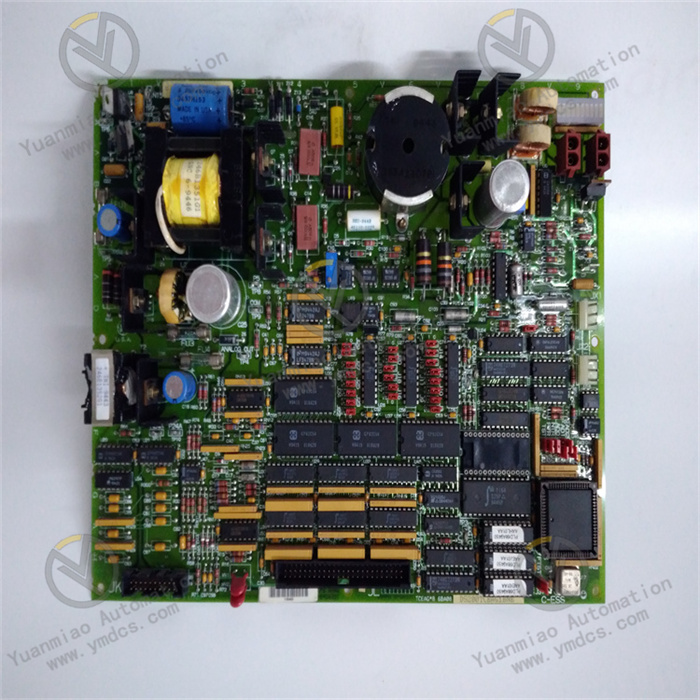
WOODWARD 8200-1310 is a high-performance steam turbine digital governor of Woodward 505XT series. Designed specifically for single-valve, extraction/induction steam turbines, it serves as the core intelligent control unit for speed regulation, load adjustment and process interlock protection of industrial steam turbines. Replacing traditional mechanical governors and early analog control systems, this device integrates advanced adaptive control algorithms, fault diagnosis, data logging and multi-protection functions. It is widely deployed on industrial steam turbine units in cogeneration plants, captive power stations, chemical, petrochemical, paper-making and other industries, meeting the requirements of continuous normal operation and precise condition regulation for medium and small-sized steam turbines.
The 8200-1310 controller adopts the new-generation OptiTune adaptive PID control technology. It delivers professional steam turbine control capabilities including intelligent load rejection suppression, critical speed avoidance and reverse rotation detection, and can automatically adapt to unit condition changes without frequent manual parameter tuning. Equipped with a complete set of analog and digital input/output interfaces and supporting multi-protocol communication, the hardware features anti-interference, anti-vibration and wide-temperature performance to adapt to harsh industrial operating conditions. It supports automatic unit start-stop, steady-state speed regulation, load distribution and over-limit protection, acting as the core control equipment for automatic and intelligent stable operation of industrial steam turbines.
2. Functional Characteristics
2.1 High-precision Steam Turbine Speed and Load Control
It incorporates optimized PID speed regulation algorithms together with OptiTune adaptive tuning technology. The controller dynamically adjusts control parameters according to turbine operating conditions, steam parameters and load variations, solving the drawbacks of conventional speed control systems such as fixed parameters, poor condition adaptability and large fluctuations. It supports precise closed-loop speed control, constant unit load regulation and coordinated extraction/induction pressure control, featuring high speed control accuracy and minimal steady-state error. It effectively prevents turbine speed drift and load fluctuation to ensure stable and efficient turbine operation, suitable for complex production conditions with variable loads and changing steam parameters.
2.2 Multi-layer Unit Protection and Safety Interlock Functions
Integrated with complete safety protection logic for steam turbines, it has three built-in critical speed avoidance bands to automatically bypass unit resonance zones and protect rotors and shafting. It provides reverse rotation detection, overspeed protection, underspeed protection, signal anomaly protection and circuit fault interlock functions. It continuously monitors unit operating status and triggers interlock actions and alarms rapidly upon abnormal conditions to prevent major equipment hazards such as turbine overspeed, resonance and abnormal shutdown. Custom external interlock logic is supported to connect with on-site emergency shutdown, process interlock and equipment protection signals, comprehensively safeguarding the safety of steam turbine units.
2.3 Intelligent Start-Stop and Adaptive Condition Adaptation
It supports fully automatic sequenced start-stop, stepwise speed ramping, smooth warming-up and uniform loading of steam turbines. Equipped with anti-overshoot accelerated PID algorithm, it suppresses speed overshoot and oscillation during unit start and stop, achieving smooth unit start-stop and reducing impact losses to equipment. It adapts to multiple operation modes including no-load, grid-connected, isolated grid, variable load and variable steam pressure, and switches control logic automatically without manual intervention. It perfectly meets production demands of industrial units with frequent load cycling and fluctuating working conditions, greatly improving the automation level of the unit.
2.4 Complete Data Logging and Fault Diagnosis Capabilities
With high-speed data logging function, it continuously records key operating data such as turbine speed, load, steam parameters, valve position, operating hours, start-stop status and fault events. It supports unit stress monitoring, working condition tracing, fault analysis and equipment condition assessment. The device performs full-range hardware self-test and operation diagnosis, accurately identifying sensor failures, circuit disconnection, communication exceptions, hardware faults and parameter abnormalities. It outputs fault codes and alarm information in real time to help operation and maintenance personnel quickly locate and troubleshoot hidden risks and shorten equipment downtime.
2.5 Multi-protocol Communication and Convenient Operation & Maintenance Expansion
It natively supports mainstream industrial communication protocols including Modbus, Ethernet and CANOpen, enabling seamless connection with DCS systems, PLCs and upper monitoring platforms to remotely upload unit operating parameters, download control commands and modify parameters remotely, satisfying centralized intelligent plant management requirements. Local keypad configuration, parameter viewing on display screens and online parameter modification are available; commissioning and calibration can be completed without disassembling the device. The hardware supports hot maintenance and modular maintenance with standardized interfaces for neat wiring and easy maintenance, significantly reducing daily operation and maintenance costs.
2.6 Industrial-grade High-reliability Performance for Harsh Conditions
The whole unit adopts industrial reinforced design complying with industrial EMC and seismic standards, effectively resisting complex electromagnetic interference, voltage fluctuation and mechanical vibration in power stations and chemical plants. It features a wide temperature and humidity range, dust-proof, moisture-proof, anti-aging and anti-interference properties. It can operate stably for 24-hour non-stop continuous operation in industrial sites with high temperature, high humidity, strong vibration and heavy electromagnetic interference, with low failure rate and long service life, applicable to long-term unattended operation of industrial units.
3. Technical Parameters
3.1 Core Control Parameters
Model: 8200-1310 (505XT Steam Turbine Digital Controller) Applicable Equipment: Single-valve, extraction/induction industrial steam turbines Control Mode: Adaptive PID speed regulation, load control, coordinated pressure control Core Algorithms: OptiTune adaptive tuning, anti-overshoot accelerated PID Protection Functions: Critical speed avoidance, reverse rotation prevention, overspeed/underspeed protection, fault interlock Operation Modes: Automatic start-stop, no-load, grid-connected, isolated grid, variable-load operation
3.2 Electrical Operating Parameters
Power Supply: 24VDC industrial DC power supply Input Type: Analog input, digital switching input, speed pulse input Output Type: Relay switching output, SSR solid-state output, analog valve position output Communication Protocols: Modbus, Ethernet/IP, CANOpen Data Storage: High-speed data logging, long-term storage of operation and fault data
3.3 Environmental and Protection Parameters
Operating Temperature: -20℃ ~ +70℃ Storage Temperature: -40℃ ~ +85℃ Operating Humidity: 5%~95%RH (non-condensing) Vibration Resistance: Complies with industrial unit seismic standards, suitable for continuous vibration conditions Electromagnetic Compatibility: Industrial-grade EMC anti-interference design for strong electromagnetic environments of power stations and chemical plants
3.4 Structure and Installation Parameters
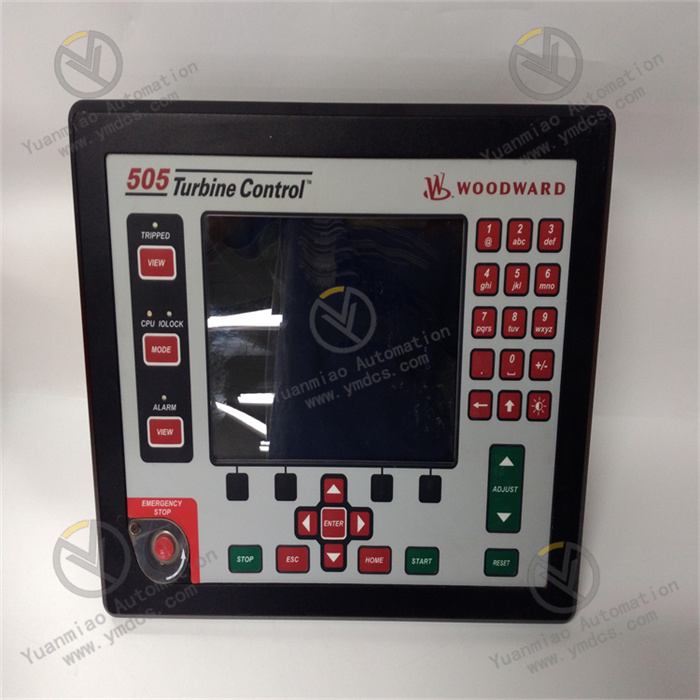
Structure Type: Industrial embedded standard cabinet controller Installation Method: Standard cabinet panel embedded installation Operation Interface: Local LCD + keypad configuration operation Hardware Structure: Modular integrated design with neat wiring and easy maintenance
4. Hardware Configuration and Structural Advantages
4.1 Core Hardware Configuration
The 8200-1310 controller adopts Woodward dedicated industrial control hardware architecture, equipped with a high-speed industrial processor optimized for steam turbine dynamic control. It delivers fast computation and precise control response, capturing tiny dynamic changes of unit speed, load and valve position in real time. Onboard high-precision analog sampling unit, digital signal processing unit, independent relay output loop and dedicated speed detection circuit accurately acquire speed pulses, steam pressure, unit load, valve feedback and interlock switch signals to eliminate signal distortion and sampling delay. Built-in large-capacity non-volatile memory permanently retains operation logs, fault records and configuration parameters without data loss upon power failure, providing complete data support for unit traceability analysis, equipment maintenance and parameter optimization.
It comes with a full set of interfaces and multiple AI/DI/DO channels, which can directly connect to field transmitters, actuators and interlock switching devices. No additional expansion modules are required to satisfy the conventional steam turbine control requirements. All hardware components adopt industrial temperature-resistant, shock-resistant and anti-aging materials, suitable for long-term high-load and high-vibration operation of units, with hardware stability and reliability superior to ordinary industrial control equipment.
4.2 Structural Design Advantages
The device adopts an industrial standard embedded panel structure matching regular control cabinet dimensions for simple installation and tidy cabinet layout. Integrated sealed reinforced design provides good dust-proof, moisture-proof and oil-proof performance to resist dust, moisture and oil contamination in power station and chemical workshops, adapting to harsh industrial field environments. The front panel integrates a high-definition LCD screen and physical operation keys with intuitive interface. Operators can view key parameters including unit speed, load, valve position, temperature and pressure in real time, and perform fast local configuration, parameter modification and fault query for convenient on-site maintenance.
The internal circuit adopts scientific zoning layout with independent isolation of control, sampling, output and communication zones to prevent circuit crosstalk and electromagnetic interference, greatly improving control stability and signal accuracy. Modular hardware design simplifies fault troubleshooting and spare parts replacement. Online parameter debugging is supported without shutdown or disassembly, minimizing unit downtime risks and guaranteeing continuous and stable unit operation.
5. Working Principle
The WOODWARD 8200-1310 steam turbine digital governor implements fully automatic precise regulation and safety protection of steam turbine speed, load and pressure via a closed-loop control mechanism: Signal Acquisition → Calculation & Judgment → Adaptive Regulation → Output Execution → Real-time Monitoring & Protection.
After power-on, the device completes hardware self-test, communication calibration and parameter loading before entering normal operation control mode. Through speed detection loops, analog sampling channels and digital input channels, it collects full-range process and equipment signals including steam turbine speed, inlet steam pressure, extraction pressure, unit load, valve opening and external interlock status in real time. Combined with preset control logic, PID parameters and protection thresholds, the core processor performs high-speed calculation and comparison judgment of collected data to accurately analyze real-time operating conditions of the unit.
Based on the OptiTune adaptive algorithm, the controller dynamically optimizes control parameters according to unit operating conditions and outputs precise regulation instructions. The output loops drive the turbine speed governing actuators to adjust inlet valve opening, maintaining constant turbine speed, stable load and qualified extraction pressure. Meanwhile, it accomplishes the full automatic control sequence of turbine warming-up, speed ramping, grid connection, loading, load reduction and shutdown. During unit operation, the device continuously avoids critical speed bands, suppresses load fluctuations and eliminates speed overshoot to ensure smooth turbine operation.
The system continuously monitors hardware status, signal loops, communication conditions and turbine parameters throughout operation. Once hazards such as overspeed, underspeed, reverse rotation, signal anomalies, circuit faults and parameter overruns are detected, alarms will be triggered immediately, operating status locked and interlock protection actions executed to rapidly cut off risky operating conditions. Fault codes and operation data are recorded synchronously for accurate fault tracing, fully ensuring safe, stable and continuous operation of steam turbine units.
6. Application Scenarios
6.1 Steam Turbine Systems for Cogeneration and Captive Power Plants
It is widely used on medium and small steam turbine units of industrial captive power stations and cogeneration plants. It undertakes core functions of turbine speed regulation, load adjustment, grid connection control and extraction pressure regulation, adapting to power station peak shaving, stable power generation and heat supply coordinated conditions. It guarantees stable grid connection and precise load distribution of generator sets, improving power generation efficiency and operational stability, serving as the core control equipment for steam turbine systems in captive power plants.
6.2 Petrochemical and Fine Chemical Plants
Applicable to control systems of process drive turbines and waste heat power generation turbines in chemical enterprises. It provides precise speed regulation, load control and safety interlock protection for turbomachinery in chemical plants, satisfying the demand for continuous and non-stop production. It effectively avoids the impact of unit condition fluctuation on process production and ensures stable, safe and efficient chemical production workflows.
6.3 Power Systems for Paper-making, Metallurgy and Building Materials Industries
Deployed on industrial steam power turbines in paper-making, metallurgy and building materials sectors for automatic control of equipment drive and waste heat recovery generator sets. Adapted to variable-load and multi-condition characteristics of these industries, it ensures stable unit operation through adaptive regulation, reducing equipment energy consumption and failure probability and improving operational efficiency and intelligent management level of industrial power systems.
6.4 Industrial Waste Heat Recovery and Energy Utilization Systems
Suitable for various waste heat power generation and steam recovery steam turbine units. Aiming at the features of waste heat steam with large parameter fluctuation and unstable operating conditions, it dynamically optimizes control strategies relying on adaptive PID algorithms to adapt to fluctuating conditions, maximize waste heat utilization, enhance energy recovery efficiency and realize energy saving and cost reduction for enterprises.
6.5 General Control Scenarios for Medium and Small Industrial Steam Turbines
Applicable to automatic control and safety protection of all single-valve, extraction/induction medium and small industrial steam turbines. It can fully replace traditional mechanical governors and obsolete analog control systems for new unit matching and revamping of old units. Featuring high-precision control, intelligent maintenance and multi-layer protection, it meets the intelligent upgrading and reconstruction demands of steam turbines in various process industries.