Description
1. Product Overview
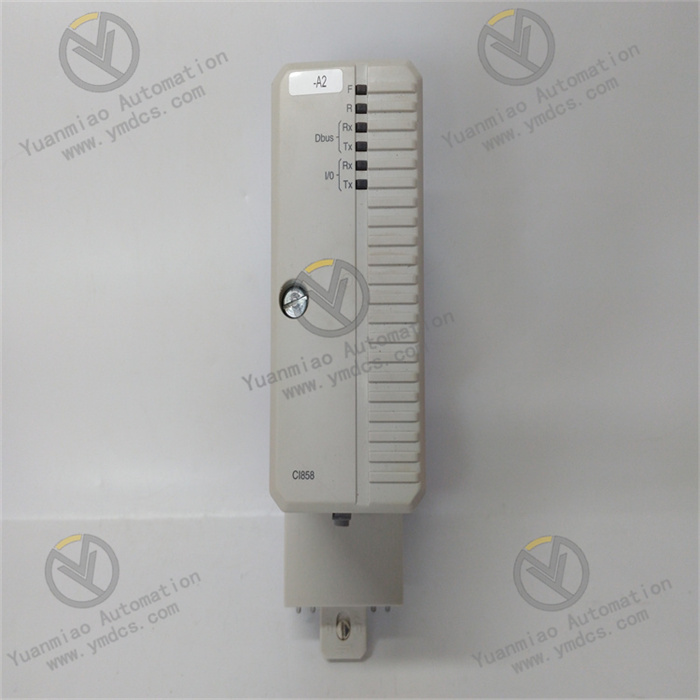
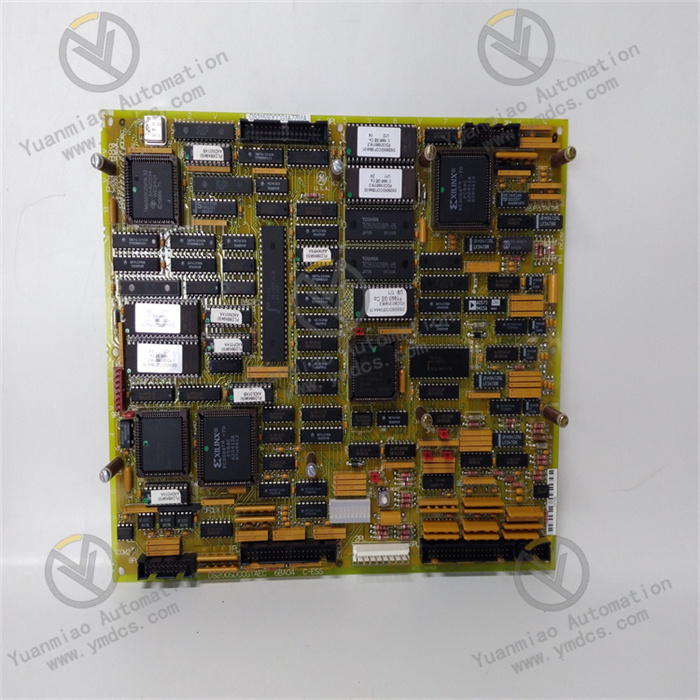
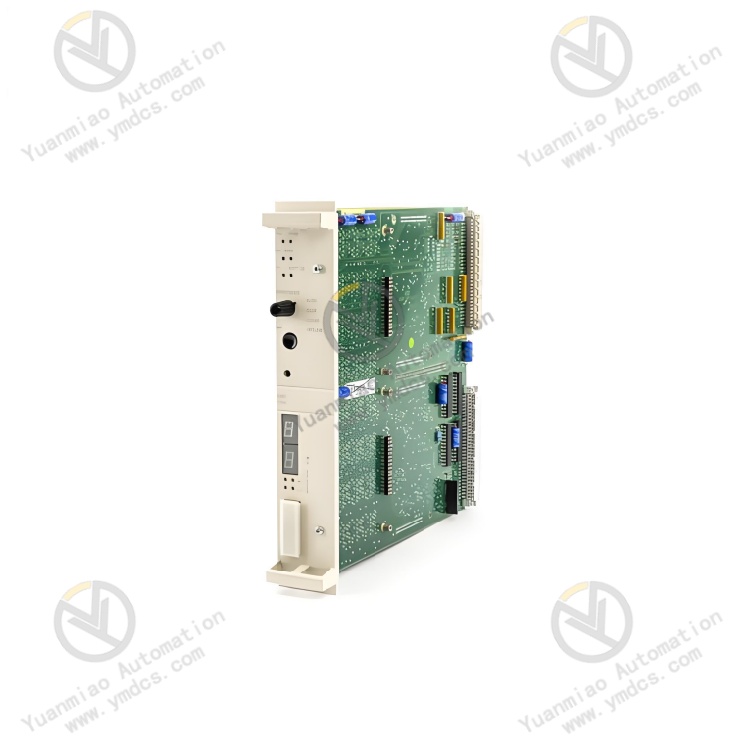
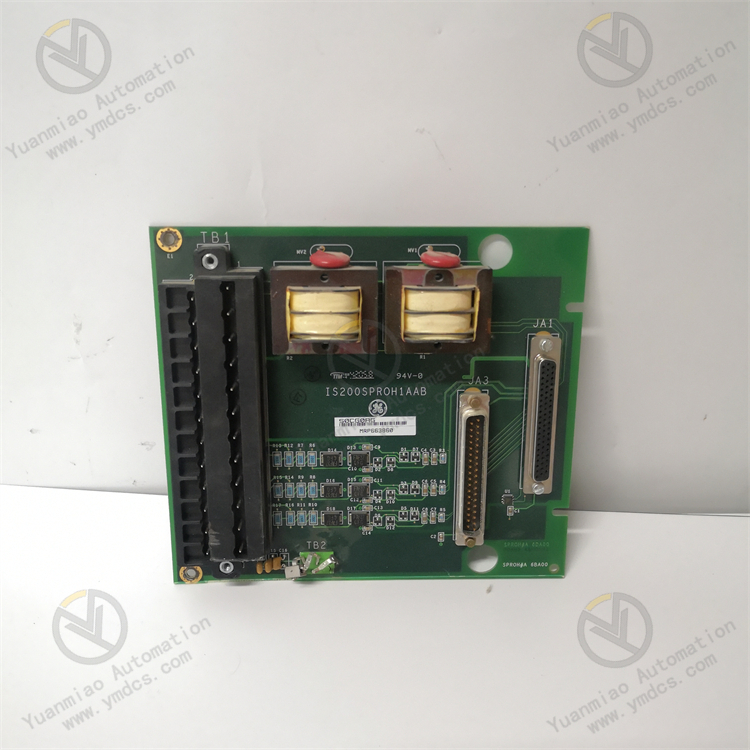
Full Model: IS200SPROH1ACC
Manufacturer: GE General Electric
Product Series: Mark VIe Speedtronic Turbine Control System Protection & Monitoring Card Series
Product Name: SPRO Overspeed Protection & Redundant Safety Monitoring Card, Turbine Safety Logic Processing Module
Product Positioning
IS200SPROH1ACC is a dedicated core safety protection card for GE Mark VIe gas turbine and steam turbine control systems. It serves as the primary hardware unit for unit overspeed protection, speed monitoring, safety logic interlock and emergency fault response. The card specializes in high-speed turbine speed signal acquisition, overspeed judgment, safety logic operation and emergency protection command output. It acts as a critical protection module guaranteeing rotor speed safety throughout unit startup, load variation and steady-state operation. Adopting power plant safety-grade ruggedized design and equipped with high-reliability speed signal discrimination and redundant voting mechanism, it resists complex electromagnetic interference and operating condition fluctuations on site, eliminating severe safety risks including turbine overspeed runaway, speed loss of control, protection failure to act and spurious tripping. As an indispensable core card within the safety protection chain of the Mark VIe turbine control system, it is widely deployed for new unit matching, system technical transformation and spare part replacement for combined-cycle thermal power plants, gas power stations and industrial turbine power facilities.
Core Functions
This module performs five core responsibilities: accurate unit speed monitoring, multi-stage overspeed protection, safety logic operation, fault interlock response and redundant signal voting. It acquires and processes high-frequency pulse signals from unit speed probes, calculates the actual rotational speed of the turbine rotor accurately in real time, and tracks rotor speed conditions covering the full cycle of unit startup, speed-up, synchronization, load variation and shutdown. Embedded multi-stage overspeed judgment logic accurately identifies three abnormal operating modes: critical overspeed, rated overspeed and extreme overspeed, and outputs graded commands including alarm, load limiting and emergency trip protection. Meanwhile, it supports cross-comparison and voting of multiple speed signals to reject abnormal interference signals and avoid erroneous protection judgment caused by single-channel faults. Cooperating with the main controller, it completes unit safety interlock, fault tracing and operating condition protection, establishing a hardware safety barrier for turbine rotor speed and preventing equipment damage, unit trip and production accidents triggered by overspeed.
Compatible Systems
Fully compatible with the complete GE Mark VIe Speedtronic turbine control system, supporting simplex, dual redundant and TMR Triple Modular Redundant safety control architectures for gas-steam combined cycle units, condensing steam turbine units, industrial mechanical drive turbines and large compressor main control systems. It seamlessly interfaces with system main processors, speed acquisition boards, analog I/O modules, interlock terminal boards and redundant power modules. Natively compliant with the system IONet bus protocol and safety logic architecture, it meets OEM cabinet installation specifications, backplane bus interfaces and underlying protection programs. Backward-compatible replacement is available for new and legacy systems without extensive modification of control logic and wiring; direct in-situ installation restores unit overspeed protection functionality. It covers all engineering scenarios including new unit commissioning, replacement of aged cards, safety system upgrade and optimization of unit protection logic.
Application Scenarios
It is deployed in large gas power plants, combined-cycle thermal power stations, cogeneration plants, oil & gas chemical power workshops and other power facilities equipped with GE Mark VIe systems. It is dedicated to speed monitoring and overspeed safety protection for gas turbines, steam turbines and large industrial turbines. Designed for long-term operation under harsh cabinet conditions in power plants featuring high temperature, dust, mechanical vibration and strong electromagnetic interference, it continuously monitors rotor speed online and executes graded overspeed protection, fault interlock and safety logic verification. It is the core safety hardware preventing turbine overspeed runaway and safeguarding equipment and power grid operation safety.
2. Technical Features
High-Precision Speed Acquisition with Ultra-Fast Dynamic Response
Equipped with dedicated high-frequency pulse acquisition and speed calculation chips, the card accurately captures high-frequency pulse signals from speed probes with high resolution and minimal conversion error, enabling real-time tracking of minor and rapid speed fluctuations. Speed data update and operating condition judgment are completed within milliseconds. It delivers faster response than conventional acquisition boards, perfectly meeting protection response requirements during rapid turbine acceleration and transient operating conditions, reserving sufficient action time for emergency overspeed protection and avoiding protection delay.
Multi-Channel Redundant Voting for Superior Protection Reliability
Supports synchronous acquisition, cross-comparison and redundant voting of multiple independent speed signals. It automatically identifies single-channel signal anomalies, interference jitter and data invalidation, filters out erroneous data and adopts valid normal signals as the basis for protection judgment. It fundamentally eliminates risks of spurious tripping and failure to trip induced by single speed probe faults, line interference and channel abnormalities. Fully adapted to the TMR Triple Modular Redundant safety architecture, it satisfies high-grade safety protection standards for power generation units.
Graded Overspeed Protection with Wide Operating Condition Adaptability
Embedded OEM standardized solidified overspeed protection logic implements a three-level graded protection scheme: low-speed alarm, medium-speed load limiting and high-speed emergency trip. Corresponding protection strategies can be matched according to different unit operating conditions. It reliably adapts to full operating cycles including cold startup, hot speed-up, synchronized loading, load rejection and shutdown, balancing unit operational stability and safety and preventing frequent unit trips or protection failure caused by single-mode protection logic.
Safety-Grade Anti-Interference Design with Excellent Environmental Tolerance
Adopting power plant safety-grade ruggedized PCB construction and full industrial wide-temperature anti-aging components, integrated multi-stage electromagnetic shielding, pulse filtering, surge suppression and electrostatic protection circuits. It effectively mitigates complex interference such as variable frequency drive noise, high-voltage electromagnetic radiation, line pulse clutter and voltage fluctuation, avoiding speed signal distortion, data jitter and false protection judgment. Stable long-term operation is guaranteed under cabinet environments with high temperature, vibration, dust and strong electromagnetic interference, with zero drift and zero failure of protection logic.
Full-Range Self-Diagnosis for Traceable and Controllable Faults
Integrated four-layer self-diagnosis mechanism: hardware full-scale self-test, channel status monitoring, signal validity verification and logic operation supervision. It continuously monitors card power supply, chip status, pulse acquisition channels, bus links and protection logic operation. It accurately detects hidden hazards including open/short circuits of speed measuring cables, signal anomalies, channel damage, card faults and bus disconnection, and reports fault codes and event logs in real time to pinpoint failure locations, facilitating rapid maintenance and precluding protection failure risks.
Hot-Swap Modular Design for Convenient and Efficient Maintenance
Standard pluggable modular structure consistent with the Mark VIe series featuring uniform dimensions and interfaces. Online hot-swap replacement is supported without unit shutdown or power cut. Power-on automatic self-test, online logic verification and non-stop commissioning are available. Faulty legacy cards can be directly replaced in position without modifying system protection programs, interlock logic or wiring layouts, greatly shortening maintenance duration and reducing unit outage losses and operating costs.
Native System Compatibility with Strong Interoperability
Natively adapted to the full range of GE Mark VIe turbine control systems, fully compatible with redundant bus communication, safety interlock logic and unit protection setpoint architecture. It seamlessly cooperates with all types of system I/O cards, main controllers and power modules. Backward compatible with legacy systems requiring no secondary development or extensive parameter adjustment, suitable for various technical renovation, capacity expansion and spare part replacement projects.
3. Specification Parameters
| Item | Parameter |
|---|---|
| Model | IS200SPROH1ACC |
| Manufacturer | GE General Electric |
| Product Series | Mark VIe Speedtronic Turbine Control System Safety Protection Card |
| Equipment Type | Speed Monitoring Card, Overspeed Safety Protection Logic Module, Turbine Safety Protection Card |
| Applicable Equipment | Gas Turbine, Steam Turbine, Large Industrial Turbine, High-Speed Compressor Unit |
| Applicable System | GE Mark VIe Turbine Control System (Simplex / Dual / TMR Triple Modular Redundant Architecture) |
| Core Functions | Unit high-frequency speed pulse acquisition, accurate speed conversion, three-level overspeed protection judgment, redundant signal voting, safety interlock logic operation, fault self-diagnosis, protection command output, SOE fault recording |
| Speed Measurement Accuracy | Full-scale measurement error ≤ ±0.02%, stable and accurate under high-speed conditions |
| Speed Measurement Range | 0~10000 rpm (compatible with rated speed of various turbine units) |
| Response Latency | Millisecond-level response, protection action delay ≤ 20 ms |
| Protection Mechanism | Three-level graded protection: Overspeed Alarm, Load Limiting, Emergency Trip Shutdown |
| Redundancy Mode | Support multi-channel signal cross voting, faulty signal rejection, TMR triple modular redundancy fault tolerance |
| Operating Power Supply | DC 18~30 V wide-range input, standard 24 VDC system power supply |
| Communication Bus | Dual redundant high-speed IONet bus for data synchronization and command interaction |
| Event Recording Precision | 1 ms resolution SOE sequence recording for accurate fault tracing |
| Operating Temperature | -30℃ ~ +65℃ |
| Storage Temperature | -40℃ ~ +85℃ |
| Ambient Humidity | 5% ~ 95% RH, non-condensing, suitable for power plant cabinet environment |
| Mechanical Performance | Vibration resistance: 5 g RMS (10~2000 Hz); Shock resistance: 30 g / 11 ms |
| Electrical Characteristics | Electromagnetic shielding, pulse filtering, surge suppression, electrical isolation, high anti-electromagnetic interference capability, signal error correction |
| Mechanical Structure | Standard rack-mount pluggable, hot-swap capable, compact structure, high interchangeability |
| O&M Characteristics | Power-on full self-test, online logic verification, fault code reporting, in-situ hot replacement, non-stop commissioning |
| Product Characteristics | Precise speed measurement, rapid response, graded protection, redundant fault tolerance, strong anti-interference, high safety reliability, easy maintenance |
4. Working Principle
4.1 Power-On Initialization and Full-Range Safety Self-Test
After receiving 24 VDC industrial power supply from the system, the module automatically completes hardware initialization, underlying safety logic loading, bus protocol matching, protection setpoint calibration and full hardware self-test. The system comprehensively inspects pulse acquisition channels, speed calculation units, protection logic chips, communication ports, power supply circuits and self-diagnosis mechanisms to identify risks including hardware damage, channel abnormality, logic disorder, bus disconnection and unstable power supply. Upon successful self-test, it synchronizes protection setpoints, redundant configurations and interlock parameters from the main controller, completes channel calibration and logic initialization, and enters full-speed online monitoring and protection standby status.
4.2 High-Speed Pulse Acquisition and Accurate Speed Conversion
During unit operation, the card continuously receives high-frequency pulse signals transmitted from field speed probes. Built-in dedicated pulse shaping, filtering and error correction circuits automatically remove invalid signals such as electromagnetic interference, line clutter and pulse distortion to restore standard valid pulse waveforms. Based on high-precision speed measurement algorithms, it accurately calculates pulse frequency and cycle to convert the actual rotational speed of the turbine rotor in real time. Synchronous filtering, jitter suppression and mean correction are applied to speed data to output stable, accurate and jitter-free speed operating data as the core basis for subsequent protection judgment.
4.3 Redundant Signal Voting and Abnormal Data Screening
Under redundant system architectures, the card synchronously acquires multiple independent speed signals and performs automatic cross-comparison and redundant voting. Embedded fault-tolerant algorithms accurately identify anomalies including open circuit, signal jitter, over-range and signal failure of single channels, automatically discard erroneous data, and adopt consistent valid signals from multiple channels as the final speed judgment result. It effectively avoids false protection judgment caused by single-channel faults, guarantees authenticity and stability of speed monitoring data and lays a solid data foundation for protection logic.
4.4 Graded Overspeed Logic Judgment and Protection Command Output
The card continuously compares measured rotational speed with preset system protection setpoints and executes three-level graded protection logic: When speed approaches the warning threshold, an overspeed alarm is triggered and alarm information is uploaded to prompt operator intervention. When speed exceeds the rated safe range, load limiting logic is activated to restrain unit acceleration and reduce load to pull speed back within safe limits. When speed reaches the extreme overspeed threshold, an emergency trip protection command is immediately issued to coordinate system interlock equipment for unit shutdown, completely eliminating turbine overspeed runaway risks. The judgment logic is solidified with ultra-fast response without logic delay or misjudgment.
4.5 Real-Time Fault Self-Diagnosis and Safety Status Tracing
The module maintains four-layer continuous self-diagnosis covering hardware, channels, signals and logic to monitor card operating status and signal link integrity. It accurately identifies hidden defects such as damaged speed probes, open/short cables, channel faults, signal abnormalities, intermittent bus connection and component aging. Fault locations are locked in real time with fault codes and SOE event logs uploaded. Abnormal operating condition timestamps are automatically marked to fully record the whole process of speed fluctuation, alarms and protection actions, enabling traceable, analyzable faults and providing accurate data support for unit fault research and hidden hazard rectification.
4.6 Bus Data Synchronization and System Interlock Coordination
Via dual redundant high-speed IONet bus, the card transmits real-time speed data, protection status and fault information to the Mark VIe main controller within milliseconds, while receiving interlock commands and system status signals from the main controller. Cross-verification is implemented together with unit parameters including temperature, pressure, vibration and load to build a multi-dimensional safety protection system and overcome limitations of single-parameter judgment. The redundant bus architecture supports automatic link switching; single bus failure will not affect protection function operation, ensuring continuous, reliable and uninterrupted unit safety interlock logic.
5. Common Faults and Troubleshooting
5.1 Symptom: Fluctuating, drifting and unstable speed readings
Possible Causes
① Aged, contaminated speed probes with abnormal installation clearance leading to unstable pulse output;
② Poor shielding of speed measuring cables, mixed routing of AC/DC cables enabling electromagnetic interference intrusion into signal loops;
③ Aged cables with degraded insulation and loose terminals resulting in attenuated and distorted pulse signals;
④ Degraded performance of card filtering circuits failing to suppress clutter interference;
⑤ High cabinet temperature and vibration causing offset card operating parameters and abnormal signal processing.
Solutions
Clean contamination on speed probes, calibrate probe installation clearance and replace damaged aged probes. Optimize shielding and grounding practices of speed measuring cables and separate routing from high-voltage and variable frequency interference equipment. Tighten all terminals, replace aged damaged cables and strengthen insulation protection. Clean dust on the card and cabinet air ducts to improve heat dissipation and vibration damping. Perform signal calibration and parameter reset for card channels. If speed fluctuation persists after verifying all external equipment and wiring, aging of the card signal processing circuit is confirmed; replace with original IS200SPROH1ACC card.
5.2 Symptom: No speed data, interrupted speed signal, failed monitoring
Possible Causes
① Damaged speed probe, broken cables or disconnected joints resulting in zero pulse input;
② Damaged card pulse acquisition channels, disabled channels or incorrect configuration parameters;
③ Loose and oxidized signal transition terminals causing signal transmission interruption;
④ Abnormal bus communication leading to failed data upload;
⑤ Abnormal card power supply resulting in hardware operation failure.
Solutions
Inspect field speed probes and speed measuring cables, repair open circuits and poor connections, replace damaged probes. Verify system channel configuration parameters, enable corresponding acquisition channels and correct range and signal settings. Clean terminal oxidation and tighten connectors to ensure unobstructed signal transmission. Test bus communication status and card supply voltage to troubleshoot communication and power faults. If no speed data is obtained with normal external cables, probes, communication and power supply, hardware damage to card acquisition channels is confirmed; replace the spare part.
5.3 Symptom: Spurious protection operation, unsolicited overspeed alarms, false trip commands
Possible Causes
① Severe on-site electromagnetic interference causing pulse clutter misidentified as valid speed signals;
② Abnormal redundant signal voting triggering false logic judgment due to single-channel faults;
③ Corrupted system protection setpoints and unreasonable threshold configuration;
④ Malfunction of card logic operation unit and program disorder;
⑤ Transient line interference generating abnormal pulse signals and activating false protection.
Solutions
Strengthen on-site signal shielding and cabinet grounding to eliminate electromagnetic interference risks. Inspect speed signals of each channel one by one and isolate faulty abnormal channels. Verify and restore OEM system protection setpoints and optimize alarm and protection delay parameters. Refresh card underlying firmware and reset logic parameters. Troubleshoot transient line interference and optimize signal filtering strategies. If frequent false alarms and spurious trips continue after rectification, malfunction of the card logic processing unit is confirmed; replace with original card.
5.4 Symptom: Protection fails to act, no response under overspeed conditions, protection function invalid
Possible Causes① Failed card protection logic and abnormal firmware unable to identify overspeed conditions;
② Widespread acquisition channel faults preventing valid speed signal capture;
③ Disrupted bus communication blocking transmission of protection commands;
④ System interlock logic blocking and protection function not activated;
⑤ Aging core components of the card leading to failed operation and output.
Solutions
Verify protection activation status, release logic interlocks and confirm protection functionality is enabled. Fully test card acquisition channels and signal processing functions to eliminate channel failure risks. Inspect bus communication links and repair intermittent disconnections. Refresh card firmware, restore OEM logic configuration and verify overspeed protection operation. Simulate overspeed conditions to test protection responsiveness. If protection still fails to trigger after eliminating system configuration and external faults, hardware failure of the card is confirmed. Replace the spare part immediately to ensure effective unit safety protection.
5.5 Symptom: Frequent card error reports, persistent self-diagnosis alarms, abnormal redundant synchronization
Possible Causes
① Heavy cabinet dust accumulation and poor heat dissipation leading to performance degradation under long-term high-temperature operation;
② Mismatched redundant bus parameters and asynchronous links triggering synchronization anomalies;
③ Long-duration high-load operation resulting in component aging and reduced stability;
④ Vibration impact during operation inducing poor internal soldering and contact issues;
⑤ Excessive ambient temperature and humidity accelerating hardware aging.
Solutions
Regularly clean cabinet filters and card dust, clear heat dissipation air ducts and optimize cabinet temperature and humidity conditions. Verify redundant bus parameters and synchronization logic, correct configuration deviations and restore bus synchronization. Reinforce cabinet vibration damping facilities to reduce shock impact. Refresh card firmware and calibrate hardware operating conditions to eliminate minor parameter drift. For cards with recurring error reports, persistent redundant synchronization anomalies and severe aging, replace with original IS200SPROH1ACC module promptly to guarantee stable and reliable operation of the unit overspeed protection system.