Description
ABB PM511V08 3BSE011180R1
1. Basic Information
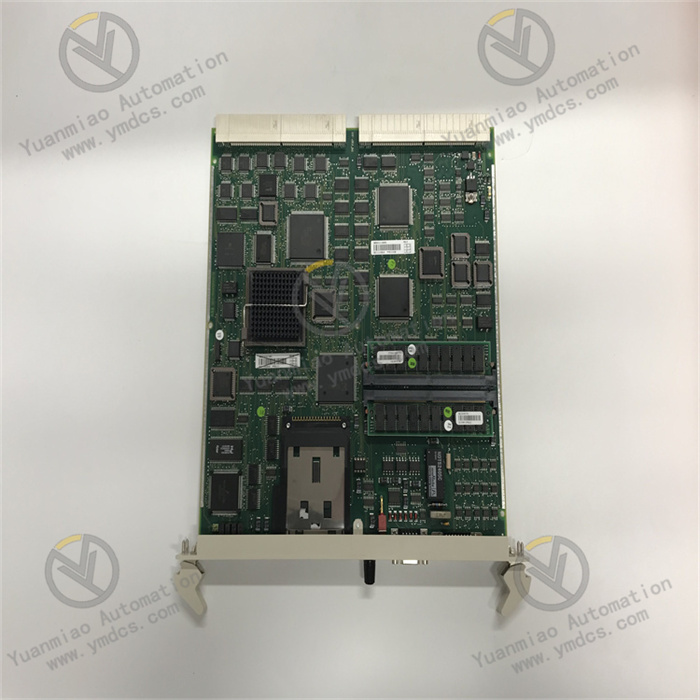
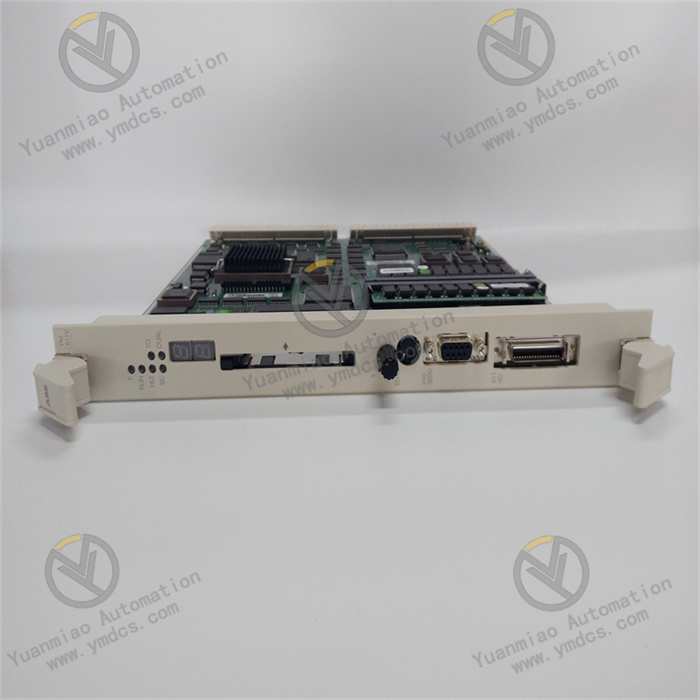
ABB PM511V08 (Order No.: 3BSE011180R1) is a high-performance central processing unit (CPU module) for Advant Controller 400 series and MasterPiece systems. Manufactured in Sweden, it serves as the core control and data processing unit for industrial automation. Equipped with Motorola 68040 processor running at 25MHz and integrated with 8MB ECC-enabled dynamic RAM, it features high-speed computation, data processing and multi-protocol communication capabilities. It is designed for high-reliability, real-time and complex logic control scenarios in process industries.
2. Technical Specifications
2.1 Core Computing & Storage Specifications
- Processor: Motorola 68040, 25MHz main frequency, dual independent instruction/data MMU, equipped with two separate 4KB caches for data and instructions respectively, delivering efficient calculation and quick response.
- Memory: 8MB dynamic RAM with ECC error checking and correction, ensuring accurate and stable data and preventing system anomalies caused by transient errors.
- Storage Expansion: 1 PCMCIA slot supporting hot swapping of flash memory cards for convenient program update, data backup and storage expansion.
- Redundancy: Built-in redundant processor logic supports backup operation. Distributed arbitration and forced transmission over Future Bus+ enhance system fault tolerance and reliability.
2.2 Power Supply & Power Consumption
- Power Input: 5V DC (Typical: 4900mA, Max: 6000mA); 24V DC (Typical: 200mA, Max: 280mA). Compatible with standard industrial power supply and on-site voltage fluctuation.
- Power Dissipation: Typical 25W. Low power consumption design avoids abnormal heat generation during long-term operation, suitable for dense installation in control cabinets.
2.3 Communication & Interface Specifications
- System Bus: Future Bus+ with 32-bit address and data lines for high-speed parallel data exchange; S100 I/O interface supports bus expansion and compatibility with various I/O modules.
- Communication Protocols: Integrated RS-232 serial port, 10/100Mbps Ethernet and optional CAN bus. Compatible with mainstream industrial protocols including Modbus TCP/IP and Profibus-DP for multi-device networking and third-party system integration.
Interface Features: Clearly partitioned ports with isolated strong and weak electricity. Easy plugging and reliable connection with anti-loose locking structure prevent poor contact and signal failure induced by vibration.
2.4 Environmental & Physical Specifications
- Operating Temperature: -25℃ ~ +55℃; Storage Temperature: -40℃ ~ +85℃. Wide temperature adaptability withstands ambient temperature variation in industrial sites.
- Humidity & Protection: 5%~95% non-condensing operating humidity. Treated with triple-proof coating, the module is dustproof, moisture-proof, oil-resistant, corrosion-resistant and anti-electromagnetic interference.
- Dimensions: 274.5mm×270mm×27mm; Weight: 0.76kg. Compact structure saves cabinet space and fits standard rack installation.
Installation: Plug-in board card matching AC 410/450 racks. Firm installation with superior vibration resistance, supporting hot-swap maintenance.
2.5 Function & Reliability Specifications
- Core Functions: Integrates full-process functions including logic operation, data processing, closed-loop control, communication management and fault diagnosis. It precisely regulates on-site equipment and adapts to complex continuous process control.
- Self-diagnosis & Protection: Comprehensive self-check upon power-up. Real-time monitoring of power supply, temperature, communication and load status. Built-in protection against overvoltage, overcurrent, overtemperature and abnormal signals. Fault codes will be locked and alarms triggered to guarantee system safety.
- Operational Reliability: Industrial durable design enables 24-hour continuous operation. No parameter drift occurs during long-term running with stable computation and low failure rate. Maintenance can be implemented without disassembly to shorten downtime.
3. Working Principle
- System Initialization & Self-check: After power-on, the module conducts full inspection on processor, memory, bus and communication ports, verifies power and load conditions, and completes redundancy synchronization and zero calibration. It enters standby state once no fault is detected.
- Command Reception & Data Processing: It receives control commands from upper PLC and industrial controllers, collects field feedback signals from I/O modules, eliminates interference via ECC verification and filtering, and calculates control deviation accurately.
High-speed Computation & Logic Execution: Relying on 68040 processor and dual-cache architecture, it performs adaptive PID regulation, logic calculation and data conversion to generate control signals. Commands are transmitted to I/O modules via Future Bus+ to drive actuators.
- Multi-protocol Communication & Data Interaction: Bidirectional real-time communication is realized with upper systems and third-party devices through Ethernet, RS-232 and CAN bus. Operating status, process data and fault information are uploaded while remote configuration and control instructions are received for system linkage.
- Redundant Backup & Fault Switchover: Primary and backup modules synchronize data in real time under redundant mode. The backup module takes over control seamlessly once the main unit fails, ensuring non-stop production.
- Real-time Monitoring & Intelligent Protection: Power voltage, current, temperature and communication status are monitored continuously. Protection mechanism activates immediately when abnormality appears, cutting off abnormal output, locking fault codes and triggering alarms. Fault logs are recorded for convenient troubleshooting.
4. Application Scenarios
4.1 Metallurgical Automatic Control System
4.2 Papermaking Process Control System
4.3 Power & Energy Management System
4.4 Chemical & Process Industrial Automation
4.5 High-end Equipment Upgrade & Legacy System Renovation