Description
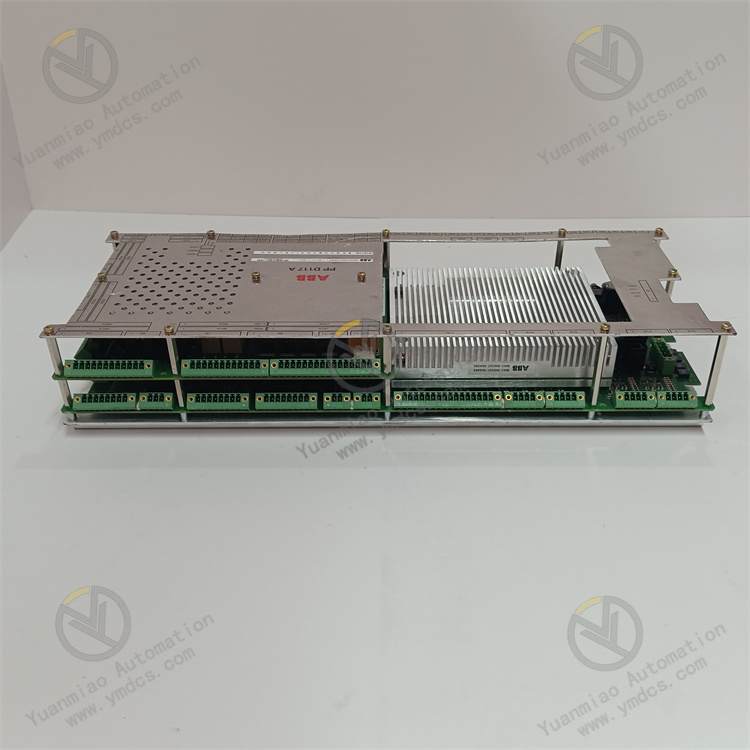
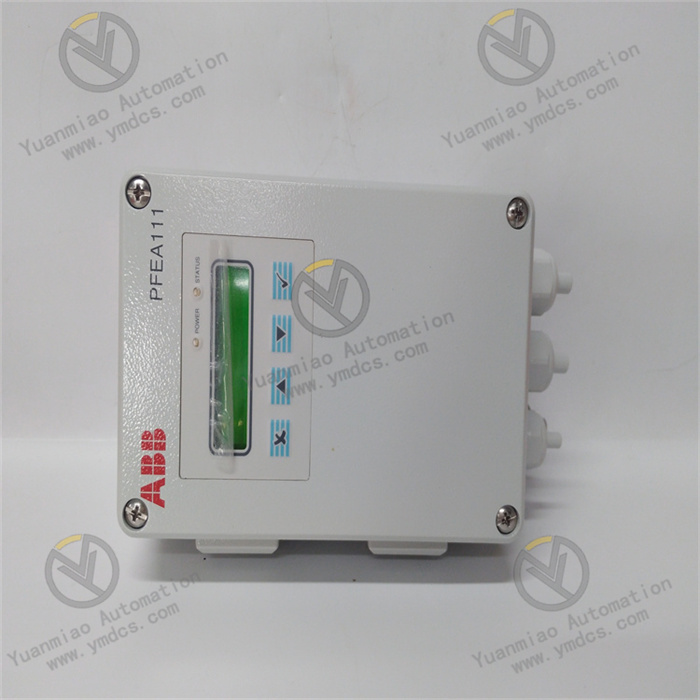
ABB PFEA111-65 3BSE050090R65
1. Basic Information
ABB PFEA111-65 (Part No. 3BSE050090R65) is a compact high-precision web tension control unit of ABB PFEA series, specially designed for low-range and high-precision closed-loop tension regulation. As a core tension measurement and control module for thin and flexible web production lines, this 65N dedicated version matches load cell tension sensors to complete tension signal acquisition, amplification and filtering, precision operation, PID closed-loop regulation and multi-channel signal output. It effectively solves precision process defects such as tension jitter, micro-stretching, wrinkles and uneven winding during the production of thin films, foils, thin paper and micro flexible materials.
Integrated with signal conditioning, high-precision AD conversion, adaptive PID algorithm, local LCD & key operation, bus communication and full-dimensional fault diagnosis, the module is equipped with dual sensor inputs and supports 0–65N precise micro-tension regulation with steady-state control accuracy up to ±0.1%FS. It realizes parameter setting, condition monitoring and on-site debugging independently via local display and keys without upper computer. Featuring industrial anti-interference circuit, wide temperature adaptability, compact size, convenient installation and fast response, it is widely used for new precision light industry production line matching, replacement and precision upgrading of old micro-tension control systems.
2. Technical Specifications
2.1 Core Tension Control Specifications
- Product Positioning: Compact high-precision closed-loop micro-tension controller, dedicated for 0–65N low-range precision tension regulation
- Rated Tension Range: 0~65N, suitable for ultra-thin and micro flexible web production
- Control Accuracy: Steady-state ±0.1%FS, dynamic acceleration/deceleration ≤±1% of set value, meeting micron-level flatness requirements of precision processes
- Response Speed: Millisecond-level high-speed closed-loop response, effectively suppressing micro-tension oscillation at high speed
- Control Modes: Constant tension, linear/S-type taper tension, speed follow and limit protection multi-mode switchable
- Process Algorithm: Built-in adaptive micro-tension compensation algorithm automatically compensates tension fluctuation during start-stop and acceleration/deceleration to avoid thin material stretching and deformation
2.2 Power Supply Specifications
- Supply Voltage: 24V DC standard industrial power supply, wide range 18V~36V DC, tolerant to on-site voltage fluctuation and instantaneous voltage drop
- Power Consumption: ≤8W low power consumption, low temperature rise and high stability during long-term operation
- Reverse Polarity Protection: Built-in anti-reverse circuit to prevent module burnout caused by wrong power wiring
- Fuse Specification: Built-in 2A/250V slow-blow fuse for hardware overload and short-circuit protection
- Auxiliary Power Output: Onboard +5V@250mA, +3.3V@10mA isolated auxiliary power for peripheral detection circuits
2.3 I/O Signal Specifications
- Sensor Input: 2-channel differential load cell tension sensor inputs for synchronous dual-point tension acquisition and balanced detection
- Analog Output: 2-channel configurable high-precision analog output (0–10V / 4–20mA), directly driving frequency converters, servos and tension brakes
- Digital Ports: Multi-channel programmable DI/DO for equipment start-stop interlock, fault reset, mode switching and tension limit alarm
- Pulse Output: 1-channel pulse output for production line speed synchronization and roll diameter linkage control
- Signal Isolation: Full-channel electrical isolation shielding frequency conversion interference, electromagnetic clutter and ground crosstalk to ensure drift-free micro-signal acquisition
2.4 Communication & Operation Specifications
- Standard Communication: RS485 interface with native Modbus RTU protocol for seamless connection with PLC, touch screens and upper industrial control systems
- Optional Communication: Expandable PROFINET and EtherNet/IP industrial Ethernet interfaces for high-end automatic networking
- Local Operation: 2-line LCD display + 8 function keys for local parameter setting, real-time tension data viewing and fault code query
- Parameter Storage: Power-off memory retains all process parameters without repeated debugging after restart
2.5 Diagnosis & Protection Specifications
- Power-on Self-inspection: Automatically completes full-dimensional self-inspection of sensor loops, power supply, I/O channels and communication ports
- Real-time Diagnosis: Continuously monitors sensor disconnection, over-range, abnormal tension, communication timeout and power failure
- Multi-protection: Tension over-limit alarm, overload protection, short-circuit protection and signal abnormality self-locking protection to avoid thin material breakage, stretching and deviation
- Fault Prompt: On-screen fault code pop-up + external alarm output for fast fault location and convenient on-site maintenance
2.6 Environmental & Physical Specifications
- Operating Temperature: -20℃~+70℃ wide temperature range, adapting to normal workshop temperature conditions
- Storage Temperature: -40℃~+85℃, excellent temperature impact resistance and anti-aging performance
- Humidity Range: 5%~95% (non-condensing), dust-proof and moisture-proof for high-humidity workshop environments
- Protection Grade: Standard IP20 cabinet protection, optional IP65/NEMA4 dustproof and waterproof housing for harsh sites
- EMC Performance: Compliant with industrial EMC standards with strong resistance to frequency conversion interference and electromagnetic radiation
- Installation Mode: Standard rail mounting, vibration-proof and anti-loose for high-vibration production line conditions
- Dimensions & Weight: 122×96×60mm, approx. 0.5kg, compact design saving cabinet space
3. Working Principle
- Power-on Initialization & Self-inspection: After 24V DC power-on, the module automatically completes hardware self-inspection, communication initialization, sensor loop detection and process parameter loading, and enters standby measurement and control state after verification.
- Dual-channel Micro-tension Precision Acquisition: It synchronously collects real-time micro-tension signals of thin webs through dual differential sensor interfaces, eliminates on-site vibration and electromagnetic interference via hardware filtering, signal shaping and differential amplification to obtain high-precision original tension data.
- Precision Algorithm Operation & Correction: The high-speed chip performs temperature compensation, linear correction and zero calibration on micro-tension data, and accurately identifies tiny deviations between measured and set tension values through built-in adaptive PID algorithm.
- Dynamic Closed-loop Micro-regulation: It outputs high-precision 0–10V/4–20mA analog control signals in real time, dynamically adjusts the speed of frequency converters, servo torque or brake resistance, and eliminates tension fluctuation within milliseconds to maintain constant micro-tension in the range of 0–65N.
- Multi-condition Process Adaptation: It automatically switches taper tension algorithm during start-stop, acceleration/deceleration and winding finishing stages, compensates micro tension deviation caused by coil diameter change, and solves the problems of inner-tight outer-loose and stretching wrinkles of thin materials.
- Data Interaction & Fault Protection: It uploads tension data, equipment status and fault information in real time via Modbus for local display and remote monitoring. It automatically locks output and triggers alarms under abnormal conditions to prevent thin web breakage and deformation, ensuring continuous and stable operation of the production line.
4. Application Scenarios
4.1 Precision Film & Flexible Thin Material Production Line
Suitable for ultra-thin PET, PE, PVC films and non-woven fabric production lines. It realizes precise closed-loop control for 0–65N micro-tension working conditions, eliminating thin film stretching, thinning, surface wrinkles, winding deviation and uneven tightness, and meeting high-precision process requirements of film coating, lamination, slitting and printing.
4.2 Precision Metal Foil Processing Equipment
Applied in slitting, rewinding and coating equipment for ultra-thin aluminum foil, copper foil and tin foil. Adapting to low-tension and high-precision processing scenarios, it effectively suppresses micro tension oscillation at high speed, preventing foil deformation, warpage and fracture, and ensuring flatness and yield of precision metal coils.
4.3 Thin Paper & Special Paper Processing Line
Used in rewinding, slitting and coating equipment for thin paper, thermal paper and cigarette paper. It accurately controls micro tension to solve defects such as paper breakage, stretching deformation and surface wrinkles, adapting to continuous high-speed production of light-weight paper products.
4.4 Textile & Micro Flexible Material Equipment
Suitable for production equipment of ultra-fine fibers, light fabrics, silk threads and strip flexible materials. According to the characteristics of low tension and high flexibility of materials, it realizes stable tension regulation, avoiding material relaxation, stretching and distortion, and ensuring stable processing quality of light industrial flexible materials.
4.5 Replacement & Upgrade of Old Precision Tension Systems
Fully compatible to replace old micro-tension control modules of the same series, solving common problems of old equipment such as inaccurate micro-tension control, severe jitter, low-temperature drift and high-speed runaway. It upgrades the process precision of precision coil production lines at low cost without modifying wiring and production line structure.