Description
Honeywell 51403519-160 K4LCN-16
1. Basic Information
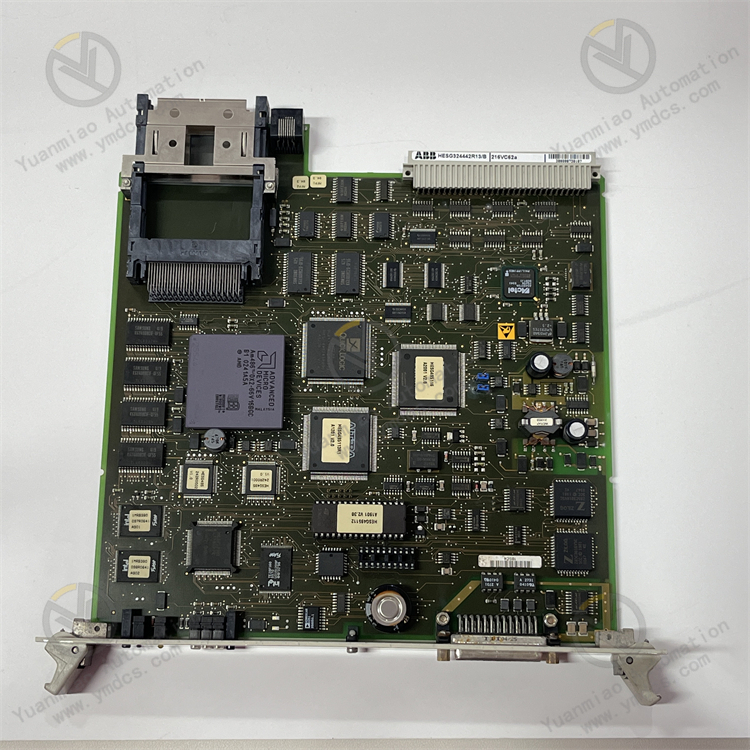
Honeywell 51403519-160 (K4LCN-16) is a core LCN memory processor module for the classic Honeywell TDC3000 DCS system. Equipped with a Motorola 68040 industrial processor and 16MW high-speed memory, it undertakes system logic operation, process data caching, LCN network scheduling and configuration storage tasks.
As an upgraded enhanced model of traditional LCN modules, it features ECC memory error correction, power-off data protection and multi-task parallel processing. It is widely used in chemical, power, oil & gas industries for aging system replacement, hardware upgrade and stability optimization of legacy TDC3000 DCS units.
2. Technical Specifications
2.1 Core Performance & Operation Specifications
- Model: 51403519-160 / K4LCN-16, Type: TDC3000 LCN Memory Processor Module
- Compatible System: Honeywell TDC3000 Legacy DCS System
- Core Processor: Motorola 68040 industrial dedicated CPU for real-time process control
- Memory Capacity: 16MW high-speed industrial memory with ECC error correction
- Storage Support: RAM, ROM, EEPROM multi-layer storage architecture
- Core Functions: Complex process operation, interlock logic execution, LCN network scheduling and data caching
2.2 Communication & Signal Specifications
- Bus Protocol: TDC3000 dedicated LCN (Local Control Network) protocol
- Extended Protocol: Compatible with HART industrial protocol for smart instrument adaptation
- Signal Type: Supports 0~5V, 1~5V, 0.4~2V voltage and 4~20mA current signals
- Channel Configuration: 12 single-ended channels + 4 differential high-precision channels
- Networking Capability: Supports redundant networking and collaborative operation with all TDC3000 node devices
- Transmission Performance: High-speed data forwarding to ensure real-time network data synchronization
2.3 Electrical & Power Specifications
- Power Supply: TDC3000 rack backplane power supply
- Rated Voltage: 24VDC industrial standard voltage
- Stability Design: Built-in voltage regulation and filter circuit against voltage fluctuation
- Protection Mechanism: Over-voltage, over-current, ESD and surge multi-level protection
- Isolation Performance: Electrical isolation between core operation area and external ports
2.4 Diagnosis & Operation Characteristics
- Power-on Self-test: Comprehensive self-inspection of processor, memory, bus and storage chip
- ECC Error Correction: Hardware-level data correction to ensure accurate operation and storage
- Precise Fault Diagnosis: Identifies memory error, bus disconnection, operation failure and configuration loss
- LED Indication: Onboard status indicators for run, communication and fault status
- Hot-swap Support: Online replacement without system shutdown and process interruption
- Data Protection: Power-off cache protection for key configuration and operation parameters
2.5 Environmental & Physical Specifications
- Operating Temperature: -20℃~+60℃ industrial wide temperature range
- Storage Temperature: -40℃~+85℃ high and low temperature resistance
- Humidity Range: 5%~95%RH (non-condensing), dust-proof and moisture-proof
- EMC Performance: High anti-interference capability against industrial harmonic and electromagnetic noise
- Vibration Resistance: Reinforced PCB design for long-term vibrating working conditions
- Protection Grade: IP20 standard for indoor industrial cabinet installation
- Dimensions: 175mm × 150mm × 50mm
- Weight: Approx. 0.8kg
3. Working Principle
- Power-on Initialization & Self-test: After backplane power-on, the module starts the processor, completes full hardware self-inspection, loads system firmware and user configuration, and synchronizes system clock and bus timing to finish network initialization.
- Resource Loading & Cache Deployment: Reads system programs from EEPROM and ROM, caches core control logic and process parameters into 16MW high-speed memory, and ensures data accuracy via ECC error correction mechanism.
- Real-time Operation & Logic Execution: Continuously executes PID regulation, sequence control, batch control and interlock logic, processes field analog and digital signals, and outputs accurate control commands.
- LCN Network Scheduling: Acts as the core node of LCN local network, uniformly schedules data interaction of workstations, controllers and I/O devices, allocates bus bandwidth, and ensures full-network data synchronization.
- Data Storage & Fault Tolerance: Caches real-time process data, alarms and operation logs, corrects data deviation in real time, and locks operating status during transient faults to avoid process fluctuation.
- Fault Monitoring & Self-recovery: Monitors hardware and network status in real time, accurately reports fault codes, isolates local abnormalities, and recovers automatically from minor faults to ensure continuous system operation.
4. Application Scenarios
4.1 TDC3000 System Core Operation
Serves as the core operation hub of Honeywell TDC3000 DCS system, undertaking complex process control, logic interlock and data scheduling tasks for large-scale chemical, refining, thermal power and oil & gas production units.
4.2 Legacy System Spare Part Replacement
Directly replaces aging LCN processor modules with operation abnormality, memory failure and network stuttering. No configuration and wiring modification is required, quickly restoring system operation performance and communication stability.
4.3 System Performance Upgrade
Improves system data cache capacity and multi-task processing efficiency with 16MW large-capacity memory, solving common problems of legacy systems such as slow data refresh and delayed interlock response, and optimizing overall system performance.
4.4 Multi-signal Adaptive Acquisition
Adapts to multiple analog signal types and HART smart devices, realizes unified access and parsing of field instrument signals, and meets the compatible control requirements of multi-brand field equipment in old industrial units.
4.5 System Maintenance & Fault Rectification
Used in annual maintenance and hidden danger rectification of TDC3000 systems, eliminating underlying faults such as system crash, data error and full-network communication abnormality, and extending the service life of legacy DCS systems.