I. Basic Information
Full Model:IS200AEPAH1BKE
Brand & Origin:GE General Electric, USA
Product Positioning
As a high-precision analog I/O conditioning board dedicated to GE Mark VIe turbine control systems, it serves as the core front-end signal acquisition and output drive hardware for DCS systems of gas turbine, steam turbine and combined cycle generator sets. It mainly undertakes core tasks such as isolation filtering, signal conditioning, precision calibration, analog-to-digital conversion and control instruction output for full-plant analog signals including temperature, pressure, liquid level, vibration, valve position and load. Acting as a key signal transfer hardware connecting on-site primary sensing equipment and system main control units, it is widely applied in automatic control systems of large-scale thermal power, combined heat and power, oil and gas power generation and industrial self-provided power station turbine units. Specially adapted to high-precision working condition monitoring, closed-loop regulation and process parameter collection scenarios, it is an original replacement spare part for old Mark VIe system boards with abnormal signals, channel damage and precision drift, ensuring unit regulation accuracy and operation stability.
Hardware Architecture
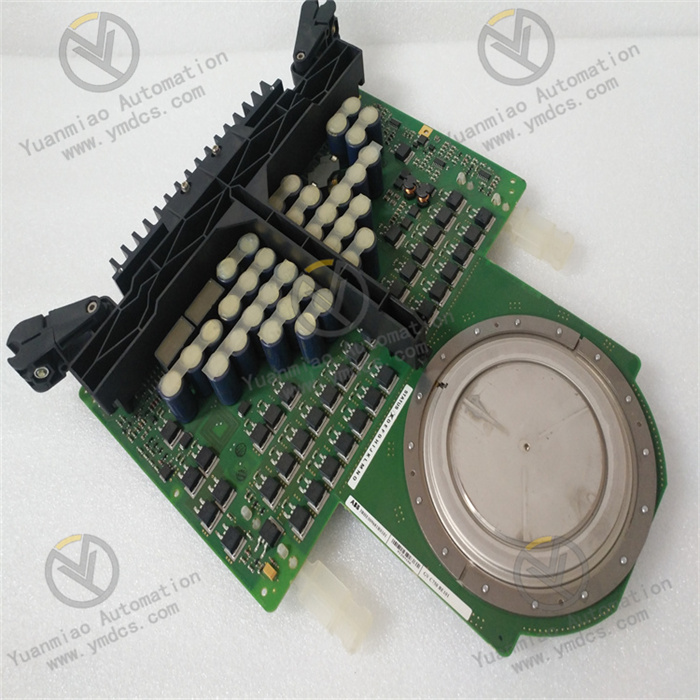
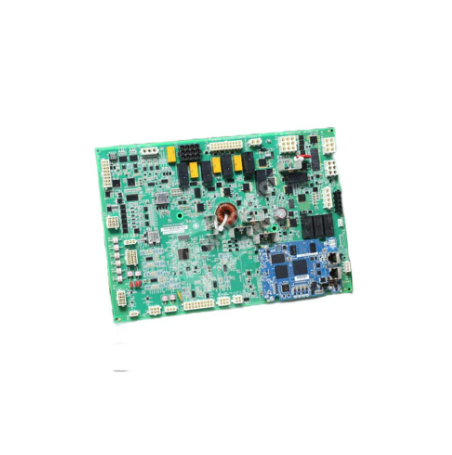
It adopts a turbine industrial-grade reinforced embedded board architecture, integrating multiple independent analog input conditioning loops, analog output drive loops, high-speed AD/DA conversion units, hardware electromagnetic filtering circuits, signal isolation modules and fault self-inspection circuits. Equipped with a high-precision signal sampling core, each channel adopts independent operational amplifier conditioning, photoelectric isolation and impedance matching design to eliminate inter-channel crosstalk, signal attenuation and clutter interference. Adopting military-grade multi-layer gold-plated PCB technology, full-domain electromagnetic shielding wiring and strong and weak current layered isolation structure with three-proof protective coating on the board surface, it adapts to harsh power station working conditions such as high temperature, high-frequency vibration, dust, humidity and strong electromagnetic interference. Built-in hardware-level signal over-limit judgment, disconnection detection, surge suppression and channel fault latching mechanisms, it features high sampling accuracy, excellent signal linearity, strong anti-interference performance, no long-term operation drift and superior channel stability, fully meeting the high-precision closed-loop control requirements of large power units.
Mounting Specification
It adopts embedded installation in standard Mark VIe system rack slots, matching the universal I/O rack slots of the system. The snap-on locking structure features convenient disassembly and assembly, stable fixation and excellent anti-vibration and anti-loosening performance, adapting to the long-term start-stop vibration working conditions of generator sets. The board is equipped with channel status indicator lights and fault alarm indicators, which can real-timely feed back the normal, over-limit, disconnection and abnormal fault status of each channel, supporting rapid on-site inspection, channel verification and accurate fault location. The standardized board size and original factory interface definition are fully compatible with the full range of Mark VIe rack structures, adapting to the all-weather closed operation environment of control cabinets and supporting online non-stop replacement and maintenance of the system, complying with GE original installation and operation specifications for turbine control systems.
Compatible Systems
Natively and exclusively compatible with the full range of GE Mark VIe gas turbine and steam turbine distributed control systems, it perfectly adapts to system main control processors, backplane buses and upper configuration software. It natively matches the signal acquisition timing, analog-to-digital conversion precision standards and channel configuration logic of Mark VIe systems, plug-and-play without additional protocol conversion and parameter adaptation. It can be seamlessly connected with various on-site temperature, pressure, displacement and vibration transmitters, compatible with standard industrial analog signals such as 4~20mA and 0~10V, supporting data linkage with upper DCS and SCADA systems. It adapts to technical transformation and upgrading of large-scale combined cycle power stations, replacement of old I/O boards and optimization of system acquisition accuracy.
Product Characteristics
It is an original industrial-grade high-precision analog I/O board dedicated to turbines. Before delivery, it has completed full-channel precision calibration, full-load aging, high and low temperature cycle impact, power-level EMC electromagnetic compatibility and insulation voltage resistance full-item testing with stable hardware performance, high channel consistency and excellent sampling linearity. The multi-channel independent isolation design ensures that single-channel faults do not interfere with each other with strong system fault tolerance. Built-in disconnection detection and over-limit alarm functions can predict on-site sensing faults and line abnormalities in advance. Featuring wide temperature and voltage adaptation, low power consumption and low heat generation, it supports 24/7 uninterrupted high-load operation. Old boards with precision drift, channel damage, signal interference and frequent alarms can be replaced in situ without modifying system programs and on-site wiring, greatly reducing unit downtime maintenance and technical transformation costs.
II. Technical Specifications
1. Core Channel Parameters
Channel Configuration: Integrated with 16 analog inputs and 16 analog outputs, the intensive multi-channel design enables a single board to meet the demand for multi-point working condition signal acquisition and regulation drive of units, adapting to synchronous multi-parameter monitoring and closed-loop regulation scenarios. Channel Isolation: All I/O channels adopt independent photoelectric isolation design with complete separation of strong and weak currents, thoroughly eliminating sampling distortion and output abnormality caused by on-site power interference, ground loop and signal crosstalk. Single-channel faults are independently locked without affecting the normal operation of other channels. It features excellent channel consistency with minimal full-channel deviation and no long-term operation offset or performance attenuation.
2. Signal & Impedance Parameters
Compatible Signal Types: Compatible with standard industrial analog signals, including 4~20mA current signals and 0~10V voltage signals, while supporting conditioning and acquisition of platinum resistance and conventional temperature sensing signals, covering full working condition parameter acquisition requirements such as unit temperature, pressure, liquid level, valve position and vibration. Input Impedance Parameters: Current input ≤100Ω, voltage input ≥10MΩ, platinum resistance input ≥100kΩ. The high-impedance input design effectively avoids signal attenuation and voltage drop distortion, ensuring accurate long-distance transmission of on-site signals with high signal linearity and no full-range inflection point or offset, adapting to high-precision unit regulation control.
3. Accuracy & Conversion Parameters
Sampling Accuracy: Full-channel high-precision sampling with analog acquisition error ≤±0.1% and output regulation linear error ≤±0.1%, fully meeting the high-precision closed-loop control accuracy requirements of large turbine units for speed regulation, pressure regulation and load regulation. Conversion Performance: Equipped with a high-speed AD/DA conversion core, it features fast signal conversion response and extremely low delay, synchronizing on-site working condition changes in real time without data lag or sampling stuttering, ensuring sensitive dynamic regulation response and accurate working condition following. The built-in hardware multi-stage filtering algorithm can automatically filter on-site high-frequency clutter and instantaneous interference with smooth and stable output signals.
4. Electrical & Power Parameters
Power Supply Specification: Standard industrial power supply 24VDC±10%, adapting to power station UPS stabilized power supply and rack standard bus power supply working conditions. The wide voltage tolerance range can resist small grid fluctuations and instantaneous surge interference. Featuring ultra-low power consumption design, it generates low heat under full load operation with no hardware aging or power attenuation after long-term high-load operation. The power supply loop integrates multi-stage hardware protections including overvoltage, undervoltage, overcurrent, short circuit, static electricity and surge, effectively avoiding board faults, channel failure and sampling disorder caused by abnormal voltage, wiring errors and electromagnetic interference, with strong power supply stability and working condition adaptability.
5. Environmental Operating Parameters
Operating Temperature:-40℃~+70℃
Storage Temperature:-40℃~+85℃
Operating Humidity:5%~95% RH, non-condensing
The whole machine has passed authoritative certifications of power industry EMC electromagnetic compatibility, insulation voltage resistance, vibration and impact resistance. The military-grade three-proof coating provides excellent dust-proof, moisture-proof, anti-corrosion, aging-resistant, vibration-resistant and strong electromagnetic interference-resistant performance. It can long-term withstand harsh working conditions of turbine control cabinets such as high-temperature heat accumulation, high-frequency vibration, dust accumulation, humid condensation and high-frequency converter interference, adapting to the 24/7 uninterrupted continuous operation needs of power stations all year round.
III. Key Features
1. Multi-Channel Integrated Design for Full-Condition Acquisition and Regulation
The integrated 16AI+16AO channel configuration enables a single board to complete full-dimensional working condition parameter acquisition such as unit temperature, pressure, liquid level, vibration, valve position and load, and output accurate analog regulation instructions to drive on-site equipment such as electro-hydraulic actuators and regulating valves. The intensive channel design greatly simplifies the number of hardware devices and wiring complexity of control cabinets, meeting the conventional I/O point requirements of small to large turbine units, covering dual functions of condition monitoring and closed-loop regulation, and adapting to unit full-condition operation regulation including start-stop, no-load, grid-connected and variable load.
2. High-Precision Isolated Sampling to Eliminate Signal Interference and Distortion
The independent photoelectric isolation, impedance matching and hardware filtering architecture of each channel and high-impedance input design effectively avoid attenuation of long-distance signal transmission. The multi-stage filtering circuit automatically filters high-frequency electromagnetic clutter generated by on-site frequency converters, power cables and contactors. The full-channel sampling accuracy is ≤±0.1% with excellent linearity and minimal temperature drift, which can accurately restore real on-site working condition data, thoroughly solving industrial pain points of old boards such as sampling drift, signal jitter and data mutation. It provides accurate and reliable data support for unit speed regulation, load stabilization and protection interlock, greatly improving unit control stability and regulation accuracy.
3. Independent Channel Fault Tolerance to Prevent Single-Point Fault Propagation
Adopting a single-channel independent loop design, all analog input and output channels work independently with independent protection without mutual interference. When a single channel has faults such as line disconnection, short circuit, signal over-limit and load abnormality, the system only locks the faulty channel and triggers corresponding alarms, while other channels continue normal acquisition and output without affecting the overall system operation and unit normal regulation. The hardware-level channel fault latching function can accurately locate fault points and retain fault status for rapid on-site inspection and maintenance, greatly improving the overall fault tolerance and operation reliability of the control system and avoiding unit working condition fluctuation and shutdown hidden dangers caused by single-point faults.
4. Full-Condition Adaptive Protection for Harsh Power Station Environments
The ultra-wide temperature operating range covers extreme temperature differences in power stations throughout the year. The military-grade three-proof coating and full-domain electromagnetic shielding structure can effectively resist harsh working conditions such as high-temperature heat accumulation, humid condensation, dust accumulation, high-frequency vibration and strong electromagnetic interference in control cabinets. The multi-layer isolated circuit protection features anti-drift, anti-aging and anti-crosstalk performance with stable parameters and no performance attenuation after long-term continuous operation and extremely low failure rate. It adapts to various high-load, high-interference and all-weather operation scenarios such as thermal power, combined heat and power and oil and gas power stations, featuring long board service life and low operation and maintenance pressure, meeting the long-term uninterrupted safety production needs of power stations.
5. Non-Destructive In-Situ Replacement for Efficient O&M and Transformation
The board channel definition, electrical parameters, communication adaptation and configuration logic are fully consistent with GE Mark VIe original factory standards. Old analog I/O boards with sampling drift, channel damage, unstable signals and frequent alarms can be directly replaced in situ. No modification of on-site sensing lines, reconstruction of system configuration and recalibration of channel parameters are required. The board can be put into full-load operation after power-on self-test, greatly shortening downtime maintenance duration and reducing unit technical transformation and daily operation and maintenance costs, adapting to hardware upgrading and transformation scenarios of various old Mark VIe systems.
IV. Working Principle
GE IS200AEPAH1BKE is a high-precision analog I/O conditioning board dedicated to Mark VIe turbine control systems. As the core signal interaction hub between on-site primary equipment and the main control system, it is embedded installed in standard rack slots. After accessing 24VDC working power supply and backplane bus links, it automatically completes hardware self-test, channel initialization, precision calibration, filtering parameter matching and bus handshake upon power-on, and enters real-time signal acquisition and regulation output operation state after normal initialization.
During normal system operation, the board continuously collects 4~20mA/0~10V working condition signals output by various on-site transmitters through 16 analog input channels. After preprocessing such as independent hardware isolation, impedance matching, multi-stage filtering and signal shaping, the high-speed AD conversion unit converts analog signals into digital signals and uploads accurate data to the Mark VIe main control processor, providing original and accurate data for unit working condition monitoring, logic judgment and closed-loop regulation. Meanwhile, it receives control instructions issued by the main control, converts and conditions the signals through high-speed DA conversion and signal amplification, and outputs standard and stable analog signals through 16 analog output channels to drive on-site actuators to complete closed-loop control actions such as steam valve regulation, pressure stabilization and load adjustment.
In the whole operation process, the board hardware self-inspection circuit real-timely monitors the signal status, line working condition, hardware temperature and electrical parameters of each channel, and continuously performs disconnection detection, over-limit judgment and interference filtering. When abnormal channel signals, line faults and parameter over-limits occur, it immediately latches fault status, triggers channel alarms and isolates faulty loops, while non-faulty channels continue normal operation to ensure uninterrupted core system regulation functions. Relying on high-precision signal conditioning, stable channel output and powerful fault tolerance protection capabilities, it continuously ensures accurate working condition acquisition and stable instruction output of Mark VIe turbine control systems, supporting safe, stable and efficient controllable operation of generator sets.
V. Application Scenarios
1. Mark VIe Turbine System Analog Signal Acquisition and Regulation: Adapted to gas turbine, steam turbine and combined cycle generator sets, responsible for collecting core analog parameters such as unit temperature, pressure, vibration, valve position and load and outputting regulation instructions, serving as the core I/O hardware for unit closed-loop control.
2. Fault Replacement and Maintenance of Old Power Station I/O Hardware: In-situ replacement of old analog conditioning boards with channel damage, sampling precision drift, serious signal interference and frequent false alarms, quickly restoring system acquisition accuracy and regulation stability.
3. Technical Transformation for Unit Automatic Control System Precision Optimization: Used for upgrading and optimizing old Mark VIe systems, improving the acquisition accuracy of full-plant working condition parameters, signal anti-interference ability and closed-loop regulation linearity, and optimizing unit operation stability and power generation efficiency.
4. Supporting of Industrial Power Systems Under Harsh Working Conditions: Adapted to high-temperature, high-vibration and strong electromagnetic interference scenarios such as thermal power, combined heat and power and oil and gas power generation, providing stable, accurate and anti-interference analog signal interaction support for high-precision turbine automatic control systems.