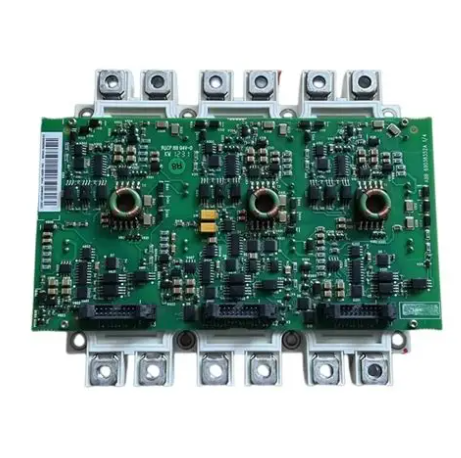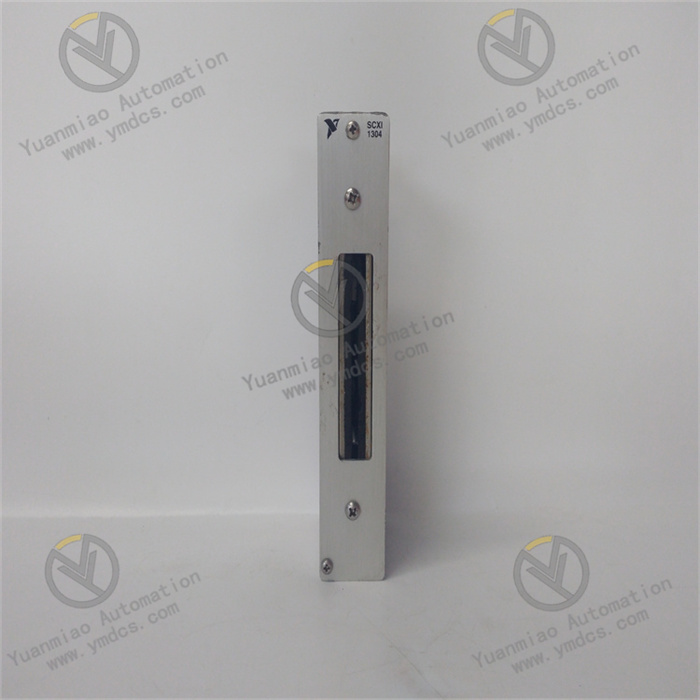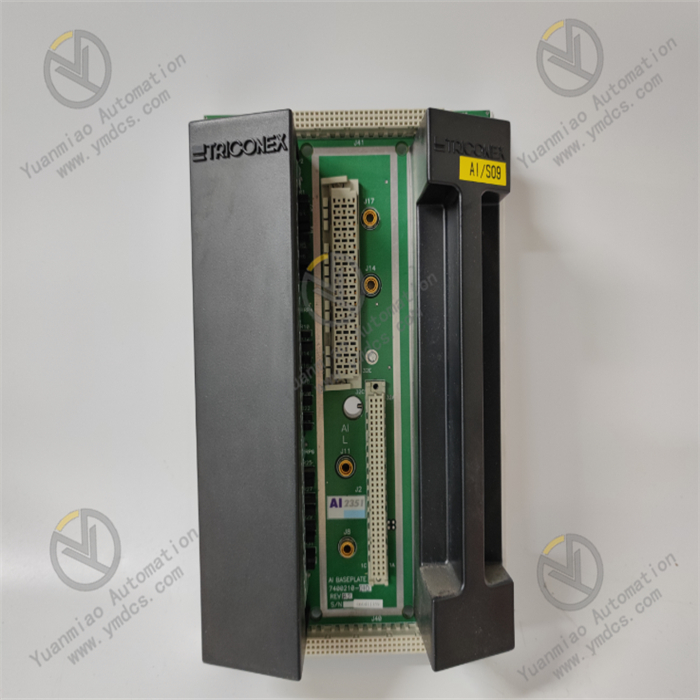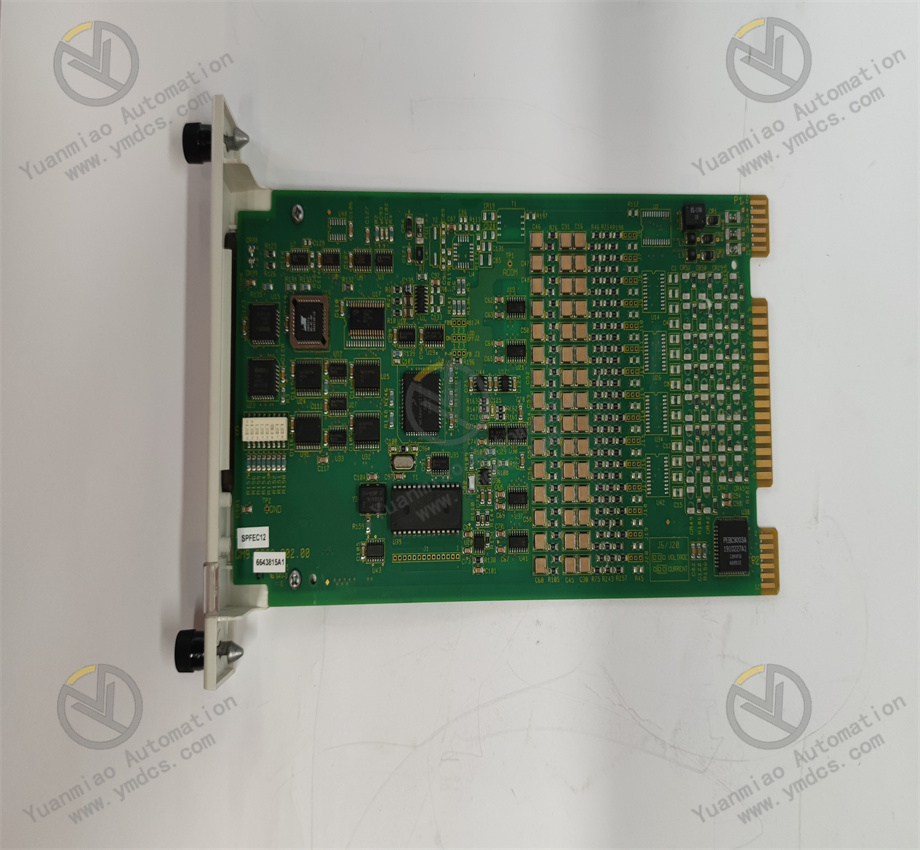
Description
1. Overview
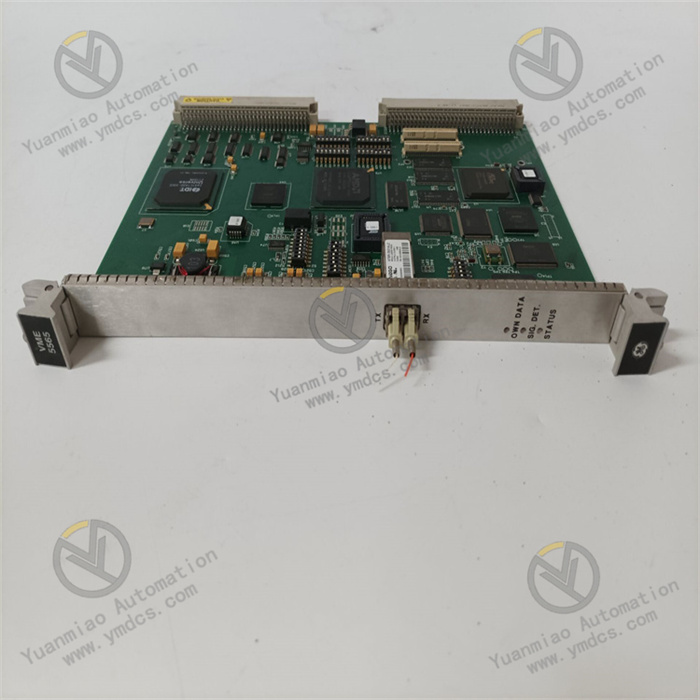
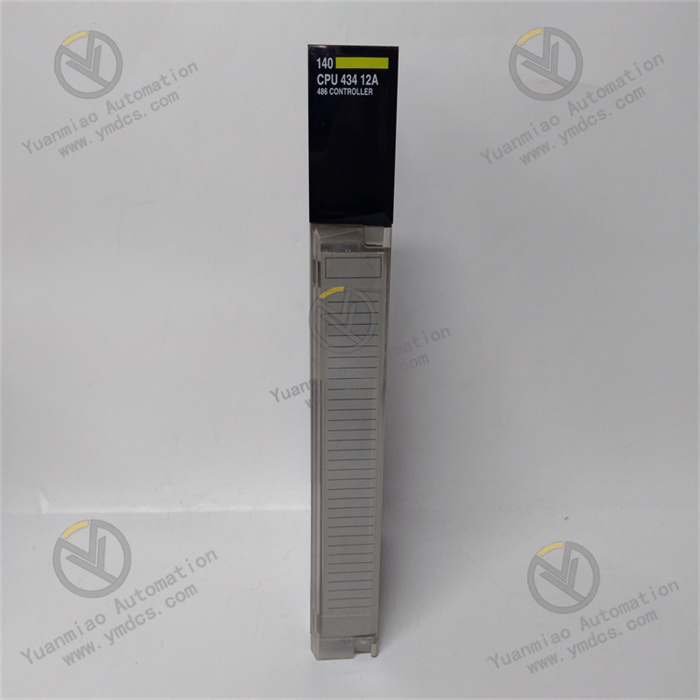
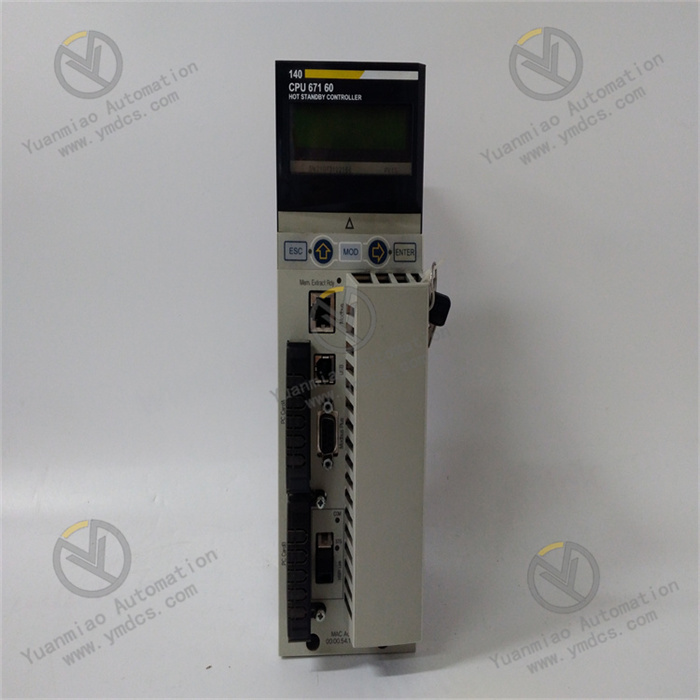
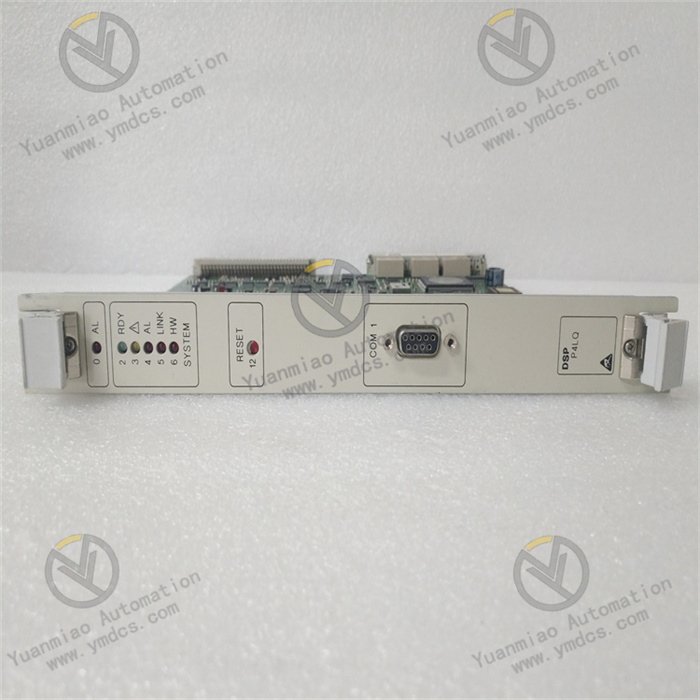
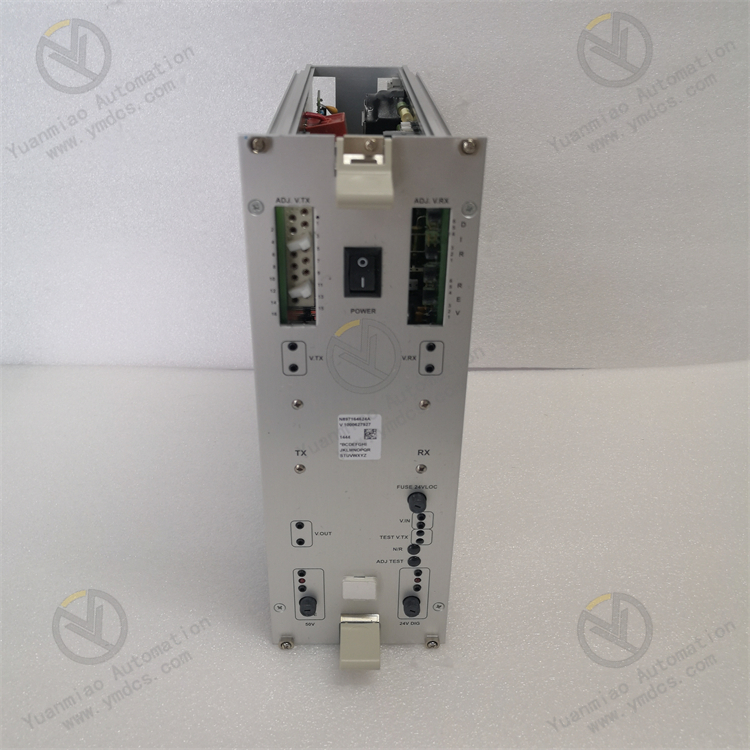
ALSTOM N897164624A is a high-speed differential communication driver interface module developed by ALSTOM exclusively for power relay protection, power station DCS measurement & control, and industrial automation control systems. As the core hardware for system bus signal transceiving and link driving, it is widely compatible with the full lineup of ALSTOM industrial control, measurement & control and protection platforms.
This module undertakes core functions including system differential signal driving, high-speed bus data transceiving, signal shaping and amplification of communication links, long-distance transmission compensation, equipment bus networking matching, and link fault monitoring. It acts as a critical expansion module ensuring high-speed, synchronous and stable data interaction between all internal boards and units of industrial control and protection systems.
Compared with conventional general communication boards, the N897164624A is specially optimized for industrial and power field scenarios such as long-distance wiring, heavy interference environments, high-speed large-volume data transmission, and parallel multi-device bus networking. Adopting a dedicated differential driver architecture and signal shaping circuits, it features high transmission speed, strong signal driving capacity, long transmission distance, high timing synchronization precision and excellent anti-interference performance.
2. Technical Features
2.1 High-Speed Differential Driver Enables Stable Long-Distance Transmission
2.2 Multi-Protocol Adaptability Supports Compatible Networking of Multiple Systems
2.3 Full-Loop Electrical Delivering Outstanding Anti-Interference Performance Under Complex Conditions
2.4 Real-Time Link Monitoring & Intelligent Fault Tolerance Prevent Fault Propagation
2.5 Non-Destructive In-Situ Replacement Enables Efficient Low-Cost O&M Upgrades
2.6 Industrial Triple-Protection Construction Supports Long-Term Maintenance-Free Operation
3. Specification Parameters
3.1 Basic Parameters
- Model: N897164624A
- Manufacturer: ALSTOM
- Device Type: High-Speed Differential Bus Communication Driver Interface Module
- Compatible Systems: ALSTOM series power relay protection systems, power station DCS measurement & control systems, industrial automation control systems
- Core Functions: Differential signal driving & shaping, high-speed bus data transceiving, long-distance transmission compensation, multi-protocol communication parsing, bus link monitoring, fault self-diagnosis & isolation, data synchronization for system networking, communication fault tolerance & error correction
- Application Scenarios: Maintenance of power industrial control systems, replacement of legacy communication driver modules, stability optimization of bus communication, troubleshooting of long-distance networking, capacity expansion & upgrade of industrial control systems, special governance of communication faults, hardware iterative renovation projects
3.2 Electrical & Communication Performance Parameters
- Operating Power Supply: Standard industrial 24VDC input, compliant with regular power specifications of power station cabinets, wide voltage adaptability, stable operation, low power consumption and anti-fluctuation
- Output Specifications: Bus driving output 12VDC, rated output current 5A, strong signal driving capacity supporting long-line networking with multiple nodes
- Communication Architecture: Differential bus driving architecture with strong common-mode interference resistance, regular transmission waveforms and ultra-low signal distortion
- Communication Protocols: Mainstream industrial and power protocols Modbus RTU/ASCII, Modbus TCP/IP and DNP3 with adaptive parsing & matching
- Transmission Performance: High-speed bus transmission with high timing synchronization precision, near-zero bit error rate, supporting continuous stable transceiving of large data volumes for parallel multiple devices
- Transmission Distance: Supports long-distance industrial bus transmission with built-in signal attenuation compensation suitable for field long-line wiring conditions
- Isolation Protection: Independent electrical isolation for all loops with integrated multi-level protection against overvoltage, overcurrent, short circuit, surge, electrostatic discharge and harmonic disturbance, meeting insulation standards
- Operating Frequency: Compatible with universal 50/60Hz power industrial frequency for power system operating conditions worldwide
- Operation Mode: Supports 24-hour uninterrupted continuous networking operation, applicable to all working conditions including steady-state system operation, fault disturbance and equipment startup/shutdown
3.3 Environmental Operating Parameters
- Operating Temperature: -40℃ ~ +85℃, adaptable to extreme cabinet temperature fluctuation and long-term enclosed high-temperature continuous operation
- Storage Temperature: -45℃ ~ +90℃, meeting environmental requirements for long-distance equipment transportation and long-term equipment shutdown storage
- Operating Humidity: 5% ~ 95%RH (non-condensing); moisture resistant to prevent short-circuit damage and performance degradation caused by dew formation
- Ingress Protection Rating: High-grade industrial protection with dust-proof, moisture-proof, anti-corrosion, mechanical vibration resistance and anti-aging performance
- EMC Compliance: Complies with high-end anti-interference EMC standards for power sectors, adapted to complex substation conditions featuring intensive electromagnetic fields and dense harmonics
3.4 Structural & Maintenance Parameters
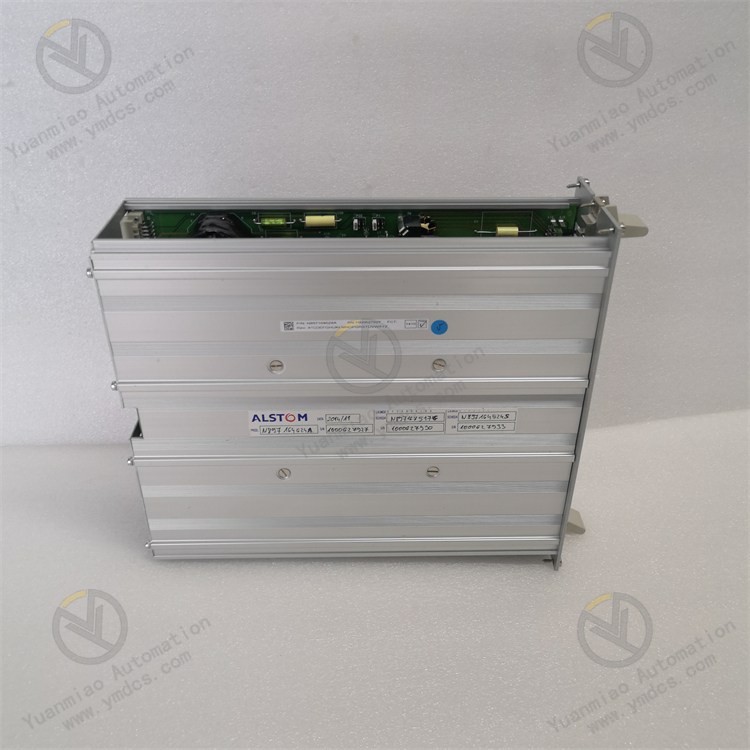
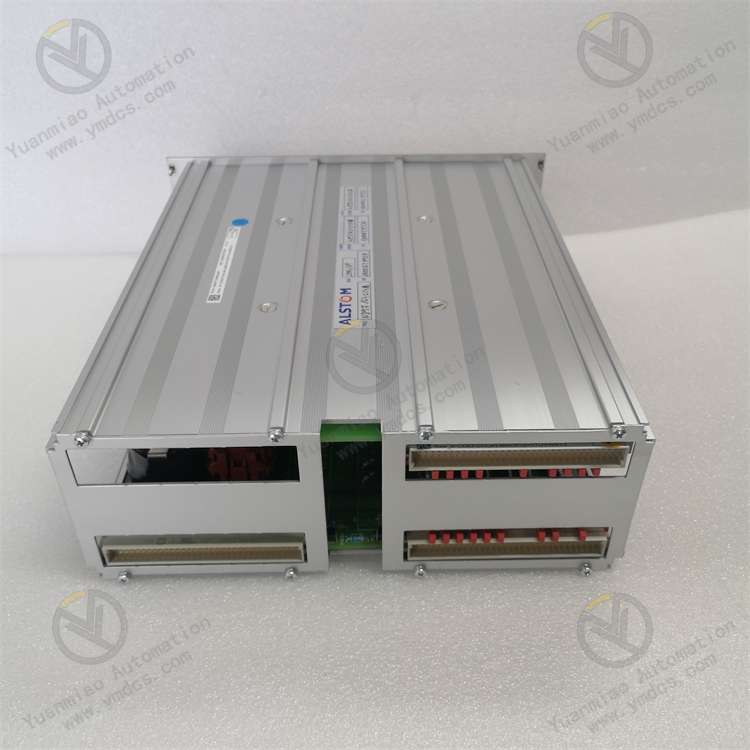
- Structure Form: Compact plug-in modular design adopting precision multi-layer SMT PCB technology with neat layout and uniform heat dissipation
- Mounting Method: Slot plug-in installation for standard cabinets with precise alignment, stable gold finger contact and strong seismic resistance
- Version Compatibility: Fully compatible with legacy communication driver modules of ALSTOM same series, supporting non-destructive in-situ replacement and upgrade iteration
- Maintenance Features: Automatic full-link power-on self-test, automatic bus protocol matching, automatic fault log archiving, communication link self-monitoring, no routine calibration required
- Operational Advantages: Stable driving, precise timing, dropout-free communication, no garbled messages, ultra-low failure rate, long-cycle maintenance-free service
4. Working Principle
After power-on, the ALSTOM N897164624A high-speed communication driver module automatically completes hardware initialization, driver chip self-test, power supply loop verification, differential signal loop inspection, bus protocol matching and calibration of link parameters. Upon successful full-dimensional self-inspection and normal bus handshake synchronization, the module connects to the system main bus and enters steady high-speed data transceiving and link driving operation.
During runtime, the module continuously receives raw communication signals from the system main control unit, various functional boards and field measurement & control units. Via internal dedicated differential driving and signal shaping circuits, weak, distorted and attenuated bus signals are amplified, regularized, denoised and compensated. Invalid interference such as grid harmonics, power-frequency clutter and electromagnetic crosstalk is eliminated, and standard, stable and time-unified differential bus signals are output to guarantee consistent signals and complete transmission for multi-node networking.
Leveraging embedded adaptive protocol parsing mechanisms, the module automatically identifies system bus communication protocols and completes bidirectional data decoding, encapsulation, timing calibration and high-speed forwarding. Real-time data interaction, instruction transmission and status feedback are realized between the main control system and each substation device, functional module and execution unit. On one hand, equipment operating conditions, status data and alarm information are uploaded in real time; on the other hand, system control commands and configuration parameters are accurately forwarded to ensure closed-loop bus communication, synchronized timing and precise command execution across the complete industrial control and protection system.
5. Application Scenarios
5.1 Core Bus Driving & Networking of Power Industrial Control Systems
5.2 Stability Optimization of Long-Distance Bus Communication
5.3 Anti-Interference Communication Adaptation Under Complex Electromagnetic Conditions