Description
1. Product Overview
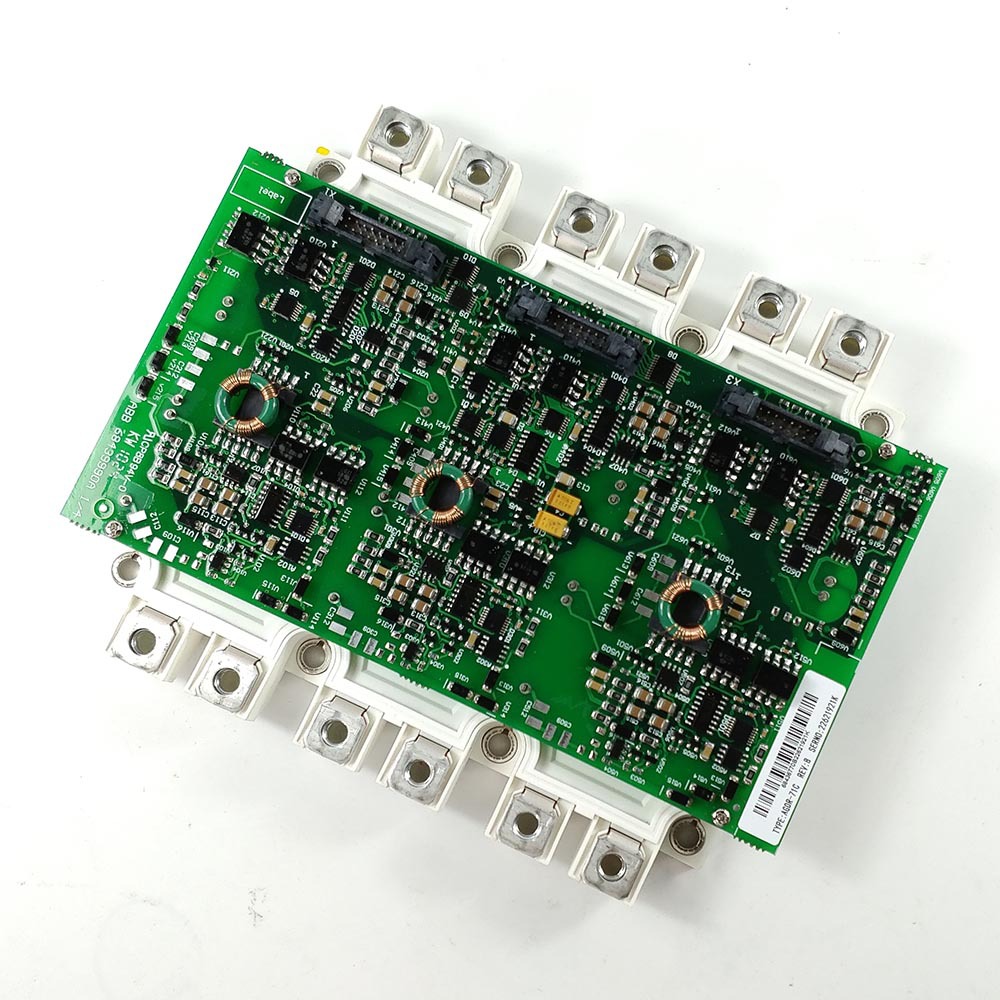
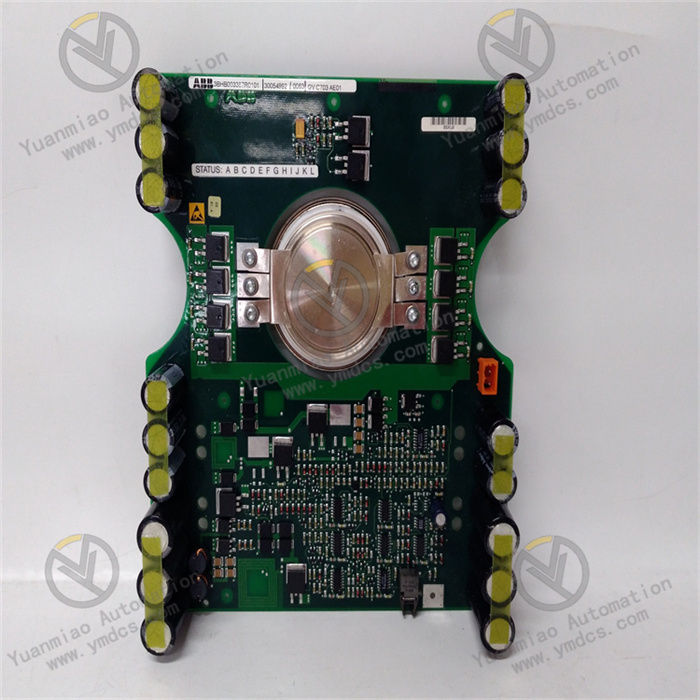
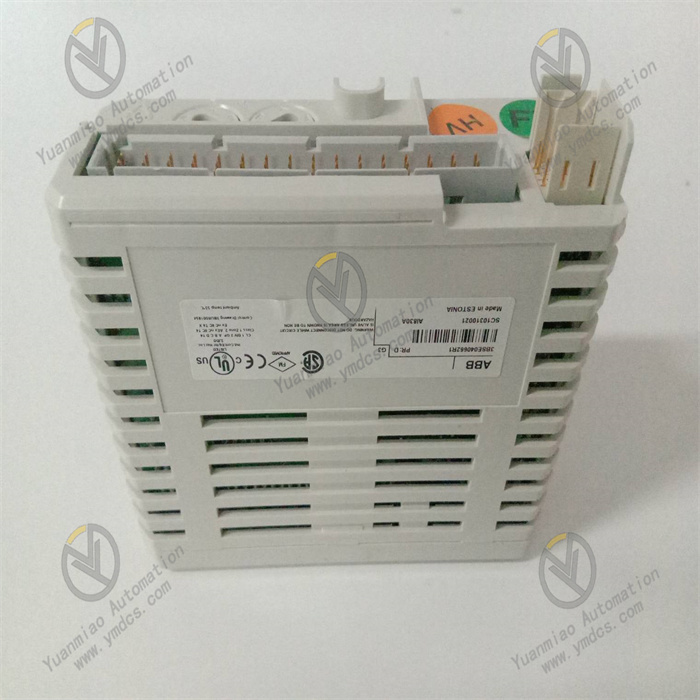
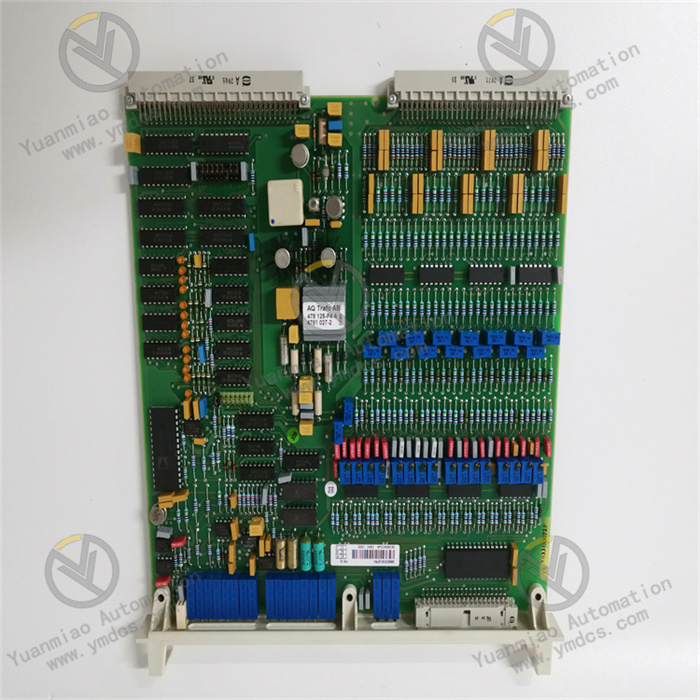
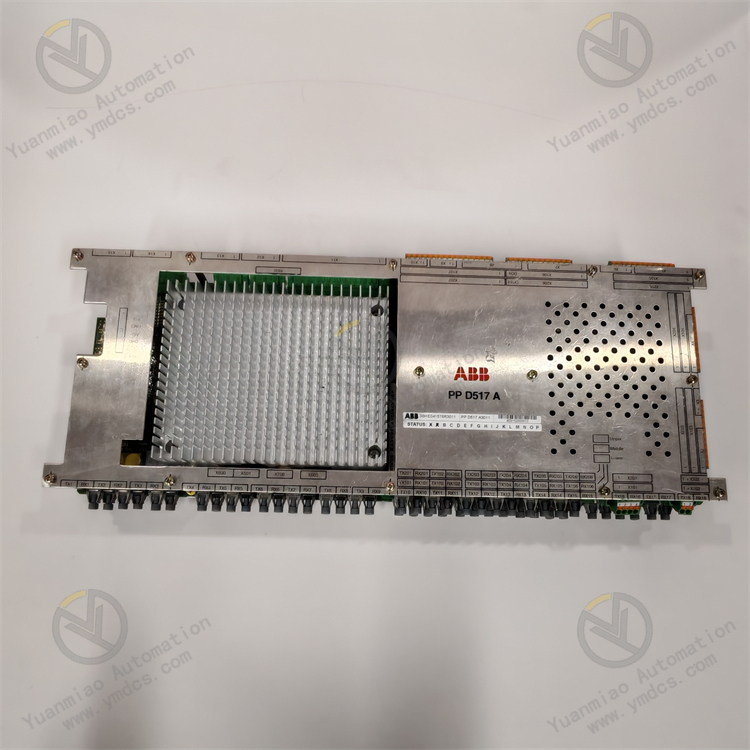
Model: PPD517A3011 3BHE041576R3011
Brand: ABB
Product Name: Excitation System Central Processing Unit Module, Core Excitation Control Processing Unit
Product Positioning
ABB PPD517A3011 3BHE041576R3011 is a high-performance core processor module exclusively designed for ABB UNITROL series excitation control systems. It is compatible with the AC800PEC power control platform and serves as the computation, control, protection and communication hub of generator excitation regulation systems. Developed for excitation operating conditions of generators in power industries including thermal power, hydropower and gas power generation, it also applies to high-end automatic control scenarios such as industrial captive power plants, energy transmission and rail transit. The module provides high-precision closed-loop regulation, fault protection, logic operation and data interaction functions for excitation systems, acting as a critical original spare part to ensure stable grid connection, accurate voltage regulation and safe excitation protection of generators.
Core Functions
The module undertakes core computation and management tasks of the entire excitation system. Integrated with multi-dimensional excitation control algorithms, it collects key parameters in real time including generator terminal voltage, stator current, rotor current and system frequency, and precisely adjusts excitation current to realize seamless switching among multiple control modes: constant voltage, constant excitation current and constant power factor. Built with comprehensive excitation fault protection logic, it accurately identifies faults such as over-excitation, under-excitation, excitation limit violation and abnormal temperature, and triggers timely alarm and interlock protection actions to eliminate major equipment risks including generator loss of excitation, damage caused by over-excitation, grid connection oscillation and voltage violation. Equipped with multi-protocol communication capability, it enables data exchange and remote management between the excitation system and DCS, upper monitoring platforms and PLC systems, guarantees 24/7 stable grid-connected operation of generators, and improves power supply quality of the power grid and unit operational reliability.
Applicable Systems
Exclusively suitable for the full range of ABB UNITROL excitation control systems and AC800PEC power-dedicated controller platforms, and perfectly matched with the architecture of complete generator excitation equipment. It strictly complies with original specifications including hardware slot standards, bus communication protocols, electrical control logic and installation criteria, and is fully compatible with supporting boards, power supply modules, acquisition modules and drive units of the same series excitation systems. It can be used for core module replacement, system performance upgrading, control logic optimization and equipment expansion & renovation of legacy excitation systems. Direct in-situ hot-swap replacement requires no extensive modification of system configuration and control programs. Featuring excellent interchangeability and compatibility, it meets the long-term operation and renovation demands of power systems.
Application Scenarios
Widely deployed in thermal power plants, hydropower plants, gas turbine power plants, biomass power plants and captive power plants of industrial and mining enterprises. It is mainly used for precise control of synchronous generator excitation systems, voltage stabilization during unit grid connection, real-time monitoring of excitation operating conditions and intelligent protection against excitation faults. It also adapts to power excitation regulation scenarios in energy power, industrial automation, rail transit and other fields, fully satisfying stringent continuous, stable and high-precision operating requirements of the power industry.
2. Technical Features
Multi-mode Intelligent Excitation Regulation with High Control Precision and Stability Embedded with industrial-grade high-precision adaptive excitation control algorithms, the module supports mainstream control modes including constant terminal voltage regulation, constant excitation current regulation, constant power factor regulation and constant reactive power regulation. It can automatically switch to optimal control logic according to unit operating conditions, grid connection status and load variations. Characterized by fast response and zero steady-state error regulation, it effectively suppresses unit voltage fluctuation, reactive power deviation and grid connection oscillation, greatly improving the grid connection stability and power supply precision of generators, and meeting excitation regulation requirements under various loads and working conditions.
Comprehensive Excitation Fault Protection to Enhance Unit Operation Safety Integrated with dedicated full-set protection logic for generator excitation, covering all fault scenarios such as over-excitation, under-excitation, excitation limit violation, rotor overcurrent, loss of excitation, low-frequency oscillation and overtemperature. It monitors operating parameters of the excitation system in real time and accurately identifies abnormal conditions to implement hierarchical protection actions: automatic parameter correction and on-site alarms for minor abnormalities; interlock protection activation and rapid cutoff of abnormal excitation output for severe faults. It effectively prevents serious accidents such as generator rotor burnout, unit disconnection and power grid fluctuation, and comprehensively ensures safe and stable operation of generators and power grids.
Multi-protocol Compatible Communication for High System Integration Equipped with abundant industrial communication interfaces, it natively supports mainstream communication protocols including IEC 61850 power-dedicated protocol, Modbus TCP/RTU, Profibus, Ethernet and RS232/RS485. It can seamlessly connect with power monitoring background, DCS distributed control systems, PLC controllers and remote operation & maintenance platforms. It supports real-time uploading of excitation operating data, remote tuning of control parameters, remote reading of fault logs and remote program upgrading, realizing intelligent, unattended and remote management of excitation systems to meet the automatic networking requirements of smart power plants.
Industrial-grade Wide-temperature Anti-interference Design Adaptable to Harsh Power Conditions Adopting military-grade main control chips and industrial components, the module has passed rigorous tests on high/low temperature resistance, vibration resistance, dust resistance, moisture resistance and electromagnetic compatibility. Its operating temperature range covers an ultra-wide span of -40℃ ~ +70℃ for power equipment. Integrated circuits for electrical isolation, surge suppression, electromagnetic shielding and power filtering effectively resist adverse impacts from severe electromagnetic interference, voltage fluctuation, ambient temperature variation and equipment vibration in power plants. No parameter drift, logic disorder or program crash occurs during long-term operation, delivering far higher reliability than ordinary industrial control modules.
Real-time Self-diagnosis and Fault Tracing for Convenient and Efficient Maintenance Built with a full-process intelligent self-diagnosis system, it monitors hardware status, program operation, communication links, excitation output loops and sampling channel conditions round the clock, and accurately identifies hidden risks such as hardware faults, program anomalies, communication disconnection, sampling distortion and loop abnormalities. Fault codes, fault sequences, parameter violation records and unit operating data are automatically stored, supporting on-site viewing and background export for review. It enables rapid root cause location, significantly shortening troubleshooting, maintenance and recovery cycles of excitation systems and reducing unit outage losses.
- Modular Standardized Design with Excellent Interchangeability and Adaptability Developed in strict accordance with ABB original hardware specifications for excitation systems, including slot definitions, bus protocols, electrical parameters and installation standards, it adopts a standardized rack-mounted modular structure. Its outline dimensions, pin definitions, communication logic and control programs are fully matched with original systems. It supports direct in-situ plug-and-play replacement of aged faulty modules without system reconfiguration, modification of excitation control logic or changes to field wiring. It covers all scenarios including routine maintenance, fault replacement, system upgrading and capacity expansion & renovation with zero compatibility risks and low transformation costs.
3. Specification Parameters
| Item | Parameter |
|---|---|
| Model | PPD517A3011 3BHE041576R3011 |
| Manufacturer | ABB |
| Equipment Type | Excitation System Central Processing Unit Module, Core Excitation Control Processing Unit |
| Applicable Systems | ABB UNITROL Series Excitation Systems, AC800PEC Power-dedicated Control Platform |
| Application Scope | Excitation control, voltage stabilization during grid connection, fault protection, automatic system networking and maintenance for generators in thermal power, hydropower, gas power plants and captive power stations |
| Core Functions | Multi-mode closed-loop excitation regulation, precise control of unit voltage/reactive power, full-range excitation fault protection, real-time parameter acquisition & computation, multi-protocol data communication, equipment self-diagnosis, fault log storage, remote program upgrading and parameter tuning |
| Control Modes | Adaptive switching among constant voltage, constant excitation current, constant power factor and constant reactive power |
| Supported Communication Protocols | IEC 61850, Modbus TCP/RTU, Profibus, Ethernet, RS232, RS485, USB |
| Input Operating Voltage | Standard industrial DC24V power supply |
| Output Control Specification | Standard DC24V control output, compatible with excitation drive loops |
| Operation Efficiency | Max. 95% computing efficiency, high computing performance with low power consumption |
| Protection Mechanisms | Over-excitation, under-excitation, rotor overcurrent, loss of excitation, overtemperature, voltage limit violation, communication abnormality, short-circuit protection |
| Operating Temperature | -40℃ ~ +70℃ (ultra-wide temperature range for power equipment) |
| Storage Temperature | -45℃ ~ +85℃ |
| Ambient Humidity | 5% ~ 95% RH, non-condensing, suitable for indoor cabinet environment in power plants |
| Protection Performance | Electromagnetic shielding, electrostatic protection, surge suppression, vibration & dust resistance, moisture & corrosion resistance, passed stringent EMC certification for power industry |
| Operation Mode | Real-time parameter sampling, closed-loop adaptive regulation, intelligent fault judgment, hierarchical alarm & protection, full-process self-diagnosis, real-time data uploading |
| Upgrade Method | Remote online firmware upgrade, local port program update, supports parameter tuning without shutdown |
| Installation Method | Standard slot mounting in excitation system rack, in-situ pluggable replacement, modular assembly |
| Overall Dimension | 600mm × 150mm × 100mm |
| Equipment Weight | 3.2 ~ 4.5 kg |
| Equipment Characteristics | High-precision adaptive excitation regulation, full-range fault protection, multi-protocol networking, stable operation under ultra-wide temperature range, intelligent self-diagnosis and tracing, plug-and-play with strong interchangeability, suitable for long-term continuous grid-connected operation of generators |
4. Working Principle
4.1 Power-on Initialization and Full-range Equipment Self-diagnosis
After powered on from the excitation system rack, the module automatically completes power-on initialization and hardware self-inspection. It sequentially verifies the integrity of the main control chip, data sampling unit, communication ports, excitation control output loops and storage unit, and simultaneously checks the validity of firmware programs, legitimacy of system parameters and adaptability of bus communication. It comprehensively detects hidden problems including hardware faults, program disorder, parameter abnormalities, port failures and wiring risks. If self-test is passed, handshake communication with UNITROL excitation system and AC800PEC controller is completed, preset excitation control logic and protection settings are loaded, and the module enters normal closed-loop regulation operation status.
4.2 Real-time Parameter Sampling and Operating Condition Calculation & Analysis
During operation, the module continuously collects full-dimensional operating parameters at high speed, including generator terminal voltage, stator current, rotor excitation current, system frequency, reactive power, power factor and equipment temperature. With built-in high-precision adaptive computing algorithms, it performs real-time data filtering, calibration, conversion and condition analysis, accurately calculates core indicators such as unit load, excitation matching degree, voltage deviation and reactive power offset. It dynamically compares preset control thresholds and protection parameters, captures subtle operating fluctuations and abnormal trends of the unit in real time, and provides accurate data support for excitation regulation and fault protection.
4.3 Multi-mode Adaptive Closed-loop Excitation Regulation
The module automatically switches to the optimal excitation control mode according to the grid connection status, load conditions and system dispatching requirements of the generator. In the no-load grid connection stage, constant voltage regulation is prioritized to stabilize terminal voltage and ensure smooth grid connection. When the unit operates under load, it adaptively switches to constant power factor and constant reactive power regulation modes, dynamically adjusts excitation current to offset voltage deviation and reactive power drift caused by load fluctuation and power grid disturbance. Zero steady-state closed-loop regulation of the excitation system is realized, effectively improving unit grid connection stability and power grid quality, and eliminating unit oscillation, voltage drift and reactive power imbalance.
4.4 Intelligent Fault Judgment and Hierarchical Protection Linkage
Built with standardized excitation fault protection logic, the module sets independent judgment thresholds, delay strategies and action mechanisms for various faults including over-excitation, under-excitation, rotor overcurrent, loss of excitation, overtemperature, voltage violation and communication abnormality. When monitored parameters exceed safe ranges, the system rapidly identifies fault types and magnitudes and executes hierarchical protection actions: minor operating anomalies trigger automatic excitation parameter correction, local alarms and background uploading; severe faults immediately activate interlock protection to cut off excitation output, trigger unit alarms or disconnection protection for rapid fault isolation, preventing major accidents such as rotor burnout, unit shutdown and power grid disturbance caused by fault escalation.
4.5 Multi-protocol Data Interaction and Remote Operation & Maintenance Management
Relying on a multi-port and multi-protocol communication architecture, the module undertakes core data interaction tasks of the excitation system. Uplink: real-time upload of unit excitation conditions, electrical parameters, operation status and fault alarm logs to DCS, power monitoring background and remote maintenance platforms. Downlink: receive dispatching commands, parameter tuning, mode switching, program upgrading and other control instructions from upper computers and execute corresponding operations accurately. Meanwhile, operation and event logs are recorded continuously to support fault tracing, operating condition review, parameter backup and program iteration, realizing intelligent, remote and unattended full-lifecycle maintenance of excitation systems.
5. Common Failures and Solutions
5.1 Phenomenon: No response after module power-on, unrecognized by system, excitation system fails to start
Possible Causes
① Abnormal DC24V power supply voltage, loose wiring or poor loop contact;
② Oxidation of module gold fingers and dust accumulation in rack slots leading to bus handshake failure;
③ Damaged firmware, version incompatibility or program crash; ④ Disordered system configuration parameters and abnormal module matching;
⑤ Aging and damage of core main control hardware.
Solutions
Shut down the system, cut off power and release residual electricity. Detect power supply voltage and circuit continuity of the module, fasten wiring terminals and eliminate voltage abnormalities and poor contact risks. Clean dust and oxidation on module gold fingers and rack slots in a dust-free environment and reinsert firmly. Verify compatible firmware versions of the system, re-flash stable original firmware and restore default configuration parameters. Rematch the hardware list of the excitation system and synchronize system settings. If the module still cannot start after confirming normal power supply, contact, firmware and configuration, hardware damage is confirmed and original PPD517A3011 module replacement is required.
5.2 Phenomenon: Severe unit voltage fluctuation, disordered excitation regulation and reactive power drift
Possible Causes
① Improper setting of excitation control parameters, disordered regulation thresholds and delay parameters;
② Poor contact of sampling loops and signal interference resulting in data distortion;
③ Mismatch between control mode and unit operating conditions;
④ Abnormal module operation program and drift of regulation algorithms;
⑤ Severe on-site electromagnetic interference impairing closed-loop regulation precision.
Solutions
Recalibrate and set excitation regulation parameters, PID closed-loop parameters and protection thresholds according to unit rated parameters and grid connection conditions. Fully inspect voltage and current sampling loops, fasten wiring, optimize shielding grounding and isolate electromagnetic interference. Switch to appropriate excitation control modes based on unit operating status and correct mismatches. Restart the module program or upgrade to stable original firmware and reset regulation algorithms. If regulation remains disordered after parameter and circuit rectification, failure of the module computing unit is confirmed and module replacement is needed.
5.3 Phenomenon: Frequent excitation alarms, false operation of over-excitation/under-excitation protection
Possible Causes
① Overly narrow protection thresholds and unreasonable delay parameters;
② Volatile sampling data without filtering of interference signals;
③ Abnormal module temperature detection and parameter drift caused by poor heat dissipation;
④ Disordered protection logic program and abnormal operation;
⑤ Abnormal operating conditions induced by poor contact of excitation output loops.
Solutions
Recheck excitation protection settings, action delays and filtering parameters to adapt to actual unit operating ranges. Enable system data filtering to suppress transient interference signals and stabilize sampling data. Clean heat dissipation channels of modules and cabinets to improve heat dissipation and avoid parameter drift under high temperature. Reset protection logic programs and clear abnormal operating cache. Inspect and fasten wiring of excitation output loops to eliminate poor contact risks. If false alarms and false operations persist after rectification, module hardware failure is confirmed and spare part replacement is required.
5.4 Phenomenon: Communication disconnection, no data displayed on background, invalid remote tuning and monitoring
Possible Causes
① Damaged communication cables/serial lines, loose connectors and unstable links;
② Incorrect configuration of communication protocols, IP addresses and baud rates;
③ Protocol mismatch between foreground and background and disconnected network segments;
④ Stuck module communication program or faulty communication unit;
⑤ Unopened system communication access rights.
Solutions
Fully inspect communication lines and interfaces, replace damaged cables and fasten connectors to ensure stable links. Verify and unify communication protocols, IP addresses, baud rates and check parameters between the module and background. Check network routing and communication permissions, enable remote monitoring and tuning access. Restart the module communication program and reset communication services. If local communication test still fails, damage to module communication hardware is confirmed and module replacement is required.
5.5 Phenomenon: Failed online firmware upgrade, interrupted program update and system lagging
Possible Causes
① Unstable communication link during upgrade leading to data transmission interruption;
② Firmware version incompatible with module hardware or corrupted firmware file;
③ Abnormal module storage unit and program cache overflow;
④ Voltage fluctuation interfering with program writing during upgrade.
Solutions
Build a stable communication environment for upgrading to avoid link fluctuation and data interruption. Verify hardware model and adopt original compatible firmware to eliminate version mismatch. Clear module program cache, release storage space and reset system programs. Ensure stable power supply during upgrade to prevent voltage fluctuation from disturbing program writing. If repeated upgrade failures occur, hardware failure of the module storage or program unit is confirmed and original module replacement is required.
5.6 Phenomenon: Excessive module temperature, operation lagging after long-term running, occasional excitation regulation failure and restart
Possible Causes
① Severe dust accumulation and blocked air ducts in cabinets leading to poor module heat dissipation;
② Long-term high-load operation and accumulation of redundant programs;
③ Excessive power supply ripple and voltage fluctuation undermining operation stability;
④ Logic lagging and performance degradation of firmware after long-term continuous operation.
Solutions
Shut down equipment, thoroughly clean dust on cabinets and module surfaces, optimize ventilation and heat dissipation to stabilize operating temperature. Inspect power supply quality, stabilize voltage and filter clutter and ripple interference. Upgrade optimized original firmware, streamline redundant programs and improve computing efficiency. Reasonably allocate unit excitation load to avoid long-term overloading of the module. If overheating, restart and regulation failure occur repeatedly, hardware aging is confirmed. Spare part replacement shall be arranged in advance to guarantee stable operation of the excitation system.