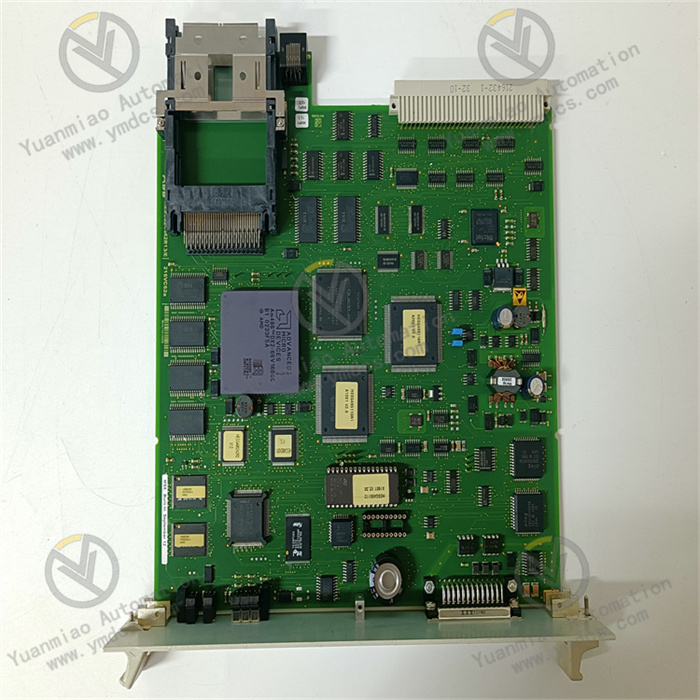
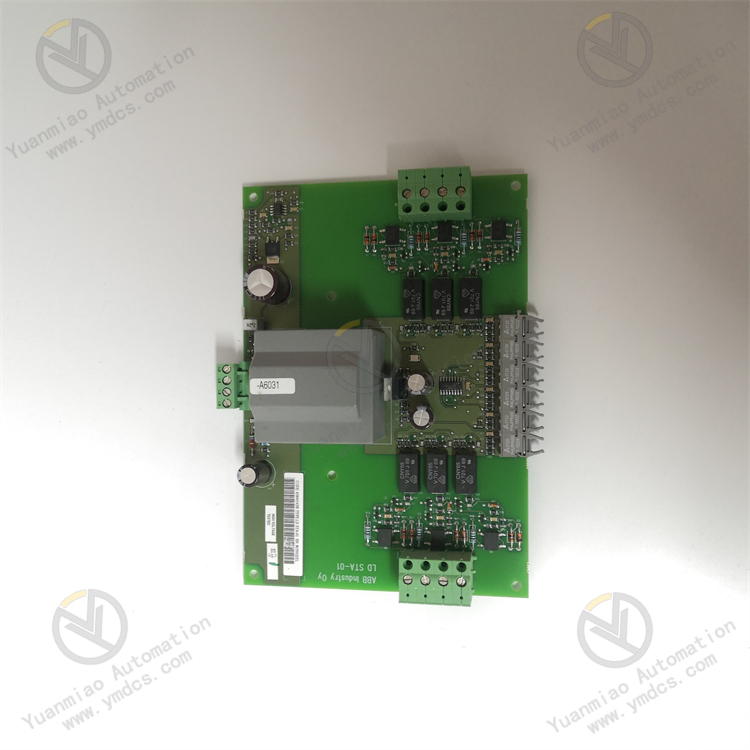
Description
1. Product Overview
Full Model: LDSTA-01
Material Code: 63940143
Manufacturer: ABB
Product Name: 16-Channel Isolated Digital Input Module, Dedicated DI Acquisition Module for AC800M DCS System
Product Positioning
ABB LDSTA-01 (63940143) is a high-reliability digital input module matched with ABB AC800M and AC800PEC power and process DCS systems. It serves as a standard core I/O card for DCS process control and SIS safety instrumented systems in power plants, chemical industry, metallurgy, new energy and other industries. Integrating 16 fully isolated digital input channels, the module is designed for acquiring field switch status, equipment feedback, interlock signals and passive contact signals. It features high anti-interference capability, independent channel isolation, hardware fast filtering, fault self-diagnosis and hot-swap maintenance. Capable of accurately and stably collecting discrete field switch signals, it acts as a key acquisition unit for working condition monitoring, logic interlocking and equipment status tracing in DCS systems.
Core Function
This module is mainly used for centralized acquisition and logic feedback of digital switch signals on industrial sites. It collects passive/active switch signals including valve position feedback, pump operation feedback, contactor status, local operating switches, safety interlock contacts and fault alarm contacts, and transmits real-time field physical status to the DCS main control system. It provides accurate and reliable raw signal basis for system logic judgment, equipment start/stop interlock, fault alarm, closed-loop process control and unit protection trip. Equipped with complete electrical isolation and anti-interference filtering functions, the module effectively suppresses on-site electromagnetic clutter, transient interference and induced electric disturbance, eliminating signal jitter, false sampling and status hopping. It comprehensively improves the accuracy and stability of control system logic actions and ensures safe, stable and continuous operation of generating units and process equipment.
Applicable Systems
Exclusively compatible with the full series of ABB AC800M and AC800PEC power control systems and process DCS systems, and fully compatible with ABB 800xA monitoring platform and all versions of Control Builder M configuration software. Matched with the original standard I/O rack backplane bus, it can seamlessly network and interact with system main control CPU, analog AI/AO modules, digital output DO modules and other I/O cards. It supports in-situ hot-swap replacement of legacy digital input modules of the same specification without modifying system control logic, rewiring or complicated configuration commissioning. With outstanding compatibility and interchangeability, it covers full scenarios including supporting new projects, renovation of legacy systems, daily maintenance and emergency fault replacement.
Application Scenarios
Widely deployed in DCS process control systems and SIS safety instrumented systems across thermal power generation, hydropower generation, wind & photovoltaic new energy, petrochemical industry, metallurgy and heavy industry, rail transit and other sectors. Typical applications include acquisition of auxiliary equipment operating status, process valve open/close feedback, local pushbutton signals, electrical switchgear interlock feedback, safety protection contact monitoring, fault alarm signal collection, ESD system status feedback and process equipment interlock status monitoring. It adapts to harsh industrial operating conditions characterized by strong electromagnetic interference, multi-equipment linkage and 24-hour uninterrupted operation.
2. Technical Features
Multi-Channel Integrated Acquisition with Independent Channel IsolationA single module integrates 16 independent digital input channels with fully isolated design for each channel to avoid crosstalk between channels. Compliant with EN 61131-2 industrial input standards and supporting standard 24 V DC industrial switch signals, it realizes parallel multi-point acquisition of massive field switch status signals. It delivers high acquisition efficiency and comprehensive point coverage, meets the monitoring demands for large and medium-sized process systems with numerous switching points, reduces the quantity of cabinet I/O devices and optimizes control cabinet layout.
Multi-Stage Hardware Filtering for Accurate and Stable SamplingThe module is equipped with built-in multi-stage hardware filtering and debounce circuits, featuring adaptive signal debounce and transient interference suppression. It effectively eliminates signal jitter and false sampling caused by on-site electromagnetic interference, line induced electricity and transient pulse clutter. Input response logic is precise without status hopping or drift. It captures real field equipment status stably for long-term operation, guarantees accurate logic judgment of the DCS system at hardware level and prevents process abnormalities and false interlock triggered by false signals.
Industrial-Grade High-Voltage Isolation with Excellent Anti-Interference PerformanceAdopting an industrial-grade high-voltage electrical isolation architecture, it achieves complete electrical isolation between the field signal side and the system bus side, thoroughly eliminating ground loop interference, ground potential difference impact and line crosstalk. It effectively resists strong electromagnetic interference generated by on-site frequency converters, high-power motors and high-voltage equipment, prevents reverse impact of field electrical faults on the main control system bus, and fully safeguards operation safety and logic stability of the DCS main control system.
High-Grade Safety Certifications for High-Risk Working ConditionsThe module has obtained IEC 61508 SIL2 safety integrity level certification, together with UL, CE and ATEX Zone 2 explosion-proof certifications. It satisfies strict safety requirements of SIS safety instrumented systems and unit protection systems in high-risk industries such as power and chemical sectors, and can be applied to process interlock and equipment protection loops requiring high safety level and high reliability.
Industrial Wide-Temperature Design with Strong Environmental AdaptabilityBuilt on an industrial-grade wide-temperature hardware framework, it operates stably within -20℃~+65℃. It can withstand severe and complex working conditions including high temperature in equipment rooms, low-temperature cabinets in winter, dust and humidity, sharp temperature and humidity fluctuations and frequent load variation. It supports 7×24-hour uninterrupted high-load continuous operation with excellent equipment tolerance, stability and environmental adaptability.
Hot-Swap Maintenance Without Shutdown for Convenient and Efficient OverhaulIt supports in-rack hot-swap replacement. Module replacement and routine maintenance require no equipment shutdown, cabinet power cut or system operation interruption, minimizing unit outage losses and production downtime. Independent LED status indicators on the panel intuitively display channel connectivity, signal acquisition and fault status for rapid fault location, greatly improving troubleshooting and on-site maintenance efficiency. The standardized 1U rack structure features neat installation, easy assembly and disassembly and strong versatility.
- Low-Power Stable Operation for Long-Term Continuous ServiceDesigned with low-power hardware architecture, the module features low power consumption and low heat generation with stable operation. No performance degradation, crash or signal drift occurs under long-term full-load acquisition. It meets the demands of year-round uninterrupted operation on industrial sites with low maintenance cost and long service life.
3. Specification Parameters
| Item | Parameter |
|---|---|
| Equipment Model | LDSTA-01 |
| Material Code | 63940143 |
| Manufacturer | ABB |
| Equipment Type | 16-Channel Isolated Digital Input Module, DCS DI Acquisition Module |
| Applicable Systems | ABB AC800M, AC800PEC Power DCS System, 800xA Monitoring Platform, SIS Safety Instrumented System |
| Application Scope | Equipment operating status acquisition, valve position feedback, local switch signal collection, electrical interlock monitoring, safety protection contact acquisition, fault alarm signal collection, process equipment status monitoring |
| Number of Input Channels | 16 independent isolated digital input channels |
| Input Signal Standard | Standard 24 V DC industrial switch signal, compliant with EN 61131-2 Type 1 specification |
| Input Operating Current | Typical: 1.4mA@5V, 4.3mA@15V, Max.<9mA@30V |
| Signal Response Delay | Fast hardware response with adaptive debounce filtering |
| Electrical Isolation Level | Industrial-grade high-voltage isolation; complete isolation between channels and between field side and bus side |
| Maximum Wiring Distance | Up to 1000 m for shielded cables; up to 600 m for unshielded cables |
| Safety Certifications | IEC 61508 SIL2, UL 508, CE, ATEX Zone 2 Explosion-proof Certification |
| Power Supply Mode | 24 V DC power supply via AC800M rack backplane |
| Maximum Power Consumption | 6 W |
| Operating Temperature | -20℃~+65℃ |
| Storage Temperature | -40℃~+85℃ |
| Ambient Humidity | 5%~95%RH, non-condensing, suitable for industrial cabinet environment |
| Structure Specification | Standard 1U rack structure, compatible with AC800M standard I/O rack |
| Maintenance Features | Support hot-swap replacement, panel LED channel status indication, hardware debounce filtering, channel-level fault diagnosis |
| Software Compatibility | Compatible with all versions of Control Builder M, supporting configuration and commissioning on 800xA platform |
| Equipment Characteristics | Multi-channel integrated acquisition, high-voltage isolation & anti-interference, hardware debounce filtering, accurate and stable sampling, high safety level, low power consumption, maintenance without shutdown, strong compatibility |
4. Working Principle
4.1 Power-On Initialization and Full-Range Self-Test
After powered by 24 V DC from the AC800M rack backplane, the module automatically completes power-on startup, hardware initialization, bus protocol matching and parameter loading. It sequentially conducts self-test on operating status of 16 input channels, power loops, bus communication units and signal acquisition units, verifies configuration information including channel settings, filtering parameters and communication addresses, and comprehensively detects hidden risks such as channel abnormality, line short circuit, hardware failure and parameter disorder. Upon passing self-test, it establishes bus connection with the main control CPU and enters standby acquisition status to respond to field switch signal acquisition tasks at any time.
4.2 Synchronous Multi-Channel Switch Signal Acquisition and Hardware Filtering
During normal operation, the 16 channels operate in parallel to collect various 24 V DC switch signals on site, including discrete status signals such as equipment operation feedback, valve position feedback, local switches, interlock contacts and fault alarms. All input signals undergo built-in multi-stage hardware filtering, debounce and noise reduction to automatically eliminate false signals induced by line induced electricity, transient clutter and electromagnetic interference, retain authentic equipment status signals, and thoroughly avoid signal jitter, status hopping and false sampling.
4.3 Signal Isolation Conversion and Bus Upload
Valid preprocessed signals pass through the high-voltage isolation unit to realize electrical separation between the field side and system side, preventing reverse impact on the main control system caused by field electrical faults and potential difference disturbance. The module converts collected switch status signals into standardized digital signals recognizable by the system, and uploads data to the DCS main control CPU and 800xA upper monitoring platform via backplane bus in real time, providing accurate data support for system logic operation, interlock judgment, status display, fault alarm and process regulation.
4.4 Real-Time Status Monitoring and Abnormality Identification
During operation, the module continuously monitors signal status of each channel, line conditions and bus communication quality. It can accurately identify hidden troubles including wire breakage, signal abnormality, channel fault and communication link fluctuation. Once an abnormality is detected, the module immediately locks fault status, activates panel fault indicators and uploads abnormal information to the system background for timely fault location by maintenance personnel, effectively preventing system logic misjudgment and equipment false interlock triggered by abnormal signals.
4.5 Status Tracing and Long-Term Stable Maintenance
The module synchronously records acquisition status of each channel, signal change sequence and abnormal alarm logs, and cooperates with the DCS background to complete equipment status tracing, process condition analysis and fault review. Supported by excellent hardware stability and anti-interference capability, it can continuously perform signal acquisition stably for long periods, matching the unattended, refined and high-reliability industrial maintenance management mode, and ensuring closed-loop logic and controllable operation of the whole control system.
5. Common Problems and Solutions
5.1 Phenomenon: No response after power-on, unrecognized by the system, no indicator light
Possible Causes
① Loss of 24 V DC power supply from rack backplane, unstable voltage or poor contact in power loops;
② Oxidation or loosening of module slot pins leading to abnormal bus contact;
③ Loss of module configuration parameters and protocol matching failure;
④ Reduced insulation and partial leakage/short circuit of circuit board due to long-term dampness and dust accumulation;
⑤ Damage of module main control hardware and initialization failure.
Solutions
Power off the equipment for full discharge. Inspect backplane supply voltage and loop stability, and troubleshoot upstream power faults. Clean module gold fingers and rack slots, reinsert and fasten the module to ensure reliable bus contact. Re-download matched system configuration parameters and communication settings, and restore module factory settings. Clean, dry and apply anti-corrosion treatment to damp and dusty modules. If startup still fails with normal power supply, slot and configuration, hardware damage is confirmed and the original ABB LDSTA-01 (63940143) module needs to be replaced.
5.2 Phenomenon: Channel signal jitter, frequent status hopping and unstable sampling
Possible Causes
① Poor shielding and non-standard grounding of field cables resulting in severe electromagnetic interference;
② Excessively long cables, aging wires and damaged insulation introducing induced electric disturbance;
③ Poor contact and oxidized virtual connection of field equipment contacts;
④ Improper configuration of module filtering parameters and low debounce threshold;
⑤ Transient clutter interference generated by startup and shutdown of high-power on-site equipment.
Solutions
Standardize shielding and grounding of field control cables, optimize routing and keep cables away from high-voltage power lines and interference sources. Replace aged and damaged cables, shorten unreasonably long wiring and improve line insulation performance. Polish and clean field switch and contactor contacts to eliminate oxidized virtual connection. Optimize channel debounce filtering parameters on the system platform and raise anti-interference threshold. If signal hopping persists after rectification, performance degradation of the module acquisition circuit is confirmed and the module shall be replaced.
5.3 Phenomenon: No channel signal acquisition, equipment status cannot be uploaded
Possible Causes
① Failure of field equipment and damaged switch contacts with no signal output;
② Signal interruption caused by wire breakage, loose terminals and detached wiring;
③ Disabled channel and unconfigured point addresses in system configuration;
④ Invalid acquisition circuit due to long-term channel overload and electric leakage;
⑤ Damage of single-channel hardware on the module.
Solutions
Check operating status and contact continuity of field equipment channel by channel, and replace faulty peripherals. Fully inspect cable continuity and terminal tightness, re-fasten wiring and repair broken points. Verify system configuration, enable corresponding channel points and complete parameter settings. If no acquisition signal persists after eliminating faults of external circuits and peripherals, single-channel hardware damage is confirmed and the original module shall be replaced.
5.4 Phenomenon: Delayed signal acquisition and slow status update
Possible Causes
① Overly large channel debounce filtering parameters leading to excessive response delay;
② Bus communication congestion and mismatched networking parameters;
③ Cache accumulation caused by long-term high-load operation of the module;
④ Severe signal attenuation due to excessive line impedance on site.
Solutions
Adjust channel debounce and response delay parameters in configuration software to balance stability and response speed. Verify full-station bus networking parameters and optimize bus communication load. Power cycle the module to clear cache and restore operating status. Replace high-impedance and aging cables to reduce line signal attenuation. If delay remains after parameter optimization, hardware performance degradation is confirmed and spare parts replacement is required.
5.5 Phenomenon: Excessive module temperature, unstable operation and occasional offline status
Possible Causes
① Poor cabinet ventilation and heavy dust accumulation leading to insufficient heat dissipation;
② Dense installation of multiple modules on the rack and long-term high-load operation;
③ Excessively high cabinet ambient temperature exceeding the rated operating range of the module;
④ Aging internal components and abnormally increased power consumption of the module.
Solutions
Regularly power off to clean dust on modules and inside cabinets, clear heat dissipation channels and improve ventilation. Reasonably arrange module layout on the rack to avoid overheating caused by dense stacking. Control cabinet ambient temperature to ensure operation within the standard temperature range. Timely replace aged original LDSTA-01 (63940143) modules suffering from high temperature, occasional offline and unstable operation to guarantee stable signal acquisition of the system。