Description
1. Product Overview
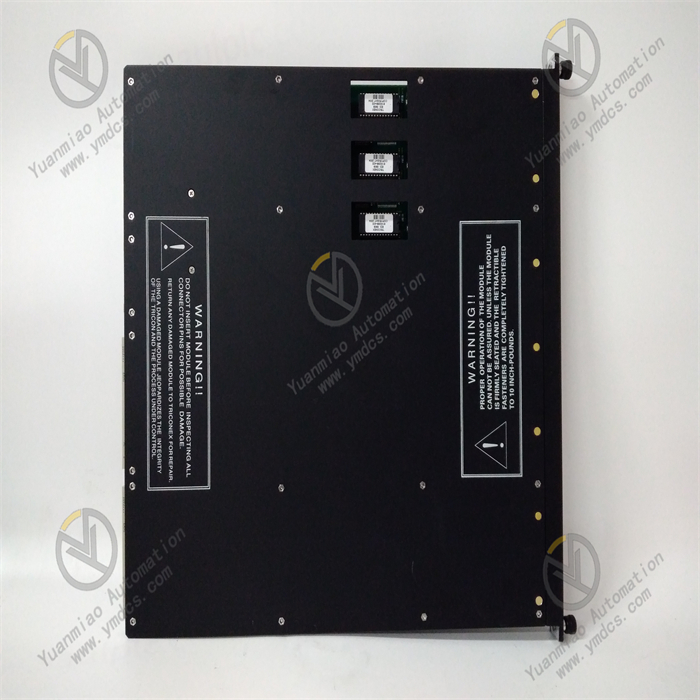
Full Model: KUC755AE117
Material Code: 3BHB005243R0117
Manufacturer: ABB
Product Name: Excitation Drive Control Module, Special Regulation & Drive Unit for Generator Excitation System
Core Function
This module undertakes core functions including signal acquisition, logic operation, precision driving and closed-loop regulation of the excitation system. It collects real-time process parameters such as generator terminal voltage, stator current, rotor excitation current and grid voltage. Through dynamic operation based on built-in high-precision control algorithms, it outputs adjustable PWM drive pulse signals to precisely control the output amplitude of the excitation power unit, realizing stepless and accurate regulation of generator excitation current and excitation voltage. The module can adapt to grid load fluctuations and unit condition variations in real time, and automatically perform functions such as voltage stabilization, reactive power distribution, power factor adjustment and auxiliary synchronization control for grid connection. Meanwhile, it is equipped with comprehensive hardware and software protection mechanisms. It can rapidly identify faults including excitation overcurrent, overvoltage, under-excitation, loss of excitation, overtemperature and signal abnormality, immediately block drive outputs and upload fault alarms. It effectively prevents risks such as generator out-of-step, oscillation, overheating damage and failed grid connection, ensures steady-state operation, safe grid connection and reliable protection under fault conditions of generating units, and meets the demand for 24-hour uninterrupted stable power generation in power stations.
Applicable Systems
Exclusively compatible with the full range of ABB industrial excitation control systems and excitation regulation systems for large and medium-sized synchronous generators. It perfectly matches the control logic and communication architecture of excitation main controllers, power rectifier units, voltage transformers, current transformers and background monitoring systems. Natively compatible with mainstream industrial communication protocols, it can seamlessly connect to power station DCS systems, PLC control systems, unit background monitoring platforms and fault recording systems. It supports compatible connection between new and legacy excitation systems, in-situ replacement of outdated modules, system upgrading and unit expansion supporting. Major modifications to system wiring and control programs are not required. It adapts to full-scenario engineering applications including excitation matching for new power stations, technical transformation of legacy excitation systems, spare parts replacement for faults and system performance upgrading.
Application Scenarios
Widely applied to excitation control conditions of synchronous generators in various power generation facilities including thermal power plants, hydropower plants, biomass power stations, cogeneration power plants and captive power stations of industrial and mining enterprises. It is mainly used for automatic excitation regulation, voltage stabilization control during grid connection, reactive load regulation, steady-state operation management of units, fault condition monitoring and protection interlock of large and medium-sized synchronous generators. It adapts to harsh industrial conditions such as frequent start-stop of generating units, drastic load fluctuations, long-term full-load continuous operation and grid disturbance impacts, and satisfies the operation standards of high reliability, high precision and high stability for excitation control in power stations.
2. Technical Features
High-Precision Closed-Loop Regulation with Excellent Control PerformanceEquipped with high-end industrial microprocessor and built-in optimized excitation-dedicated PID regulation algorithm and dynamic compensation logic, the module realizes high-precision closed-loop steady-state regulation of excitation voltage, excitation current and generator terminal voltage. It features high signal acquisition resolution, fast operation speed and excellent regulation linearity. It can quickly respond to grid load fluctuations and unit condition changes, effectively restrain unit voltage deviation, reactive power fluctuation and frequency offset, guarantee stable quality of electric energy output by generators, and greatly improve grid connection accuracy and steady-state operation performance of units.
Ultra-Fast Dynamic Response and Strong Working Condition AdaptabilityCapable of millisecond-level signal response and dynamic regulation. It can instantly capture abnormal changes such as sudden unit condition variations, grid disturbances and load shocks, rapidly correct excitation output parameters and suppress unit oscillation and instability. It perfectly meets the full-range operation requirements including unit startup and shutdown, grid connection, disconnection, load rise and fall and fault disturbances. It boasts outstanding dynamic adaptability and effectively enhances the anti-disturbance capability and self-adaptive performance of generating units.
All-Round Multi-Level Protection for Safe and Reliable OperationIntegrated dual redundant protection system combining hardware and software, covering full-dimensional protection functions: excitation overcurrent, excitation overvoltage, under-excitation, loss of excitation, rotor overtemperature, signal abnormality, sampling fault, pulse abnormality, power supply undervoltage and short-circuit protection. With accurate fault threshold setting, reliable action logic and ultra-fast response speed, it can block drive outputs, trigger alarm interlocks and isolate fault areas instantly upon faults. It effectively avoids major risks such as uncontrolled excitation, generator out-of-step, equipment burnout and grid impact, and comprehensively improves the operation safety of excitation systems and generating units.
Multi-Protocol Compatible Communication with Flexible Networking ExpandabilityNatively supports mainstream industrial communication protocols including MODBUS, PROFIBUS and Industrial Ethernet. It enables bidirectional transparent data transmission, remote parameter read/write, operation status upload and fault information tracing. It can be conveniently connected to power station DCS, PLC and background monitoring systems to realize remote monitoring of excitation parameters, remote parameter setting, operation data recording and online fault diagnosis. The system features convenient networking and strong expandability, meeting the centralized management requirements of intelligent power stations.
Industrial-Grade Anti-Interference Design with Wide Environmental AdaptabilityAdopting full industrial hardware architecture, electrical isolation, electromagnetic shielding and signal noise reduction design. Built-in filter circuits, electrostatic protection and surge protection modules effectively resist harsh site conditions such as strong electromagnetic interference, high-voltage radiation, voltage fluctuation, electrostatic surge and sharp temperature & humidity changes in power stations. No signal drift, parameter offset or communication jitter occurs during long-term operation. It can run stably for a long time under complex electromagnetic environments of power stations with superior anti-interference capability and environmental tolerance.
Modular Standardized Design for Convenient and Efficient MaintenanceAdopting ABB standard integrated modular structure with compact layout, neat installation, easy assembly and disassembly and firm fixation, suitable for standard cabinet layout of excitation systems. It supports online self-inspection, accurate fault location and real-time monitoring of operating parameters, and can actively upload fault codes and abnormal conditions, enabling maintenance staff to quickly locate hidden dangers and fault points. The module enjoys strong interchangeability and versatility and supports in-situ replacement without complicated program debugging, greatly shortening downtime for maintenance and reducing operation costs.
- Wide-Temperature Durable Design Supporting Long-Term Continuous OperationConstructed with industrial wide-temperature anti-aging components, tolerating severe industrial environments including high/low temperature, humidity, dust and vibration with wide operating temperature range. It can withstand long-term working conditions such as full load, heavy fluctuation and frequent start-stop of units, supporting 7×24-hour non-stop continuous operation. It has low failure rate, slow aging rate and long service life, satisfying the demand for long-term continuous power generation in power stations.
3. Specification Parameters
| Item | Parameter |
|---|---|
| Equipment Model | KUC755AE117 |
| Material Code | 3BHB005243R0117 |
| Manufacturer | ABB |
| Equipment Type | Generator Excitation Drive Control Module, Regulation Actuator Unit of Excitation System |
| Applicable Equipment | ABB Excitation Control System, Large & Medium-Sized Synchronous Generators, Power Station Excitation Power Units |
| Application Scope | Excitation regulation, voltage stabilization during grid connection, reactive power control and steady-state protection operation of generators in thermal power, hydropower, cogeneration and captive power stations |
| Control Mode | High-Precision PWM Pulse Width Modulation, Closed-Loop PID Dynamic Regulation |
| Input Power Supply | Standard 24V DC Industrial Power Supply |
| Output Control Signal | 0~10V DC Adjustable Drive Voltage, Compatible with Excitation Power Units |
| Rated Output Current | 5A |
| Operating Frequency Range | 0.5Hz~200Hz |
| Communication Protocols | Multi-protocol compatibility: MODBUS, PROFIBUS, Industrial Ethernet |
| Core Functions | Excitation parameter acquisition, closed-loop voltage & current stabilization, reactive power regulation, PWM drive output, working condition self-adaptation, fault self-diagnosis, remote communication |
| Core Protection | Excitation overcurrent, overvoltage, under-excitation, loss of excitation, overtemperature, signal abnormality, power supply fault, short-circuit blocking protection |
| Operating Temperature | -20℃~+65℃ |
| Storage Temperature | -40℃~+85℃ |
| Ambient Humidity | 5%~95%RH, non-condensing, suitable for power station cabinet environment |
| Electrical Characteristics | Electrical isolation, surge protection, electromagnetic shielding, signal noise reduction, strong anti-interference performance |
| Structural Characteristics | Compact modular design, easy installation, strong interchangeability, compatible with standard cabinets |
| Maintenance Characteristics | Real-time condition monitoring, fault code upload, online parameter setting, debugging without disassembly, in-situ replacement |
| Equipment Features | High-precision regulation, ultra-fast response, multi-layer safety protection, multi-protocol networking, industrial anti-interference, wide-temperature durability, easy maintenance, stable operation |
4. Working Principle
4.1 Power-On Initialization and Full-Range Self-Test
After powered by 24V DC power supply of the system, the module automatically completes hardware power-on initialization, core chip self-test, drive circuit detection, communication protocol loading, control parameter initialization and working condition calibration. The system comprehensively verifies the operating status of the module’s sampling circuit, PWM drive loop, communication ports, power supply circuit and protection logic, and eliminates hidden troubles such as hardware faults, missing parameters, circuit abnormalities and communication failures. Upon successful self-test, it automatically establishes communication links with the excitation main control system and power station background monitoring system, loads preset control parameters and regulation logic, enters standby status, and responds to excitation regulation commands of the unit at any time.
4.2 Real-Time Acquisition and Processing of Multi-Dimensional Process Parameters
During unit operation, the built-in high-precision sampling unit continuously collects core operating parameters including generator terminal voltage, rotor excitation current, stator operating current, grid voltage and module internal temperature. The acquired raw analog signals are processed through filtering and noise reduction, error correction, data verification and analog-to-digital conversion to eliminate interference clutter and invalid data on site. It ensures collected data is accurate, stable and drift-free, providing reliable data support for closed-loop excitation regulation, condition judgment and fault identification.
4.3 Intelligent Closed-Loop Operation and Precise PWM Drive Output
Based on built-in dedicated excitation control algorithms, the module compares and calculates real-time unit operating parameters and target parameters set by the system, and dynamically generates accurate PWM pulse width modulation control signals. It dynamically adjusts pulse duty cycle according to grid load variation, unit output fluctuation, voltage deviation and reactive power difference, and outputs continuously adjustable 0~10V drive voltage signals to precisely control the conduction amplitude and output current of the rear excitation power unit. It realizes stepless closed-loop regulation of generator excitation voltage and excitation current, stabilizes generator terminal voltage and reactive power output, and guarantees steady-state operation of the unit.
4.4 Multi-Condition Self-Adaptive Regulation and Auxiliary Grid Connection Control
For different working conditions including unit startup and shutdown, no-load operation, load rise and fall, synchronous grid connection, disconnection and grid disturbance, the module can automatically switch to matching regulation logic and control parameters. During grid connection, it accurately matches grid voltage, frequency and phase parameters to assist smooth synchronous grid connection of the unit. During load fluctuation, it rapidly corrects excitation output to suppress voltage fluctuation and unit oscillation. Under steady-state operation, it maintains continuous high-precision voltage and current stabilization, optimizes unit power factor and power quality, and meets the demand for automatic excitation control under full operating conditions.
4.5 Fault Monitoring, Protection and Data Tracing
The module monitors the operating status of the excitation system and its own hardware in real time throughout operation, and activates dual hardware & software fault protection logic. Once faults such as excitation overcurrent, overvoltage, under-excitation, loss of excitation, overtemperature, signal disconnection and parameter abnormality are detected, it immediately blocks PWM drive output, locks fault status and triggers local alarms. Meanwhile, fault codes and detailed fault information are uploaded to the excitation main controller and background monitoring system to interlock system protection actions and accurately isolate fault areas, preventing fault escalation leading to unit instability, equipment damage or grid impact. Operation logs and fault data are recorded continuously to support condition tracing and fault analysis, ensuring long-term safe, stable and continuous operation of the excitation system.
5. Common Problems and Solutions
5.1 Phenomenon: No module output, failed excitation regulation, unable to build up generator voltage
Possible Causes
① Abnormal 24V DC power supply of the module, missing voltage or poor contact in the circuit;
② Failed module initialization, loss of control parameters or program abnormality;
③ Damaged PWM drive circuit and invalid pulse output;
④ Disconnection of front-end sampling circuit and missing signals resulting in no regulation command;
⑤ Failed main control hardware of the module and loss of functions.
Solutions
Power off the equipment for sufficient discharge. Inspect module supply voltage and circuit continuity, troubleshoot upstream power faults and loose wiring. Power on and reset the module, restore factory configuration and download matched excitation control parameters again. Check sampling circuits and signal wiring one by one, repair broken wires, poor contacts and abnormal signal points. Inspect operating status of rear excitation power units to eliminate load faults. If no excitation output is available with normal power supply, wiring, parameters and external equipment, hardware damage of the module is confirmed. Replace with original ABB KUC755AE117 (3BHB005243R0117) control module.
5.2 Phenomenon: Severe generator voltage fluctuation, unstable excitation regulation and reactive power oscillation
Possible Causes
① Deviated module sampling precision, failed signal filtering and distorted collected data;
② Improper setting of excitation PID parameters with excessively fast or slow response;
③ Signal jitter and disordered regulation logic caused by on-site electromagnetic interference;
④ Degraded module performance and reduced dynamic response capability;
⑤ Abnormal coordination of power units and unbalanced excitation output feedback.
Solutions
Check shielding and grounding of signal cables, optimize wiring routes and keep away from strong electric interference sources to eliminate electromagnetic interference. Recalibrate module sampling precision and correct sampling offset errors. Optimize and tune excitation PID parameters to match unit operating conditions. Inspect output status of excitation power units and troubleshoot coordination abnormalities. If voltage oscillation and unstable regulation persist after parameter optimization and anti-interference rectification, module performance degradation is confirmed and module replacement is required.
5.3 Phenomenon: Frequent excitation overcurrent/overvoltage alarms and intermittent tripping
Possible Causes
① Instant excitation impact induced by grid voltage fluctuation and sudden load change;
② Improper setting of module protection threshold parameters triggering false protection;
③ Abnormal rotor circuit, short circuit or leakage of excitation load;
④ False alarms caused by distorted module voltage and current sampling;
⑤ Aging internal circuits of the module and abnormal condition judgment.
Solutions
Monitor grid and unit load conditions and avoid extreme load impact conditions. Verify and optimize module protection threshold parameters and correct unreasonable settings. Stop the unit to test insulation and continuity of generator rotor circuits and troubleshoot short-circuit and leakage faults. Calibrate module sampling precision to eliminate sampling distortion. If frequent alarms and tripping still occur after eliminating external conditions and parameter problems, hardware failure of the module is confirmed and original spare parts replacement is required.
5.4 Phenomenon: Module communication interruption, no data on background system and failed remote regulation
Possible Causes
① Loose communication wiring, damaged network cables, oxidized connectors and poor contact;
② Mismatched communication protocol parameters, disordered baud rate and address configuration;
③ Data packet loss and intermittent communication disconnection caused by strong electromagnetic interference in power stations;
④ Aging communication chip of the module and faulty communication port;
⑤ Abnormal communication link of the background system.
Solutions
Inspect communication cables and connectors, fasten wiring, replace damaged cables and clean port contacts. Recheck and unify communication parameters, protocol addresses and baud rates between the module and background system. Optimize cabinet shielding and grounding to reduce on-site electromagnetic interference. Troubleshoot communication links and equipment faults of the background system. If frequent disconnection and missing data upload still exist after configuration rectification, communication function failure of the module is confirmed and module replacement is required.
5.5 Phenomenon: Module overtemperature alarm, unstable operation and occasional regulation failure
Possible Causes
① Poor cabinet ventilation, blocked filter screen and excessive dust leading to poor heat dissipation;
② Long-term full-load operation of the module with excessive power consumption;
③ Exceeded cabinet ambient temperature beyond the standard operating temperature range of the module;
④ Aging internal components of the module, decreased thermal stability and abnormal heat generation.
Solutions
Regularly shut down equipment to clean dust on cabinet air ducts, filter screens and module surfaces, dredge heat dissipation channels and improve ventilation conditions of the cabinet. Reasonably control unit load and avoid long-term overload operation. Monitor and control cabinet ambient temperature to ensure the module operates within the specified temperature range. Timely replace aged original KUC755AE117 excitation control modules suffering long-term high temperature and unstable operation to guarantee stable operation of the excitation system。