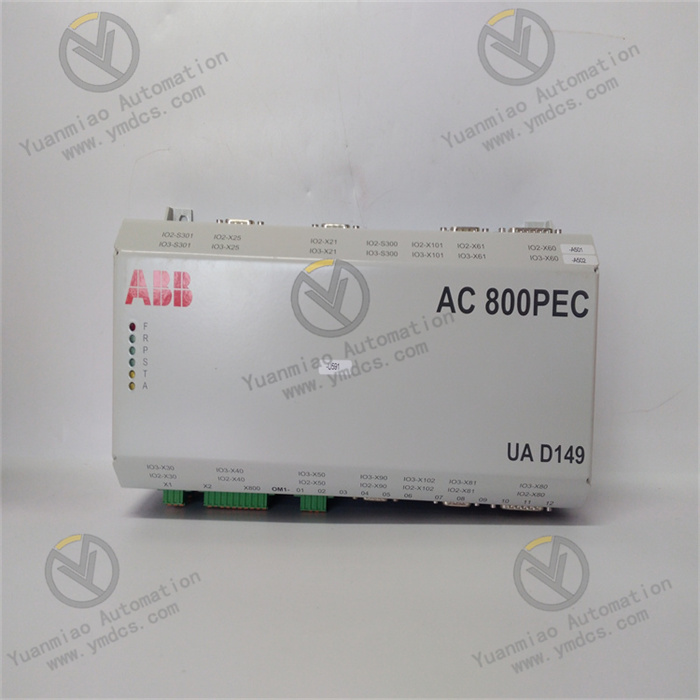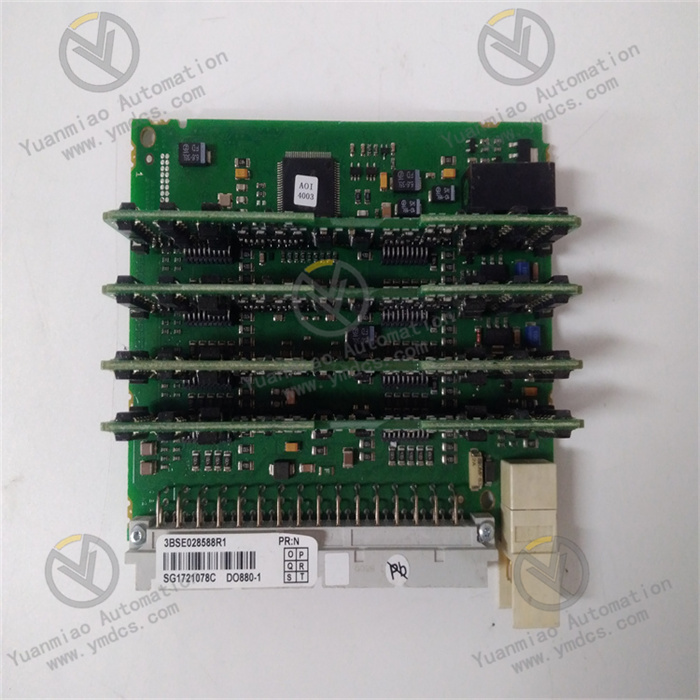
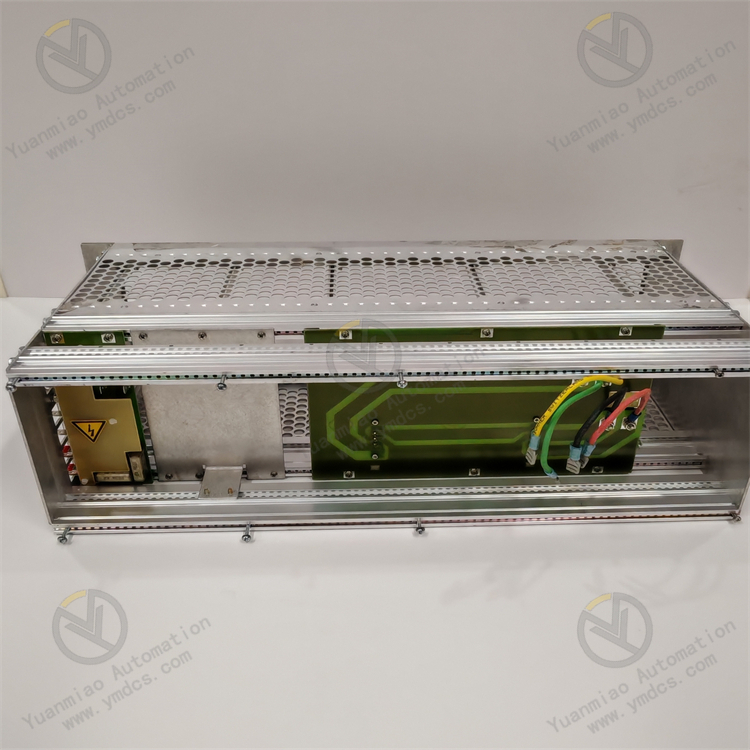
Description
1. Product Overview
Full Model: P7LA HNEF105323R0002
Manufacturer: ABB
Product Series: P7LA Series Industrial Intelligent Control & Computing Module / High-End Process Drive Control Unit
Product Name: High-Performance Programmable Logic Control Module, Multi-Protocol Industrial Main Control Computing Module
Product Positioning
ABB P7LA HNEF105323R0002 is a high-end embedded intelligent main control module within ABB industrial automation portfolio, developed for scenarios including closed-loop control of complex processes, multi-device coordinated logic operation and high-speed data exchange. Equipped with high-performance industrial main control chip and integrated multiple industrial communication interfaces and independent computing units, the module delivers powerful programmable logic processing, real-time computation and comprehensive device management capabilities. It can independently implement logic scheduling, process regulation, data acquisition and communication interaction for small and medium-sized automatic control systems. Adopting industrial ruggedized design, it adapts to harsh operating conditions featuring alternating high/low temperature, severe electromagnetic interference and 24/7 continuous operation. Serving as core control hardware for automation systems in power, chemical, metallurgy and intelligent equipment industries, it is widely deployed in engineering projects such as replacement of main control units in legacy systems, upgrade of automatic production lines, technical transformation of process control systems and coordinated management of multiple devices.
Core Functions
The module undertakes five core responsibilities: high-precision process logic computation, closed-loop control for multi-device coordination, multi-channel industrial protocol communication interaction, real-time acquisition and processing of field data, and system operation self-diagnosis & fault protection. It can independently execute key control tasks including complex process parameter calculation, sequence logic scheduling, equipment start/stop interlock and analog closed-loop regulation. Small and medium-sized systems can realize autonomous control without relying on upper-level controllers. Meanwhile, it supports multi-terminal data interaction and can connect with PLC, DCS, touch screens and upper monitoring systems to realize parameter distribution, status upload and remote regulation. Built-in multiple software & hardware protection and fault tracing mechanisms effectively prevent risks such as process runaway, incorrect equipment action and communication failure. It ensures accurate, stable and safe operation of automation systems, greatly simplifies control system architecture and reduces equipment assembly and maintenance costs.
Compatible Systems
Fully compatible with the full range of ABB industrial automation control systems, matched industrial cabinets and bus architectures. It can form independent networks or be embedded into existing DCS/PLC systems for collaborative operation. Natively compatible with official ABB configuration programming software, supporting customized logic programming, parameter configuration, control mode switching, online debugging and program downloading. The module features outstanding system compatibility and backward adaptability. It supports non-destructive in-situ replacement of legacy main control modules of the same series without massive modification of cabinet wiring and system architecture. It fits various industrial retrofit scenarios including compatibility upgrade of old and new systems, equipment upgrading, signal point expansion and control logic optimization.
Application Scenarios
Mainly applied in industrial sectors including thermal power, hydropower, oil & gas chemical industry, heavy metallurgy, intelligent manufacturing production lines, municipal energy management and high-end intelligent equipment. Typical working conditions: closed-loop control of complex processes, sequential coordination of multiple devices, high-speed data communication, independent main control for small & medium automatic systems, intelligent upgrading of legacy equipment, remote monitoring and parameter regulation. Capable of long-term operation under harsh field environments such as extreme temperature, dust and humidity, mechanical vibration, variable frequency electromagnetic interference and power fluctuation. It provides high-computing, stable and compatible core control support for industrial automation systems.
2. Technical Features
High-Performance Main Control Computing Power for Efficient & Accurate Calculation
Adopts high-end industrial dedicated main control chip with fast computing speed and strong data processing capability. It rapidly executes complex process logic operation, multi-channel data calculation, closed-loop PID regulation and sequential logic scheduling, achieving much faster response than conventional industrial control modules. Multiple sets of process data and interlock logic can be processed simultaneously without computation delay or data congestion, meeting requirements of high-precision and high real-time process control.
Multi-Protocol Compatible Communication with Excellent Integration
Integrated with 2-channel Gigabit Ethernet, 2-channel RS485 and 1-channel CANopen industrial communication interfaces. Natively supports mainstream industrial protocols including PROFINET V2.4, EtherNet/IP, Modbus RTU/TCP and CANopen DS301. It seamlessly connects various PLCs, DCS, touch screens, industrial host computers and intelligent instruments to realize high-speed cross-device & cross-system data exchange, adapting to complex working conditions with mixed old/new equipment and multi-brand networking.
Dual Power Supply Modes with Excellent Resistance to Power Fluctuation
Supports dual power supply: wide-range DC24V input and AC110V/220V AC input, matching diversified DC and AC power supply systems on site. Wide tolerance for voltage fluctuation enables resistance to grid variation, voltage drop during equipment startup and load impact. It effectively avoids module restart, program loss and control failure caused by unstable power, suitable for aging workshops and outdoor industrial control equipment with unstable power supply.
Programmable Flexible Configuration & Strong Function Expandability
Supports customized logic programming, control mode switching and configurable parameter thresholds. It can realize diversified control logic such as start-stop interlock, constant value regulation, sequence control, pulse regulation and fault interlock shutdown according to different process conditions. The front panel integrates touch buttons and physical buttons. Local parameter setting, manual/automatic mode switching and password authority management are available to prevent misoperation and satisfy flexible regulation demands for multiple processes and scenarios.
Multi-Layer Electrical Protection with Superior Anti-Interference Performance
The whole unit adopts industrial electrical isolation and electromagnetic shielding structure. Embedded multi-layer software and hardware protection including surge suppression, ESD protection, overvoltage/overcurrent protection, short-circuit protection and overtemperature protection, fully complying with industrial EMC standards. It effectively resists high-frequency interference from inverters, electromagnetic radiation during motor start-stop, line surge impact and static interference. No program disorder, control jitter or communication interruption occurs under complex industrial conditions.
Full-Range Intelligent Self-Diagnosis for Convenient & Efficient Maintenance
Three-level self-diagnosis covering module level, communication level and operation level continuously monitors potential risks such as power status, chip operating condition, communication link, program execution and temperature load. Front panel LED indicators and fault codes directly display operating status and fault types. Fault records are stored and traceable. Online debugging, parameter calibration and non-stop maintenance are supported to greatly shorten troubleshooting and handling time.
Wide-Temperature Industrial Ruggedization Ensuring Long-Term Reliability
Constructed with industrial reinforced PCB and wide-temperature anti-aging components, enhanced with moisture-proof, dust-proof, vibration-proof and shock-resistant processes. Stable operation is guaranteed under extended temperature range. It withstands alternating temperature & humidity, dust accumulation and continuous mechanical vibration in industrial sites. Supporting 24/7 non-stop continuous operation, no computing performance degradation, program drift or parameter loss occurs after long-term service, delivering outstanding stability and durability.
3. Specification Parameters
| Item | Parameter |
|---|---|
| Model | P7LA HNEF105323R0002 |
| Manufacturer | ABB (ABB Group, Switzerland) |
| Product Series | P7LA Series Industrial Intelligent Main Control Computing Module |
| Module Type | High-Performance Programmable Logic Control Module, Multi-Protocol Industrial Main Control Unit |
| Applicable Systems | Full range of ABB industrial automation control systems, general PLC/DCS systems |
| Configuration Software | Official ABB configuration software; supports customized logic, online debugging and program download |
| Core Hardware | High-end industrial high-speed main control chip, independent computing unit, on-board high-speed cache |
| Communication Interfaces | 2 × Gigabit Ethernet, 2 × RS485, 1 × CANopen |
| Supported Protocols | PROFINET V2.4, EtherNet/IP, Modbus RTU/TCP, CANopen DS301 |
| Operation Mode | Touch buttons + physical buttons; supports parameter setting, mode switching and access authority encryption |
| Power Supply | DC24V±20% / AC110V/220V±15% dual power supply |
| Power Consumption | ≤20 W (full load) |
| Operating Temperature | -40℃~+75℃ (Extended industrial temperature range) |
| Storage Temperature | -45℃~+80℃ |
| Ambient Humidity | 5%~95%RH, non-condensing; suitable for humid and dusty industrial environments |
| Protection Class | IP20 (module body) |
| Mounting Method | Standard industrial DIN rail mounting, cabinet snap-in installation |
| Isolation & Protection | Independent galvanic isolation for communication, power and computing circuits; overvoltage, overcurrent, short circuit, overtemperature and surge protection |
| O&M Features | Three-tier full-range self-diagnosis, fault code traceability, online parameter configuration, non-stop debugging, access authority management |
| Product Characteristics | High computing capability, multi-protocol communication, dual power input, programmable expansion, strong anti-interference, wide-temperature operation, easy maintenance |
4. Working Principle
4.1 Power-On Initialization and Full-Range Self-Test
After connected to qualified power supply, the module automatically completes hardware initialization, main control chip startup, firmware loading, communication protocol adaptation and system parameter reset. It performs comprehensive self-test on power circuits, main control computing unit, all communication interfaces, button operation unit and fault diagnosis module to detect hidden hazards including abnormal power supply, interface failure, missing program and hardware damage. Once self-test passes, preconfigured control programs and process parameters are loaded automatically. After communication link matching and condition calibration, the module enters normal intelligent control operation mode.
4.2 Data Acquisition and Signal Preprocessing
The module establishes data links with external sensors, instruments, actuators and upper systems via communication interfaces to collect real-time field process parameters, equipment status and digital signal states. All incoming data undergoes preprocessing including filtering, signal shaping and data verification to eliminate communication noise, invalid data and interference signals, and remove abnormal distorted data. It ensures authenticity, stability and accuracy of acquired data, providing reliable basis for subsequent logic operation and process regulation.
4.3 Intelligent Logic Operation and Closed-Loop Regulation
Based on pre-programmed logic and process parameters, the main control unit conducts high-speed calculation, comparative analysis and logic judgment on collected field data. It automatically executes core operations such as equipment start-stop interlock, closed-loop regulation of process parameters, sequence logic scheduling and fault prediction control. Control strategies can be adjusted flexibly according to manual/automatic switching commands to adapt to manual intervention, fully automatic operation and remote control modes, precisely matching on-site process requirements.
4.4 Multi-Protocol Bidirectional Communication & Data Interaction
With multiple industrial communication interfaces and compatible protocols, the module builds bidirectional data exchange links with PLC, DCS, touch screens and upper monitoring systems. It uploads equipment operating status, process parameters, fault information and module operating data in real time, and accurately receives setpoints, control commands and mode switching instructions issued by upper systems. Corresponding control actions are executed rapidly to realize seamless linkage and synchronous management between field equipment and remote monitoring systems.
4.5 Authority Control and Local Operation Response
The module supports local operation via touch and physical buttons. On-site operations including parameter modification, mode switching, equipment start/stop and parameter calibration can be performed. Built-in password authority management implements hierarchical access control to prevent unauthorized operation and arbitrary parameter modification. It guarantees safety and stability of process parameters and control logic, satisfying standardized maintenance requirements on industrial sites.
4.6 Continuous Fault Monitoring, Intelligent Protection and Traceability
Three-tier self-diagnosis and intelligent protection remain active throughout operation. The module continuously monitors supply voltage, load power consumption, chip temperature, communication link status, program execution and data transmission quality. It accurately identifies faults such as abnormal power supply, communication interruption, program error, overtemperature overload and data disorder. Protection actions including overload protection, shutdown interlock and communication reset are triggered automatically. Meanwhile, fault indicators are activated, dedicated fault codes are generated and operation logs are stored. Real-time alarm, precise positioning and full traceability of faults are achieved to support rapid recovery of system operation.
5. Common Faults and Troubleshooting
5.1 Symptom: No response after power-on; indicators off; undetected by system
Possible Causes
① Abnormal supply voltage, poor wiring connection;
② Protection lockout triggered by overload or short circuit of power circuit;
③ Damaged internal power circuit or blown fuse inside module;
④ Lost firmware or abnormal initialization program;
⑤ Hardware failure of main control unit.
Solutions
Measure supply voltage and verify DC24V/AC220V specifications. Tighten terminals and fix loose wiring or broken cables. Check whether rear-end load is overloaded or short-circuited; test the module under no-load condition. Inspect internal power fuse and replace blown components to repair power circuit. Reload firmware, restore factory settings and reconfigure programs. If no response persists after eliminating external faults, hardware damage is confirmed. Replace with original ABB P7LA HNEF105323R0002 module.
5.2 Symptom: Communication interruption, data dropout, failed data synchronization between upper and lower levels
Possible Causes
① Damaged communication cables or loose terminals;
② Mismatched communication parameters (protocol, baud rate, address);
③ Damaged or aging communication ports;
④ Severe on-site electromagnetic interference leading to signal distortion;
⑤ Communication failure or link congestion of upper equipment.
Solutions
Inspect communication cables, tighten terminals and replace aged wiring. Unify communication protocol, address and baud rate between module and upper devices to re-establish links. Check communication ports and replace faulty ones. Optimize wiring layout, route communication cables away from strong interference sources such as inverters and high-power motors, and strengthen electromagnetic shielding. Restart communication links to clear data cache. If communication remains abnormal after rectification, hardware failure of communication unit is confirmed. Replace the module.
5.3 Symptom: Abnormal program execution, disordered logic, inaccurate process regulation
Possible Causes
① Lost or tampered program parameters, incorrect logic programming;
② Distorted calculation data caused by field interference;
③ Operating condition drift and abnormal computing performance due to high module temperature;
④ Misjudgment caused by distorted acquisition data;
⑤ Incompatible firmware version or program bugs.
Solutions
Review and restore preconfigured process programs and parameters, correct logic errors and enable parameter encryption. Optimize anti-interference measures to stabilize data acquisition and computation. Improve cabinet ventilation to reduce module temperature and avoid thermal drift. Calibrate front-end acquisition equipment to ensure valid input data. Upgrade to compatible firmware version. If logic remains abnormal after rectification, aging failure of main control unit is confirmed. Replace the spare module.
5.4 Symptom: Local buttons no response; parameters cannot be modified; operation failure
Possible Causes
① Authority lock enabled without valid operation permission;
② Button panel contaminated by dust/moisture leading to poor contact;
③ Abnormal button driver program or panel program stall;
④ Damaged panel hardware or loose soldering.
Solutions
Input administrator password to unlock authority and enable parameter modification. Power off and clean dust and moisture on button panel; check whether panel wiring is loose or desoldered. Restart the module to reset stalled programs. Inspect panel hardware and replace damaged components. If operation still fails after handling, fault of panel drive circuit is confirmed. Replace the whole module.
5.5 Symptom: Frequent alarms, automatic restart and unstable operation
Possible Causes
① Frequent power voltage fluctuation or insufficient power capacity;
② Long-term overload operation;
③ Poor cabinet ventilation triggering overtemperature protection;
④ Program reset induced by strong on-site electromagnetic interference;
⑤ Hardware aging and performance degradation.
Solutions
Install power regulator and filter to stabilize voltage and power capacity and eliminate fluctuation. Optimize load allocation to avoid continuous overload. Clean cabinet dust and improve ventilation to reduce module temperature and release overtemperature protection. Optimize wiring and grounding and enhance shielding to avoid interference-induced reset. If instability is caused by long-term aging, replace with brand-new original module to guarantee system stability.