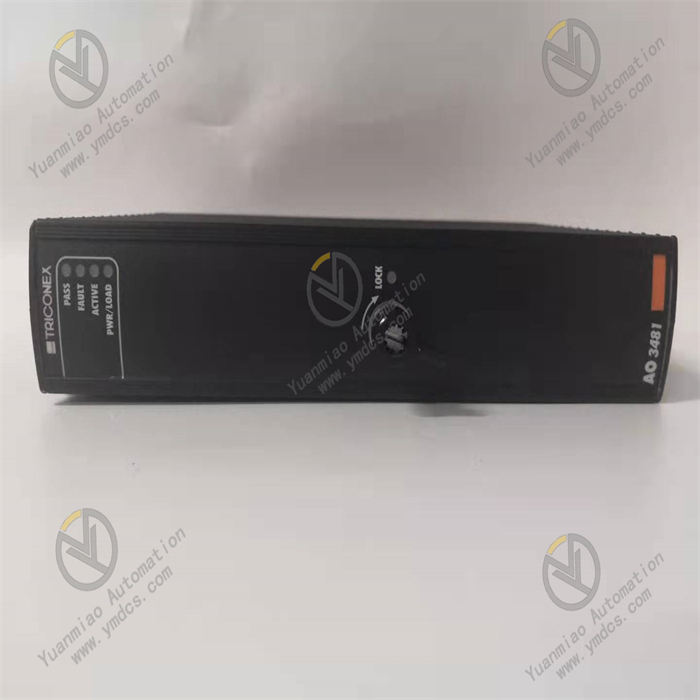
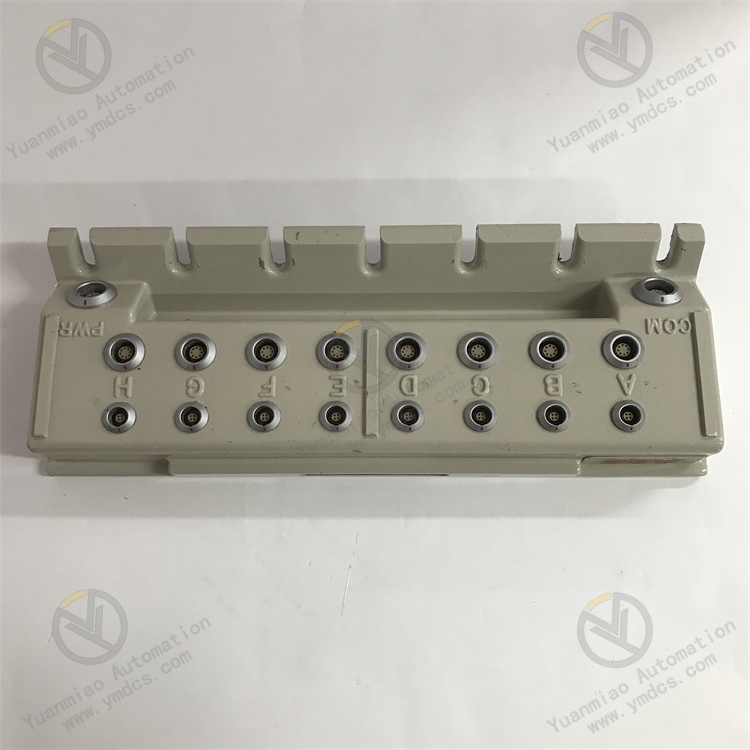
Description
1. Product Overview
Full Model: 129740-002
Manufacturer: ABB
Product Name: High-Precision Intelligent Analog I/O Module / Industrial Signal Acquisition and Regulation Control Module
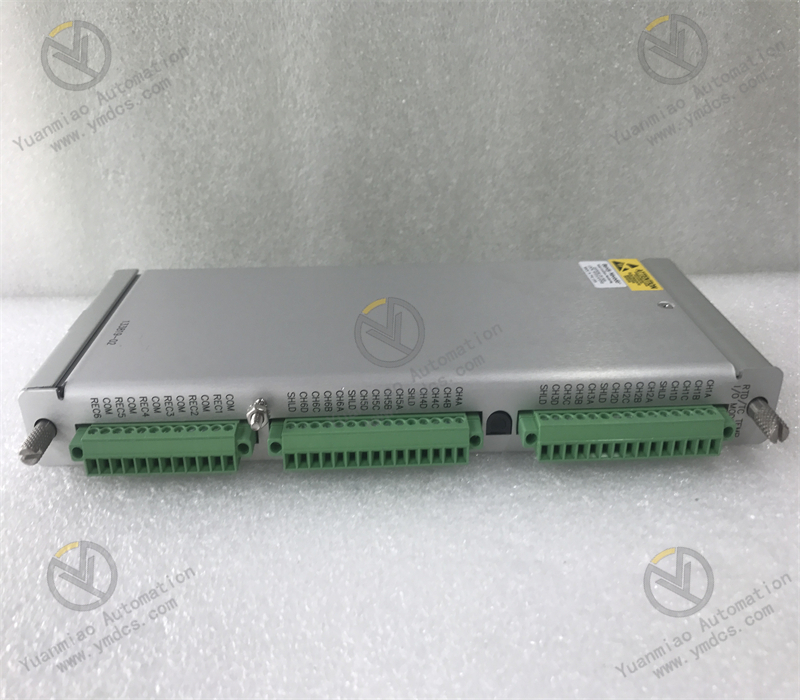
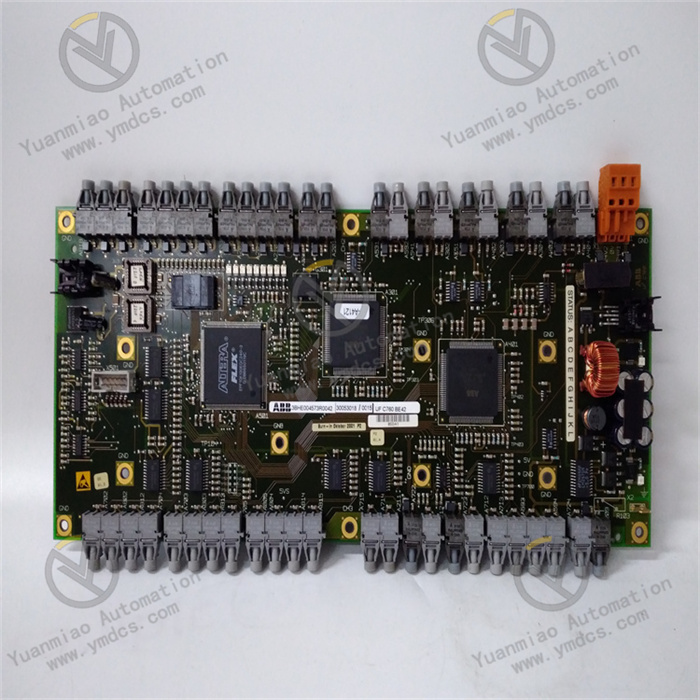
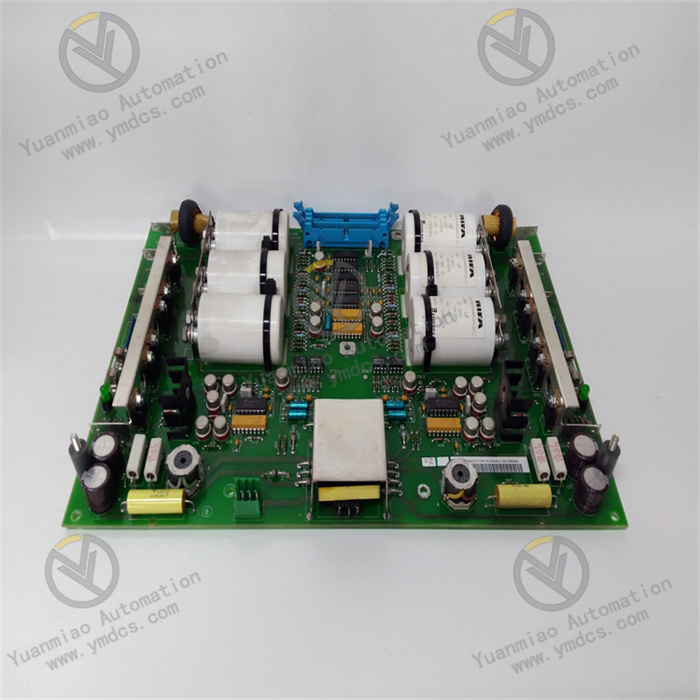
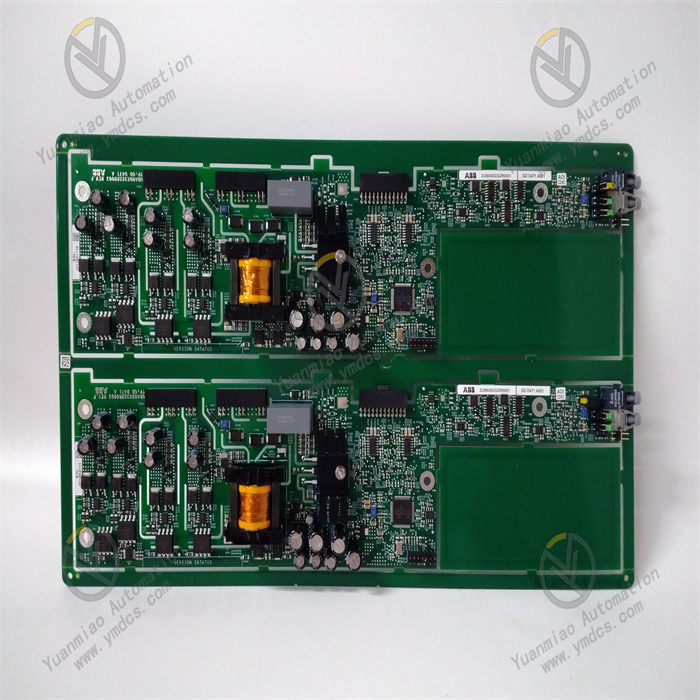
Product Description ABB 129740-002 is an industrial-grade high-precision intelligent composite I/O module developed for automatic control systems in power plants, chemical industry, water treatment, new energy and large-scale manufacturing plants. It is mainly used for precise acquisition and closed-loop regulation control of field analog and digital signals. Integrating signal acquisition, arithmetic processing, communication transmission and logic output, the module adopts a three-way isolation architecture for input, output and power supply with excellent anti-interference capability, adapting to harsh on-site conditions featuring complex electromagnetic interference and drastic temperature fluctuation.
The module supports multi-channel analog voltage and current signal acquisition and programmable signal output. Equipped with high-precision AD/DA conversion units and digital arithmetic mechanism, it delivers high sampling accuracy, favorable linearity and negligible drift during long-term operation. It supports RS232/RS485 multi-serial communication and can seamlessly connect with PLC, DCS and upper configuration systems. It is widely applied in process parameter monitoring such as temperature, pressure, flow and liquid level as well as PID closed-loop regulation. Adopting compact modular design and DIN rail mounting structure, the module facilitates easy installation, removal and maintenance, and supports hot-terminal plugging, which greatly reduces on-site downtime maintenance cost. It serves as a general core hardware for closed-loop control and process monitoring systems in industrial automation.
2. Core Functions
High-precision analog signal acquisition. Accepts standard voltage and current input signals to accurately collect continuous process parameters including on-site temperature, pressure, flow, liquid level and valve position, meeting high-precision monitoring requirements of industrial processes.
Programmable analog and digital output. Supports analog voltage/current output and relay contact digital output. It can directly drive actuators, regulating valves, variable frequency equipment and on-site interlock circuits to realize closed-loop process regulation and equipment logic control.
Three-way isolation safety protection architecture. Complete electrical isolation between input signals, output signals and power supply effectively suppresses on-site crosstalk, voltage surge and ground interference, prevents signal distortion and module breakdown, and ensures stable system operation.
High-speed multi-serial communication interaction. Compatible with industrial serial protocols RS232 and RS485, supporting adaptive half-duplex/full-duplex communication mode with widely adjustable baud rates. It can quickly connect with various industrial control systems and local terminals to realize remote parameter configuration, data upload and online monitoring.
Digital intelligent arithmetic processing. Embedded high-precision linear calibration, temperature drift compensation and digital filtering algorithms automatically filter on-site clutter interference and correct signal deviation to maintain accurate sampling and stable linear output during long-term operation.
Full-condition self-diagnosis and fault protection. Continuously monitors signal breakage, short circuit, over-range, abnormal power supply and communication faults. It locks corresponding channels and uploads alarms upon abnormalities to avoid accidental equipment action and disordered system regulation.
- User-friendly on-site maintenance design. Supports hot-terminal plugging, online parameter modification and program configuration. Commissioning, calibration and function optimization can be completed without shutdown, adapting to long-term continuous operation of industrial equipment.
3. Technical Features
High-reliability three-way isolation architecture: Complete electrical isolation among input, output and power supply withstands complex on-site interference and eliminates signal abnormality and hardware damage caused by common-mode interference, surge impact and loop crosstalk. Its protection performance satisfies demanding industrial operating conditions.
Ultra-high precision signal processing capability: Equipped with industrial high-precision AD/DA conversion chip, the overall sampling accuracy reaches ±0.1%FS. Combined with multi-stage digital filtering and automatic temperature drift compensation, stable sampling and linear output can be maintained under high and low temperature environments to satisfy precise process control requirements.
Composite multi-signal compatibility: Simultaneously supports analog acquisition & output, digital logic control and serial communication transmission. A single module covers both monitoring and control functions, simplifying cabinet layout and reducing wiring complexity and potential fault points.
Flexible programmable expandability: Supports custom range configuration, output mode switching and logic parameter programming to meet control demands of different process equipment. It can be flexibly deployed for new & old system renovation, process upgrading and equipment capacity expansion projects.
Low power consumption and stable operation: Compact low-power hardware design with no-load power ≤5W and full-load power ≤8W. Low heat generation ensures stable 24/7 continuous long-term operation with low failure rate and long service life.
- Lightweight and convenient installation & maintenance: Standard 35 mm DIN rail mounting structure with compact size for easy mounting and removal. Hot-terminal plugging is supported, so replacement and commissioning do not require modification of the whole circuit, significantly improving on-site maintenance efficiency.
4. Specification Parameters
| Item | Parameter |
|---|---|
| Model | 129740-002 |
| Manufacturer | ABB (ABB Group, Switzerland) |
| Product Type | Intelligent Composite Analog I/O Control Module |
| Input Signal Type | Standard DC voltage and DC current analog signals |
| Output Signal Type | Analog voltage/current output, relay contact digital output |
| Sampling Accuracy | ±0.1% FS (Full Scale) |
| Response Speed | DI response ≤1 ms, DO action ≤10 ms |
| Maximum Single Channel Output Load | 2 A |
| Power Supply | 24 V DC ±10% |
| Power Consumption | No-load ≤5 W, Full-load ≤8 W |
| Communication Protocols | RS232, RS485 (Half-duplex / Full-duplex adaptive) |
| Baud Rate Range | 9600 bps ~ 115200 bps, configurable |
| Isolation Mode | Complete three-way electrical isolation for input, output and power supply |
| Operating Temperature | -20℃ ~ +60℃ |
| Storage Temperature | -40℃ ~ +80℃ |
| Ambient Humidity | 5% ~ 95%RH (Non-Condensing) |
| Protection Class | IP20 |
| Mounting Method | Standard 35 mm DIN rail mounting (vertical & horizontal compatible) |
| Overall Dimension | 170 mm × 105 mm × 32 mm |
| Weight | Approx. 120 g |
| Core Characteristics | Three-way isolation protection, high-precision sampling, programmable configuration, multi-protocol communication, automatic temperature drift compensation, strong anti-interference, support of hot-terminal plugging |
| Typical Applications | Power stations, chemical industry, water treatment, new energy equipment, factory automation, closed-loop control of process parameters, equipment interlock monitoring |
5. Working Principle
After power-on, the module automatically completes hardware self-test, power supply detection, communication initialization and channel parameter loading. It comprehensively verifies power circuits, signal channels and serial communication status, and enters normal acquisition and control operation mode after passing self-inspection.
During operation, the module collects voltage and current process signals output by field sensors in real time via analog input channels. After hardware isolation, multi-stage digital filtering, noise shaping and temperature drift compensation, high-precision engineering value conversion is performed. Standardized data is uploaded to PLC, DCS or upper configuration system through RS232/RS485 serial port to realize real-time monitoring, trend recording and over-limit alarming of process parameters.
Meanwhile, the module receives control commands issued by upper systems. Relying on built-in DA conversion and logic operation unit, it outputs precise analog regulation signals or digital interlock signals to drive on-site actuators, regulating valves and frequency conversion equipment to complete closed-loop process regulation and equipment start-stop interlock control. The three-way isolation architecture effectively isolates on-site interference throughout the process to guarantee accurate and stable signal transmission and control output. The module continuously performs self-diagnosis on all channel conditions. Once faults such as wire breakage, short circuit, over-range and communication abnormality are detected, fault channels will be locked immediately and fault information uploaded, enabling normal channels to keep running and preventing accidental system actions so as to ensure stable and reliable operation of the whole automatic control system.
6. Common Faults and Solutions
1. Analog acquisition value drift, fluctuation and large accuracy deviation
Causes: Poor shielding of field signals and severe electromagnetic interference; loose or oxidized wiring terminals leading to bad contact; incorrect range calibration parameters; failed temperature drift compensation and channel aging after long-term operation.
Solutions: Optimize cable shielding and cabinet grounding and keep away from high-power interference equipment; fasten terminals and remove oxide layer; recalibrate channel zero point and full-scale parameters; replace the module if single channel maintains persistent inaccuracy beyond repair.
2. No data on input channel, signal not refreshed, constant reading
Causes: Faulty sensor with no output, broken or disconnected signal cable; short circuit or open circuit in input loop; damaged input channel circuit inside module.
Solutions: Troubleshoot and replace defective sensors, repair damaged signal lines; check circuit continuity and eliminate short/open circuit faults; replace the module directly if hardware channel suffers permanent damage beyond repair.
3. No output response, failed regulation and abnormal interlock action
Causes: Incorrect wiring of output loop, overloaded load; faulty on-site actuator; disordered output parameters and failed calibration of module; aging and damage of output circuit.
Solutions: Verify output wiring and troubleshoot load and actuator faults; recalibrate output linear parameters and control logic; replace original module when hardware aging results in unrecoverable regulation failure.
4. Serial communication interruption, no data upload, device offline
Causes: Incorrect or loose RS232/RS485 wiring; mismatched communication parameters including baud rate, data bit and parity bit; faulty serial circuit; device address conflict.
Solutions: Recheck and fasten communication wiring; unify communication parameters and device address between module and upper system; restart module to initialize communication; replace module if serial communication hardware fault persists.
5. Abnormal power-on status, flashing indicator light, failed normal initialization
Causes: Unstable power supply voltage with undervoltage/overvoltage fluctuation; dust accumulation and moisture reducing circuit insulation; abnormal internal arithmetic and conversion chip; lost or damaged parameter program.
Solutions: Stabilize 24V power supply voltage and troubleshoot power circuit faults; clean dust on module and dry damp circuits; restore factory settings and reconfigure parameters; replace module directly if hardware damage leads to self-test failure.
6. Mismatched parameters and abnormal control logic after module replacement
Causes: Corresponding range, communication and logic parameters not configured on new module; inconsistent parameter versions between old and new modules; system fails to re-identify the equipment.
Solutions: Reconfigure range, communication and control parameters according to on-site process requirements; complete channel calibration and communication connection test; restart module after parameter configuration for normal commissioning.