Description
1. Product Overview
Full Model: REF630 VBFNBAADAAAZCNBBXD
Manufacturer: ABB
Product Series: RELION® 630 Series
Product Name: Feeder Protection and Control Device, Integrated Line Protection Relay
Product Positioning
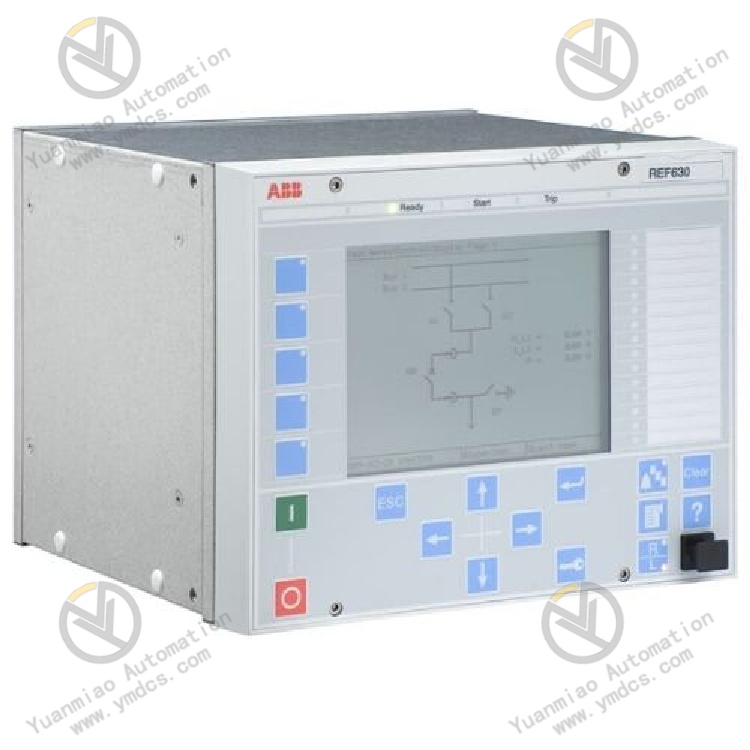
ABB REF630 is a core feeder protection and control equipment within the RELION 630 series. It is an integrated intelligent relay protection device integrating protection, measurement, control and communication functions, developed specifically for industrial distribution networks and substation feeder systems. Model VBFNBAADAAAZCNBBXD is a standard customized configuration version. It integrates a complete set of basic feeder protection, high-precision electrical measurement, local/remote control, fault recording, event logging and equipment self-test functions. It serves as the core protection and control unit for overhead lines and cable feeders in medium and low voltage distribution systems. Adopting modular functions with flexible configuration and high reliability, the device is compatible with various distribution network architectures including radial networks, ring networks and meshed networks. It is widely deployed in power grids, industrial and mining enterprises, municipal projects, new energy power stations and other power supply and distribution scenarios, providing comprehensive safety protection and intelligent operation management for feeder circuits, switchgears and distribution loops.
Core Functions
This device undertakes four core responsibilities for distribution feeder systems: fault protection, operation monitoring, switch control and data transmission. It continuously monitors full-dimensional electrical parameters of feeders such as three-phase current, three-phase voltage, frequency, power and electric energy. It accurately identifies various faults including line short circuit, overcurrent, earth fault, overload and abnormal voltage, instantly activates tripping and alarm logic, and quickly isolates faulty circuits. This effectively prevents safety accidents such as line burnout, equipment breakdown, cascaded tripping of power grids and large-area power outages. It also supports local/remote control of circuit breaker closing and opening, switch status monitoring and circuit condition supervision. The whole-process recording of equipment operation events, fault waveforms and alarm information facilitates fault tracing and condition analysis. Equipped with multi-protocol communication capability, it can seamlessly connect to substation integrated automation systems, SCADA systems and DCS systems to realize unattended intelligent monitoring, remote operation and centralized management of distribution circuits, ensuring safe, stable and efficient operation of distribution networks.
Applicable Systems
Suitable for 10kV / 35kV medium and low voltage distribution systems, industrial substations, auxiliary power distribution systems and new energy grid-connected distribution systems. Natively compatible with mainstream industrial communication protocols including IEC 61850, Modbus, DNP3, SPA and LON. It can seamlessly interface with ABB integrated automation platforms, third-party power monitoring systems, SCADA systems, background operation monitoring platforms and fault recording analysis systems. It supports compatible renovation of new and legacy distribution systems, in-situ replacement of outdated protection devices and expansion & upgrading of distribution systems without extensive modification of primary wiring and secondary control loops. It adapts to full-scenario engineering applications including matching for newly-built substations, technical transformation of legacy distribution systems, replacement of faulty spare parts and intelligent distribution upgrading.
Application Scenarios
Widely used for protection and measurement & control of medium-voltage feeder circuits in grid substations, thermal power plants, hydropower plants, photovoltaic and wind power stations, metallurgical & chemical plants, industrial and mining enterprises, municipal rail transit and commercial complexes. It is applicable to routine operation monitoring, fault protection, switch control and data uploading of overhead lines, power cable feeders, section busbars, ring main units and outgoing circuits of switchgears. It can operate stably under harsh working conditions featuring grid load fluctuation, frequent switching, severe meteorological disturbance and complex electromagnetic environment, and meets the operation standards of high reliability, high precision and high security for relay protection in power systems.
2. Technical Features
Complete Feeder Protection Functions with Comprehensive Protection System
Integrated full-range dedicated feeder protection functions: three-phase non-directional overcurrent protection, directional overcurrent protection, earth fault protection, zero-sequence protection, overvoltage/undervoltage protection, overload protection, abnormal frequency protection, circuit breaker failure protection and trip circuit supervision. With accurate protection settings, rigorous action logic and ultra-fast response speed, it can effectively distinguish transient faults from permanent faults, and avoid protection maloperation, refusal-to-trip and cascaded operation. It fully safeguards the safe operation of distribution feeders, switchgears and primary equipment under various complex distribution fault conditions.
High-Precision Electrical Measurement with Real-Time and Reliable Data
Equipped with high-precision industrial sampling chips, it collects real-time three-phase voltage, three-phase current, active/reactive/apparent power, power factor, grid frequency, accumulated electric energy and other full-dimensional electrical parameters. Measurement accuracy complies with power industry standards. Boasting high sampling stability without drift or deviation, it truly reflects real-time operating conditions of feeders, and provides accurate data support for system scheduling, load analysis, energy consumption statistics and fault diagnosis.
Intelligent Multi-Protocol Communication with Flexible Networking and Expandability
Standard with IEC 61850 dedicated power communication protocol, and compatible with mainstream communication protocols such as Modbus, DNP3, SPA and LON. It supports multi-mode communication transmission via Ethernet, serial port and optical fiber. It can be rapidly connected to intelligent substation integrated automation systems, remote monitoring platforms and dispatching systems to realize remote parameter setting, remote circuit breaker control, real-time uploading of operation data, active reporting of fault information and online condition monitoring. It satisfies the demands of unattended, centralized and digital operation and maintenance for smart grids.
Fault Recording and Event Tracing for Efficient Operation & Maintenance
Built-in high-precision fault recording module and large-capacity event storage unit. It can completely record waveform data before and after fault occurrence, parameters at fault moment, switch action events, alarm records and operation logs. It supports fault time sequence analysis, fault type judgment and fault location tracing. Maintenance personnel can quickly identify fault causes and troubleshoot hidden circuit risks, greatly shortening fault handling time and reducing outage losses of distribution systems.
Industrial-Grade Anti-Interference Design for Strong Operation Stability
Adopting power-specialized industrial hardware architecture, it features electrical isolation, electromagnetic shielding, surge protection, electrostatic protection and electrical fast transient suppression. It effectively withstands harsh conditions in substations including strong electromagnetic interference, voltage fluctuation, lightning surge, sharp temperature & humidity variation and industrial clutter interference. The device maintains stable long-term operation without parameter drift, logic disorder or intermittent communication disconnection, adapting to all-weather operation under complex electromagnetic environments of substations.
Modular Configurable Design with Wide Adaptability
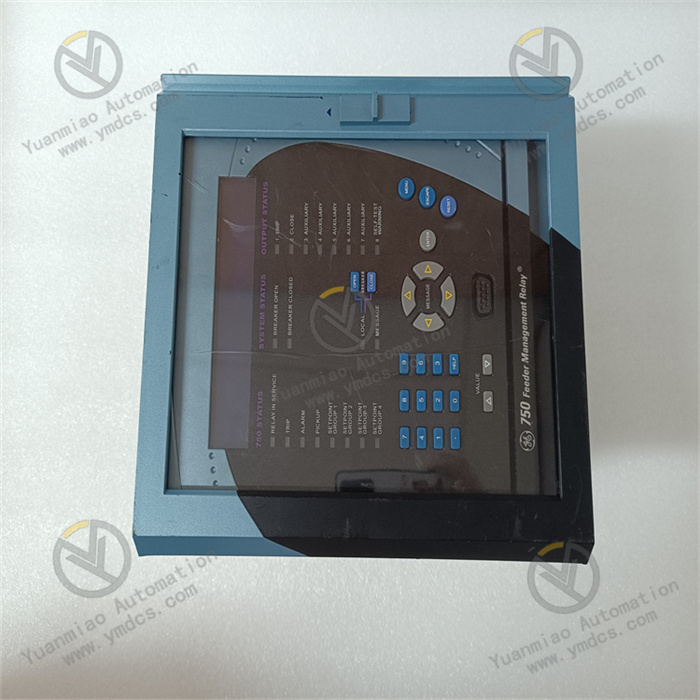
Standard modular functional design with standardized hardware interfaces and flexibly configurable software functions. It supports customized setting parameters according to different feeder conditions, distribution architectures and protection requirements. Equipped with a detachable high-definition human-machine interface panel, it enables local key operation, parameter viewing, setting modification and status query for convenient local maintenance. The device features strong universality and interchangeability, supporting in-situ replacement of legacy protection devices of the same specification for various distribution system renovation and upgrading projects.
Full-Range Self-Inspection Protection for High Equipment Safety
Comprehensive self-diagnosis functions including device hardware self-test, sampling circuit self-test, trip circuit supervision, fuse failure monitoring, current circuit abnormality monitoring and communication link self-test. It monitors the operating status of the device itself and secondary circuit conditions in real time, identifies hidden risks such as hardware abnormality, circuit failure and communication loss in advance, and actively uploads alarms. It prevents protection vacancy caused by device failure and guarantees long-term safe operation of distribution systems.
3. Specification Parameters
| Item | Parameter |
|---|---|
| Equipment Model | REF630 VBFNBAADAAAZCNBBXD |
| Product Series | ABB RELION® 630 Series |
| Equipment Type | Integrated Medium-Voltage Feeder Protection & Control Device, Intelligent Line Protection Relay |
| Applicable Voltage Level | 10kV, 35kV Medium-Voltage Distribution Systems |
| Application Scope | Protection, Measurement & Control for substation feeders, overhead lines, cable circuits, ring main units and switchgear outgoing feeders |
| Core Protection Functions | Overcurrent protection, earth fault protection, zero-sequence protection, overvoltage/undervoltage protection, overload protection, abnormal frequency protection, circuit breaker failure protection, trip circuit supervision |
| Measurable Parameters | Three-phase voltage, three-phase current, active/reactive/apparent power, power factor, frequency, accumulated electric energy |
| Communication Protocols | Multi-protocol compatibility: IEC 61850, Modbus, DNP3, SPA, LON |
| Core Functions | Fault protection, high-precision measurement, switch control, fault recording, event logging, full-range self-test, remote communication, parameter setting |
| Control Functions | Local/remote circuit breaker closing & opening, switch status monitoring, circuit condition supervision, interlock control |
| Fault Recording Functions | Fault waveform recording, fault time sequence logging, event log storage, fault data tracing |
| Self-Test Functions | Hardware self-test, sampling circuit self-test, trip circuit supervision, communication self-test, fuse failure monitoring |
| Operating Power Supply | Universal power supply: DC 220V/110V, AC 220V |
| Operating Temperature | -25℃~+70℃ |
| Storage Temperature | -40℃~+85℃ |
| Ambient Humidity | 5%~95%RH, non-condensing, suitable for substation cabinet environment |
| Electrical Performance | Electromagnetic shielding, surge protection, electrical isolation, high immunity to strong electromagnetic interference, electrical fast transient resistance |
| Structural Features | Standard cabinet flush mounting, modular structure, detachable HMI panel, easy and firm installation |
| O&M Features | Local parameter setting, remote commissioning, automatic fault reporting, log storage, maintenance without disassembly, in-situ replacement |
| Equipment Characteristics | Complete protection functions, high measurement precision, fast response, flexible communication networking, industrial anti-interference, powerful self-diagnosis capability, stable operation, wide adaptability |
4. Working Principle
4.1 Power-On Initialization and Full-Range Self-Test
After power supply is connected, the device automatically completes hardware power-on initialization, core program loading, system parameter verification, communication protocol initialization and full hardware self-test. The system sequentially inspects the status of sampling circuits, digital input/output circuits, trip control circuits, communication ports, storage modules and power supply modules to eliminate hidden troubles such as hardware faults, circuit disconnection, missing parameters and communication abnormality. Upon successful self-test, the device automatically loads preset protection settings, control logic and communication parameters, enters normal operation monitoring state, and stands by to execute protection and control commands.
4.2 Real-Time Acquisition and Processing of Full-Dimensional Electrical Parameters
During operation, high-precision voltage and current sampling circuits continuously collect real-time analog signals of feeder three-phase voltage and three-phase current. After filtering & noise reduction, error correction, analog-to-digital conversion and data verification, on-site electromagnetic clutter and invalid data are eliminated. Derived electrical parameters including power, frequency, electric energy and power factor are accurately calculated. All operating data are refreshed in real time and stored continuously, providing accurate, stable and reliable data support for protection logic judgment, condition monitoring, data uploading and fault analysis.
4.3 Intelligent Fault Identification and Protection Action Execution
The device embeds standardized feeder protection logic algorithms. It compares and analyzes collected electrical parameters with preset protection settings in real time. When fault conditions such as feeder overcurrent, short circuit, earth fault, overvoltage, undervoltage, overload and abnormal frequency are detected, the device accurately identifies fault attributes according to fault type, magnitude and time delay logic. It operates instantly within preset protection time limits, outputs trip control commands to drive circuit breaker opening and quickly isolate the faulty feeder circuit. Meanwhile, it locks fault status and triggers local alarms to prevent grid accidents caused by fault escalation. Under normal conditions without faults, continuous real-time monitoring is maintained to ensure normal power supply of the circuit.
4.4 Local/Remote Control and Circuit Status Management
The device supports dual control modes: local panel operation and remote background control. It can receive local operation commands and closing/opening commands dispatched from background systems. Under compliant interlock logic, it accurately executes circuit breaker closing and opening operations. It continuously monitors circuit breaker on/off status, secondary circuit conditions and digital signal status, and synchronously updates equipment operating status. It realizes automatic and intelligent management of switching equipment on feeder circuits, matching the unattended operation mode of substations.
4.5 Fault Recording, Event Logging and Data Communication Upload
The device records equipment operation events, operation records, alarm information and operating parameters throughout the running cycle. Once a fault occurs, high-precision recording function is automatically activated to fully capture electrical waveforms before and after faults, parameters at fault moment and action sequences, accurately restoring the whole fault process. Through standard communication links, real-time operation data, equipment status, fault codes, recording files and event logs are actively uploaded to the background monitoring system. It supports remote monitoring, fault tracing, data analysis and system scheduling, realizing full-life-cycle intelligent operation and maintenance of distribution circuits.
4.6 Equipment Self-Diagnosis and Abnormality Protection
Self-diagnosis function runs continuously during operation to monitor the working status of internal hardware modules, sampling circuits, trip circuits, communication links and power supply conditions. Once abnormalities such as device anomaly, circuit disconnection, communication interruption, hardware failure or fuse abnormality are detected, the device immediately locks abnormal status, triggers alarm prompts and uploads fault information. Meanwhile, abnormal protection logic is blocked to avoid device maloperation or protection failure, and guarantee the overall operation safety of distribution systems.
5. Common Problems and Solutions
5.1 Phenomenon: No display, fails to power on, whole device inoperative
Possible Causes
① Missing operating power supply, abnormal supply voltage or reversed positive/negative polarity;
② Blown fuse in power circuit, loose wiring or poor contact;
③ Damaged internal power module, failed power-on initialization;
④ Reduced insulation of circuit boards and circuit faults caused by long-term humidity and dust accumulation;
⑤ Mainboard hardware failure or program crash.
Solutions
Cut off power supply and fully discharge the device. Inspect supply voltage level and polarity, troubleshoot upstream power circuit faults. Check power terminals and fuse status, replace blown fuses and tighten loose connections. Carry out dust removal, dehumidification and anti-corrosion treatment to eliminate faults induced by moisture. Power on and reset the device, restore default system parameters. If no display persists with normal power supply, wiring and peripheral circuits, hardware damage is confirmed. Replace with original ABB REF630 (VBFNBAADAAAZCNBBXD) protection device.
5.2 Phenomenon: Protection maloperation, unexpected tripping and frequent alarms
Possible Causes
① Improper protection setting values, excessively low thresholds or disordered time delay parameters;
② Loose wiring of sampling circuits, insufficient shielding and signal interference leading to data distortion;
③ Transient grid fluctuation and lightning surge causing temporary abnormality;
④ Sampling module precision drift and abnormal logic judgment;
⑤ Reduced insulation, leakage or abnormal earthing of secondary circuits.
Solutions
Verify and optimize protection settings and time delay parameters, and re-calibrate settings matching on-site conditions. Inspect secondary voltage and current circuit wiring, fasten terminals, optimize shielding and earthing, keep away from strong interference sources to mitigate electromagnetic disturbance. Investigate transient grid disturbances and configure anti-chattering time delay accordingly. Calibrate sampling precision to correct data offset errors. Test insulation performance of secondary circuits and repair leakage and earthing defects. If maloperation and alarms still occur after parameter and circuit rectification, abnormal device performance is confirmed and equipment replacement is required.
5.3 Phenomenon: Protection refusal-to-trip, no breaker tripping upon faults, protection failure
Possible Causes
① Protection functions disabled, out-of-range settings or locked protection logic;
② Disconnection, loose wiring or faults in trip circuit;
③ Circuit breaker mechanism failure, unable to execute opening operation;
④ Invalid sampling of the device, failing to identify fault conditions;
⑤ Abnormal main control logic or protection program anomaly.
Solutions
Log in to the device background to verify activation status of protection functions, setting parameters and interlock logic. Enable disabled protection functions and correct wrong parameters. Inspect secondary trip circuits section by section to repair broken wires, poor contacts and loose terminals. Test circuit breaker closing and opening performance locally to eliminate mechanical mechanism faults. Verify sampling functions to ensure accurate collection of electrical parameters. Restart the device to restore program logic and update system firmware. If refusal-to-trip remains after confirming normal peripheral circuits and parameters, hardware failure is confirmed and original equipment replacement is needed.
5.4 Phenomenon: Communication interruption, no data on background system, failed remote control
Possible Causes
① Damaged communication network cables/serial cables, loose connectors and poor contact;
② Misconfigured communication protocol, baud rate and device address mismatched with background system;
③ Data packet loss and intermittent communication disconnection induced by strong electromagnetic interference in substations;
④ Damaged communication ports or faulty communication module inside the device;
⑤ Abnormal communication links or equipment faults on the background side.
Solutions
Inspect communication cables and ports, tighten wiring, replace damaged cables and clean port contacts. Uniformly verify communication protocol, device address, baud rate and other parameters between the device and background system, and correct configuration errors. Optimize cabinet shielding and earthing to reduce on-site electromagnetic interference. Troubleshoot communication servers and link conditions on the background side to eliminate peripheral faults. If continuous disconnection and missing data uploading remain after rectification, communication function failure of the device is confirmed and equipment replacement is required.
5.5 Phenomenon: Device overtemperature alarm, sluggish operation and parameter drift
Possible Causes
① Poor cabinet ventilation, blocked filter screens and excessive dust leading to insufficient heat dissipation;
② Abnormal power consumption due to long-term high-load operation and frequent protection actions;
③ Exceeded cabinet ambient temperature beyond the standard operating temperature range;
④ Aging internal components of the device, degraded thermal stability and abnormal heat generation.
Solutions
Regularly shut down equipment to clean dust on cabinet air ducts, filter screens and device surfaces, unblock heat dissipation channels and improve cabinet ventilation. Reasonably control distribution load and avoid long-term circuit overload. Monitor and regulate cabinet ambient temperature to ensure the device operates within specified temperature range. Timely replace aged REF630 protection and control devices suffering long-term high temperature, parameter drift and unstable operation, to guarantee reliable protection logic of distribution systems.