Description
WOODWARD 8402-319
WOODWARD 8402-319 is a multi-mode digital turbine governor with integrated servo drive function, belonging to the mid-to-high-end model of the 8402 series. It is specially designed for speed control, load regulation and safety protection of industrial steam turbines.
It collects turbine speed and various monitoring signals, performs internal closed-loop calculation and PID regulation, and outputs precise control signals to drive actuators, realizing accurate regulation of turbine speed and load. Meanwhile, it is equipped with complete safety protection and remote communication functions, providing reliable guarantee for the safe, stable and efficient operation of key power equipment such as steam turbines and generators. It is widely applied in harsh industrial fields including oil & gas, power generation, chemical and manufacturing industries.
1. Basic Information & Core Functions
Part Number: WOODWARD 8402-319Product Type: Multi-mode digital turbine governor with integrated servo drive functionBrand: WOODWARD
Core Positioning:As a mid-to-high-end digital governor of the 8402 series, it integrates full functions of speed control, load regulation, safety protection and remote communication. Adopting dual-CPU redundant design (partial versions), it features high reliability and high-precision control capability. It is adaptable to regulation demands of steam turbines of different specifications, can be seamlessly integrated into existing industrial control systems, and provides all-round regulation and protection support for the stable operation of power equipment.
Core Functions
- High-precision Speed & Load Control: Based on closed-loop control logic, it collects real-time turbine speed through 2 redundant speed inputs. With PID parameter adjustment and critical speed avoidance judgment, it outputs precise control signals to realize synchronous regulation of speed and load. The steady-state speed regulation accuracy reaches ±0.1% at rated speed, featuring fast response and stable regulation.
- Multi-signal Acquisition & Monitoring: Supports 10-channel external alarm input, 10-channel external trip input (dry contact / wet contact optional), and 4-channel AI analog input (0~5V / 4~20mA). It synchronously collects multi-dimensional operating parameters such as oil pressure and oil temperature to achieve comprehensive monitoring of equipment operating status.
- Integrated Servo Drive: Built-in servo drive module can directly output current signals to drive electro-hydraulic servo valves and control turbine steam intake. No additional servo drive equipment is required, simplifying system architecture and improving regulation efficiency and accuracy.
- Complete Safety Protection: Built-in multiple protection logics such as overspeed, low oil pressure and high oil temperature. It outputs alarm and trip signals via 6 relay channels. Once abnormal parameters are detected, the protection mechanism is triggered immediately to cut off fuel supply or issue alarms, preventing equipment damage and fault escalation.
- Flexible Communication & Remote Control: Supports Modbus RTU (RS-485) communication protocol, enabling seamless integration with DCS/PLC systems. It realizes remote monitoring, parameter tuning and command issuing, facilitating staff to remotely manage equipment status and improve operation and maintenance efficiency.
- Redundant Design & High Reliability: Adopts dual-CPU design (partial versions). Dual CPUs perform synchronous operation calculation; if the calculation deviation exceeds the threshold, it switches to the backup CPU or triggers protection immediately. It also supports wide voltage input adaptation, ensuring long-term stable operation in complex industrial environments.
- Harsh Environment Adaptation: Excellent anti-interference, temperature resistance and vibration resistance. It withstands electromagnetic interference, temperature fluctuation and mechanical vibration at industrial sites, meeting the demands of long-term continuous operation in harsh scenarios such as petrochemical and power industries.
2. Technical Specifications
| Parameter | Specification |
|---|---|
| Part Number | WOODWARD 8402-319 |
| Manufacturer | WOODWARD |
| Product Type | Multi-mode digital turbine governor with integrated servo drive function |
| Supply Voltage | 24V DC (Wide input: 18~32V DC) |
| Speed Input Channel | 2 redundant speed inputs, compatible with magnetic pickups, Hall sensors and encoder signals |
| DI Input Interface | 10-channel external alarm input + 10-channel external trip input (dry / wet contact optional) |
| DO Output Interface | 6-channel relay output (for valve control, alarm indication and trip signal) |
| AI/AO Analog I/O | 4AI (0~5V / 4~20mA) + 2AO (4~20mA) |
| Communication Interface | RS-485 (Modbus RTU Protocol) |
| Speed Regulation Accuracy | ±0.1% (Steady-state accuracy at rated speed) |
| Response Time | ≤100ms (Regulation response upon speed fluctuation) |
| Compatible Sensor Type | Magnetic Pickup Unit (MPU), Photoelectric Encoder, Hall Sensor |
| Core Features | Dual-CPU redundancy (partial versions), integrated servo drive, multi-signal acquisition, full protection, remote communication, wide voltage adaptation |
3. Hardware Design & Structural Details
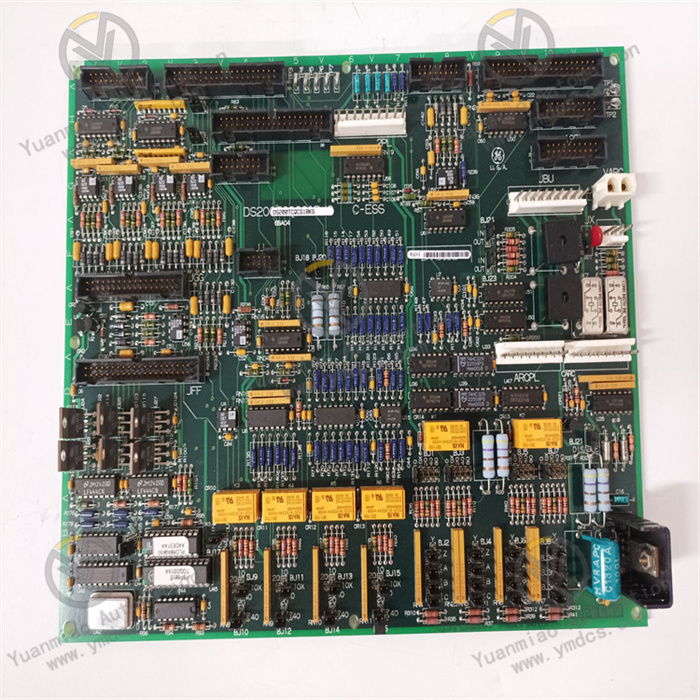
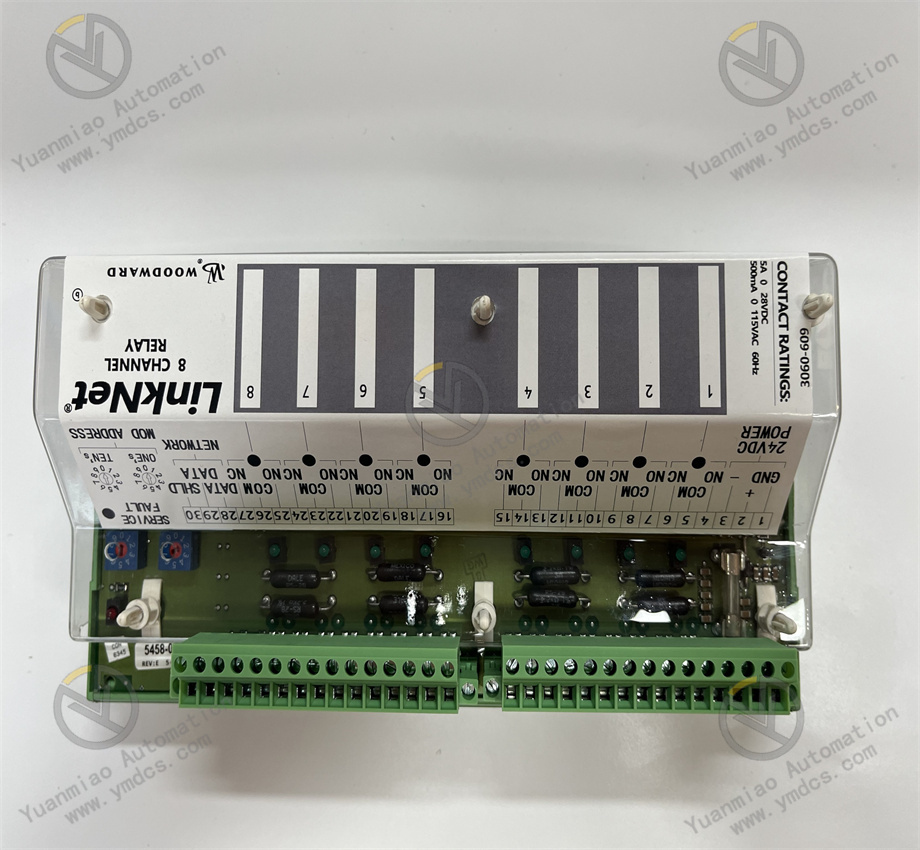
PCB & Material: Adopts industrial high-quality flame-retardant PCB and high-reliability electronic components to ensure accurate signal processing and stable equipment operation. The housing is made of industrial-grade protective material with excellent anti-electromagnetic interference, vibration resistance and temperature resistance. It withstands dust, moisture and temperature fluctuation on industrial sites, suitable for long-term continuous operation in harsh environments.
Structural Layout
- Signal Input Area: Equipped with 2 redundant speed input terminals, 10 alarm input terminals, 10 trip input terminals and 4 AI analog input terminals. Clear marking and convenient wiring allow flexible connection of various sensors and external control signals to adapt to different on-site deployment requirements.
- Core Control Area: Integrated with dual CPU (partial versions), speed controller, current controller and PID regulation module. It receives various input signals, completes speed deviation calculation, critical speed avoidance judgment and control signal output to ensure regulation accuracy and reliability.
- Output & Drive Area: Includes 6 relay output terminals, 2 AO analog output terminals and servo drive output terminals. Relay outputs are used for valve control and alarm indication; AO outputs transmit monitoring data; servo drive outputs directly drive electro-hydraulic servo valves to realize actuator control.
- Communication & Control Area: Equipped with RS-485 communication terminals, operation buttons and status indicator lamps. The communication interface connects with DCS/PLC systems; buttons are used for parameter tuning and mode switching; indicators display equipment operating status, signal acquisition status and alarm status in real time for convenient on-site troubleshooting and maintenance.
Structural Advantages: Compact modular design with small size and easy installation, flexibly deployed in control cabinets to save space. Integrated servo drive eliminates extra drive equipment, simplifying system architecture and reducing integration cost. Dual-CPU redundant design (partial versions) improves equipment reliability and avoids single-point failure affecting operation. Rich interfaces provide strong compatibility for connecting various sensors and control systems.
Anti-interference Design: Built-in EMI filter circuit and signal isolation technology effectively suppress on-site electromagnetic interference and avoid accuracy degradation in signal acquisition and control. Anti-interference terminal design further stabilizes signal transmission, ensuring accurate output of control and monitoring data in complex electromagnetic environments.
4. Working Principle & Signal Flow
- Equipment Installation & Power Supply: Install the WOODWARD 8402-319 governor inside the turbine control cabinet and connect 18~32V DC power supply. Connect speed sensors such as magnetic pickups and Hall sensors to the 2 redundant speed input terminals, and wire all alarm, trip and AI analog signals to complete deployment.
- Signal Acquisition: Speed sensors collect real-time turbine speed signals; AI terminals acquire operating parameters such as oil pressure and oil temperature; DI terminals receive external alarm and trip signals. All signals are transmitted synchronously to the core control area.
- Closed-loop Calculation & Regulation: The dual CPUs (partial versions) in the core control area compare the collected speed with the set speed synchronously, calculate speed deviation, perform parameter tuning via PID module, judge critical speed avoidance demand, and finally output precise control signals.
- Actuator Drive & Protection Judgment: Control signals are sent to the servo drive module, which outputs current signals to drive electro-hydraulic servo valves and adjust turbine steam intake for accurate speed and load control. Meanwhile, the equipment monitors operating parameters in real time. Once overspeed, low oil pressure or other abnormalities are detected, the protection mechanism is triggered immediately to output trip signals via DO relays, cut off fuel supply and activate alarm indication.
- Data Transmission & Remote Control: Via RS-485 interface, the equipment transmits real-time speed, load, operating parameters and alarm status to DCS/PLC systems. Operators can perform parameter tuning and mode switching remotely, realizing remote equipment monitoring and management.
5. Features & Advantages
- High-precision Regulation & Fast Response: Steady-state speed regulation accuracy up to ±0.1% at rated speed and response time ≤100ms. It responds quickly to speed fluctuation and realizes precise PID regulation, keeping the turbine operating stably within rated speed and load range and improving operational efficiency.
- Full-function Integration & Simplified Architecture: Integrates servo drive, multi-signal acquisition, safety protection and remote communication. No extra servo drive or protection modules are needed, simplifying system architecture and reducing integration and maintenance costs.
- Redundant Design & High Reliability: Dual-CPU redundancy (partial versions) and dual redundant speed inputs effectively avoid single-point failure, ensuring stable operation even with sensor or CPU abnormality, and greatly improving equipment reliability and operational safety.
- Rich Interfaces & Strong Compatibility: Various I/O and communication interfaces support flexible connection with sensors, actuators and industrial control systems, adapting to deployment requirements of different turbine specifications and industrial sites.
- Harsh Environment Resistance & High Stability: Excellent anti-interference, temperature resistance and vibration resistance, together with wide voltage input adaptation, enable stable operation under complex working conditions in petrochemical, power and other industries with low long-term failure rate.
- Remote O&M & Higher Efficiency: Supports Modbus RTU for remote monitoring, parameter tuning and troubleshooting, reducing on-site workload, improving operation efficiency and lowering maintenance costs.
6. Application Scenarios
- Oil & Gas Industry: Precisely regulate speed and load of steam turbines, compressors and other power equipment in refineries, petrochemical plants and oil & gas pipelines; monitor operating status to ensure stable operation, reduce downtime and improve operational efficiency.
- Power Industry: Accurately control the speed of key equipment such as steam turbines and generators in power plants to maintain stable power frequency. Complete protection functions prevent equipment damage caused by overspeed and abnormal working conditions, ensuring power production safety.
- Chemical Industry: Regulate speed and load of steam turbines and supporting power equipment in chemical plants to meet production process requirements; monitor oil pressure, oil temperature and other parameters to guarantee production continuity and safety.
- Manufacturing Industry: Precisely control the speed of steam turbine power systems on production lines to provide stable power for processing equipment and improve production efficiency. Remote monitoring facilitates centralized equipment management and maintenance.
- Other Industries: Realize accurate speed and load regulation of steam turbine power equipment in energy management, water treatment and other fields, providing reliable power support for system stable operation and adapting to various harsh industrial operating conditions.