Description
Ⅰ. Product Overview
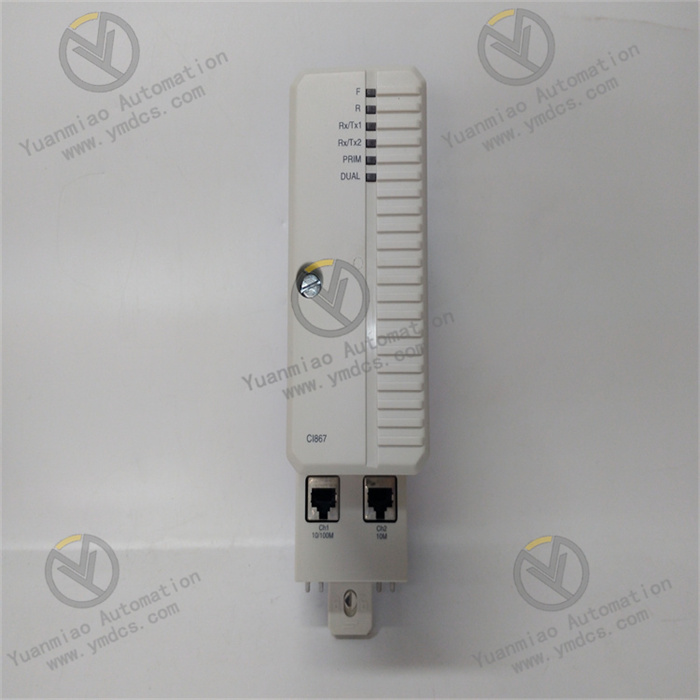
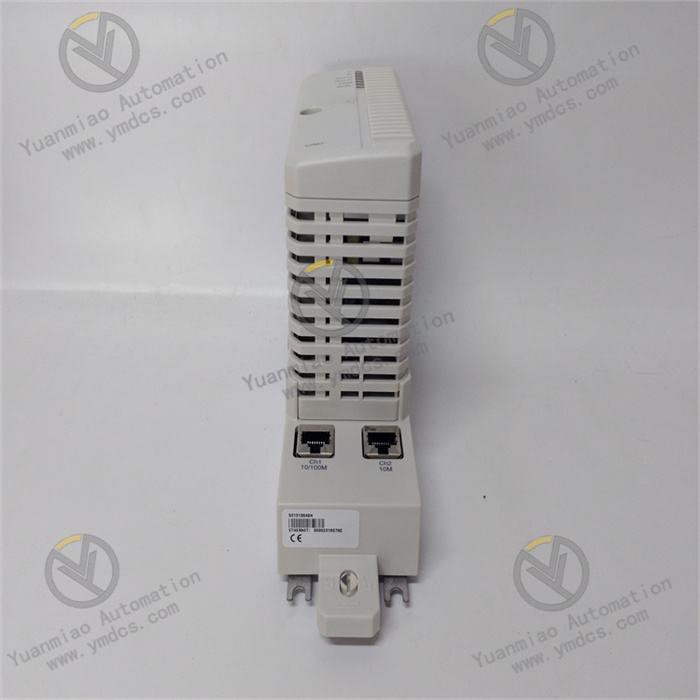
ABB CI871K01 (Part No. 3BSE056767R1) is a high‑performance PROFINET IO communication interface module for the ABB AC800M / 800xA Distributed Control System (DCS). As a core system bus communication unit, it operates in conjunction with the TP867 base unit. Designed for process‑industry automation networking, this module functions as a PROFINET IO slave device. It handles high‑speed data exchange and bus networking between controllers and field‑based PROFINET IO instruments, actuators and remote I/O stations, serving as a critical link connecting the ABB DCS to standardized industrial Ethernet field devices.
The module supports module‑level redundancy, on‑line hot‑swap and deterministic real‑time communication. It delivers stable operation, strong anti‑interference performance, simple configuration and broad compatibility. Widely deployed in petrochemical, thermal‑power, water‑treatment, metallurgical and light‑industry process‑automation applications, it fits various engineering scenarios including PROFINET bus deployment for new‑build DCS projects, upgrade‑and‑replacement of legacy communication modules, system expansion and spare‑part stocking.
Ⅱ. Functional Features
Standard PROFINET IO Real‑time Communication Natively implementing the PROFINET IO industrial‑Ethernet protocol as a compliant slave, the module provides deterministic real‑time data transmission between controllers and field I/O devices. Low communication latency and high synchronization precisely satisfy timing requirements for closed‑loop process‑industry control, interlock logic and real‑time data acquisition. 10/100 Mbps auto‑negotiated Ethernet automatically adapts to field network bandwidth, ensuring stable exchange of large‑volume point data and eliminating communication stalling and data lag.
Redundant Configuration for Maximum System Reliability Module‑level redundancy is supported for dual‑module hot‑standby parallel operation. Upon single‑module failure, bumpless automatic switch‑over occurs without interrupting system communication or process‑control logic. It eliminates risks of system off‑line and process shutdown triggered by single communication‑module faults. This redundancy scheme is ideal for high‑hazard continuous‑production conditions in power and chemical industries and improves fault tolerance and operational stability of DCS bus communication.
On‑line Hot‑swap for Non‑stop Maintenance Hot‑swap under powered conditions allows module replacement, inspection and commissioning while the DCS runs normally and production continues. No system power‑down or process shutdown is required. It avoids production losses caused by outages in continuous‑process plants, reduces maintenance risks and overhaul costs for communication systems, and suits long‑term unattended operation.
Powerful Bus Expansion and Flexible Networking Built on the CEX bus architecture, one controller bus supports up to 12 expansion modules for flexible scaling of field I/O points and communication interfaces, meeting bus‑networking requirements for small‑to‑large‑scale automated production lines. Independent communication architecture enables parallel multi‑module operation free of signal conflict and data interference, supporting centralized management of large‑scale distributed I/O stations.
Comprehensive Self‑diagnostics and Fault Alarming Robust on‑board hardware and bus self‑diagnostics continuously detect hardware faults, bus disconnection, network anomalies, device off‑line status and communication packet loss. Fault codes and exception information are uploaded for remote fault tracing and precise localization. Maintenance personnel can rapidly identify bus‑network hazards to sustain long‑term stable and compliant PROFINET bus performance.
- Industrial‑grade Protection for Stable Wide‑condition Operation Built to industrial standards with IP20 ingress protection rating, the unit offers dust resistance, moisture resistance, vibration resistance and electromagnetic‑interference immunity and has obtained G3 corrosion‑protection certification. Optimized for enclosed cabinet environments, it withstands complex field electromagnetic noise and temperature‑humidity fluctuations. 24‑hour non‑stop continuous operation is achieved with extremely low hardware failure rates and consistent long‑term performance.
Ⅲ. Technical Specifications
Basic Specifications Model: CI871K01 Part Number: 3BSE056767R1 Product Series: ABB AC800M / 800xA DCS System Module Device Type: PROFINET IO Communication Interface Module Operation Mode: PROFINET IO Slave Matching Base Unit: TP867 dedicated mounting base Ingress Protection: IP20 Corrosion Protection: Industrial G3 standard
Communication Parameters Communication Protocol: PROFINET IO Industrial Ethernet Data Rate: 10/100 Mbps auto‑negotiation Interface: RJ45 8‑pin female Ethernet connector (CH1 active channel) Communication Mode: Deterministic real‑time communication complying with industrial real‑time control timing Bus Expansion: Max. 12 expansion modules per CEX bus
Operation & Redundancy Parameters Redundancy: Module‑level hot‑standby with bumpless fault switch‑over Maintenance: On‑line hot‑swap for non‑stop servicing Diagnostics: Hardware self‑test, bus‑fault detection, network‑anomaly alarm, real‑time communication‑status monitoring System Compatibility: Fully compatible with ABB AC800M controllers and the 800xA control‑system platform
Electrical Parameters Power Supply: Backplane‑fed via the CEX bus; no external power supply required. Built‑in voltage‑stabilizing, filtering and surge‑protection circuits resist mains fluctuation and electromagnetic interference to maintain stable module power and prevent communication outages induced by voltage anomalies.
Environmental Parameters Operating Temperature: 0 ℃ ~ +55 ℃ Storage Temperature: ‑40 ℃ ~ +70 ℃ Properties: Dust‑proof, moisture‑proof, vibration‑resistant, EMI‑resistant and corrosion‑resistant. Suitable for 24‑hour continuous operation inside industrial control cabinets and enclosed automation rooms.
- Mechanical Dimensions & Mounting Mounting: Slot‑mount on standard cabinet backplane, assembled together with the TP867 base. Compact, well‑organized form factor; smooth insertion‑extraction and reliable contacts resisting loosening over long‑term service. Optimized for standardized DCS cabinet layout.
Ⅳ. Hardware Configuration & Structural Advantages
Dedicated Industrial Communication Chip Architecture Equipped with ABB‑specific industrial real‑time communication processor deeply optimized for the PROFINET IO protocol. Fast data parsing, ultra‑low latency and high synchronization accuracy satisfy strict timing demands of industrial real‑time closed‑loop control, safety interlocks and high‑speed data acquisition, avoiding latency and packet‑loss issues common with generic communication modules.
Matched Integrated‑base Design Precisely mated with the TP867 base, the integrated assembly sits firmly against the system backplane. Low contact resistance ensures stable transmission free of poor‑contact and signal‑attenuation problems. The base integrates bus and power circuits for high integration and fewer potential fault points, greatly reducing hardware‑failure probability.
Independent Bus‑expansion Architecture The high‑bandwidth CEX expansion bus delivers ample throughput and flexible scaling for automation systems of varying sizes. Multiple modules operate concurrently without mutual interference for efficient, orderly bus data flow supporting complex control scenarios with large I/O counts and multi‑device coordination.
Multi‑level Electrical‑protection Design Built‑in protection against over‑voltage, under‑voltage, surge, electrostatic discharge and electromagnetic interference isolates field‑site noise and potential drift. Core communication circuitry is safeguarded against module damage and bus collapse originating from on‑site electrical abnormalities, delivering excellent anti‑aging and weather‑resistant performance.
- Light‑weight Compact Industrial Construction Small footprint minimizes cabinet space consumption and fits high‑density wiring and networking in standard DCS cabinets. Modular plug‑in design simplifies installation, removal and maintenance for both new‑build and retrofit cabinet‑layout requirements.
Ⅴ. Application Scenarios
- Process‑industry DCS System Networking: PROFINET IO bus construction for AC800M / 800xA DCS in chemical, coal‑chemical, oil‑gas and water‑treatment plants; data exchange with field instruments, actuators and remote I/O stations.
- Power‑generation Automatic‑control Systems: Bus communication for auxiliary‑control and unit‑control systems in thermal‑power plants, cogeneration facilities and substations; real‑time field‑device data acquisition and interlock control.
- Large‑scale Automated‑production‑line Control: Distributed I/O networking for integrated metallurgical, building‑material and light‑industry production lines; multi‑device inter‑working communication, real‑time data transfer and coordinated system control.
- System Redundant‑communication Retrofit: Communication‑redundancy upgrades for high‑hazard‑process systems; deployment of dual‑module hot‑standby communication architectures to improve continuous‑operation reliability.
- Legacy‑system Upgrade & Replacement: Replacement of obsolete ABB DCS communication modules, bus‑network rework, system expansion and point‑count expansion projects.
Ⅵ. Product Advantages
- Perfect OEM Compatibility: Original‑equipment ABB communication module fully compatible with AC800M controllers and the 800xA platform at both hardware and software levels. Protocol conformity enables straightforward networking and error‑free data interaction. It is the standard core module for PROFINET bus implementation within ABB DCS.
- Hot‑standby Redundancy for High Operational Safety: Module‑level hot‑standby with bumpless switch‑over eliminates shutdown risks from single‑module communication faults. Well‑suited to continuous high‑hazard production, it substantially improves intrinsic safety and stability of automation systems.
- High‑speed Real‑time Communication with Superior Control Accuracy: 10/100 Mbps auto‑negotiated industrial Ethernet plus deterministic real‑time communication delivers precise timing, minimal latency and zero packet loss, meeting stringent communication requirements for high‑precision industrial closed‑loop control and interlock logic.
- Hot‑swap Capability Reduces Maintenance Costs: On‑line non‑stop replacement supports continuous‑process operation modes, lowering outage‑related losses and labor‑maintenance expenses. Low failure rates translate into extended service life.
- Strong Expandability for Diverse Retrofit Scenarios: Outstanding bus‑expansion performance and flexible networking adapt to new‑build, expansion and retrofit projects of all sizes. High protection grades and wide environmental suitability deliver industry‑leading overall cost‑effectiveness and practical engineering value.