Description
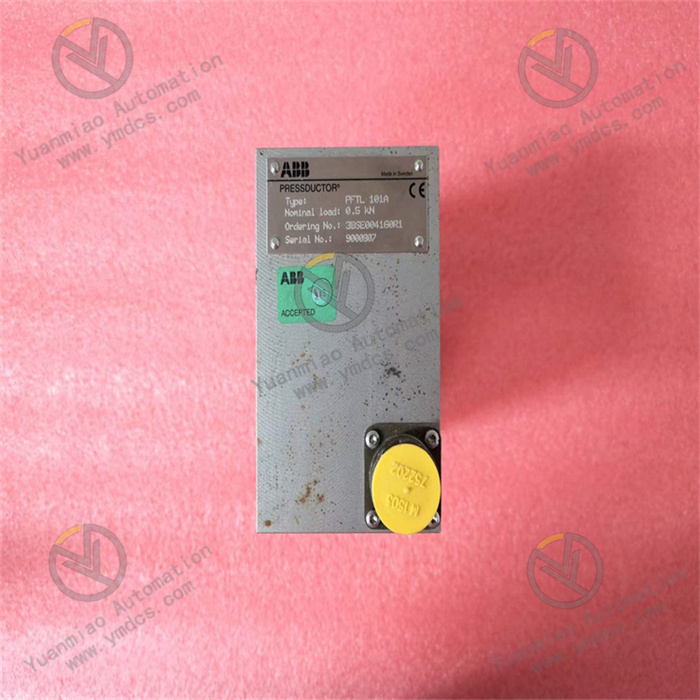
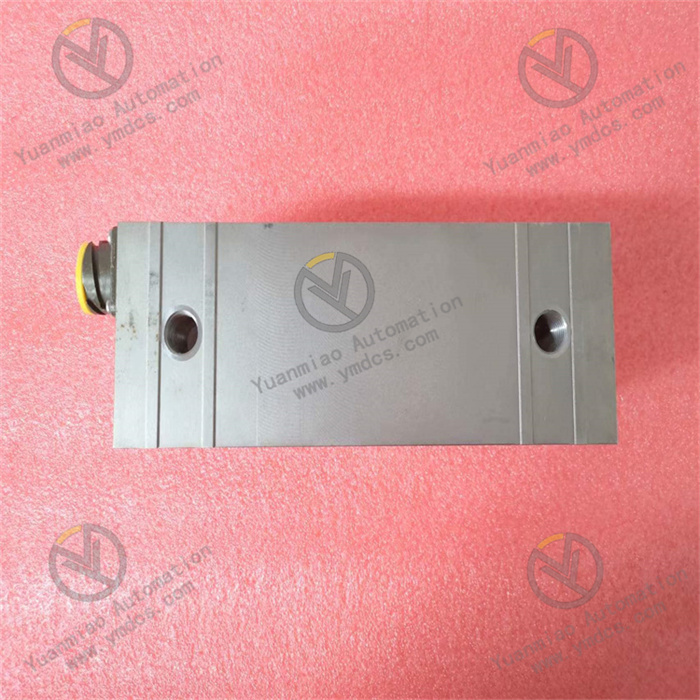
ABB PFTL101A-0.5kN 3BSE004160R1
I. Overview
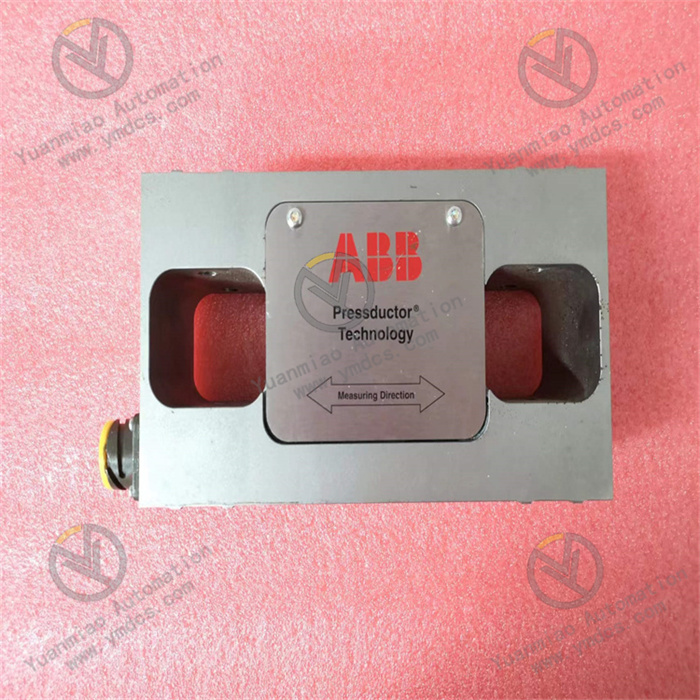
ABB PFTL101A-0.5kN 3BSE004160R1 is a tension sensor, with its core positioning as a tension detection unit for light-load scenarios. It is specially designed for precise tension control in industries such as textile, printing, papermaking and film production. The "0.5kN" in the model indicates a rated measurement range of 0–500N. Based on the strain gauge sensing principle, it can collect tension signals of coils, wires and filaments in real time, convert physical tension into standard electrical signals for output, and provide accurate data support for automatic control systems. It is a key component to ensure uniform material tension and avoid tensile deformation during the production process.
II. Core Features
High-precision Tension Detection: Adopting imported high-precision strain gauges, it achieves a measurement accuracy of ±0.1%FS with a linear error of less than 0.05%FS and high resolution. It can accurately capture tiny tension changes within the range of 0–500N, meeting the precise control requirements of light-load scenarios and preventing material damage or uneven stretching caused by tension fluctuations.
Standard Signal & Flexible Adaptation: Outputs 4–20mA analog signal by default, with zero and full-scale adjustment via built-in potentiometers, compatible with various control systems such as PLC and DCS. It supports bidirectional tension detection, capable of measuring both tension and pressure, featuring strong adaptability.
Industrial-grade Stable Protection: Encapsulated in a stainless steel housing with IP65 protection rating, it has good dustproof, waterproof and corrosion-resistant performance. Built-in overload protection circuit with 150%FS overload capacity can effectively withstand instantaneous impact tension, avoiding sensor damage and extending service life.
Easy Installation & Calibration: Supports multiple installation methods including flange and bracket mounting. With compact structure and small size, it can be flexibly integrated into the limited space of equipment. The calibration process is simple, supporting on-site zero and full-scale calibration without professional complex equipment, reducing operation and maintenance difficulty.
- Strong Anti-interference Capability: Adopts shielded cables and anti-electromagnetic interference design, complying with industrial EMC standards. It can effectively resist electromagnetic radiation interference from on-site equipment such as frequency converters and motors, ensuring stable signal transmission and preventing clutter from affecting measurement accuracy.
III. Technical Parameters
| Parameter Name | Specification |
|---|---|
| Product Model | ABB PFTL101A-0.5kN 3BSE004160R1 |
| Product Type | Industrial strain gauge type tension sensor |
| Rated Measurement Range | 0–0.5kN (0–500N) |
| Measurement Accuracy | ±0.1%FS, linear error ≤0.05%FS |
| Output Signal | 4–20mA DC analog signal, load resistance 0–500Ω |
| Power Supply Parameters | 24V DC±10%, power consumption ≤2W |
| Protection Performance | IP65 protection rating, stainless steel housing, 150%FS overload capacity |
| Installation Method | Flange mounting, bracket mounting, supporting horizontal/vertical installation |
| Dimensions | Φ80mm × 55mm (main body), mounting hole spacing 60mm |
| Product Weight | Net weight approx. 0.8kg |
| Operating Environment | Temperature -20℃~+60℃, relative humidity 5%~95% (non-condensing) |
IV. Working Principle
The ABB PFTL101A-0.5kN 3BSE004160R1 sensor is based on the strain gauge working principle, with its core being a closed-loop detection process of tension force bearing – strain conversion – electrical signal output. It realizes real-time tension monitoring by accurately capturing material tension changes and converting them into recognizable electrical signals. The specific working process is divided into three core stages:
Stage 1: Tension Force TransmissionWhen tension is generated in measured objects such as coils and wires, the tension is transmitted to the internal elastic body through the force-bearing end of the sensor. The elastic body undergoes tiny elastic deformation under tension (deformation range at micron level, invisible to the naked eye), and the deformation degree has a linear correspondence with the applied tension.
Stage 2: Strain Signal ConversionThe high-precision strain gauges attached to the surface of the elastic body expand and contract synchronously with the deformation of the elastic body, resulting in changes in the resistance value of the strain gauges (following Ohm's Law). The sensor's built-in Wheatstone bridge circuit converts resistance changes into weak voltage signals, and the signal amplification circuit amplifies the weak signals to a processable range while filtering out clutter interference.
V. Common Fault Troubleshooting
1. Abnormal Output Signal, Inaccurate Measurement
2. No Output Signal, No Feedback from Control System
3. Sensor Damage Due to Overload, Failure to Work Normally