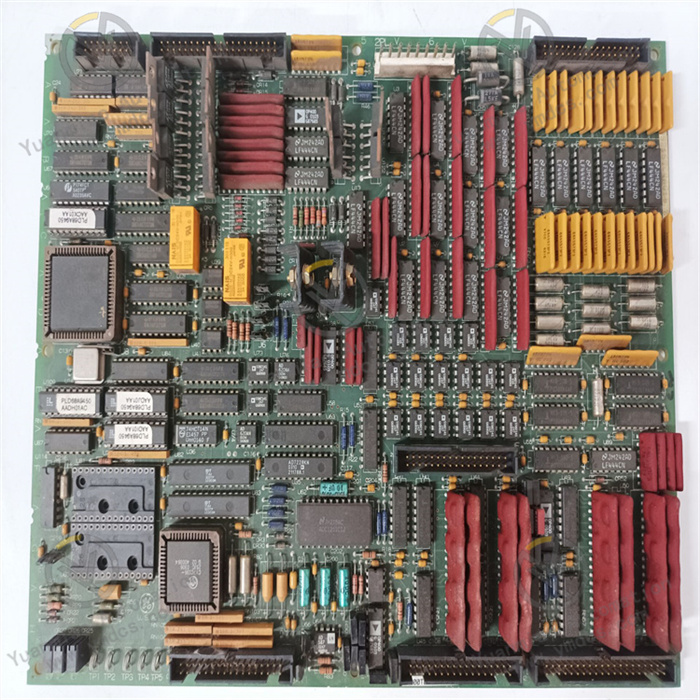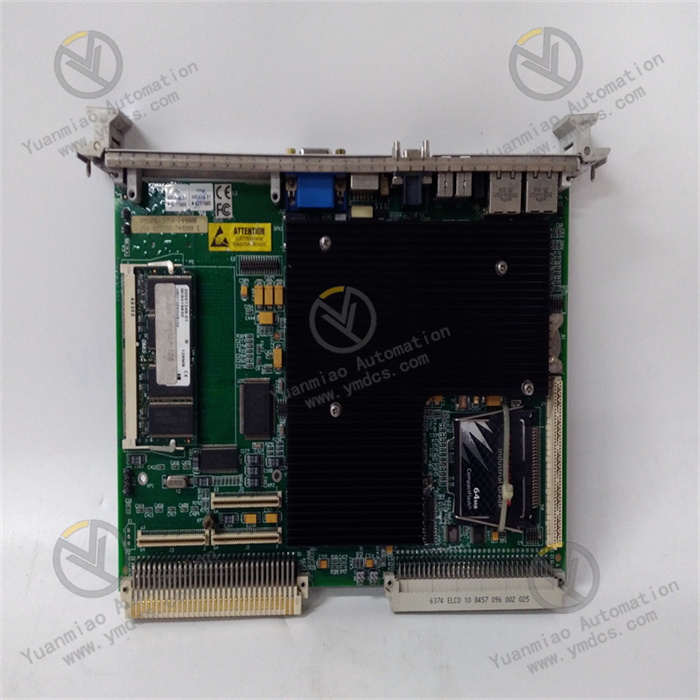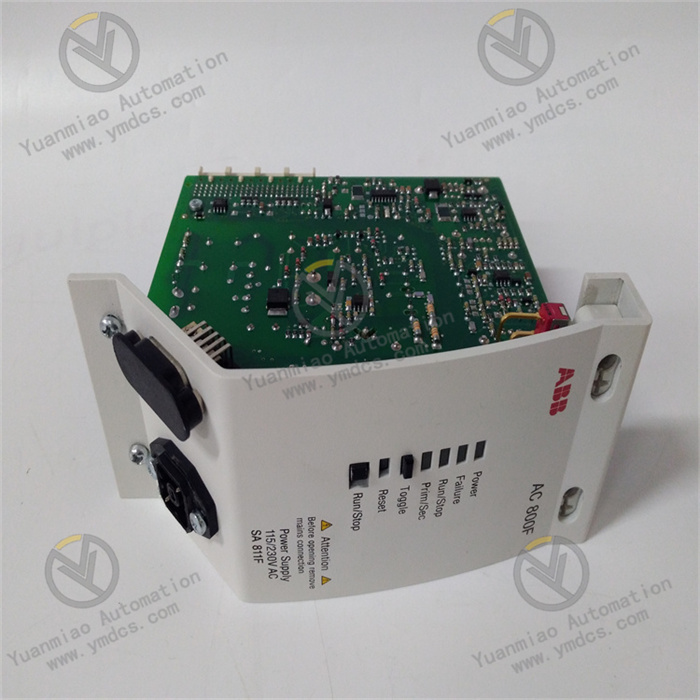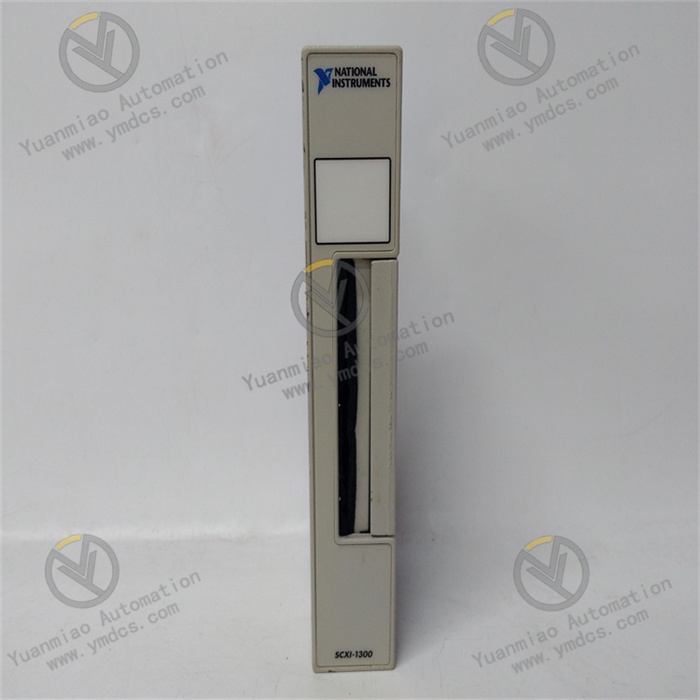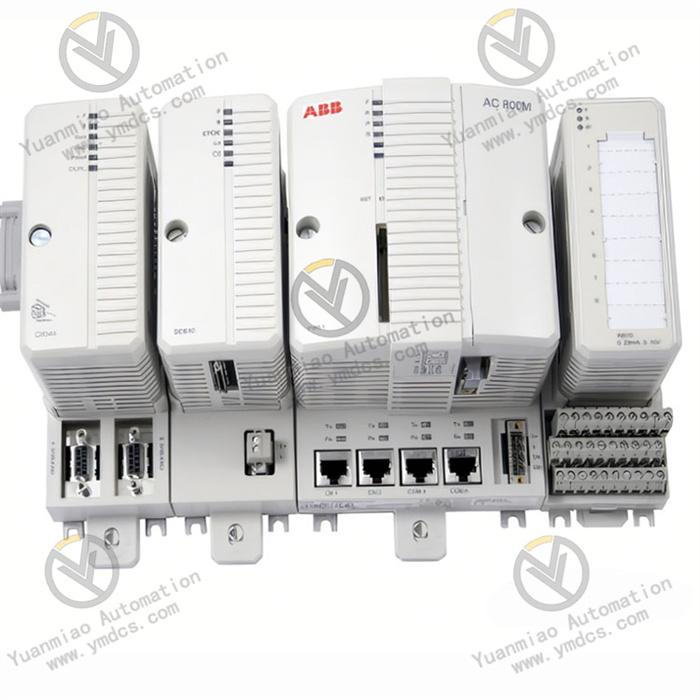
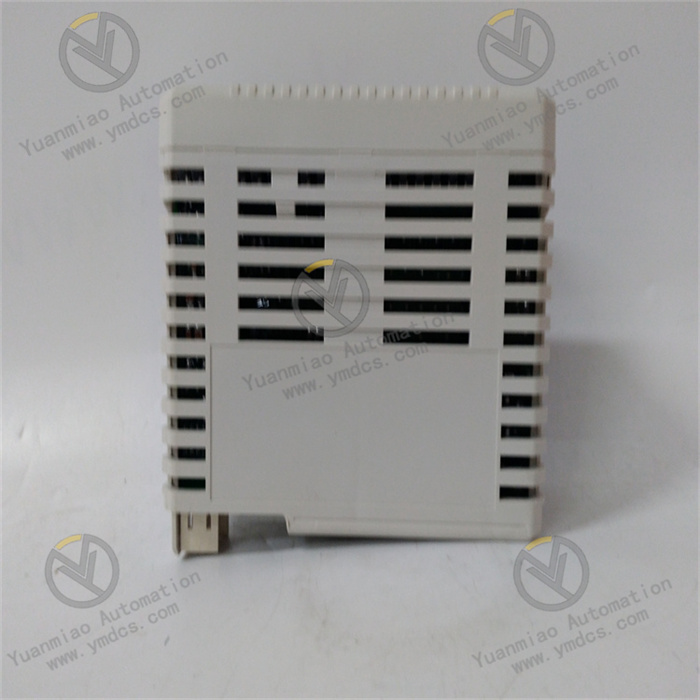
ABB DO890 3BSC690074R1 | S800 Digital Output Module

ABB DO890 3BSC690074R1 | S800 Digital Output Module

Brand: ABB

Product ID: DO890 3BSC690074R1

Condition: New / used

Terms of payment: Paypal、T/T 、Western Union

Category:

Description

ABB DO890 3BSC690074R1

I. Overview


ABB DO890 3BSC690074R1 is an intrinsically safe 4-channel digital output module, positioned as a Precision Drive and Safety Control Terminal for Hazardous Areas. It is a component of the S800 I/O series under the ABB Ability System 800xA Distributed Control System (DCS). Integrated with an intrinsically safe interface, this module can directly connect to process equipment in Zone 0, Zone 1 or Zone II hazardous areas without additional external safety devices. It stably receives digital control commands issued by ABB control systems such as Advant 800xA, and converts the commands into intrinsically safe output signals through its internal high-side switch drive circuit and full-channel isolation design, realizing start-stop control and status switching of intrinsically safe executive devices including Ex-certified solenoid valves, alarm sounders and indicator lights. With its excellent intrinsic safety performance and anti-interference capability, it provides safe and reliable signal output support for industries with flammable and explosive risks such as oil and gas, chemical processing, pharmaceuticals, mining and mineral processing, ensuring the stable operation of industrial process automation in hazardous areas.


Adopting an industrial-grade compact design, the module maintains core intrinsic safety performance while featuring wide temperature range environmental adaptability, enabling long-term continuous and stable operation in harsh industrial environments. Leveraging the mature technical system of the ABB S800 I/O system, the DO890 3BSC690074R1 can be flexibly adapted to dedicated terminal units such as TU890 (for explosion-proof applications) and TU891 (for non-explosion-proof applications). It achieves efficient data interaction with the controller via ModuleBus, and is built-in with full-channel open/short-circuit detection, status monitoring and fault feedback functions. It can quickly respond to equipment faults in hazardous areas and upload status information, reducing operation and maintenance difficulty and safety risks. It is suitable for the construction of new automation systems in hazardous areas, the upgrading of legacy safety control systems, and the intrinsically safe signal output requirements of key process nodes.


II. Product Features


  • Intrinsically Safe Core Design: The module integrates an intrinsically safe interface and has obtained intrinsic safety certifications such as IECEx and ATEX. It can be directly deployed in hazardous areas including Zone 0, Zone 1 and Zone II without additional external intrinsically safe protection devices such as safety barriers. It can directly connect to intrinsically safe executive devices in hazardous areas, eliminating safety risks in flammable and explosive environments from the source.


  • Full-channel Isolation and Stable Drive Performance: It adopts a 4-channel independent design. All channels are galvanically isolated from each other, as well as from the ModuleBus and power supply, effectively avoiding signal interference between channels and ensuring the reliability of signal transmission in noisy industrial environments. Each channel can provide a nominal current of 40mA, capable of stably driving field intrinsically safe devices with a load impedance ≤ 300Ω. The output stage power supply is converted from 24V voltage, and combined with built-in EMC protection components, it can effectively resist on-site voltage fluctuations and electromagnetic interference, ensuring the stability and accuracy of output signals.


  • Flexible System Adaptability and Installation Design: Tailor-made for the ABB 800xA Distributed Control System, it can seamlessly connect with control systems such as Advant 800xA. It supports adaptive installation with Compact MTU terminal units such as TU890 and TU891, enabling two-wire connection with process equipment without additional terminals, meeting the wiring requirements of different application scenarios including explosion-proof and non-explosion-proof. Its compact structure and lightweight design make it suitable for installation scenarios with limited cabinet space in hazardous areas, simplifying on-site deployment processes.


  • Comprehensive Fault Diagnosis and Status Feedback: Built-in with full-channel open-circuit and short-circuit detection functions, it can real-time monitor the working status of each channel. When a fault is detected, it automatically generates a fault signal and uploads it to the controller via ModuleBus. Equipped with independent channel output status and fault status LED indicators, operation and maintenance personnel can intuitively judge the working condition and fault type of a single channel through the indicators, quickly locate fault points, and reduce the operation and maintenance difficulty and working time in hazardous areas.


  • Reliable Environmental Adaptability and Safety Protection Performance: It has passed strict intrinsic safety and electromagnetic compatibility certifications, with strong anti-interference capability and environmental adaptability. It can operate stably in a wide temperature range of -40℃~+70℃, adapting to hazardous area scenarios under different climatic conditions. The working humidity adaptation range is 0%~95% (no condensation), capable of resisting the impact of humid environments on module performance. The overall protection design of the module can effectively cope with harsh conditions such as dust and vibration in hazardous areas, ensuring the safe and stable operation of the core circuit.


  • Convenient Operation and Maintenance and Firmware Upgrade Support: The standardized ModuleBus interface and terminal unit adaptive design simplify the wiring and module replacement process. It supports firmware version updates, which can be completed through dedicated configuration software to obtain the latest functions and fault repair support, improving the long-term operation reliability and compatibility of the module.


III. Technical Parameters


1. Core Basic Parameters

  • Product Model: ABB DO890 3BSC690074R1
  • Product Type: Intrinsically Safe 4-channel Digital Output Module
  • Manufacturer: ABB Group
  • Product Series: ABB Ability System 800xA DCS S800 I/O System Component
  • Core Functions: Receive digital commands from the controller, intrinsically safe signal output, full-channel open/short-circuit detection, fault diagnosis and status feedback, intrinsic safety protection
  • Communication Method: Communicate with the controller via ModuleBus, compatible with the S800 I/O system bus protocol
  • Applicable Systems: ABB Advant 800xA Distributed Control System (DCS)
  • Compatible Terminal Units: TU890 (for explosion-proof applications), TU891 (for non-explosion-proof applications)
  • Intrinsic Safety Certifications: IECEx, ATEX
  • Applicable Hazardous Areas: Zone 0, Zone 1, Zone II
  • Application Fields: Industrial automation scenarios in hazardous areas such as oil and gas (wellhead control, pipeline transportation, refining), chemical processing (hazardous chemical reaction control, product processing), pharmaceuticals (mixing, sterilization, packaging process control), mining and mineral processing (material handling, processing equipment control).


2. Electrical Performance Parameters

  • Supply Voltage: 24V DC input at the module power connection terminal; the output stage power supply is converted from this voltage
  • Output Type: Digital high-side switch output, intrinsically safe
  • Channel Quantity: 4 independent digital output channels; galvanic isolation is implemented between channels, and between channels and the ModuleBus as well as power supply
  • Output Voltage Range: 11V DC ~ 35V DC (rated for 24V DC power supply scenarios)
  • Output Current: Nominal output current of 40mA per channel; maximum drivable load impedance ≤ 300Ω
  • Fault Diagnosis Range: Channel open circuit, channel short circuit, ModuleBus communication abnormality, power supply abnormality
  • Special Functions: Intrinsic safety protection, full-channel independent isolation, open/short-circuit detection for each channel
  • Insulation Performance: Full-channel galvanic isolation; rated insulation voltage complies with intrinsic safety certification standards
  • Driven Device Type: Intrinsically safe executive devices such as Ex-certified solenoid valves, intrinsically safe alarm sounders, intrinsically safe indicator lights.


3. Environmental and Physical Parameters

  • Operating Temperature: -40℃ ~ +70℃
  • Storage Temperature: -40℃ ~ +85℃
  • Relative Humidity: 0% ~ 95% RH (no condensation)
  • Pollution Degree: Degree 2 (compliant with IEC 60664-1 standard)
  • Electromagnetic Compatibility: Compliant with EN 61000-6-2 (immunity) and EN 61000-6-4 (emission) standards
  • Protection Grade: IP20 (module itself, compliant with IEC 60529 standard)
  • Corrosion Resistance: Compliant with ISA-S 71.04 G3 standard
  • Safety Certifications: Compliant with IEC 61131-2 standard; Intrinsic safety certifications: IECEx, ATEX
  • Weight: Approximately 1000g (module itself)
  • Installation Method: Rack-mounted installation (compatible with S800 I/O system standard racks)
  • Process Side Connection: Jack panel connection method


IV. Working Principle


The core working principle of the ABB DO890 3BSC690074R1 is a closed-loop workflow of Safe Command Transmission - Intrinsically Safe Signal Conversion - Precision Drive - Full Status Monitoring - Fault Safety Response. Through the coordinated operation of the intrinsic safety protection unit, communication unit, signal processing unit, channel drive unit and fault diagnosis unit inside the module, it realizes accurate conversion of controller commands and reliable drive of executive devices in hazardous areas while ensuring intrinsic safety. The specific working process can be divided into five core stages:


Stage 1: System Initialization and Parameter Configuration StageAfter the module is installed and connected to the S800 I/O system, it establishes a communication connection with the 800xA controller via ModuleBus, automatically completes initialization and startup, performs internal circuit self-test, calibrates 4 output channels one by one, detects the status of the intrinsic safety protection circuit, and verifies the integrity of the communication link. Operation and maintenance personnel complete the configuration of basic parameters such as channel fault detection thresholds and output response parameters through the system configuration software, ensuring the module is precisely adapted to the controller and intrinsically safe executive devices in hazardous areas, and meeting the safe operation requirements of hazardous area control scenarios.


Stage 2: Controller Command Receiving StageBased on the logic operation results of the industrial process in hazardous areas, the controller transmits digital control commands (such as start-stop commands for intrinsically safe solenoid valves, trigger commands for alarm devices) to the communication unit of the DO890 module via ModuleBus. The communication unit parses the command format and verifies validity, filtering invalid commands and interference signals to ensure the accuracy and safety of command transmission, avoiding safety risks in hazardous areas caused by incorrect commands.


Stage 3: Intrinsically Safe Signal Conversion and Drive Preparation StageThe verified control commands are transmitted to the signal processing unit inside the module. The processing unit converts the commands into standardized drive signals, and at the same time triggers the intrinsic safety protection unit to condition the signals, ensuring the output signals meet the requirements of intrinsic safety specifications. The drive signals are then transmitted to the high-side switch circuit of the corresponding channel, preparing for subsequent output drive. Meanwhile, the module real-time monitors its own power supply status to ensure stable power supply, preventing the impact of power supply fluctuations on intrinsic safety performance.


Stage 4: Channel Output Drive and Status Collection StageThe conditioned intrinsically safe drive signals are transmitted to the intrinsically safe executive devices in hazardous areas through the corresponding output channels, providing a nominal working current of 40mA for the devices and triggering the devices to complete preset actions (such as solenoid valve opening, alarm sounding). Meanwhile, the module real-time collects the output current signal of each channel through the built-in current detection circuit, monitors whether the channel has abnormal states such as open circuit or short circuit, and provides real-time and accurate data support for fault diagnosis.

Stage 5: Status Feedback and Fault Safety Response StageThe fault diagnosis unit real-time analyzes the collected channel status data, the status of the intrinsic safety protection circuit and the ModuleBus communication status, making comprehensive judgments based on preset fault thresholds. If faults such as channel open circuit, short circuit, communication abnormality or power supply abnormality are detected, it immediately activates the intrinsic safety protection mechanism to cut off the output of the faulty channel, avoiding the spread of faults and the resulting safety risks. At the same time, it generates standardized fault signals and uploads them to the controller and upper computer system via ModuleBus. The local fault status LED indicator of the corresponding channel lights up synchronously to intuitively feed back fault information. After receiving the fault information, the controller can automatically execute interlock safety protection actions, reminding operation and maintenance personnel to quickly handle the fault under safe conditions, and minimizing the impact of the fault on the industrial process in hazardous areas.


V. Common Fault Troubleshooting


1. No Signal Output/Output Abnormality in Partial/All Output Channels

Phenomenon: After the controller issues control commands, partial or all output channels of the DO890 module have no intrinsically safe signal output; the output signals cannot drive the intrinsically safe executive devices in hazardous areas to act; the actions of the executive devices are inconsistent with the controller commands; the status LED indicators of the corresponding channels of the module are abnormal (not lit or always on).
Causes: Abnormal 24V DC power supply of the module (power supply missing or voltage fluctuation exceeding the adaptive range); loose, poor contact, damaged or short-circuited lines between partial or all output channels and intrinsically safe executive devices; faults of on-site intrinsically safe executive devices (such as coil burnout, contact jamming); faults of partial or all module output channels (high-side switch damage or intrinsic safety protection circuit abnormality); poor connection between the module and the terminal unit (such as TU890); signal distortion caused by strong on-site electromagnetic interference; incorrect configuration of channel fault detection thresholds.
Solutions: 1. Use a high-precision multimeter to detect the 24V DC supply voltage at the module power connection terminal to ensure stable power supply. If the power supply is abnormal, troubleshoot the power module or connecting harness, and replace it with an intrinsically safe power supply component that meets the requirements. 2. Strictly follow the hazardous area operation specifications, disconnect the power supply under safe conditions, check the connection status of the lines between the output channels and the executive devices, tighten loose joints, repair or replace damaged or short-circuited lines, and give priority to using intrinsically safe shielded cables. 3. Check the working status of on-site intrinsically safe executive devices, use professional intrinsically safe test tools to detect whether the drive end of the device can receive signals normally, troubleshoot device faults, and replace faulty devices with the same type of intrinsically safe devices in a timely manner. 4. Switch the executive device of the faulty channel to a backup channel for testing. If the backup channel output is normal, determine that the original channel is faulty; if multiple channels are faulty at the same time, check the configuration of channel fault detection thresholds and troubleshoot the intrinsic safety protection circuit or high-side switch fault of the corresponding channel. 5. Check the connection status between the module and the terminal unit, re-plug and tighten the connecting components to ensure good contact. 6. Keep the output lines away from strong electromagnetic interference sources such as frequency converters and high-power motors, and reliably ground both ends of the intrinsically safe shielded cable (grounding resistance ≤4Ω) to enhance anti-interference capability. 7. Check the configuration of channel fault detection thresholds through the system configuration software, adjust them to a reasonable range, and restart the module for testing.


2. Module Reports Channel Open Circuit/Short Circuit Fault (Fault Light On)

Phenomenon: The module frequently reports open circuit or short circuit faults of single or multiple channels; the fault status LED indicator of the corresponding channel is always on; the controller displays the channel open circuit/short circuit fault code; the faulty channel cannot output signals normally, triggering the system interlock safety protection action.
Causes: Open circuit, short circuit or insulation damage of the output line between the output channel and the intrinsically safe executive device; abnormal load of the on-site intrinsically safe executive device (exceeding the nominal current of 40mA or the load impedance exceeding the upper limit of 300Ω); damage to the high-side switch of the internal channel of the module; abnormality of the module intrinsic safety protection circuit; excessively low setting of channel fault detection thresholds.
Solutions: 1. Strictly follow the hazardous area operation specifications, disconnect the power supply under safe conditions, check the output line corresponding to the faulty channel, troubleshoot open circuit, short circuit or insulation damage problems, repair abnormal lines, and timely replace aging lines with intrinsically safe cables. 2. Check the load parameters of the intrinsically safe executive device corresponding to the faulty channel to ensure the load current does not exceed 40mA and the load impedance ≤ 300Ω. If the load is abnormal, troubleshoot problems such as device jamming, or replace it with an intrinsically safe executive device suitable for the load. 3. Switch the executive device of the faulty channel to a backup channel for testing. If the fault disappears, determine that the internal circuit of the original channel is faulty, and replace the faulty module under safe conditions; the replacement module must be a certified intrinsically safe product of the same model. 4. Check the setting of channel fault detection thresholds through the configuration software, and adjust them to a reasonable range based on the actual parameters of the on-site executive devices. 5. If multiple channels report faults at the same time, check the status of the module intrinsic safety protection circuit, and contact ABB official after-sales service for intrinsic safety performance testing if necessary.


3. Abnormal Communication Between Module and Controller

Phenomenon: The module cannot establish communication with the ABB 800xA controller; the controller cannot identify the DO890 3BSC690074R1 module; controller commands cannot be issued or status feedback is interrupted; the module communication status LED indicator flashes abnormally.
Causes: Loose, poor contact or damaged ModuleBus connecting harness between the module and the terminal unit as well as controller; incompatible model between the module and the terminal unit (non-compatible model, such as using the non-explosion-proof terminal unit TU891 in explosion-proof scenarios); module address configuration conflict or communication parameter error; module ModuleBus interface fault; controller communication interface fault; intermediate gateway/switch fault (if present).
Solutions: 1. Disconnect the power supply under safe conditions, check the connection status of the ModuleBus connecting harness, re-plug and tighten the joints, clean impurities at the joints, repair or replace damaged harnesses, and select bus cables that meet the requirements of the S800 I/O system. 2. Confirm that the terminal unit model is compatible with the module and application scenario (TU890 for explosion-proof scenarios, TU891 for non-explosion-proof scenarios). If the model is incompatible, replace it with a compatible terminal unit. 3. Check the module address and communication parameters through the system configuration software to ensure the address is unique without conflict and the parameter configuration meets the requirements of the 800xA system. Restart the system for testing after reconfiguration. 4. If connected through an intermediate gateway/switch, check whether the gateway/switch is powered on and whether the indicators are normal, and restart the gateway or replace it with a backup device for testing. 5. Replace it with a backup DO890 module for testing. If communication returns to normal, determine that the ModuleBus interface of the original module is faulty, and contact ABB official after-sales service for maintenance or replacement. 6. If multiple modules have communication abnormalities at the same time, troubleshoot the controller communication interface or ModuleBus power supply fault, and replace the controller communication module if necessary.


4. Module Fails to Start/Power Indicator Has No Response

Phenomenon: After connecting to the 24V DC power supply, the module power indicator has no response and fails to start; the controller cannot detect the module; the module has no feedback to configuration commands; the module generates abnormal heat (safety interlock must be triggered immediately in hazardous areas).
Causes: 24V DC power supply fault or poor power interface contact; reversed positive and negative poles of the power supply; short circuit of the internal power supply circuit of the module or aging of the intrinsic safety protection circuit; poor connection between the module and the rack leading to abnormal power supply; module hardware damage (core circuit fault); overload or short circuit of the power supply line.
Solutions: 1. Check whether the 24V DC power supply outputs normally, and test with a backup intrinsically safe power supply; re-plug the power interface, tighten the joints, check the positive and negative pole wiring of the power supply, correct wrong wiring, check whether the power supply line is overloaded or short-circuited, and repair abnormal lines. 2. Check the connection status between the module and the rack, tighten the mounting screws to ensure good contact, avoiding abnormal power supply caused by poor contact. 3. After disconnecting the power supply, wait for a sufficient time (to ensure the internal capacitor is fully discharged), and reconnect the power supply to try to start under safe conditions, eliminating the startup fault caused by instantaneous voltage impact. 4. If the module generates abnormal heat or still fails to start and has no response, disconnect the power supply immediately, trigger the on-site safety interlock mechanism, determine that the internal hardware of the module is damaged, and it is strictly prohibited to disassemble it by yourself (to avoid damaging the intrinsic safety performance). Contact ABB official after-sales service for professional testing, maintenance or replacement.

contact us