Description
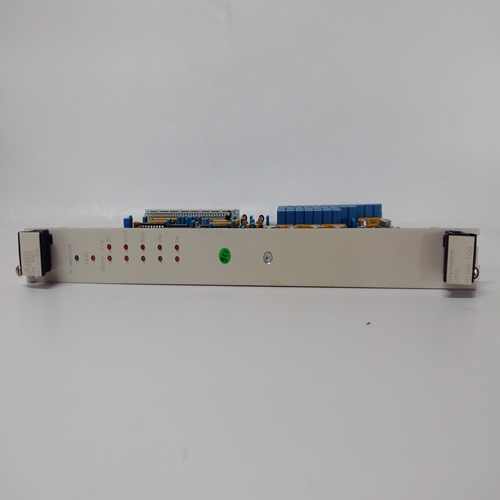
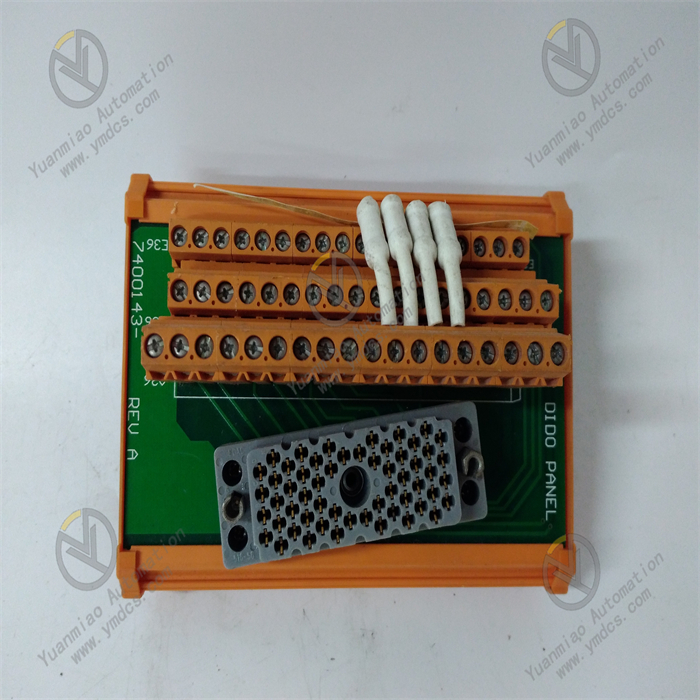
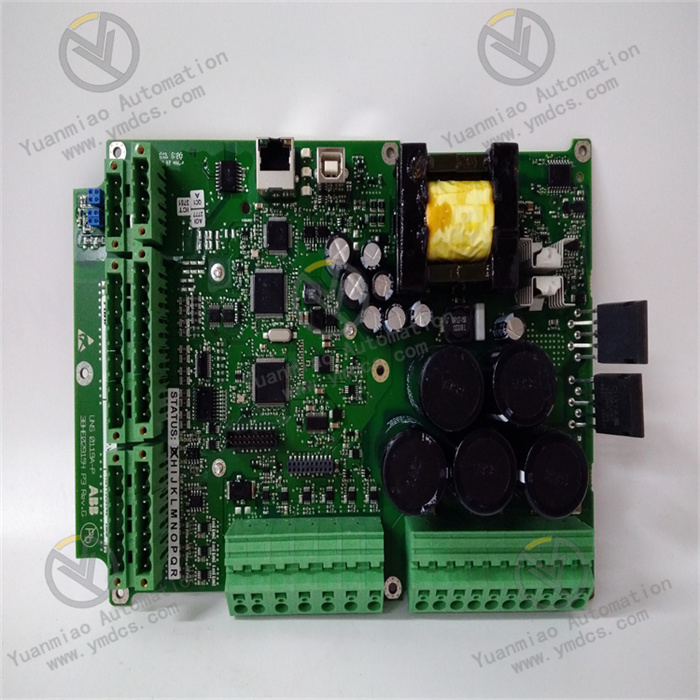
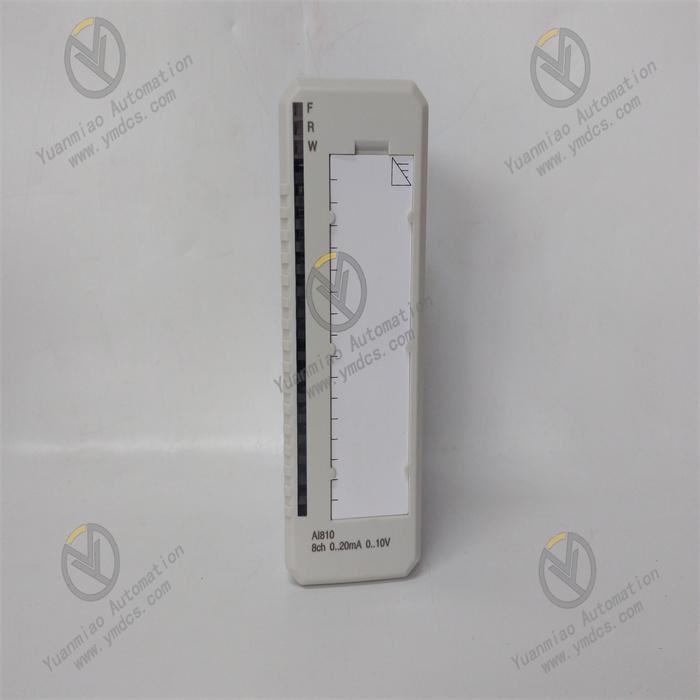
ABB DI810 3BSE008508R1
I. Overview
ABB DI810 3BSE008508R1 is a digital input module, whose core positioning is a basic field digital signal acquisition terminal for industrial automation control systems and process monitoring systems. Designed specifically for simple signal acquisition scenarios, it can accurately collect basic field switching value signals (such as equipment run/stop status, ordinary button operation signals, conventional limit switch trigger signals, basic fault alarm signals, etc.). It stably transmits signals to the AC 800M controller for logic operation and analysis via the PROFIBUS DP bus, providing reliable data support for basic real-time monitoring of industrial processes, simple equipment interlock protection, and basic judgment of production status. This module is widely applicable to industrial scenarios that require simple signal acquisition functions and pursue high reliability and cost-effectiveness, such as general manufacturing, municipal engineering, small-scale water treatment equipment, and light processing production lines. It is especially suitable for control systems with small demand for signal acquisition channels and simple system architecture.
II. Product Features
Basic Channel Configuration: Adopting a compact channel integrated design, it is equipped with 8 independent digital input channels with a compact and reasonable channel layout. It accurately matches the needs of simple signal acquisition scenarios, saves cabinet installation space to the greatest extent while ensuring acquisition stability, reduces system construction and operation and maintenance costs, and is an ideal basic acquisition component for small-scale industrial control systems.
High-Reliability Industrial-Grade Architecture: Selected high-quality industrial-grade core components and reinforced compact circuit design, it has passed strict electromagnetic compatibility (EMC) certification, environmental reliability testing and industry safety certification. It can operate stably in harsh industrial environments with a long mean time between failures (MTBF), providing a solid guarantee for the continuity and safety of small-scale industrial production.
Accurate and Stable Basic Acquisition Capability: The 8 input channels are fully electrically isolated with an isolation voltage of ≥500V AC, effectively avoiding signal interference between channels. It supports 24V DC wet contact input mode and is compatible with PNP/NPN signal types, enabling accurate acquisition of various basic field digital signals. The input response time is flexibly configurable (minimum ≤1ms), which can quickly capture field signal changes to meet the needs of basic high-speed response control scenarios.
Flexible System Adaptation and Expansion Capability: Designed specifically for ABB AC 800M series control systems, it can achieve high-speed data interaction with controllers through communication interface modules such as CI854. It supports cascade expansion of up to 32 same-series I/O modules, with a maximum expandable I/O point count of 256, adapting to the expansion needs of small and medium-sized industrial control systems. It is compatible with ABB Control Builder M configuration software, facilitating parameter configuration, program debugging and running status monitoring.
Practical Online Diagnosis Function: Built-in complete basic self-diagnosis and fault monitoring mechanism, it real-timely monitors module power supply status, input status of each channel, bus communication status and external line connection status. It can accurately locate common fault channels and fault types (such as line short circuit, signal loss, channel open circuit, etc.), and upload fault information to the controller and upper computer system via the bus, facilitating quick handling by operation and maintenance personnel and shortening fault troubleshooting time.
Strong Environmental Adaptability and Anti-Interference Capability: The operating temperature range covers -25℃~+60℃, enabling stable operation in wide-temperature environments. It has excellent vibration resistance (2g, 10Hz~150Hz) and shock resistance (10g, 11ms) performance. Adopting reinforced electromagnetic shielding design and built-in signal filtering circuit, it can effectively resist electromagnetic interference and surge interference generated by high-power equipment in industrial sites, ensuring the stability and accuracy of basic signal acquisition.
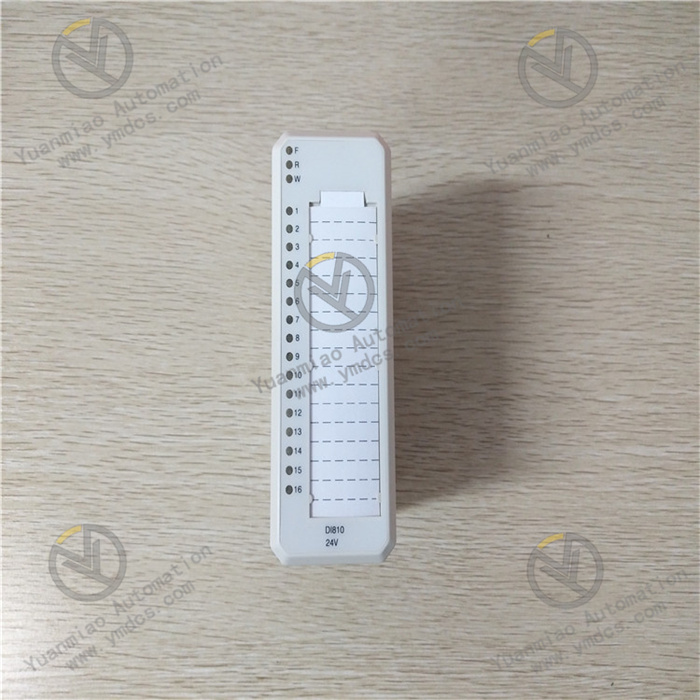
Convenient Operation and Maintenance and Management Design: Supporting module-level online hot swap function, it can complete module installation, replacement and maintenance without interrupting system operation, greatly reducing production losses caused by small-scale system downtime. Equipped with intuitive local status indicators (power supply, operation, communication, channel group status), operation and maintenance personnel can quickly judge the overall operation status of the module and channel group fault conditions through the indicators, and accurately locate single-channel faults combined with the upper computer, improving operation and maintenance efficiency.
- Comprehensive Input Protection Function: Each input channel is equipped with overvoltage protection, short-circuit protection and reverse polarity protection circuits. When detecting excessive input voltage (maximum withstand voltage ≤35V DC), line short circuit or reverse connection of power supply positive and negative poles, it can quickly cut off the input loop to avoid damage to the module and field signal source equipment. After the fault is eliminated, the module can automatically restore normal acquisition function without manual reset, reducing the difficulty of operation and maintenance.
III. Technical Parameters
1. Core Basic Parameters
- Product Model: ABB DI810 3BSE008508R1
- Product Type: Basic digital input module
- Manufacturer: ABB Group
- Product Series: I/O component of AC 800M series control system
- Core Functions: Field basic digital signal acquisition, channel status monitoring, online fault diagnosis, data upload to controller
- Communication Method: Communicate with the controller via PROFIBUS DP bus (matching corresponding communication interface module is required)
- Applicable System: ABB AC 800M series industrial automation control system
- Application Fields: General manufacturing, municipal engineering (such as street lamp control, small pumping station), small-scale water treatment equipment, light processing production line, warehousing and logistics auxiliary equipment, pharmaceutical auxiliary equipment, food processing auxiliary production line, etc.
2. Electrical Performance Parameters
- Supply Voltage: 24V DC (voltage fluctuation range: 20.4V DC ~ 28.8V DC)
- Input Type: Digital input (wet contact, compatible with PNP/NPN)
- Channel Quantity: 8 independent digital input channels (fully isolated between channels, isolation voltage ≥500V AC)
- Input Voltage Range: 15V DC ~ 30V DC (effective input)
- Input Current: Normal operating current of each channel ≤5mA DC (when powered by 24V DC)
- Input Response Time: Configurable, minimum ≤1ms, maximum ≤100ms
- Input Protection: Overvoltage protection (maximum withstand voltage ≤35V DC), short-circuit protection, reverse polarity protection
- Fault Diagnosis Range: Channel short circuit, signal loss, power supply abnormality, communication interruption, channel open circuit
- Communication Interface: Connect with communication interface module (such as CI854) via I/O bus
- Communication Protocol: Support PROFIBUS DP V1/V2 protocol
- I/O Expansion Capability: Support cascade connection of up to 32 same-series I/O modules, maximum expandable I/O point count of 256
- Signal Source Type: Field ordinary switches, conventional limit switches, basic buttons, general proximity switches, simple photoelectric switches, travel switches and other basic digital equipment
3. Environmental and Physical Parameters
- Operating Temperature: -25℃~+60℃
- Storage Temperature: -40℃~+85℃
- Relative Humidity: 5%~95% RH (no condensation)
- Vibration Resistance: 2g, 10Hz~150Hz (sine wave)
- Shock Resistance: 10g, 11ms (half-sine wave)
- Protection Grade: IP20 (module itself); IP54 (when installed in standard cabinet)
- Weight: Approximately 0.6kg (module itself); 2.0kg (including transportation package)
- Installation Method: Rack-mounted installation (adapt to ABB standard I/O cabinet, comply with IEC 60917 standard)
- Dimensions (Length × Width × Height): 140mm × 100mm × 55mm
- Special Functions: Online hot swap, independent channel isolation, online fault diagnosis, signal filtering
IV. Working Principle
The core working principle of ABB DI810 3BSE008508R1 is a closed-loop workflow of basic signal acquisition - signal preprocessing - data transmission - status diagnosis - fault feedback. Through the coordinated operation of the signal acquisition unit, signal preprocessing unit, bus communication unit and fault diagnosis unit inside the module, it realizes accurate and stable acquisition and reliable transmission of field basic digital signals. The specific working process can be divided into four core stages:
Stage 1: System Initialization and Parameter Configuration StageAfter the module establishes a connection with the communication interface module (such as CI854) of the ABB AC 800M controller via the I/O bus and is connected to the 24V DC power supply, it automatically completes initialization and startup, performs internal circuit self-test, calibrates 8 channels one by one and verifies the communication link. Operation and maintenance personnel complete the basic configuration of input response time, fault diagnosis threshold, communication parameters, etc. through the ABB Control Builder M configuration software, ensuring that the module is accurately adapted to the field basic signal source equipment and the controller, and meets the response requirements of simple signal acquisition.
Stage 2: Field Signal Acquisition and Preprocessing StageField basic digital signals (such as equipment operation status switching, ordinary button operation, ordinary limit switch triggering, etc.) are connected to the 8 independent input channels of the module via dedicated terminals. The signal filtering unit built into each channel preprocesses the original signal, filtering out clutter and instantaneous jitter caused by electromagnetic interference to ensure signal stability. At the same time, the high isolation voltage design between channels can effectively avoid interference between different signal sources, ensuring the accuracy of acquisition of the 8 channels.
Stage 3: Data Conversion and Bus Transmission StageThe preprocessed digital signals are converted into standard digital data by the internal logic circuit of the module and transmitted to the communication interface module via the high-speed I/O bus. The communication interface module converts the data into PROFIBUS DP protocol format and then transmits it to the AC 800M controller, providing standard data support for the controller's basic logic operation, simple equipment interlock protection decision-making and real-time monitoring. The entire data transmission process is high-speed and synchronous, ensuring the real-time performance and reliability of signal transmission, adapting to the rapid response needs of small-scale systems.
V. Common Fault Troubleshooting
1. No Signal Acquisition/Signal Acquisition Abnormality in Partial/All Input Channels
2. Frequent Fault Alarms/False Alarms of Input Channels
3. Abnormal Communication Between Module and Controller
4. Module Fails to Start/Power Indicator Has No Response