
Description
ABB AO930S 3KDE175531L9300
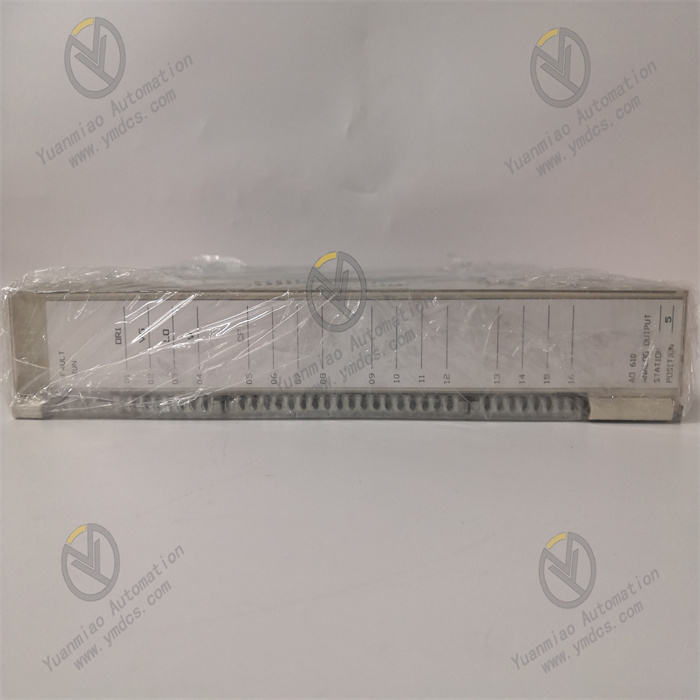
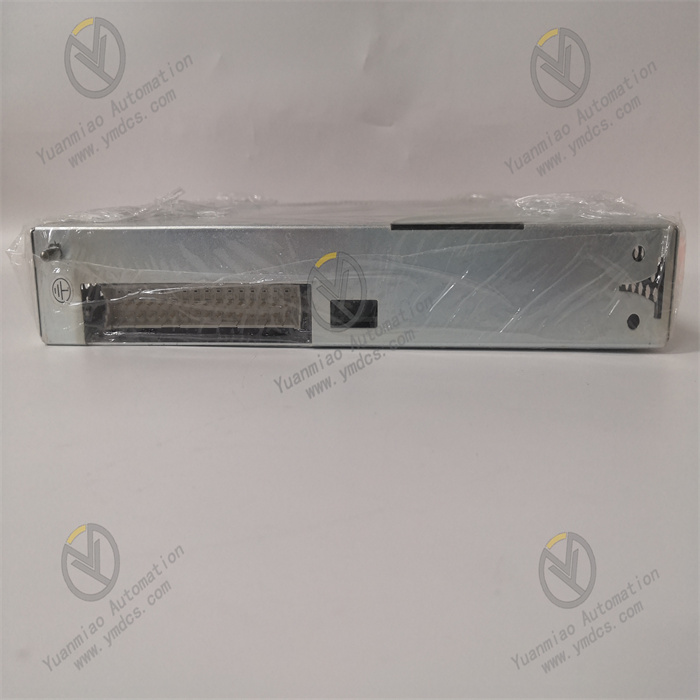
The ABB AO930S 3KDE175531L9300 is a 4-channel analog output HART module, primarily positioned as a field device control unit integrating precise signal conversion and intelligent communication functions. This module can stably convert digital commands from the controller into standard 0/4-20mA analog signals for driving various industrial actuators. Meanwhile, it supports the HART communication protocol, enabling bidirectional transmission of analog and digital signals, which balances the stability of traditional analog control with the remote operation and maintenance requirements of intelligent devices.
I. Product Features
1. 4-Channel Independent Output with Precise and Stable Signal Conversion
Adopting a 4-channel independent design, each channel can stably output 0/4-20mA analog signals to accurately drive various industrial actuators, meeting the demand for parallel control of multiple devices. The channel output accuracy complies with industrial-grade standards, featuring stable signal transmission and strong anti-interference capability. It can maintain the purity of output signals in complex electromagnetic environments, ensuring the precise execution of control commands.
2. HART Communication Support with Both Analog and Intelligent Advantages
Built-in HART communication function enables simultaneous bidirectional transmission of analog and digital signals: on the one hand, it realizes real-time control of actuators through 0/4-20mA analog signals; on the other hand, it achieves intelligent operation and maintenance operations such as remote parameter reading, configuration modification and fault diagnosis via HART digital signals. Parameter debugging and status monitoring can be completed without on-site equipment disassembly, greatly reducing operation and maintenance costs and downtime.
3. Wide Area Adaptability with Excellent Working Condition Compatibility
It has excellent adaptability to hazardous areas. Relying on the explosion-proof design advantages of the S900 I/O system, it can be directly applied to Zone 1, Zone 2 hazardous areas and non-hazardous areas without additional explosion-proof isolation devices. This simplifies the system integration process in hazardous environments and improves the convenience and safety of on-site installation.
4. Compact Structural Design for Efficient and Flexible Installation and Integration
Featuring a lightweight and compact structural design, its dimensions are only 104mm×20mm×104mm (Length×Width×Height) with a net weight of merely 0.135kg. Its small size and light weight allow flexible installation in various industrial control cabinets, making it particularly suitable for space-constrained installation scenarios. The module adopts the standard mechanical interface of the S900 I/O system, which can seamlessly connect with other components in the system, greatly improving system integration efficiency.
II. Technical Parameters
1. Basic Parameters
- Model: ABB AO930S 3KDE175531L9300
- Product Type: 4-channel analog output HART module (I/O module)
- Brand: ABB
- Place of Origin: Sweden
- Core Functions: Converts digital signals to 0/4-20mA analog output; supports HART communication; drives industrial actuators
- Compatible System: ABB Remote S900 I/O System
- HS Code: 85389099
- Environmental Compliance: Complies with EU 2011/65/EU RoHS Directive; WEEE Category 5 (small equipment)
- Net Weight: 0.135kg
- Dimensions (Length×Width×Height): 104mm×20mm×104mm
- Warranty Period: 12 months (original factory standard warranty)
- Supply Status: In stock
2. Electrical Parameters
- Output Channels: 4 independent channels
- Output Signal Type: 0/4-20mA current signal
- Communication Protocol: HART (bidirectional transmission of analog + digital signals)
- Channel Function: Drive industrial actuators
- Protection Features: Equipped with basic overcurrent and overvoltage protection (complies with general standards for industrial-grade I/O modules)
- Power Supply Specification: Adapted to industrial standard DC power supply (specific parameters shall match the requirements of the S900 I/O system power supply unit)
3. Mechanical and Environmental Parameters
- Installation Method: Modular slot mounting (compatible with S900 I/O system standard mounting rail)
- Installation Area: Non-hazardous area, Zone 1 hazardous area, Zone 2 hazardous area (selected according to system variant)
- Operating Temperature: Industrial-grade conventional range (refer to S900 I/O system general standard, -10~+60℃)
- Storage Temperature: -40~+70℃ (refer to similar product standards)
- Relative Humidity: 5%~95% (non-condensing)
- Electromagnetic Interference Resistance: Complies with industrial-grade electromagnetic compatibility standards; can operate stably in complex electromagnetic environments
- Vibration Resistance: Complies with IEC 60068-2-6 standard (refer to general requirements for similar products)
III. Working Principle
The core working logic of the ABB AO930S 3KDE175531L9300 module follows the sequence of "Power Supply → System Initialization → Signal Conversion and Output → Bidirectional Communication → Status Monitoring and Fault Feedback". The specific workflow is as follows:
Power Supply and System Initialization: The module is connected to a suitable industrial-grade DC power supply via the S900 I/O system bus. The built-in power voltage stabilization circuit converts the input voltage into a stable voltage suitable for internal core components (signal processing circuit, D/A conversion circuit, HART communication module, isolation circuit, etc.), ensuring the normal operation of each component. After power-on, the module automatically starts the system initialization program, detects the integrity of internal circuits and the status of the communication link with the system main control unit, and loads preset channel configuration parameters (signal type, output range, HART communication address, etc.). Upon completion of initialization, it enters the ready state, waiting to receive control commands from the controller.
Signal Conversion and Output: The module receives digital control commands from the controller via the system bus. After being parsed and filtered by the internal signal processing unit, the commands are transmitted to the high-precision D/A conversion circuit. The D/A conversion circuit accurately converts the digital signals into preset 0/4-20mA analog signals, which are then transmitted to the corresponding field actuators through 4 independent channels, realizing real-time and precise control of industrial process parameters.
Bidirectional Communication (HART Protocol): While outputting analog signals, the module realizes bidirectional digital communication with the controller and intelligent actuators through the HART protocol. On the one hand, it can transmit digital signals such as the operating status, parameter deviation and fault information of the actuators back to the controller, providing real-time equipment status data for operation and maintenance personnel. On the other hand, operation and maintenance personnel can issue digital commands through the controller to remotely modify the configuration parameters of the module and actuators (such as output signal range, control threshold, etc.) without on-site operation.
Status Monitoring and Fault Feedback: The module real-time monitors the output signal amplitude of each channel, line connection status, power supply voltage and its own working status, and conducts comprehensive fault judgment combined with the equipment data transmitted back via HART communication. If an output line open/short circuit, excessive signal deviation, abnormal power supply or internal circuit fault is detected, it will immediately report the fault information to the controller via the system bus, and adjust the output status according to the preset protection strategy (such as maintaining the current output, switching to a safe output value) to prevent the spread of faults leading to production accidents and ensure the safe operation of the system.
IV. Common Fault Troubleshooting
| Fault Phenomenon | Possible Causes | Troubleshooting and Solutions |
|---|---|---|
| No module response, unable to communicate with the controller | Abnormal or interrupted system power supply; poor contact between the module and the S900 I/O system bus; incorrect communication address configuration; mismatched HART protocol parameters | Check the output voltage of the S900 I/O system power supply unit to confirm that it meets the module's working requirements. If the power supply is interrupted or abnormal, troubleshoot the power supply unit and lines. Re-plug the module, check whether the bus slot is oxidized or loose, and ensure that the module is in firm contact with the system bus. Verify the module communication address through the system configuration software to ensure no address conflict. Check the HART protocol configuration parameters (such as baud rate) to ensure consistency with the controller. |
| Abnormal or no output signal from a certain channel | Open/short circuit or poor contact of the channel output line; incorrect configuration parameters of the channel (such as signal range); fault of the internal D/A conversion circuit of the module; load of the actuator exceeding the module's adaptation range | Disconnect the module power supply, check the continuity and connector firmness of the output line corresponding to the faulty channel, and repair open/short circuit or poor contact issues. Verify the signal output range, enable status and other parameters of the channel through the system configuration software, and reconfigure and save them if incorrect. Remove the actuator connected to the channel and connect a standard load for testing. If the signal is still abnormal, there may be a fault in the internal channel of the module. Test the load parameters of the actuator to confirm that it is within the module's adaptation range; if it exceeds the range, replace the equipment with a load suitable for the module. |
| HART communication interruption, unable to read equipment status | Mismatched HART protocol parameters; interference caused by ungrounded or poorly grounded line shielding layer; module communication interface fault; actuator not supporting HART protocol | Verify the HART protocol configuration parameters (such as communication address, baud rate) of the module and the controller to ensure consistency. Check the connection status of the output line shielding layer to ensure reliable single-point grounding (ground resistance ≤ 4Ω) and reduce electromagnetic interference. Test by replacing the module with the same model; if communication is restored, the original module has a communication interface fault. Confirm the actuator model to ensure that it supports the HART protocol; if not, replace it with a compatible intelligent actuator. |
| Excessive output signal fluctuation with insufficient control precision | The module installation location is close to strong interference sources; the output line is too close to the power line; excessive power supply voltage fluctuation; the module has not been accurately calibrated | Check the module installation location. If it is close to strong interference sources such as frequency converters and high-power motors, adjust the installation location or install a metal shield. Re-plan the wiring to ensure that the distance between the analog output line and the power line is ≥ 20cm, and use shielded cables for the output line. Test the stability of the system power supply voltage; if the fluctuation is excessive, install a power regulator. Re-calibrate the module output precision through the system configuration software or special calibration tools. |
| The module frequently reports faults and the protection mechanism is activated | Simultaneous overload operation of multiple channels; hidden short circuit in the output line; excessive environmental parameters in hazardous areas; internal circuit fault of the module | Check the load of the actuators connected to each channel, avoid simultaneous overload operation of multiple channels, and distribute the load reasonably. Check whether the insulation layer of the output line is damaged with hidden short circuit hazards, and repair the damaged line. Test the environmental parameters of the installation area (such as temperature, humidity, concentration of flammable and explosive gases) to confirm that they meet the module's operating requirements. If the above checks are all normal, view the detailed fault information through the system internal event list, and contact ABB authorized after-sales service for maintenance or replacement. |