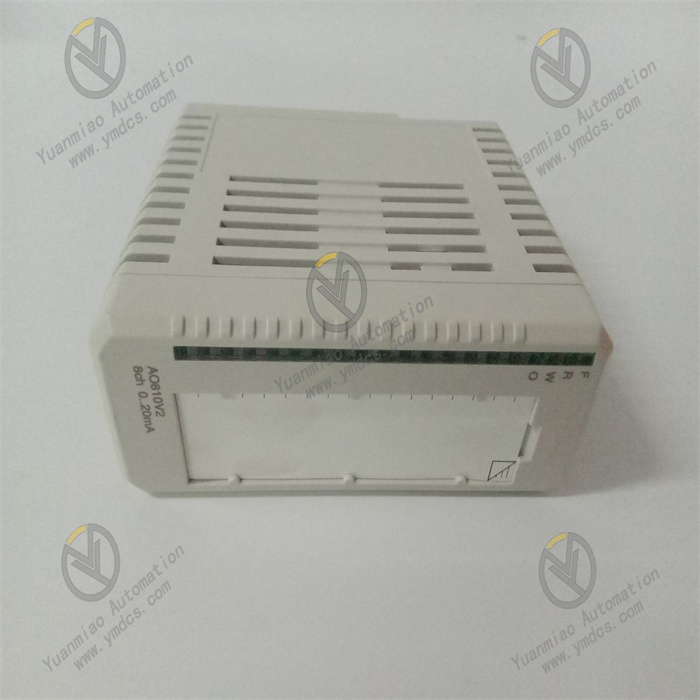
Description
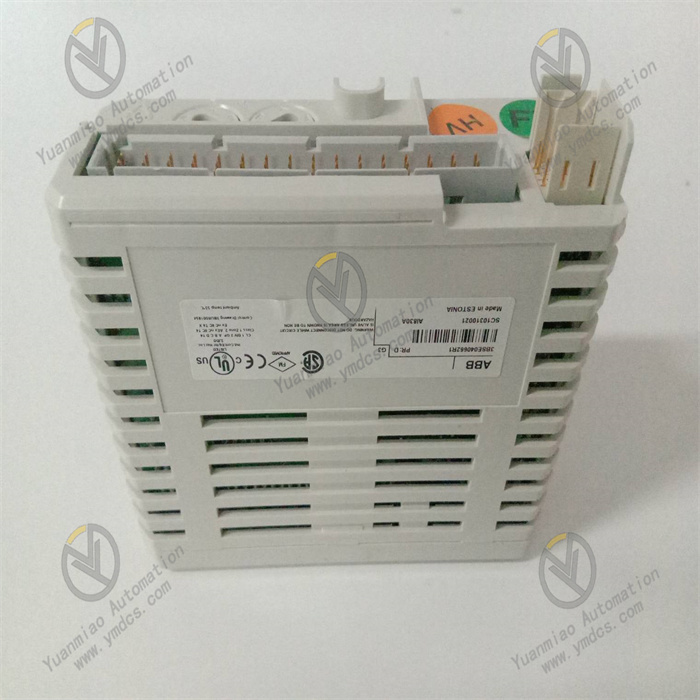
ABB AI893 3BSC690141R1
ABB AI893 3BSC690141R1 is an analog input module, whose core positioning is to achieve the accurate acquisition and transmission of thermocouple (TC) and millivolt (mV) signals in industrial hazardous environments. It undertakes the core task of converting analog signals generated by converting on-site physical quantities such as temperature into digital signals recognizable by the control system, and ensuring the safety and reliability of signal acquisition in hazardous areas through intrinsically safe design. It is a key interface component connecting sensors under hazardous working conditions and upper control systems (such as the 800xA system). This module is widely used in hazardous industrial scenarios with flammable and explosive media such as petrochemicals, mining, and pharmaceutical chemicals, as well as in fields with stringent requirements for signal acquisition accuracy and safety such as conventional industrial automation, process control, and environmental monitoring. It can be accurately matched with relevant control systems of the S800 I/O series, providing reliable data support for automated precision control in hazardous environments.
Relying on intrinsically safe circuit design, multi-type thermocouple adaptation capability, and full-channel differential input design, the ABB AI893 3BSC690141R1 module can stably acquire weak analog signals in hazardous environments, effectively avoiding potential safety risks during the acquisition process. At the same time, it improves the anti-interference capability and accuracy of signal acquisition, reduces system downtime caused by environmental interference or safety hazards, and lowers operation and maintenance costs. It is a key core component in the automated monitoring loop of hazardous industrial scenarios.
1. Product Features
1.1 Intrinsically Safe Design for Hazardous Environments
1.2 8-Channel Differential Input for Multi-Type Thermocouples
1.3 Built-in Cold-Junction Compensation for Excellent Acquisition Accuracy
1.4 Comprehensive Fault Monitoring for Easy Operation and Maintenance
1.5 Modular Design for Flexible Integration and Adaptation
1.6 Wide Working Condition Adaptation for Strong Environmental Suitability
2. Technical Parameters
2.1 Basic Parameters
- Model: ABB AI893 3BSC690141R1
- Product Type: Intrinsically Safe Analog Input Module
- Brand: ABB
- Product Series: System 800xA Series, S800 I/O Module Series
- Application Fields: Hazardous industrial scenarios such as petrochemicals, mining, pharmaceutical chemicals; industrial automation, process control, environmental monitoring
- Compatible Systems: ABB 800xA System (Versions 4.0/4.1/5.0/5.1/6.0, etc.), S800 I/O Series Control Systems
- Number of Input Channels: 8 channels (differential input)
- Compatible Signal Types: Multiple thermocouples (Types B, C, E, J, K, L, N, R, S, T, U), mV signals
- Dedicated Terminal Unit: Must be used with TU890 or TU891
- Mounting Method: Standard Modular Mounting
- Net Weight: Approximately 0.3kg
- RoHS Compliance: Complies with EU Directive 2011/65/EU
- WEEE Category: Category 5 (small equipment with external dimensions not exceeding 50 cm in all aspects)
- HS Code: 85389099
2.2 Electrical Parameters
- Measurement Range: -30mV~75mV (linear) or temperature range corresponding to thermocouple type
- Input Type: Differential Input
- Channel Configuration: Channel 8 can be configured as cold-junction temperature measurement channel
- Fault Monitoring: Supports input open-circuit monitoring
- Communication Interface: Compatible with S800 I/O system bus protocol
- Power Supply Method: Powered via backplane bus or dedicated terminal unit (meeting intrinsically safe power supply requirements)
2.3 Mechanical and Environmental Parameters
- Dimensions (W×H×D): 45mm×119mm×102mm
- Operating Temperature: Conventional industrial temperature and humidity range (adapted to normal working conditions in hazardous environments)
- Storage Temperature: -40℃~+85℃
- Relative Humidity: 5%~95%RH (no condensation)
- Electromagnetic Interference Resistance: Complies with relevant industrial-grade anti-interference standards
- Protection Rating: IP20 (front-end protection after installation)
- Housing Material: Flame-retardant engineering plastic + metal shielding cover
3. Working Principle
The core working logic of the ABB AI893 3BSC690141R1 intrinsically safe analog input module is "Intrinsically Safe Power Supply - Signal Acquisition and Adaptation - Cold-Junction Compensation - Signal Conditioning - A/D Conversion - Digital Transmission - Fault Monitoring and Feedback". The specific working process is as follows:
4. Common Fault Troubleshooting
| Fault Phenomenon | Possible Causes | Troubleshooting and Solutions |
|---|---|---|
| No response when the module is powered on, and the status indicator light does not turn on | Abnormal intrinsically safe power supply, loose backplane bus connection, TU890/TU891 terminal unit failure, damaged power connection cable, internal power circuit failure of the module | Check whether the output of the intrinsically safe power supply meets the requirements to ensure the power supply is normal; check whether the connection between the module and the backplane bus, terminal unit is firm, re-plug and tighten; troubleshoot the working status of the TU890/TU891 terminal unit to confirm it is fault-free; check whether the power connection cable is damaged and replace it with a qualified cable; if the above inspections are normal but there is still no response, contact ABB authorized after-sales service for maintenance or module replacement. |
| Large temperature measurement deviation of a certain channel | Channel configuration error (mismatched thermocouple type), cold-junction compensation channel not enabled or faulty, incorrect sensor wiring (reversed positive and negative poles), sensor failure, signal cable interference | Check the channel configuration through the control system software to confirm that the thermocouple type matches the actual sensor, reconfigure and save; check whether channel 8 has enabled the cold-junction compensation function, enable it if not, and test whether the acquisition of channel 8 is normal if it has been enabled; verify the sensor wiring to ensure correct connection of positive and negative poles; disconnect the connection between the sensor and the module, connect a standard signal source to the channel for testing, replace the sensor if the data is normal; check whether the signal cable is a shielded cable and whether the shielding layer is grounded, replace the shielded cable and ensure reliable grounding to reduce interference. |
| The module frequently triggers channel open-circuit alarms | Sensor disconnection, damaged signal cable, loose channel wiring, oxidized wiring terminals, internal channel circuit failure of the module | Check whether the sensor connection of the corresponding channel is normal, troubleshoot whether the sensor is disconnected, replace the faulty sensor; check whether the signal cable is damaged or broken, replace it with an intact cable; check whether the channel wiring is loose and re-tighten the wiring; check whether the wiring terminals are oxidized, clean the oxide layer or replace the terminals; if the above measures are ineffective, there may be a fault in the internal channel circuit of the module, contact after-sales service for maintenance or module replacement. |
| Communication abnormality between the module and the control system | Loose backplane bus connection, incorrect module address configuration, mismatched communication protocol, outdated module firmware version, control system interface failure | Re-plug the module to ensure firm connection with the backplane bus; check the module address configuration to ensure it is consistent with the address allocation of the control system; confirm that the communication protocol configuration is correct and compatible with the 800xA system; check the module firmware version, contact ABB authorized after-sales service for firmware upgrade if the version is outdated; if other modules communicate normally, there may be a fault in the module communication interface, contact after-sales service for maintenance or module replacement. |
| Large fluctuation of signals collected by all channels | Excessive electromagnetic interference on site, unshielded or poorly shielded signal cables, poor module grounding, non-standard wiring of intrinsically safe loops | Check whether the module installation location is close to strong interference sources, install a metal shielding cover or optimize the installation location; ensure that the signal cable is a qualified shielded cable with the shielding layer reliably grounded at one end; check whether the module grounding is good and re-tighten the grounding terminal; verify whether the wiring of the intrinsically safe loop complies with specifications, avoid parallel wiring with power cables, and rectify non-standard wiring. |