Description
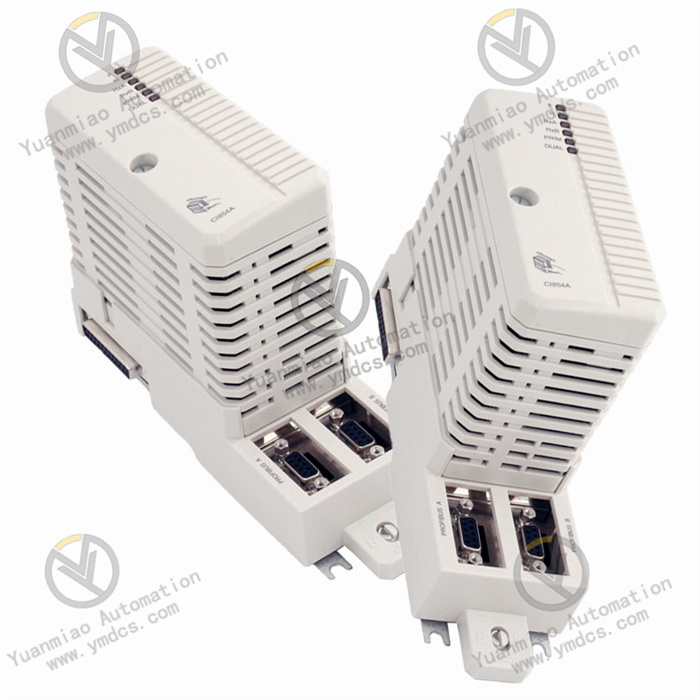
ABB CI868K01-eA 3BSE048845R2
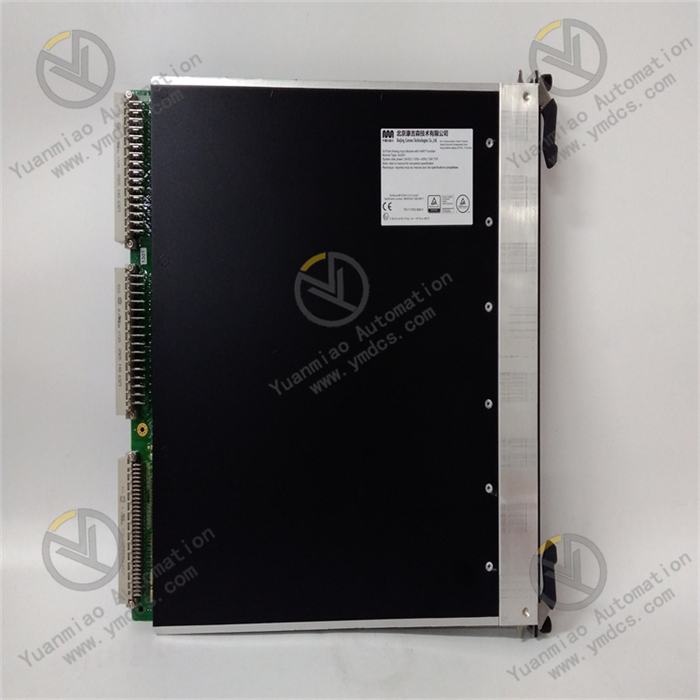
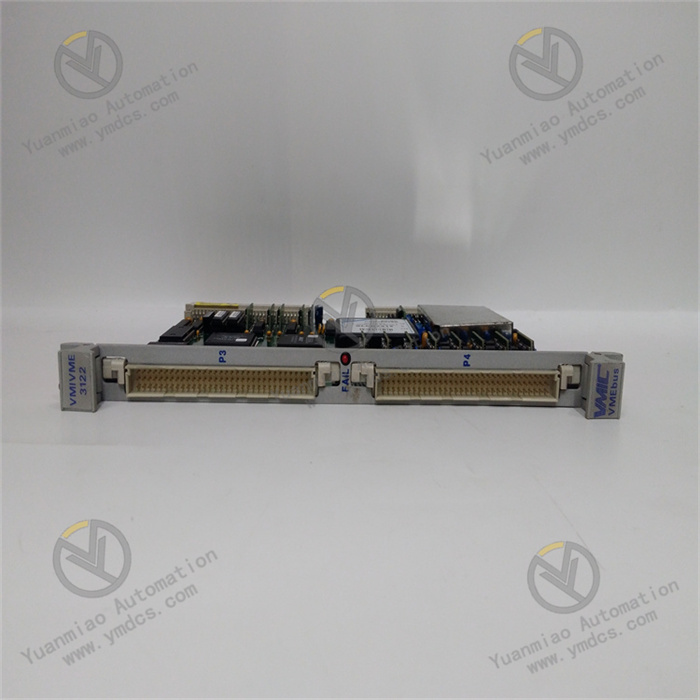
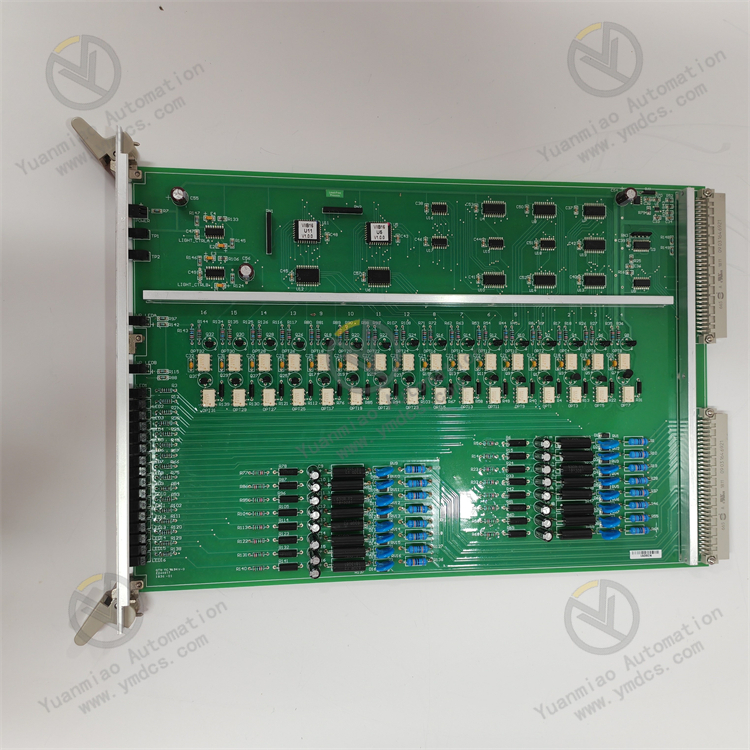
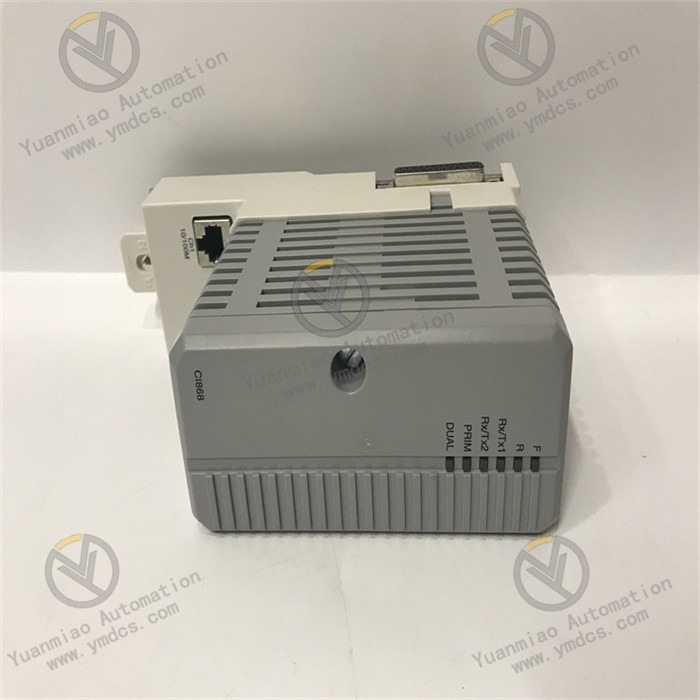
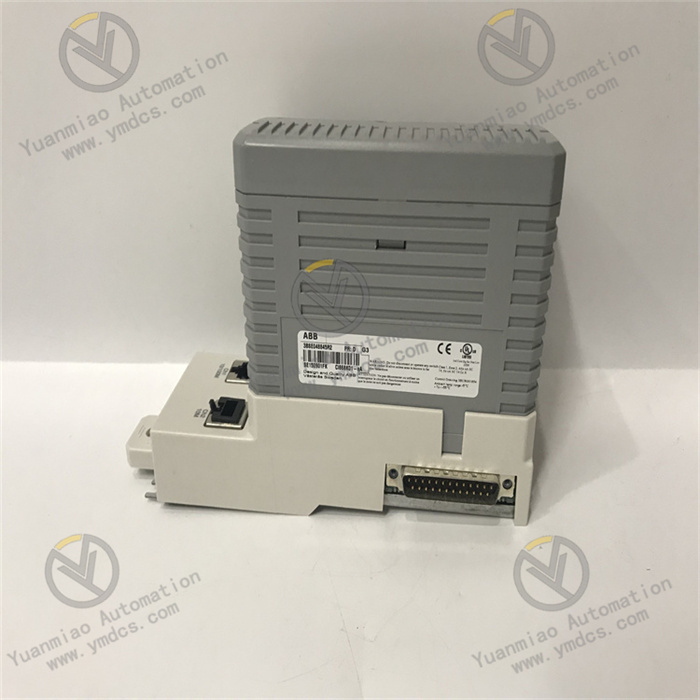
ABB CI868K01-eA (3BSE048845R2) is a communication interface module, whose core positioning is to achieve stable and efficient data interaction between the control system, external devices, and third-party systems, and build a reliable industrial communication bridge. As a key communication expansion unit of the AC800M control system, this module is compatible with a variety of mainstream industrial communication protocols and provides rich types of communication interfaces. It can flexibly adapt to the communication requirements in different industrial automation scenarios, realizing full-link data transmission and command interaction between field devices, controllers, and upper-level systems.
The product adopts a compact structural design and an industrial-grade hardware platform, featuring excellent environmental adaptability and anti-interference capability. It can operate stably in harsh industrial scenarios such as high temperature, heavy dust, and complex electromagnetic interference. Its core value lies in simplifying the design of system communication architecture and improving the efficiency and reliability of data transmission through an integrated communication solution. Meanwhile, it reduces the cost of project implementation and operation and maintenance by means of standardized programming and configuration methods. The module is widely used in key infrastructure fields such as process industry, discrete manufacturing, energy and power, oil and gas pipelines, and nuclear power plants, providing core support for the interconnection and intercommunication of various automation systems.
The module has strong multi-protocol support capability, compatible with various mainstream industrial communication protocols such as Modbus, PROFIBUS, HART, and Ethernet/IP. It can seamlessly connect with field devices (e.g., sensors, actuators, instruments) and third-party control systems from different manufacturers, greatly improving the flexibility and compatibility of system integration. Through protocol self-adaptation and configuration switching functions, the type of communication protocol can be quickly adjusted according to actual on-site requirements without replacing hardware modules, reducing the cost of system upgrade and transformation.
Equipped with a high-performance communication processing unit, it supports high-speed data transmission, enabling real-time data interaction between the control system and external devices, ensuring the rapid response of control commands and the precise synchronization of process parameters. Aiming at the complex electromagnetic environment of industrial sites, the module adopts professional anti-interference design. Through hardware filtering, signal shielding and other technologies, it can effectively resist the impact of electromagnetic interference on data transmission, ensure the stability of communication links and the integrity of data transmission, and reduce the risk of data packet loss and delay.
With a compact structural design, it is small in size and light in weight, and can be directly plugged into the ABB standard I/O backplane without occupying a large amount of additional installation space, suitable for small control cabinets and dense installation scenarios. The module has a simple installation process, realizing quick connection with the control system through standardized slot-type connection, and reducing the workload of on-site wiring. Meanwhile, it is equipped with clear interface identification and status indicator lights, facilitating installers to quickly identify and debug, and improving the efficiency of project implementation.
Designed in accordance with strict industrial environment standards, it has a wide operating temperature adaptation range, capable of stable operation in the temperature range of -20℃~+60℃, and can be extended to -40℃~+70℃ under some extreme working conditions, suitable for various harsh environments such as high-temperature workshops, outdoor equipment rooms, and cold regions. The module shell has good dustproof and moistureproof performance, effectively protecting the internal circuit from erosion by dust and moisture in industrial sites, and extending the service life of the equipment.
Built-in with an intelligent fault diagnosis system, it can monitor the status of communication links, module operation status, and power supply status in real time. When abnormal conditions such as communication interruption, protocol mismatch, and line fault occur, it can quickly identify the fault type and feed back through status indicator lights or system alarm signals, facilitating operation and maintenance personnel to locate and handle faults in a timely manner. Meanwhile, it supports remote status monitoring and parameter configuration through integrated engineering tools, reducing the workload of on-site operation and maintenance and improving maintenance efficiency.
It supports a variety of standardized programming languages (e.g., ladder logic, structured text), and is compatible with the IEC 6131-3 programming standard, facilitating engineers to carry out flexible programming and logic configuration according to on-site requirements. It provides reusable programming components (e.g., graphical control logic elements, unit configuration templates), supporting library-based development methods, which greatly improves programming efficiency and program maintainability. The rapid configuration and debugging of module parameters can be realized through special configuration software, simplifying the project implementation process.
The core working logic of ABB CI868K01-eA (3BSE048845R2) communication interface module is "Protocol Parsing and Adaptation → Communication Link Establishment → Data Interaction and Transmission → Status Monitoring and Feedback". It completes the full-process communication interaction function through cooperation with the ABB AC800M controller and external devices, with the specific working process as follows:
Protocol Configuration and Initialization: Complete the communication parameter configuration of the module through special engineering software (e.g., Control Builder M), including selection of communication protocol type (e.g., Modbus, PROFIBUS, etc.), setting of interface parameters (baud rate, IP address, subnet mask, etc.), definition of data interaction rules, and setting of fault alarm thresholds. After configuration is completed, the module is powered on and starts up, automatically loading the configuration parameters, completing the initialization process, and entering the standby communication state.
Communication Link Establishment: Based on the preset communication parameters, the module establishes a stable two-way communication link with external devices (sensors, actuators, instruments) and third-party systems through interfaces such as Ethernet or RS-485. Meanwhile, it realizes internal data interaction with the AC800M controller through the I/O backplane, building a full-link communication architecture of "Controller - Module - External Devices".
Data Interaction and Transmission: The module receives real-time process parameters (e.g., temperature, pressure, flow rate) and equipment operation status data uploaded by external devices, and transmits them to the AC800M controller after protocol parsing and format conversion. At the same time, it receives control commands (e.g., equipment start-stop, parameter adjustment) issued by the controller, converts them into protocol signals recognizable by external devices and transmits them accurately, realizing remote control of field devices by the control system.
- Status Monitoring and Fault Feedback: The module monitors the connection status of communication links, data transmission status, and its own operation status in real time, and identifies faults such as communication interruption, data abnormality, and protocol mismatch through built-in diagnostic algorithms. When a fault is detected, it immediately gives an intuitive prompt through status indicator lights (e.g., power light, communication light), and transmits the fault code to the controller to trigger the system alarm mechanism, facilitating timely handling by operation and maintenance personnel.
![]()