Description
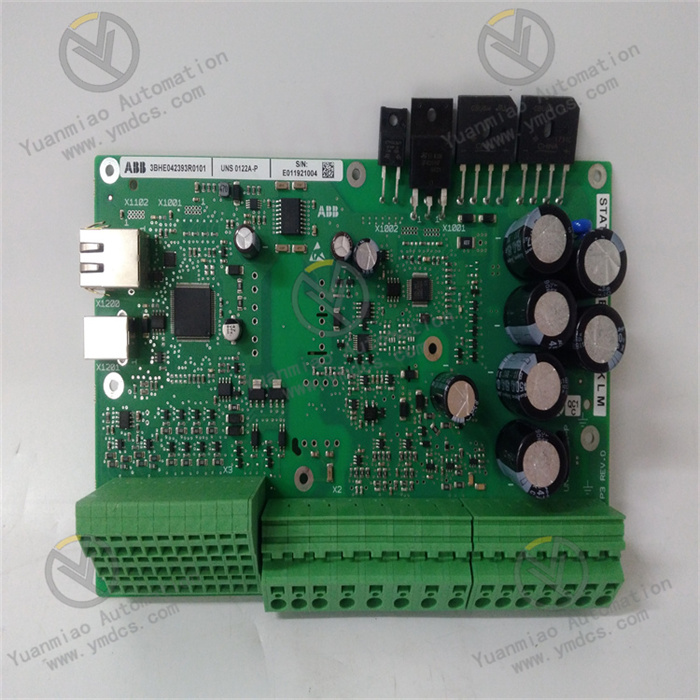
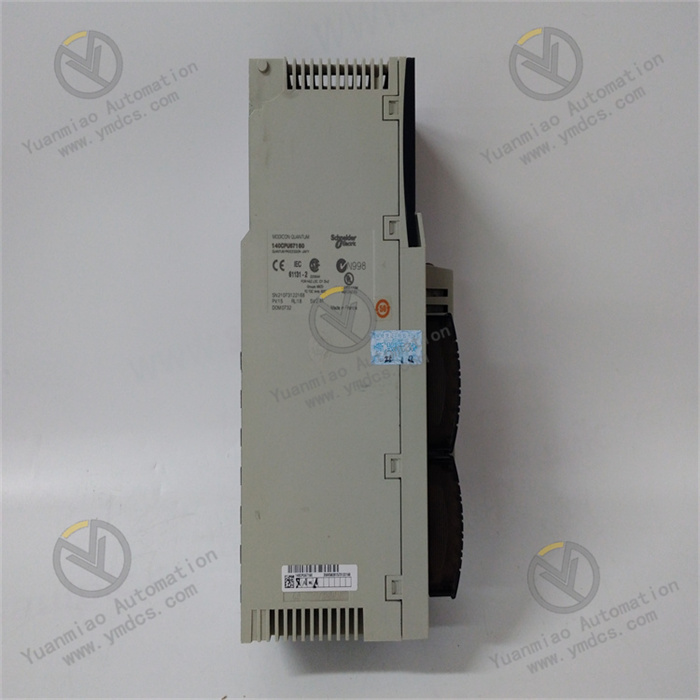
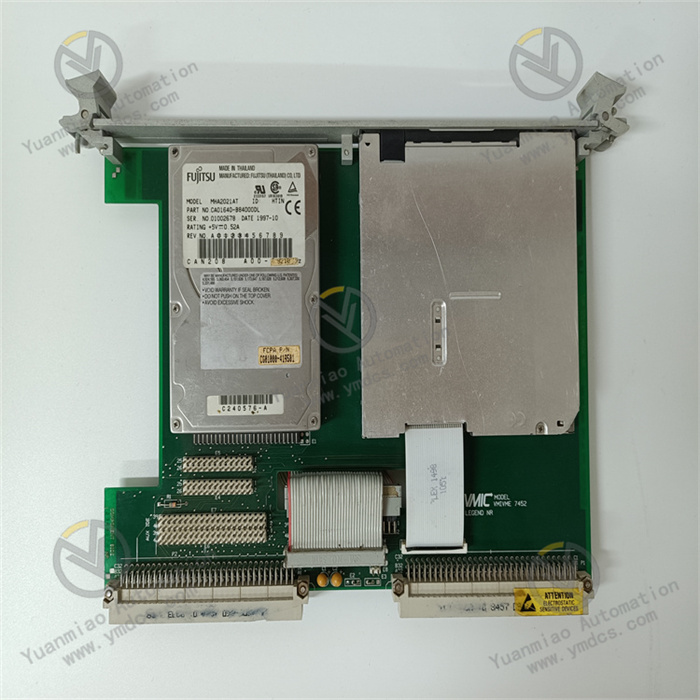
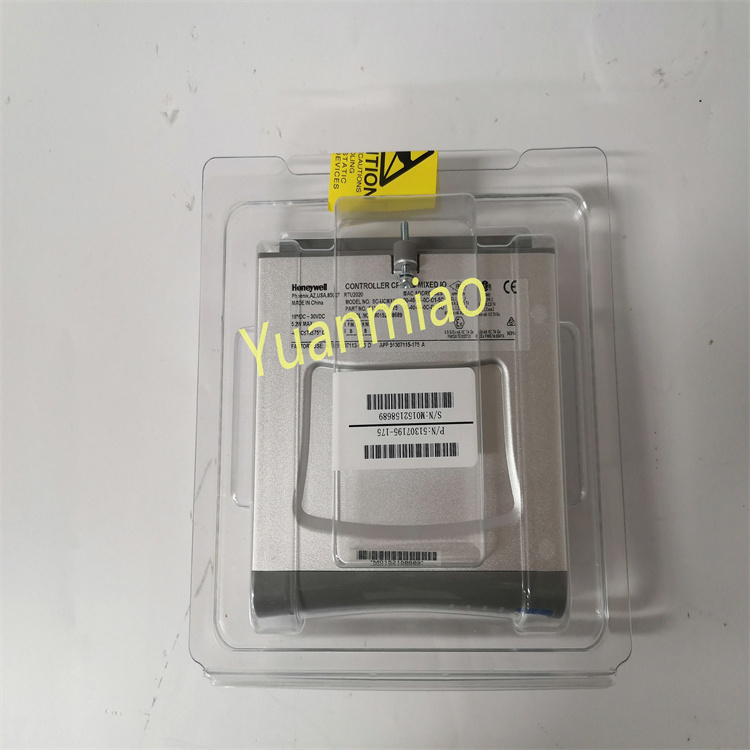
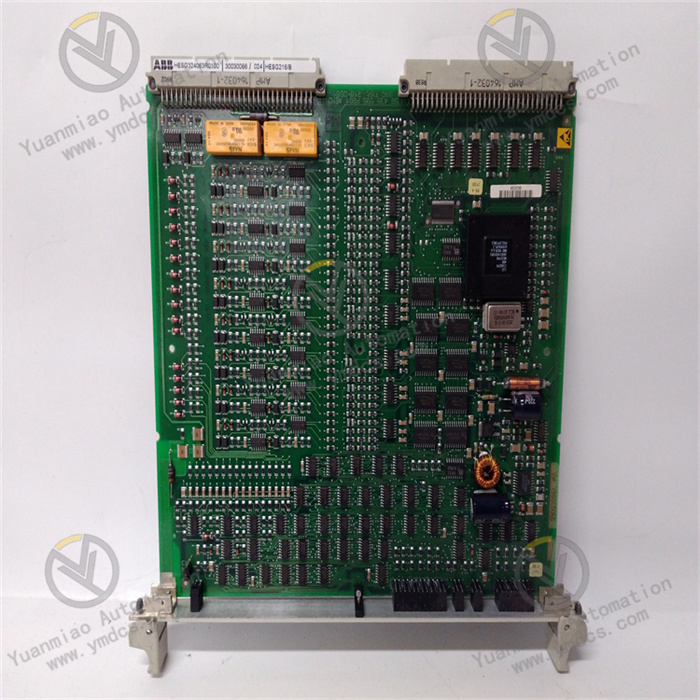
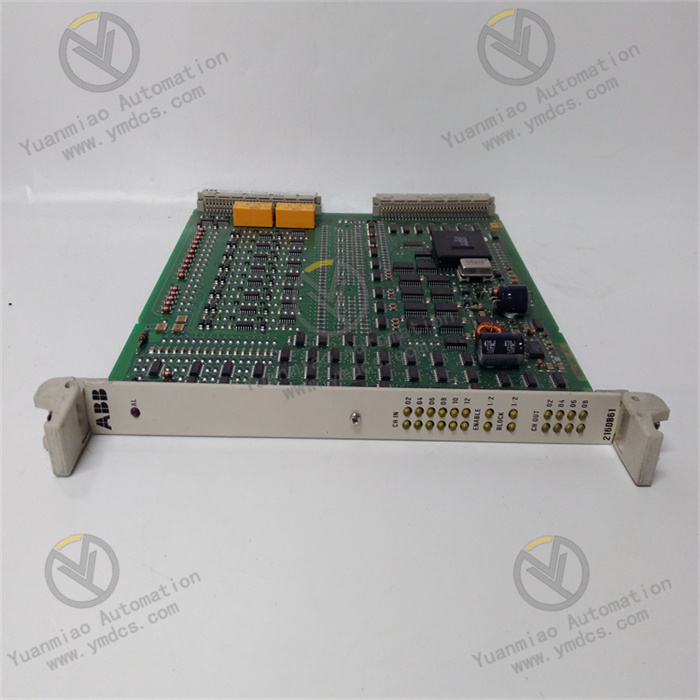
ABB 216DB61 HESG324063R100/J
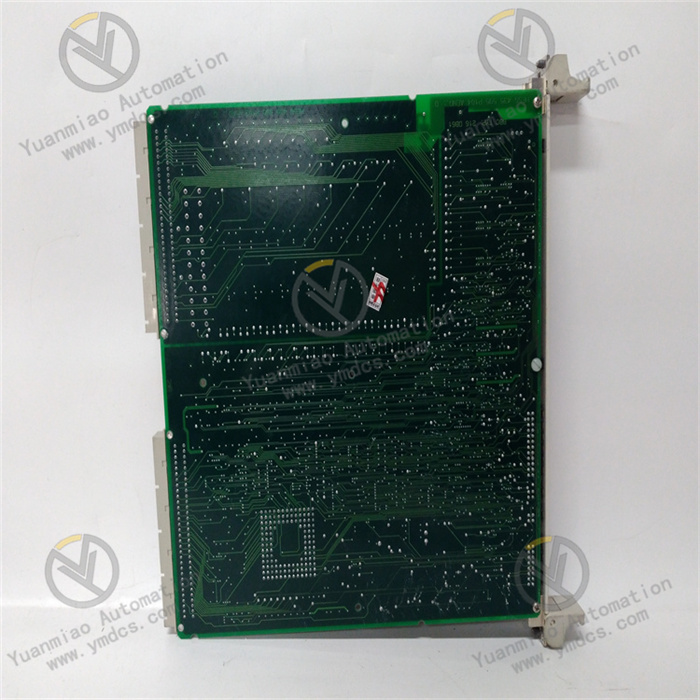
ABB 216DB61 HESG324063R100/J is an industrial-grade high-performance binary input/tripping unit module, belonging to the core component series of ABB DCS. It is positioned as a key executive module for binary signal acquisition, tripping control, signal conditioning, and fault feedback in industrial automation control systems. Integrating four core functions: binary input, tripping control, signal isolation, and fault self-diagnosis, it has advantages such as high reliability, strong anti-interference, modular adaptation, and flexible programmability. As a core component in ABB Distributed Control Systems (DCS) for realizing distributed control, equipment safety protection, and on-site signal monitoring, it is widely applicable to harsh industrial scenarios in power, chemical industry, oil and gas, automotive manufacturing, building automation and other industries, especially suitable for control scenarios with high requirements for system reliability and safety protection.
This module mainly undertakes five core tasks: binary signal acquisition, tripping command execution, signal conditioning, fault monitoring, and data interaction. It focuses on the precise acquisition and safe control of binary signals (switch signals, fault signals) in industrial sites, and can directly connect to on-site limit switches, motor status sensors, safety door switches and other equipment to realize real-time monitoring of equipment operation status and execute tripping actions according to preset logic to ensure equipment and production safety. Relying on industrial-grade circuit design and high-level electrical isolation technology, it effectively suppresses electromagnetic interference in industrial sites, avoiding signal false alarms or module damage. Compatible with ABB distributed control systems, it can be seamlessly connected to various DCS/PLC systems without additional conversion modules, effectively solving problems such as on-site signal interference, control response lag, and cumbersome operation and maintenance. It is widely used in equipment safety protection, process monitoring, emergency tripping and other scenarios, providing reliable core support for the continuous, safe and stable operation of industrial automation systems. In practical applications, it can achieve long-term stable operation with zero faults, significantly reducing operation and maintenance costs.
It adopts an industrial-grade compact modular design with a corrosion-resistant high-strength resin coating on the surface, suitable for 35mm DIN rail installation or control cabinet embedded installation, facilitating dense deployment and space optimization in control cabinets, and its compact design can greatly save control cabinet installation space. Equipped with high-density pluggable terminals and dedicated module connectors, it can quickly complete the wiring of power and signal lines and module replacement, greatly improving installation, commissioning, and maintenance efficiency. The enclosure and circuit design comply with IEC 60950-1, UL 508 safety standards and IEC 61000-6-2, IEC 61000-6-4 electromagnetic compatibility standards, with IP65 protection level, offering excellent dustproof, waterproof, and anti-electromagnetic interference performance, which can withstand high-frequency noise from inverters, electromagnetic fields from high-power equipment, and harsh environments such as humidity and dust in industrial sites. It supports hot-swappable function, allowing module replacement without shutdown during maintenance, and supports online configuration, parameter setting, and fault diagnosis through ABB special configuration software, which can customize functions according to different application needs, making operation and maintenance convenient and efficient.
1. Technical Specifications
1.1 Power Specifications
- Power Supply Voltage: Standard 24VDC (compatible with 20-30V DC wide range), meeting the needs of voltage fluctuations on industrial sites, supporting redundant power supply configuration to protect the 24V power supply from device short circuits;
- Power Protection: Equipped with overvoltage, overcurrent, reverse polarity, overload, and short-circuit protection functions; electrical isolation between power circuit and signal circuit, isolation voltage ≥2000VAC, suppressing ground loop interference and preventing damage to the module and connected equipment;
- Typical Power Consumption: High-efficiency and low-power consumption design, rated power consumption <15W, efficiency >90%, suitable for long-term continuous operation without additional heat dissipation burden, no need to install heat dissipation devices;
- Power Indication: The panel is equipped with a power LED indicator (green) to intuitively display the module's power supply status, facilitating quick troubleshooting of power supply faults;
- Power Compatibility: Seamlessly compatible with the power architecture of ABB Distributed Control Systems (DCS), can operate synchronously with the system power supply, simplifying system wiring and deployment.
1.2 Computing & Signal Processing Parameters
- Processor Type: Industrial-grade embedded microprocessor, with fast signal processing, logic judgment, and tripping command execution capabilities, with rapid and stable response;
- Response Speed: Binary input response time ≤1ms, tripping command execution response time ≤0.5ms, ensuring the real-time performance of signal acquisition and safety control, avoiding fault expansion;
- Storage Capacity: Built-in 128KB Flash and 32KB RAM, which can store operation logs, fault information, and configuration parameters, supporting data power-off preservation to avoid loss of key data and facilitate fault tracing;
- Signal Filtering: Built-in digital filtering circuit, which can effectively filter out high-frequency interference in industrial sites, and the filtering time can be adjusted through configuration software, which can not only meet the needs of fast response but also ensure signal stability in strong interference occasions;
- Self-test Function: Built-in hardware self-test and software watchdog function, which can real-time monitor the status of internal components, I/O channels, and tripping units of the module, and trigger an alarm and record fault information in case of abnormalities.
1.3 Binary Input & Tripping Parameters
- Input Channels: 8 channels of binary input, compatible with 24VDC active input, can collect binary signals (logic "0"/"1") from switches, buttons, sensors and other equipment, used for protection function setting and equipment status monitoring;
- Tripping Function: Integrated with a dedicated tripping unit, controlled by the 216DB61 core, the normally closed (N/C) contacts of relays 1 to 4 are connected to the terminals, which can trigger tripping actions according to preset logic to protect equipment safety;
- Output Capacity: Single-channel rated output current 10A, output voltage range 115-230VAC, which can convert 24V DC voltage into AC voltage to provide stable power for the load;
- Channel Isolation: Electrical isolation between input channels, and between input/output channels and power supply, isolation voltage ≥2000VAC, effectively suppressing interference intrusion and ensuring signal stability and module safety;
- Alarm Function: Supports multiple types of alarms such as input signal abnormality, tripping action trigger, and communication interruption, can preset alarm thresholds, and upload alarm information and light up the panel alarm indicator when an alarm is triggered, and can configure alarm event recording modes.
1.4 Communication & Compatibility Parameters
- Communication Interface: Integrates RS232, RS422, RS485, and Ethernet interfaces, supports redundant communication configuration, and can flexibly connect to different types of communication links;
- Communication Protocols: Native support for mainstream industrial protocols such as Profinet, Profibus-DP, and Modbus RTU, which can be seamlessly connected with ABB DCS systems and third-party automation equipment, facilitating system integration;
- Data Transmission: The maximum data transmission rate is 100Mbps, and the parameter refresh cycle ≤1s, ensuring real-time interaction of signal acquisition, tripping commands, and fault information without packet loss;
- System Compatibility: Deeply compatible with ABB Distributed Control Systems (DCS), can be directly connected to the existing automation network, and supports seamless linkage with ABB drives and inverters to achieve integrated control;
- Expansion Capacity: Supports analog expansion function, can provide additional analog input or output channels, and can be flexibly expanded according to on-site control needs, adapting to control scenarios of different scales.
1.5 Environmental Parameters
- Operating Temperature: -40℃ to +85℃, wide-temperature design adapts to extreme high and low temperature industrial environments, and can start and operate stably in severe cold and high temperature scenarios;
- Operating Humidity: 5%–95% (non-condensing), capable of stable operation in humid industrial environments, adapting to humid scenarios such as chemical industry, water treatment, and oil and gas;
- Anti-Interference Level: Complies with IEC 61000-6-2 (industrial environment immunity) and IEC 61000-6-4 (industrial environment emission) standards, has excellent anti-electromagnetic interference performance, and can resist strong electromagnetic interference on site;
- Reliability: Certified by CE, UL, and RoHS, mean time between failures (MTBF) >50,000 hours, natural heat dissipation, maintenance-free operation, adapting to long-term continuous production needs, and can achieve long-term zero-fault operation;
- Protection Performance: IP65 protection level, with excellent dustproof and waterproof capabilities, can be directly installed in harsh on-site environments without additional protection measures, adapting to high-dust, high-humidity, and corrosive industrial environments.
1.6 Physical & Installation Parameters
- Overall Dimensions: Compact design, approximately 100mm×65mm×25mm (subject to actual product), the compact design can save 60% of control cabinet space, adapting to dense installation needs;
- Installation Method: Supports 35mm DIN rail installation, can be directly installed in the DCS control cabinet, or connected to the system through a dedicated connector, with convenient installation;
- Wiring Terminals: Pluggable high-density wiring terminals, reliable wiring, plug-in life >1000 times, facilitating quick wiring and module replacement, improving operation and maintenance efficiency;
- Status Indication: The panel is equipped with multi-color LED indicators, which respectively display power supply, operation, communication, fault, tripping status, and each channel status, facilitating quick location of faults and tripping causes;
- Weight: Net weight of a single module is about 0.25kg, lightweight and easy to install, convenient for spare part management and on-site replacement, reducing operation and maintenance workload.
2. Features
- High Reliability and Strong Anti-Interference: Industrial-grade circuit design, high isolation between power and signal circuits, equipped with comprehensive protection functions such as overvoltage, overcurrent, reverse polarity, overload, and short circuit; complies with international safety and electromagnetic compatibility standards, IP65 protection level, can withstand strong electromagnetic interference, high dust, high humidity and other harsh environments in industrial sites, avoiding signal false alarms or module damage, stable and reliable for long-term operation, and can achieve zero-fault operation.
- Integrated Binary Input and Tripping Control: Integrates 8 binary input channels and a dedicated tripping unit, which can simultaneously realize on-site binary signal acquisition and fault tripping control. The tripping command responds quickly, which can effectively protect equipment safety and avoid fault expansion. It is suitable for equipment safety protection, emergency tripping and other scenarios, especially for supporting control of ABB drives and inverters.
- Flexible Programmability and Expansion Adaptation: Supports custom function configuration, can customize control logic according to different application needs, and signaling output can be configured with multiple operation modes (control signal relay and record event, only record event, no action); supports analog expansion function, can flexibly expand input and output channels, adapting to various needs from small-scale control scenarios to large-scale distributed control scenarios.
- Seamless Integration and Multi-Protocol Compatibility: As a native module of the ABB DCS series, it can be seamlessly connected to ABB distributed control systems, drives, and inverters without additional conversion modules; supports multiple mainstream industrial protocols and communication interfaces, compatible with third-party automation equipment, simplifying system integration difficulty, shortening project delivery cycle, and improving system synergy efficiency.
- Convenient Operation and Maintenance, Efficient Management and Control: Supports hot-swappable function, allowing maintenance without shutdown, reducing production losses; the panel LED indicators can intuitively display the module's operation, fault, and tripping status, facilitating quick location of faults and tripping causes; supports online configuration, parameter setting, and fault diagnosis through ABB special configuration software, built-in fault log storage function, supports log export, providing support for fault tracing and predictive maintenance, and significantly reducing operation and maintenance costs.
3. Operating Principle
- Initialization and Link Establishment: After power-on, the module completes a full self-test, initializes the processor, input channels, tripping unit, communication interface, and internal control circuit, and loads the built-in firmware and pre-configured configuration parameters; establishes a connection with the ABB DCS main control system, on-site sensors, drives and other equipment through the communication interface, and after parameter calibration and state synchronization, it is connected to the distributed control system, enters the normal working state, and starts the redundant power supply protection mechanism.
- Binary Signal Acquisition and Conditioning: Through 8 binary input channels, it collects binary signals (logic "0"/"1") from on-site limit switches, motor status sensors, safety door switches and other equipment, filters out high-frequency interference in industrial sites through the built-in digital filtering circuit to ensure the accuracy of signal acquisition; converts the collected signals into logic signals recognizable by the processor through the signal conditioning circuit, and transmits the signal status to the main control system in real time to provide a basis for control decisions, and some signals can be used for setting protection functions.
- Tripping Control and Command Execution: According to the preset control logic and fault judgment standards, the main control system performs logical analysis on the collected binary signals. When dangerous situations such as equipment faults and signal abnormalities are detected, it issues a tripping command to the module; after receiving the command, the module triggers the relay action through the built-in tripping unit, executes the tripping operation, cuts off the dangerous circuit, protects equipment and production safety, and feeds back the tripping status to the main control system to form closed-loop control and record the tripping event.
- Fault Monitoring and Alarm Handling: The module real-time monitors its own operation status, input channel status, tripping unit status, communication link, and power supply status, and detects component abnormalities, channel short circuits, signal abnormalities, tripping action abnormalities and other faults through the self-test circuit; if an abnormality is detected, it immediately triggers an alarm, lights up the panel alarm indicator, records fault information (fault type, fault channel, tripping cause) and uploads it to the main control system through the bus, and can control the signal relay or only record the event according to the configuration mode, facilitating operation and maintenance personnel to quickly troubleshoot and handle, avoiding fault expansion.
- Maintenance Management and Configuration Update: Supports online modification of module parameters, configuration of input and output functions, setting of alarm thresholds and signaling output modes through ABB special configuration software without disassembling the module; supports hot-swappable maintenance, and can replace the module online to reduce downtime; built-in fault log storage function, supports log export, providing support for fault tracing and predictive maintenance, and supports online firmware upgrade to improve module performance and compatibility.
4. Applications and Case Examples
- Power Industry Control and Protection: In the control systems of power stations and substations, the module is used to collect the operation status signals of generators, transformers and other equipment, execute fault tripping control to protect the safety of power equipment; at the same time, monitor the status of electrical switches, optimize power generation efficiency, ensure the stable operation of the power grid, and adapt to the high requirements of the power system for reliability and safety.
- Chemical and Oil & Gas Industry: In the DCS system upgrade project of a large chemical plant in East China, this module is used to collect digital signals of key equipment such as valve limit switches, motor operation status, and liquid level switches. Its excellent electrical isolation performance effectively resists electromagnetic interference generated by on-site inverters and large motors, completely solving the problem of signal false alarms, and maintaining a zero-fault record during more than half a year of operation; in the oil and gas industry, it is used to monitor and control various process flows to ensure safe and stable production.
- Automotive Manufacturing Industry: In the automation transformation project of the welding workshop of a South China automobile manufacturer, this module is widely used in the production line safety door status monitoring system to real-time monitor the opening and closing status of more than 200 safety doors to ensure the safe operation of welding robots. The system integrates more than 150 such modules, which communicate with the main control PLC through the Profinet network. Its compact design saves 60% of the control cabinet space and ensures 99.5% equipment availability of the production line.
- Building Automation and Manufacturing Industry: In building automation systems, it is used for signal conditioning and logic control to ensure the power stability of commercial buildings, medical facilities, and large data centers; in manufacturing industries such as 3C electronics and auto parts, it connects to binary signals of production line safety equipment and sorting equipment to realize equipment safety protection and automatic management and control, improving production safety and efficiency.
- Other Industrial Scenarios: In fields such as transportation, agriculture, and mining, it is used to real-time monitor and control equipment operation status, execute fault tripping protection, meet the high requirements for power supply quality and stability, and provide reliable safety control solutions for various industrial scenarios.