Description
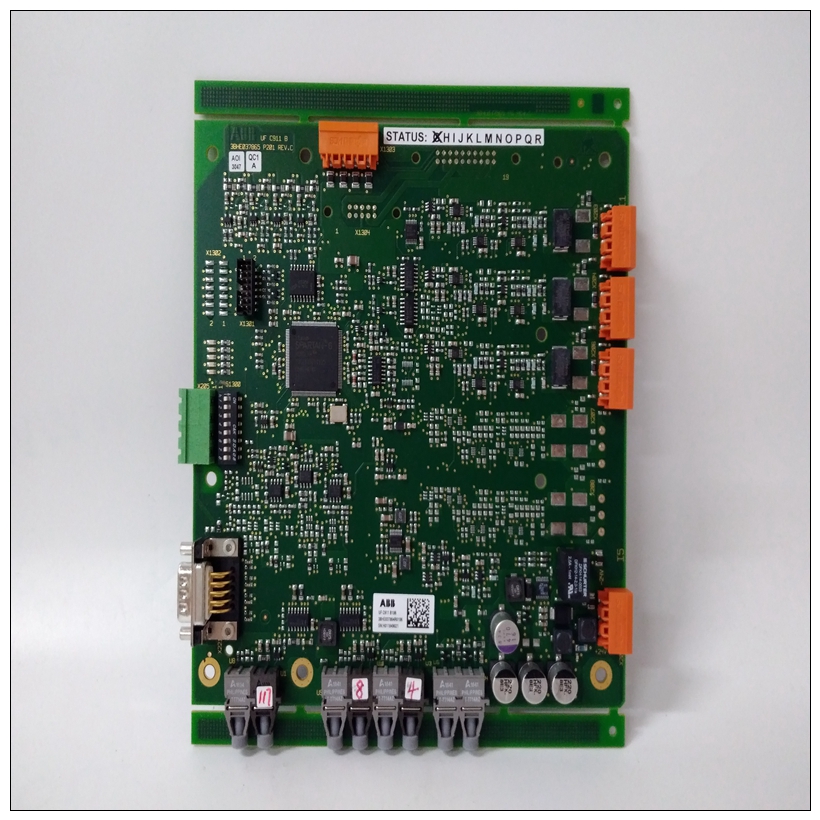
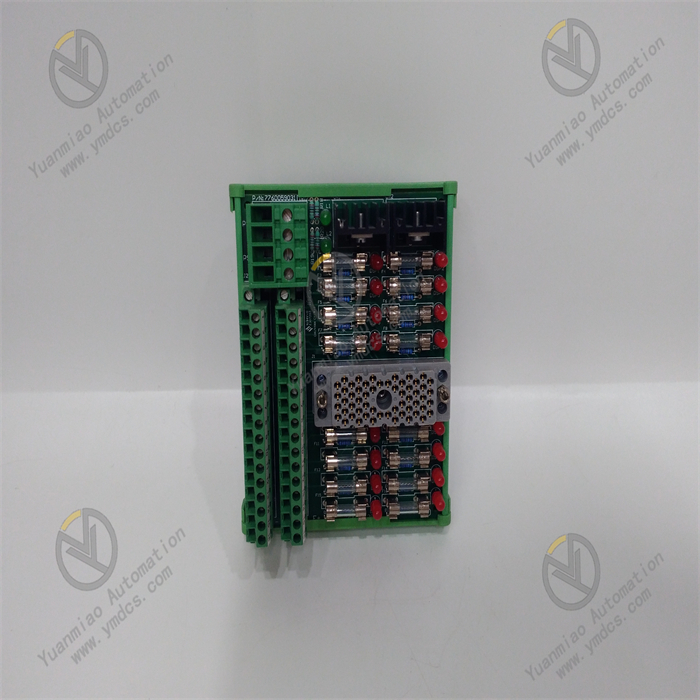
ABB SB821 3BSE018109R1
I. Overview
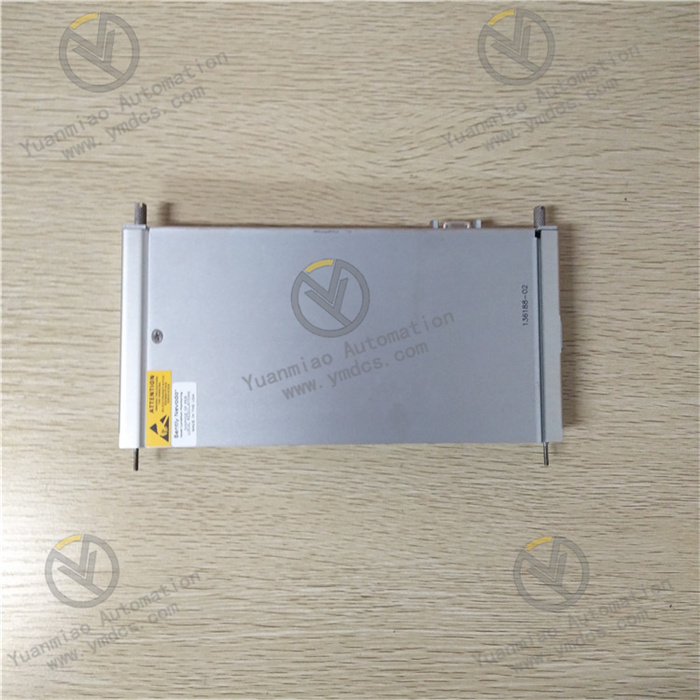
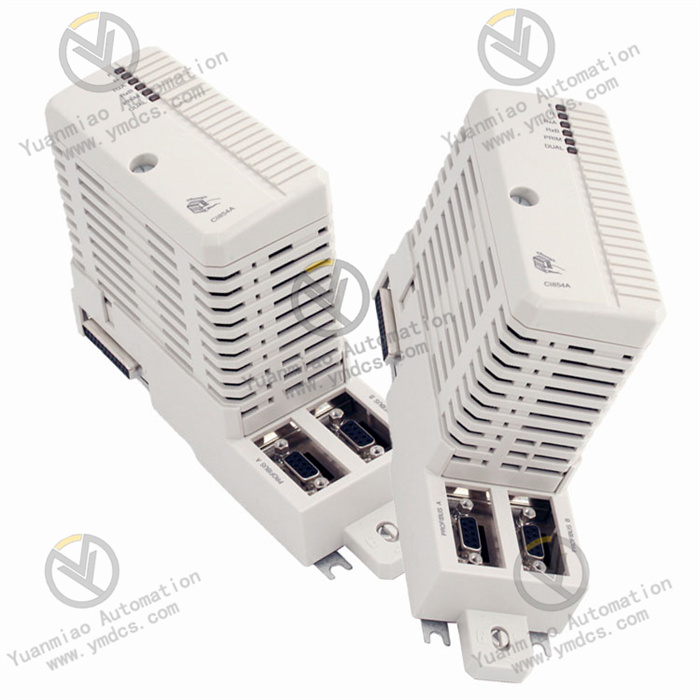
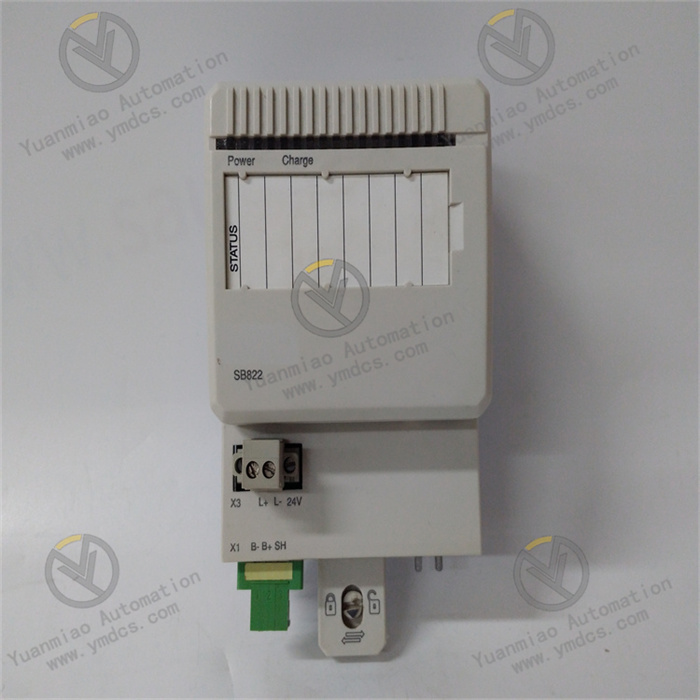
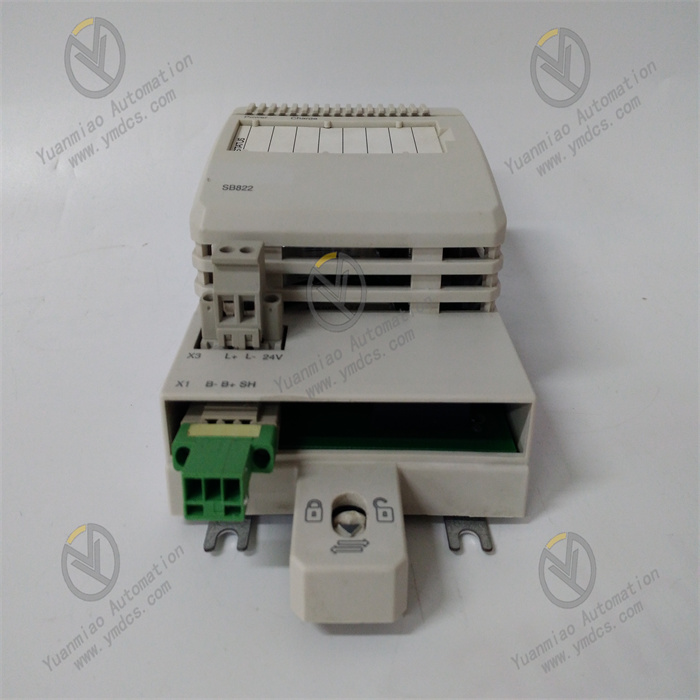
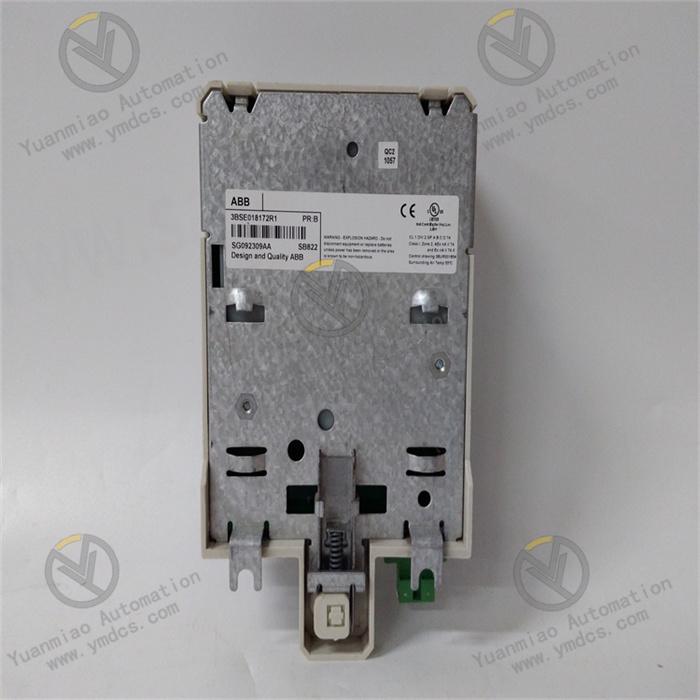
ABB SB821 3BSE018109R1 is a safety bridge module, with its core positioning as a safety signal isolation and transmission unit for automation systems, specially designed for industrial scenarios with high safety requirements. Belonging to ABB's safety control product series, this module mainly undertakes the functions of signal isolation, conversion and reliable transmission in safety loops. It can realize bidirectional interaction between safety signals and standard control signals, and has fault diagnosis and redundancy backup capabilities at the same time. It is a key component to ensure the stable operation of safety loops in automation systems and meet the requirements of functional safety levels.
II. Core Features
High-level Safety Signal Isolation: Adopting electrical isolation technology, the signal isolation degree reaches 2.5kVrms/1min, which can effectively isolate electrical interference between the safety loop and the control loop, avoid fault spread, prevent high voltage from intruding and damaging core control components, protect personnel and equipment safety, and comply with SIL 2 functional safety level certification.
Bidirectional Signal Conversion and Transmission: Supports bidirectional conversion and transmission of multiple signal types, compatible with 4-20mA analog signals and dry contact switch signals. It can realize accurate interaction between safety-side and non-safety-side signals without additional adapter modules, simplifying loop design and improving signal transmission efficiency.
Real-time Fault Diagnosis and Feedback: Built-in fault detection circuit can monitor abnormal conditions such as signal disconnection, short circuit and overvoltage in real time. It feeds back fault information through status indicator lights and output signals, facilitating maintenance personnel to quickly locate problems; it supports uploading fault signals to the control system to trigger corresponding safety protection actions.
Industrial-grade Stable Protection Design: Encapsulated in an all-metal housing with IP20 protection rating, suitable for installation in control cabinets; it has vibration resistance and anti-electromagnetic interference capabilities, with an operating temperature range of -25℃~+60℃, and can resist the impact of harsh industrial conditions such as voltage fluctuations and electromagnetic radiation, with a long service life.
- Flexible Adaptation and Convenient Operation & Maintenance: Supports DIN rail mounting, and the terminal blocks adopt plug-in design for quick installation and maintenance; compatible with ABB and third-party safety control systems, plug-and-play without complex parameter configuration; status indicator lights intuitively display power supply, signal transmission and fault status, with low operation and maintenance costs.
III. Technical Parameters
| Parameter Name | Specification |
|---|---|
| Product Model | ABB SB821 3BSE018109R1 |
| Product Type | Industrial-grade safety bridge module (signal isolation and transmission unit) |
| Signal Type | Analog: 4-20mA DC; Switch: Dry contact (NO/NC) |
| Isolation Performance | Signal isolation degree 2.5kVrms/1min, dual isolation of power supply and signal |
| Power Supply Parameters | 24V DC±10%, power consumption ≤3W, supporting redundant power input |
| Environmental Adaptability | Operating temperature -25℃~+60℃, storage temperature -40℃~+85℃; Relative humidity 5%~95% (non-condensing) |
| Protection Performance | IP20 protection rating, all-metal housing, anti-electromagnetic interference (EMC compliant with EN 55011 standard) |
| Installation Method | TS35 DIN rail mounting, plug-in terminal blocks |
| Dimensions | 100mm (depth) × 120mm (height) × 22.5mm (width) |
| Product Weight | Net weight approx. 0.25kg |
IV. Working Principle
ABB SB821 3BSE018109R1 safety bridge module realizes reliable signal interaction between the safety loop and the control loop based on the core working process of signal isolation - conversion - transmission - fault monitoring. The specific working process is divided into four core stages:
Safety-side signals (4-20mA analog or dry contact switch signals) are connected to the module through dedicated terminals. The module physically isolates the safety-side and non-safety-side circuits through an internal electrical isolation circuit, avoiding electrical interference and fault conduction between the two circuits, and filtering out clutter in the signals to ensure the stability of the accessed signals.
For different types of input signals, the built-in conversion circuit of the module converts them into standard signals suitable for non-safety-side control systems; analog signals maintain linear conversion to ensure no loss of accuracy; switch signals achieve reliable triggering through level conversion, and anti-shake processing is performed on the signals to avoid false triggering.
The processed standard signals are transmitted to the non-safety-side control system through output terminals. At the same time, it supports the reverse transmission of non-safety-side control signals (such as reset signals) to the safety side to realize bidirectional signal interaction; it monitors signal integrity in real time during transmission to ensure signal transmission without delay or distortion.