Description
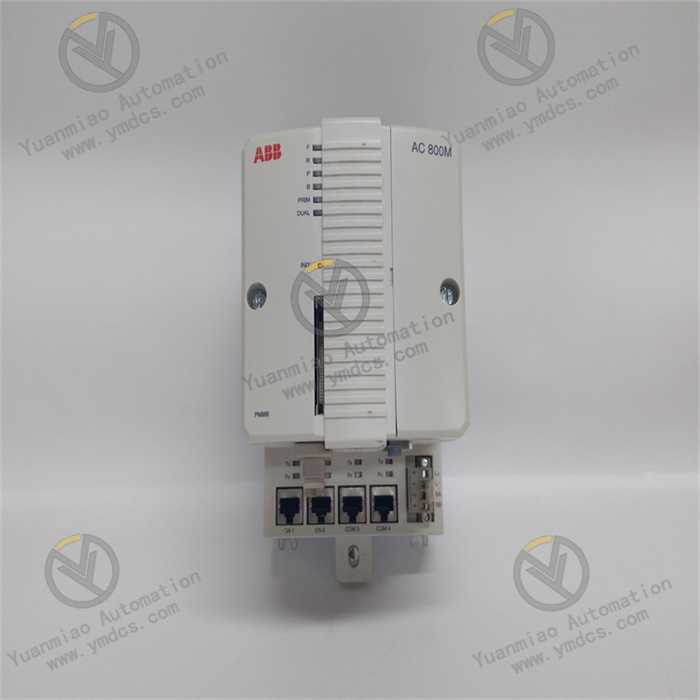
ABB DI818 3BSE069052R1
I. Overview
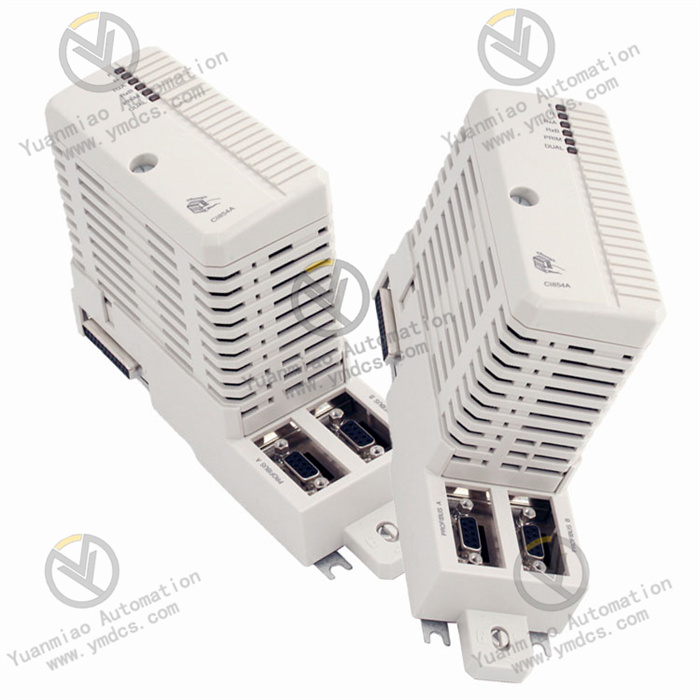
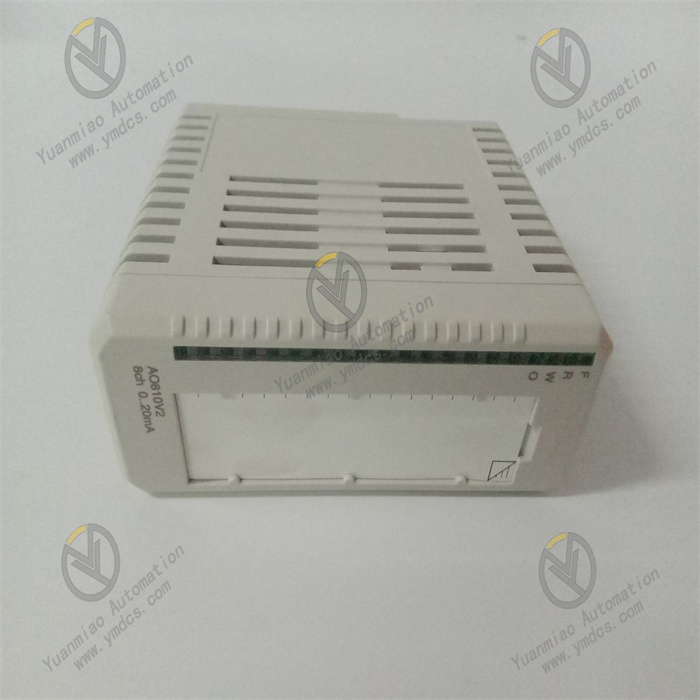
The ABB DI818 3BSE069052R1 is a digital input module, with its core positioning as a high-precision discrete signal acquisition and enhanced isolation transmission unit for industrial field applications. Adopting enhanced photoelectric isolation technology, high-precision anti-interference signal conditioning circuits and comprehensive safety protection designs, this module can accurately collect various high-precision digital signals on site (such as on/off signals from high-speed limit switches, precision proximity switches, high-frequency push buttons, and fast-response relay contacts). After undergoing isolation conversion, signal optimization and precision conditioning, the collected signals are stably transmitted to the control system, enabling real-time capture of key information in industrial production processes, including high-precision equipment status monitoring, high-speed process position tracking, and high-frequency operation command acquisition. Thanks to its excellent high-speed response performance, superior anti-interference capability and comprehensive diagnostic functions, it provides efficient and stable signal acquisition support for high-precision process control systems, high-speed equipment interlocking systems and high-reliability safety early warning systems in industries such as electric power, chemical engineering, metallurgy, high-end equipment manufacturing, and rail transit.
II. Product Features
Multi-channel Enhanced Isolation Input and High-reliability Design: It integrates 16 independent digital input channels, each equipped with enhanced photoelectric isolation technology with an isolation voltage of up to 3000V AC, far exceeding the standard of basic modules. This design can more effectively suppress ground loop interference, strong electromagnetic radiation interference and on-site high-voltage crosstalk, ensuring the control system is free from the impact of interference signals. Full isolation combined with independent shielding is implemented between channels, so the failure of a single channel will not affect the normal operation of other channels at all, greatly improving the system's anti-failure capability and fault tolerance. Adopting high-end industrial-grade circuit design and high-quality precision components, and undergoing rigorous environmental reliability testing, the module ensures long-term stable operation in complex industrial environments, suitable for various high-precision industrial control scenarios.
Ultra-wide Range Signal Adaptability and High-speed Response Performance: It fully supports multiple digital signal input types including dry contacts, wet contacts and high-speed pulse signals, and is perfectly compatible with the 24V DC standard industrial control power supply. It can match the output signals of various high-precision on-site sensors and operating components such as high-speed limit switches, precision proximity switches, high-frequency photoelectric switches, fast push button switches and fast-response relay contacts. The input signal boasts an extremely fast response speed, with a standard response time ≤ 0.1ms (signal rising/falling edge), and supports ultra-wide-range software adjustment from 0.05ms to 100ms. It can accurately capture instantaneous signal changes in high-frequency and high-speed production scenarios, meeting the high-speed response requirements of high-end working conditions.
Full-dimensional Fault Diagnosis and Visual Intelligent Monitoring: The built-in full-dimensional real-time diagnosis unit can conduct comprehensive monitoring of multiple dimensions including module power supply status, input signal integrity of each channel, working status of internal isolation circuits, bus communication status, module temperature status and line insulation status. The module's overall operating status, power supply status, bus communication status, input status of each channel (signal present/signal absent/fault) and module temperature abnormal status are intuitively displayed through multiple groups of high-brightness LED indicators. Meanwhile, detailed fault information (including fault type, fault channel, fault time, fault level and fault trend data) can be uploaded to the upper system, supporting fault early warning function. This facilitates maintenance personnel to predict potential faults in advance, quickly locate the root cause of faults, and greatly improve maintenance efficiency and system reliability.
Superior Adaptability to Complex Industrial Environments: Adopting industrial-grade high-stability precision components and enhanced protective structure, it has an operating temperature range of -40℃ ~ +75℃, far wider than that of basic modules, and can withstand strong vibration shocks in the frequency range of 10-2000Hz. Its electromagnetic compatibility complies with the advanced EN 61000-4 series standards, with superior anti-electromagnetic interference capability. It can operate stably in extremely complex industrial environments such as high-power frequency converter clusters, high-voltage equipment groups and high-frequency electromagnetic fields, ensuring that the accuracy of input signal acquisition and the stability of transmission are free from any interference.
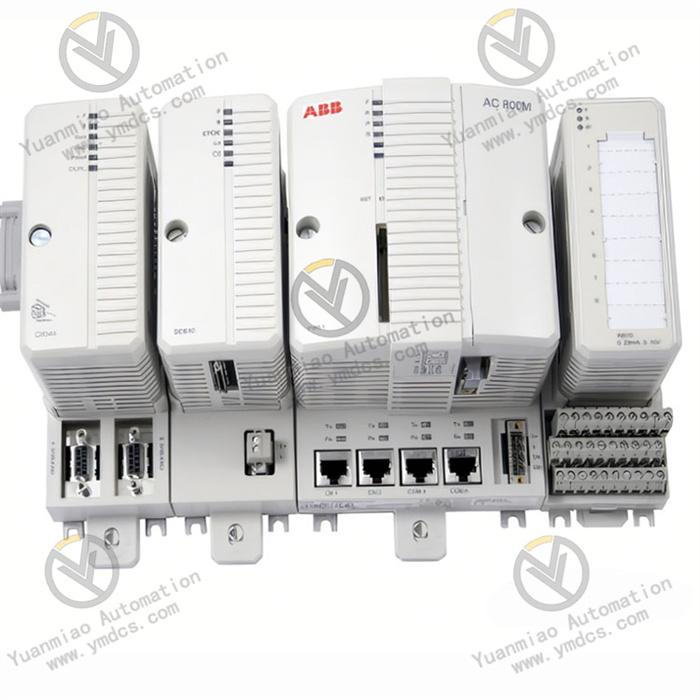
Flexible Adaptation and Intelligent Convenient Maintenance: Specifically designed for ABB AC 800M series high-end controllers, it can seamlessly cooperate with the controllers via PROFIBUS DP/Profinet bus to achieve high-speed data transmission (with a maximum transmission rate of 12Mbps) and precise command interaction. It supports hot swapping function, allowing module replacement, inspection and maintenance without stopping the system, which minimizes production downtime. It adopts the standardized 35mm DIN rail mounting method, featuring convenient and efficient installation and disassembly. Combined with the anti-misplug spring-loaded terminal block design, it has wiring error-proof and anti-loosening functions, greatly reducing the workload of on-site construction and operation and maintenance, and improving wiring reliability.
Comprehensive Advanced Safety Protection: It is equipped with multi-level overvoltage protection, reverse connection protection, overcurrent protection, surge suppression and electrostatic protection functions, which can effectively resist damage to the module caused by various abnormal conditions such as reverse power connection, high-voltage impact on input signals, external strong surges, load short circuits and electrostatic discharge. The shell is made of high-strength corrosion-resistant engineering plastics with a flame retardant rating of UL 94 V-0, having excellent impact resistance, corrosion resistance, dustproof and splash-proof performance, and complying with advanced industrial safety standards. Each input circuit is equipped with independent current-limiting and overvoltage dual protection functions to avoid overall module failure caused by single external line faults, comprehensively ensuring system operation safety. It has passed the IEC 61508 SIL 3 safety certification, meeting the high safety level requirements of high-end safety control systems.
- Intelligent Parameter Configuration and Precision Debugging: Fine-grained custom configuration of full-channel parameters can be realized through the dedicated high-end ABB Control Builder M configuration software, including multiple advanced parameters such as input signal type, response time, diagnosis threshold, fault alarm strategy, fault early warning threshold and data filtering level. It supports online debugging, real-time parameter modification, fast program downloading and parameter backup/restore functions, enabling system debugging and optimization without stopping the machine, thus significantly simplifying the debugging process. It can be seamlessly connected to the ABB System 800xA high-end monitoring system, realizing remote real-time monitoring of input status, high-precision data trend analysis, in-depth fault log query, historical data traceability and automatic generation of maintenance reports, providing comprehensive data support for preventive maintenance and intelligent operation and maintenance.
III. Technical Parameters
1. Core Basic Parameters
- Product Model: ABB DI818 3BSE069052R1
- Product Type: Industrial-grade high-performance digital input module
- Manufacturer: ABB Group
- Core Functions: On-site high-precision digital signal acquisition, enhanced isolation conversion, status monitoring, full-dimensional fault diagnosis and intelligent data feedback
- Compatible System: ABB AC 800M series high-end process control system
- Input Channels: 16 independent digital input channels with enhanced photoelectric isolation + independent shielding between channels
- Application Fields: High-precision process control systems, high-speed equipment interlocking systems, high-reliability safety control systems and high-end signal acquisition systems in industries such as electric power, chemical engineering, metallurgy, high-end equipment manufacturing, rail transit, semiconductor manufacturing and precision electronic processing.
2. Electrical Performance Parameters
- Supply Voltage: 24V DC (allowable fluctuation range: 18V DC ~ 30V DC)
- Input Signal Type: Discrete input (dry contact/wet contact), high-speed pulse signal (maximum frequency 10kHz)
- Compatible Sensor Types: High-speed limit switches, precision proximity switches, high-frequency photoelectric switches, fast push button switches, fast-response relay contacts, etc.
- Input Voltage Range: 24V DC (typical value), supporting wide-range adaptation of 15V DC ~ 32V DC
- Input Current: Typical value of 2mA ~ 4mA per channel (when powered by 24V DC)
- Isolation Voltage: 3000V AC between channels and between channels and backplane for 1 minute; 2500V AC between channels and ground for 1 minute
- Response Time: ≤ 0.1ms (signal rising/falling edge), configurable via software (0.05ms ~ 100ms)
- Insulation Resistance: ≥ 500MΩ (500V DC, between input and ground)
- Surge Protection: ±6kV (differential mode), ±8kV (common mode), complying with IEC 61000-4-5 advanced standard
- Electrostatic Protection: ±8kV (contact discharge), ±15kV (air discharge), complying with IEC 61000-4-2 standard
- Power Consumption: Typical value 4W, maximum value 6W
- Communication Protocol: PROFIBUS DP/Profinet (dual-protocol compatible, configurable)
- Communication Interfaces: Backplane bus interface, PROFIBUS DP interface, Profinet interface (dual interfaces as standard configuration)
- Data Transmission Rate: Up to 12Mbps (under Profinet protocol)
3. Environmental and Physical Parameters
- Operating Temperature: -40℃ ~ +75℃
- Storage Temperature: -40℃ ~ +85℃
- Relative Humidity: 5% ~ 95% RH (non-condensing, capable of withstanding short-term condensing environment)
- Vibration Resistance: Frequency 10-500Hz, acceleration 15g (sine wave); Frequency 500-2000Hz, acceleration 10g (random wave), complying with IEC 60068-2-6 advanced standard
- Shock Resistance: Peak acceleration 50g, duration 11ms (half-sine wave), complying with IEC 60068-2-27 advanced standard
- Protection Grade: IP21 (complying with IEC 60529 standard, suitable for cabinet installation, capable of withstanding slight water splashing)
- Shell Material: High-strength corrosion-resistant engineering plastic, flame retardant rating UL 94 V-0
- Mounting Method: Standard 35mm DIN rail mounting, supporting hot swapping
- Dimensions: 142mm (width) × 102mm (height) × 220mm (depth) (approximate value)
- Weight: Approximately 0.7kg (including installation accessories)
- Wiring Method: Anti-misplug spring-loaded terminal blocks, supporting 0.5-2.5mm² wire connection with anti-loosening and error-proof structure
IV. Working Principle
The core working principle of the ABB DI818 3BSE069052R1 digital input module is a closed-loop process of on-site high-precision signal acquisition - enhanced isolation conversion - precision signal conditioning - full-dimensional status monitoring and intelligent feedback. Through the coordinated operation of enhanced photoelectric isolation, high-precision signal conditioning, full-dimensional diagnostic monitoring and high-speed data transmission circuits, it realizes reliable acquisition and stable transmission of on-site high-precision and high-frequency digital signals. The specific working process can be divided into four core stages:
Stage 1: On-site High-precision Signal AcquisitionThrough 16 independent high-precision input channels, the module collects various on-site high-precision and high-frequency digital signals in real time, including on/off signals from sensors such as high-speed limit switches and precision proximity switches, as well as status signals from operating components such as fast push buttons and fast-response relay contacts. Each input circuit is equipped with an independent current-limiting and overvoltage dual protection unit, which can effectively resist damage to the module's internal circuit caused by abnormal conditions such as external line short circuits and high-voltage shocks, ensuring the safety, stability and signal integrity of the acquisition process.
Stage 2: Enhanced Isolation ConversionThe module's built-in enhanced photoelectric isolation circuit provides comprehensive electrical isolation between the collected on-site signals, the module's internal circuit, the control system and the ground. It can efficiently block ground loop interference, strong electromagnetic radiation interference, high-frequency electromagnetic field interference and on-site high-voltage crosstalk, fundamentally preventing interference signals from affecting the normal operation of the control system. Meanwhile, it converts the on-site input non-standard discrete signals and high-speed pulse signals into standard logic signals recognizable by the module's internal circuit, laying a foundation for subsequent high-precision signal conditioning and high-speed transmission.
Stage 3: Precision Signal Conditioning and High-speed TransmissionThe logic signals after isolation and conversion are transmitted to the high-precision signal conditioning circuit. The conditioning circuit performs independent refined shaping and multi-stage filtering processing on each channel of signals, completely removing noise interference, clutter and high-frequency interference components in the signals, and greatly improving signal integrity and precision. Subsequently, the conditioned signals are synchronously and rapidly transmitted to the ABB AC 800M controller via the high-speed backplane bus or PROFIBUS DP/Profinet bus, with a maximum transmission rate of 12Mbps, providing accurate and real-time on-site data support for the controller's high-speed logic operation, precise interlocking control and intelligent decision-making scheduling.
V. Common Troubleshooting
1. No Signal Input on a Certain Channel, Controller Cannot Recognize On-site Status
2. The Module Frequently Reports Faults, and Inputs of Multiple Channels Are Abnormal
3. Input Signal Response Delay/High-frequency Signal Loss, Status Monitoring Is Not Timely
4. The Module Cannot Communicate with the Controller and Has No Response Overall