Description
ABB CP415M 1SBP260191PR1001
I. Product Overview
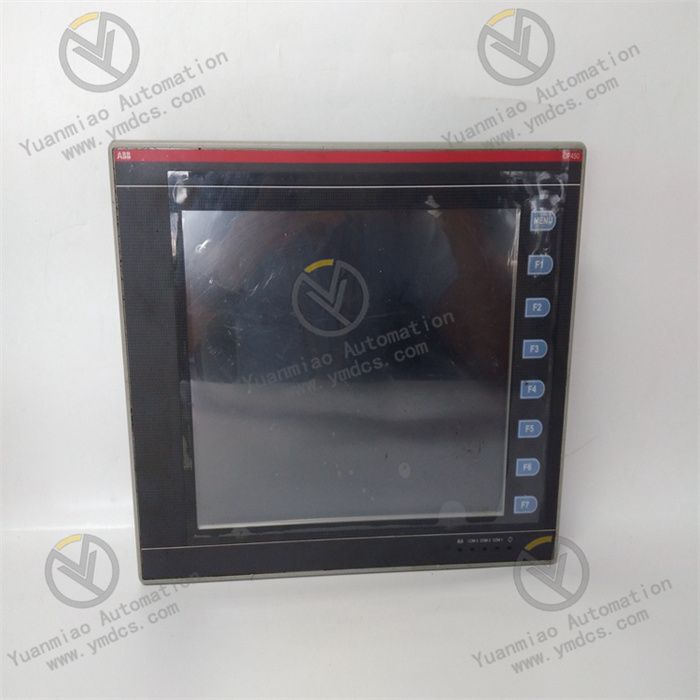
ABB CP415M (1SBP260191PR1001) is a compact industrial-grade color touch screen control panel belonging to the ABB CP400 series. Its core positioning is to provide an accurate and reliable visual human-machine interaction (HMI) solution for small-scale industrial automation systems and standalone equipment. This panel can realize core functions including real-time monitoring of equipment operating status, precise setting of process parameters, rapid response to operation instructions, intuitive display of fault information, and basic alarm linkage control, serving as a critical interactive bridge between operators and the control system.
Equipped with a dedicated runtime license, the product requires configuration with the proprietary Panel Builder 400 programming software. It can seamlessly interface with ABB AC 500 series PLCs and is also compatible with other third-party control devices that support standard industrial communication protocols such as Modbus. Adopting a Germany-originated industrial-grade hardware platform, it features a 4.3-inch high-brightness TFT color touch screen, integrating a compact structural design, high-reliability protection performance, and practical communication interface configuration. With a front-panel protection rating of IP65, it can effectively resist the impact of harsh industrial site conditions such as dust intrusion and low-pressure water jets. It is suitable for small-scale industrial automation scenarios including small automated production lines, standalone mechanical equipment, small water treatment devices, and standalone food processing equipment, and is particularly applicable to control scenarios with limited installation space and basic requirements for interactive convenience and stability.
II. Functional Features
1. High-Definition Touch Interaction for Convenient and Efficient Operation
It is equipped with a 4.3-inch 16:9 aspect ratio TFT color touch screen with a resolution of 480×272 pixels and support for 256-color display, delivering clear images with uniform color reproduction. It can clearly present simplified process flow diagrams, equipment operating status icons, real-time parameter data, and fault alarm information. Adopting industrial-grade resistive touch technology, it features sensitive response and precise positioning, supporting single-point accurate click operations. Combined with basic interactive components such as custom touch buttons, digital input boxes, and drop-down menus, it can realize basic operations including fast parameter switching, equipment start-stop control, fault reset, and simple query of historical data. Compared with traditional push-button panels, visual touch interaction significantly reduces the learning cost for operators and improves the convenience and accuracy of on-site operations.
2. Practical Communication Interfaces for Small-Scale System Integration
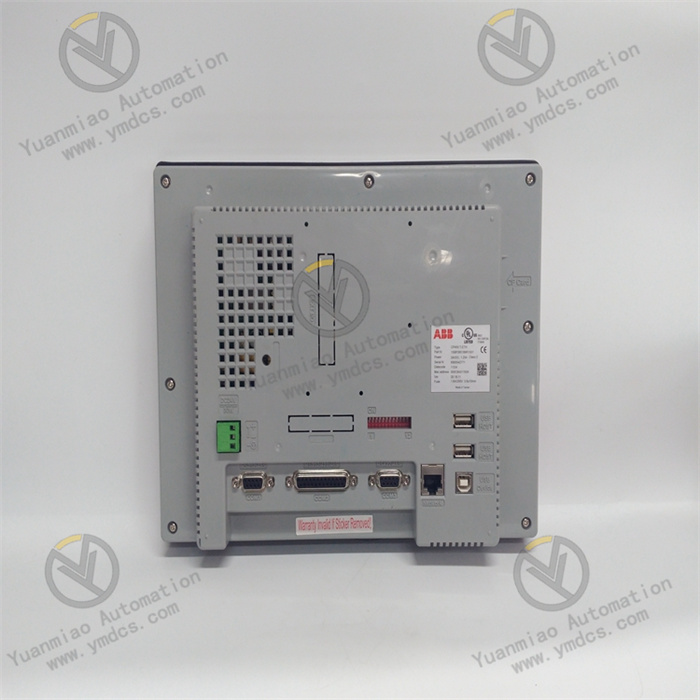
Built with a practical communication interface configuration, including 1×10/100Mbit Ethernet interface, 1×switchable RS-232/RS-485 serial communication interface, 1×USB 2.0 host interface, and 1×SD card slot, it can fully meet the basic communication needs of small-scale industrial automation systems. It supports mainstream industrial communication protocols such as Modbus and EtherNet/IP, with stable data interaction capability to achieve efficient data transmission with upper-level control systems and local operation and maintenance terminals. Through USB interfaces or SD cards, it can conveniently complete upload and download of configuration programs, backup and restoration of operating data, and system firmware upgrade, significantly improving the flexibility of system integration and the convenience of operation and maintenance, and reducing the implementation cost of small-scale projects.
3. High-Reliability Protection for Conventional Industrial Environments
Adopting a targeted protection design, the front panel strictly complies with the IEC 60529 standard with a protection rating of IP65, which can directly withstand common harsh industrial site conditions such as low-pressure water jet cleaning and full dust coverage. The equipment housing has a protection rating of IP20, effectively protecting internal circuits from foreign object intrusion and electrostatic interference. Having passed rigorous environmental reliability tests, it has an operating temperature range of 0~+50℃ and a storage temperature range of -20~+70℃, capable of stable operation in conventional industrial environments with alternating high and low temperatures and humidity changes. With a mean time between failures (MTBF) of 25,000 hours, it boasts excellent operational stability and service life, meeting the requirements of 24/7 continuous operation in industrial sites.
4. Hierarchical Permission Control for Operational Safety Assurance
Built-in with a 4-level password permission protection mechanism, it can accurately divide user levels (such as ordinary operators, maintenance personnel, system administrators, etc.) according to operational responsibilities. Different user levels correspond to different operation permissions, effectively preventing unauthorized personnel from modifying critical process parameters, tampering with configuration programs, or performing misoperations, thus ensuring the operational safety of the control system from the source. Equipped with 64MB user program memory and 64MB user data memory, it adopts Flash Disk non-volatile storage technology. Even in the event of sudden power failure, configuration programs and key operating data can be permanently saved without the need for additional backup batteries, reducing operation and maintenance costs and the risk of data loss.
5. Simple Configuration and Debugging to Reduce Project Implementation Costs
III. Technical Parameters
IV. Working Principle
The core working logic of ABB CP415M (1SBP260191PR1001) is "Configuration Program Driven → Communication Link Establishment → Data Interaction and Transmission → Touch Command Parsing → Information Display and Action Linkage". It needs to cooperate with the upper-level control system to complete the full-process human-machine interaction function, with the specific working process as follows: